
 By admin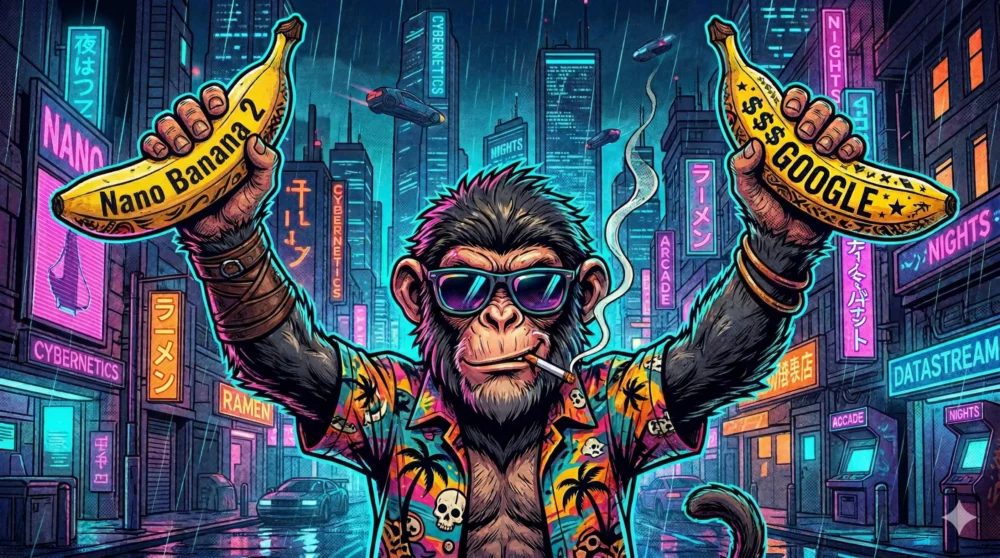
For the past six months, businesses striving to implement high-quality AI image generation at scale have been confronted with a stark, often inconvenient, choice. On one hand, there was the premium option: Google’s Nano Banana Pro model, lauded for its sophisticated reasoning and visual fidelity, but commanding a price tag that made widespread deployment a significant financial hurdle. On the other, a constellation of cheaper, faster alternatives, some even available for free, offered accessibility but at a noticeable compromise in quality, particularly concerning critical enterprise requirements like the accurate embedding of text, the creation of intricate slides, precise diagrams, and other non-purely aesthetic information. This dichotomy created a frustrating bottleneck for many organizations looking to integrate advanced visual AI into their workflows. Today, Google DeepMind has made a significant move to dismantle this trade-off with the official launch of Nano Banana 2, formally known as Gemini 3.1 Flash Image. This new model aims to democratize the high-level reasoning, precise text rendering, and granular creative control previously exclusive to the Pro tier, delivering these capabilities at the speed and cost structure of the Flash tier.
This strategic release arrives in a rapidly evolving landscape, just sixteen days after Alibaba’s Qwen team unveiled Qwen-Image-2.0. The latter, a 7-billion parameter open-weight model, had already garnered considerable attention from developers, with many arguing it had successfully matched the quality benchmarks set by Nano Banana Pro while operating at a fraction of the inference cost. For IT leaders tasked with architecting and optimizing image generation pipelines, the introduction of Nano Banana 2 fundamentally reshapes the decision-making matrix. The fundamental question is no longer whether AI image models have reached a level of maturity suitable for production environments, but rather, which vendor’s pricing and performance curve best aligns with the specific demands and constraints of an organization’s existing or planned workflows.
The Production Cost Conundrum: Why Nano Banana Pro Remained Largely in the Sandbox
When Google first introduced Nano Banana Pro in November 2025, a model built upon the robust Gemini 3 Pro backbone, it immediately impressed the developer community with its remarkable visual fidelity and sophisticated reasoning capabilities. The model demonstrated an unprecedented ability to render accurate and legible text within generated images, maintain character consistency across multi-turn conversational prompts, and meticulously follow complex compositional instructions – capabilities that had long eluded previous generations of AI image generators. However, the premium pricing structure associated with the Pro tier proved to be a significant barrier to its widespread deployment at scale. According to Google’s publicly available API pricing, Nano Banana Pro’s image output was set at $120 per million tokens. For images generated at a 1K resolution, this translated to approximately $0.134 per image. For enterprise applications that require the generation of thousands, or even tens of thousands, of images daily – such as e-commerce platforms necessitating dynamic product visualization, marketing departments building extensive asset pipelines, or global companies requiring localized content generation – these per-image costs could rapidly escalate into substantial, often prohibitive, expenditures. This financial reality confined Nano Banana Pro primarily to research labs and high-budget, low-volume proof-of-concept projects, rather than enabling broad production integration.
Nano Banana 2, built on the Gemini 3.1 Flash backbone, directly addresses this critical cost barrier. Google has announced that the Flash tier’s image output will be priced at $60 per million tokens. This translates to an estimated cost of $0.067 per 1K image, representing a significant reduction of approximately 50% compared to the Pro model. For enterprises operating high-volume image generation workflows, this drastic price reduction moves the technology from the realm of aspirational concepts to that of practical, economically viable production deployments. It effectively lowers the barrier to entry for sophisticated AI image generation, making it accessible for a much broader range of business applications.
Unpacking the Capabilities of Nano Banana 2
Crucially, Nano Banana 2 is not merely a scaled-down or re-priced version of its predecessor. Google DeepMind’s announcement highlights that the new model inherits several key capabilities that were previously exclusive to the Pro tier, while also introducing novel features designed to enhance its utility for enterprise users. The most prominent advancement lies in its enhanced text rendering and translation capabilities. Nano Banana 2 excels at generating images with accurate, easily legible text, a historically challenging area for many AI image generators. Furthermore, it offers the ability to translate this embedded text into different languages directly within the same image editing workflow, a significant boon for global marketing and content localization efforts.
Subject consistency has also seen substantial improvements. Nano Banana 2 can now maintain character resemblance across a sequence of up to five characters and preserve the fidelity of up to 14 distinct reference objects within a single generation workflow. This enhanced control is invaluable for applications such as storyboarding, creating product photography featuring multiple Stock Keeping Units (SKUs), and developing brand assets where visual continuity across a series of images is paramount. Google’s technical documentation further emphasizes the model’s ability to accept up to 14 different reference images as input, empowering it to compose complex scenes that seamlessly integrate multiple distinct objects or characters sourced from separate visual references.
From a technical specification standpoint, Nano Banana 2 offers comprehensive aspect ratio control, supports resolutions ranging from 512 pixels all the way up to 4K, and introduces two distinct "thinking levels." These levels allow developers to fine-tune the balance between generation quality and latency, providing greater flexibility to optimize for specific application needs. A particularly noteworthy addition that differentiates Nano Banana 2 from Nano Banana Pro is its integrated image search tool. The model can now perform image searches and leverage the retrieved images as contextual grounding for its generation processes, significantly expanding its utility for workflows that rely heavily on visual reference materials for inspiration and accuracy.
The Qwen-Image-2.0 Catalyst: Why Google Needed to Accelerate its Offering
The timing of Google’s Nano Banana 2 launch is far from coincidental; it clearly signals a strategic response to intensifying market competition. On February 10th, the release of Alibaba’s Qwen-Image-2.0 sent ripples through the AI community. This unified model, capable of both image generation and editing, was immediately compared to Nano Banana Pro, but with a considerably more efficient architecture. Qwen-Image-2.0 operates on a significantly smaller 7-billion parameter count, a notable reduction from its 20-billion parameter predecessor, while consolidating text-to-image generation and image editing into a singular, streamlined architecture. The model boasts native generation at a 2K resolution (2048×2048 pixels), supports prompts of up to 1,000 tokens for intricate scene composition, and has consistently ranked at or near the top of AI Arena’s blind human evaluation leaderboards for both its generation and editing tasks.
The competitive implications for enterprise buyers are substantial. Qwen-Image-2.0’s reduced 7B parameter count translates to significantly lower inference costs when self-hosted, a critical factor for organizations prioritizing data residency requirements or managing exceptionally high-volume workloads. Historically, Alibaba’s Qwen team has followed a pattern of releasing models under permissive licenses (like Apache 2.0) approximately one month after their initial announcement. The developer community widely anticipates a similar trajectory for Qwen-Image-2.0. Should this open-weight availability materialize, organizations could potentially deploy a powerful image generation model that rivals Nano Banana Pro’s quality on their own infrastructure, entirely bypassing per-image API charges.
Furthermore, Qwen-Image-2.0’s unified generation-and-editing architecture simplifies deployment complexities. Current industry practice often necessitates chaining separate models for image creation and subsequent modification, a process that can introduce latency and degrade output quality as data is passed between different systems. Qwen-Image-2.0, by handling both tasks in a single pass, promises to reduce these inefficiencies. However, where Qwen-Image-2.0 currently faces a challenge is in its ecosystem integration. Google’s Nano Banana 2 launches with broad distribution across its extensive product suite, including the Gemini app, Google Search (AI Mode and Lens), AI Studio, the Gemini API, Google Antigravity, Vertex AI, Google Cloud, and Flow, where it will serve as the default image generation model at zero credit cost. Replicating this level of widespread accessibility and integration is a formidable task for any competitor, particularly one whose primary API access is currently confined to Alibaba Cloud’s platform.
Implications for Enterprise AI Image Strategies
The simultaneous availability of Nano Banana 2 and the burgeoning capabilities of Qwen-Image-2.0 create an unprecedented decision-making framework for IT leaders in the realm of AI image generation. For organizations already deeply integrated within Google’s cloud ecosystem, Nano Banana 2 presents itself as the most logical starting point for evaluation. The substantial cost reduction from Pro-tier pricing, coupled with its native integration across Google’s pervasive product surface, offers the path of least resistance for teams requiring production-quality image generation without necessitating a complete re-architecture of their existing technological stack. The model’s advanced text rendering capabilities make it particularly well-suited for generating marketing assets, streamlining localization workflows, and supporting any application where legible, embedded text is a fundamental requirement.
Conversely, organizations grappling with stringent data sovereignty concerns, managing exceptionally high-volume workloads that render per-image API pricing financially unfeasible, or harboring a strategic preference for open-weight models, will find Qwen-Image-2.0 to be a highly compelling alternative – contingent, of course, on Alibaba’s commitment to releasing its weights. The model’s more compact parameter count translates to lower GPU requirements for self-hosting, offering a significant advantage in terms of infrastructure investment and operational costs. Moreover, its unified generation-editing architecture promises to simplify pipeline complexity and reduce potential points of failure.
The persistent presence of Nano Banana Pro itself introduces another strategic consideration. It is not being retired; Google AI Pro and Ultra subscribers will continue to have access to the Pro model for highly specialized tasks, accessible via the regeneration menu within the Gemini app. For use cases that demand the absolute pinnacle of visual fidelity and intricate creative reasoning – such as high-end creative campaigns or applications where each generated image must possess a bespoke, artistic quality – Nano Banana Pro remains the benchmark.
The Provenance Layer: A Quiet but Crucial Enterprise Differentiator
A detail embedded within Google’s announcement, though perhaps less flashy than performance metrics, holds significant weight for enterprise legal and compliance teams: the inclusion of robust provenance tooling. Nano Banana 2 comes equipped with SynthID watermarking, Google’s proprietary technology for identifying AI-generated content, integrated alongside C2PA Content Credentials. C2PA represents a cross-industry standard for embedding metadata that verifies the authenticity and origin of digital content. Google reports that since the introduction of SynthID verification within the Gemini app last November, the feature has been utilized over 20 million times to identify AI-generated images, video, and audio. The integration of C2PA verification into the Gemini app is also slated for imminent release.
For enterprises operating within regulated industries or jurisdictions with emerging AI transparency mandates, baked-in provenance is rapidly transitioning from a desirable feature to an indispensable compliance requirement. It represents a critical checkbox for ensuring responsible AI deployment and mitigating potential risks associated with AI-generated content. Notably, self-hosted open-weight alternatives, such as Qwen-Image-2.0, do not natively provide this integrated provenance layer, potentially creating an additional implementation step or a compliance gap for organizations that prioritize such features.
The Bottom Line: Maturation and Strategic Positioning
Nano Banana 2 does not represent a revolutionary leap in the fundamental quality ceiling of AI image generation. Instead, its significance lies in marking the maturation of AI image generation from a cutting-edge creative novelty into a reliable, production-ready infrastructure component. By effectively collapsing the cost and speed disparity between its Flash and Pro tiers, while crucially retaining the sophisticated reasoning and accurate text rendering capabilities that are essential for practical business workflows, Google is making a calculated strategic wager. The company anticipates that the next wave of enterprise AI image adoption will be propelled not solely by the models capable of producing the most aesthetically stunning images, but by those that can consistently deliver sufficiently high-quality results, rapidly and affordably, to enable deployment at massive scale.
With Qwen-Image-2.0 actively pushing from the open-weight flank, offering a compelling alternative for cost-conscious and self-hosting-oriented organizations, and Nano Banana Pro continuing to hold the benchmark for ultimate quality, Nano Banana 2 strategically positions itself in the vital middle ground. This is precisely where the vast majority of enterprise workloads and practical applications reside. For IT decision-makers who have been patiently observing the market, waiting for the cost curve of advanced AI image generation to become more accommodating, that moment has now arrived. The landscape has fundamentally shifted, offering more viable and cost-effective pathways for businesses to harness the power of generative visual AI.