
 By Titik Puspa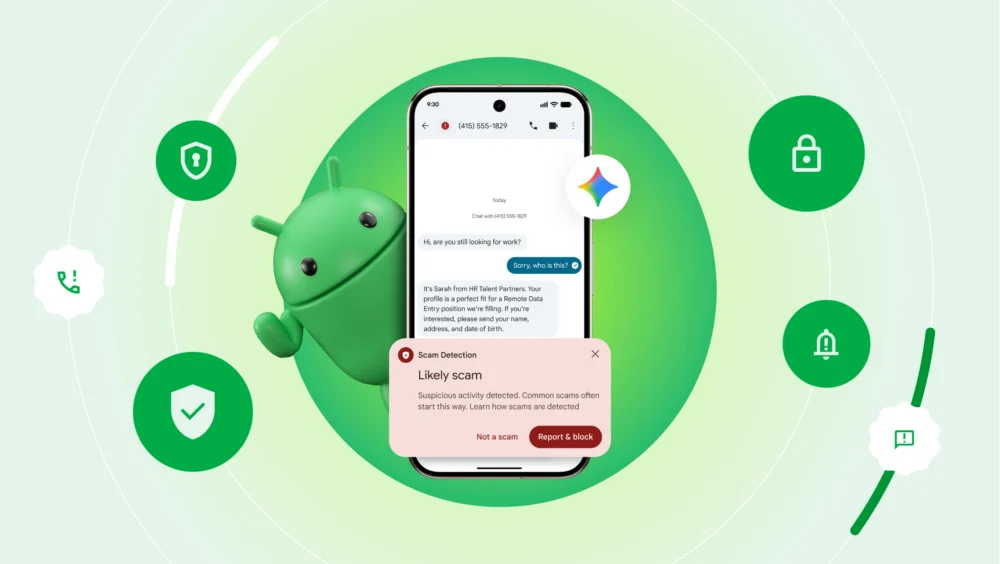
Boston, MA – June 9, 2026 – Google has ignited a significant leap forward in the capabilities of its Gemini AI integrated within the Android operating system, with a suite of updates designed to streamline user experience and bolster device security. The centerpiece of this announcement is a revolutionary new method for leveraging Gemini to autonomously handle complex, multi-step tasks. Imagine effortlessly ordering an Uber for your evening commute or arranging a food delivery for dinner without lifting more than a finger to initiate the process. These advanced automations are now joining other notable Gemini enhancements rolling out today, including a significantly expanded scam detection system for phone calls and a powerful evolution of the Circle to Search feature, now capable of identifying every single item visible on your phone’s screen.
The newly introduced automations, as explained by Google, empower users to effectively delegate their to-do lists to Gemini. This vision of a truly hands-off digital assistant is a significant stride toward making AI an indispensable part of daily life. However, in its current beta phase, the practical scope of these automations, while impressive, remains defined. Initially, the feature will focus its capabilities on a curated selection of apps within the crucial categories of food delivery, grocery shopping, and ridesharing services. This strategic rollout allows Google to refine the AI’s performance and user experience in controlled environments before broader application.

Access to these powerful new automations will initially be restricted to the dedicated Gemini app and will be available on a select range of high-end devices. This includes Google’s own Pixel 10 and Pixel 10 Pro models, alongside the cutting-edge Samsung Galaxy S26 series. The geographic rollout is also commencing with a focused approach, with the feature launching first in the United States and South Korea. This phased deployment strategy suggests a meticulous approach to ensuring stability and gathering user feedback from key markets before expanding to a global audience.
The potential for AI-powered automations to encounter unforeseen issues or errors is a critical consideration, and Google has implemented robust safeguards to mitigate these risks. A fundamental protection mechanism ensures that these automations cannot be initiated without an explicit command from the device’s owner, preventing any unauthorized or accidental task execution. As these automations spring into action, users will have the ability to monitor their progress in real-time, offering a transparent view of the AI’s operations. Crucially, users retain the power to halt any task should it deviate from expectations, make an apparent mistake, or become stuck. Google further emphasizes that these automations operate within a secure, virtualized environment on the user’s phone. This sandboxed approach limits Gemini’s access to only the specific applications required for the task at hand, preventing any unwanted intrusion into the broader data ecosystem of the device.
This advancement by Google directly taps into a burgeoning global trend: the increasing integration of AI into personal lives to automate a myriad of tasks. The landscape of AI assistants capable of performing complex actions is rapidly evolving. OpenAI, for instance, has empowered ChatGPT users to create custom tasks that can be executed on predefined schedules or at specific times. Furthermore, OpenAI has been at the forefront of developing AI agents capable of executing a diverse array of computer-based operations, ranging from navigating calendars and generating presentations to writing and running code. In a parallel development, Anthropic’s Cowork tool brings the sophisticated capabilities of its Claude AI to non-coding tasks, democratizing AI-powered automation for everyday file and task management for individuals without a technical background. The viral success of OpenClaw, a personal AI assistant, further underscores this trend, with its ability to manage everyday responsibilities such as sending emails, organizing calendars, and handling flight check-ins capturing widespread attention.

Beyond task automation, Google is also significantly bolstering the security features within its Gemini ecosystem. The Scam Detection feature for phone calls is receiving a substantial expansion, becoming available on Samsung Galaxy S26 series devices in the United States. This feature, already a trusted guardian for Pixel phone users across the U.S., Australia, Canada, India, Ireland, and the U.K., now extends its protective reach to a wider user base. Further enhancing its security prowess, Google is leveraging its on-device Gemini model to proactively detect scam texts. This intelligent detection is rolling out to Pixel 10 series devices in the U.S., Canada, and the U.K., with an impending expansion to the Galaxy S26 series phones. This proactive approach to identifying and flagging potential scams is a critical step in safeguarding users from increasingly sophisticated fraudulent activities.
The final major enhancement unveiled today is a significant upgrade to Google’s Circle to Search functionality. Previously, this intuitive feature, which allows users to initiate searches using simple gestures like scribbling or circling elements on their screen, was primarily focused on identifying single objects. Now, Circle to Search has evolved to encompass the entirety of what is visible on the phone’s screen. This means users can effortlessly search for every item of clothing and accessory within a stylish outfit they admire, or gain a comprehensive understanding of a collection of items and their related topics that appear together on the display. This expanded capability transforms Circle to Search from a discrete object identifier into a powerful contextual search tool, offering richer insights and more efficient information retrieval.
Google has been meticulously cultivating its Gemini integration within the Android ecosystem, consistently releasing updates through both major operating system upgrades and targeted enhancements for its flagship Pixel devices via its celebrated "Pixel Drops" initiative. This strategic approach ensures that users benefit from the latest AI advancements in a timely and integrated manner. Meanwhile, the competitive landscape is marked by different trajectories. Apple, for instance, has reportedly faced significant hurdles in delivering a comprehensive suite of AI features, including a much-anticipated AI-powered Siri. The launch of this feature has reportedly been postponed multiple times, now slated for a later release this year, highlighting the complex challenges involved in developing and deploying advanced AI capabilities.

The consistent and ambitious rollout of Gemini updates by Google signals a clear commitment to establishing AI as a foundational element of the Android experience. The newly introduced multi-step task automations, coupled with enhanced scam detection and the expanded Circle to Search, represent a significant evolution in how users interact with their mobile devices. By empowering users to delegate complex tasks and providing more robust security measures, Google is not only enhancing convenience but also fostering a more secure and intuitive digital environment. The ongoing development and iterative improvements to Gemini suggest a future where artificial intelligence seamlessly integrates into the fabric of our daily lives, becoming an indispensable partner in both productivity and safety. The extended capabilities and careful rollout strategy indicate Google’s intent to not just introduce new features, but to ensure they are reliable, secure, and truly beneficial to its vast user base. The company’s strategic partnerships with device manufacturers like Samsung further underscore its ambition to bring these advanced AI capabilities to a wide array of Android users, solidifying Gemini’s position as a leading AI assistant in the mobile computing space. As these features mature and expand, the lines between human intent and AI execution will continue to blur, paving the way for unprecedented levels of personal computing efficiency and a more intelligent, responsive mobile future.