
 By Rifan Muazin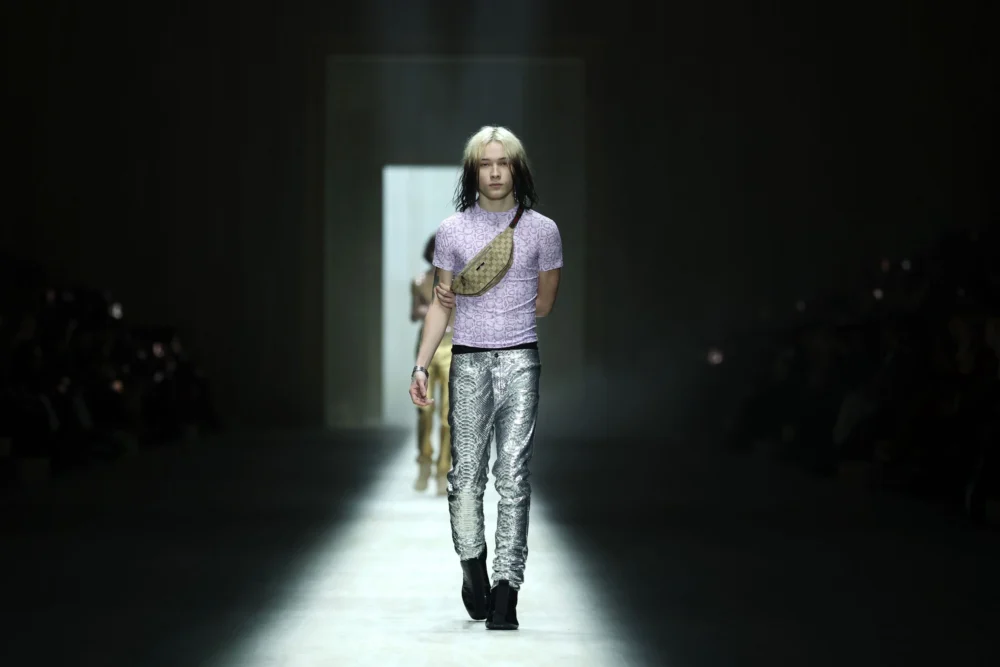
The fashion landscape of Milan has been jolted by a polarizing, hyper-modern movement that critics and enthusiasts are already calling "Guccimaxxing." This emerging trend, characterized by a visceral blend of muscle-bound silhouettes, low-slung skinny jeans, and fur-lined slippers, made its definitive debut during the most anticipated event of Milan Fashion Week: Demna’s inaugural runway show as the creative director of Gucci. Adherents of this new aesthetic move with a calculated "fuck-you" strut, their eyes often obscured by goth-inspired makeup smudges, embracing a wardrobe that fluctuates between daytime fanny packs and nocturnal sequins. At its core, Guccimaxxing is an exercise in increasing one’s personal "flirtiness and fearlessness," a stylistic philosophy that leans heavily into the brand’s hedonistic heyday of the 1990s under Tom Ford while simultaneously capturing the chaotic energy of the 2020s internet subculture.

The term itself, though not used by Demna backstage, reflects a deep-seated connection to contemporary digital parlance—specifically "looksmaxxing," a community-driven obsession with self-improvement and physical attractiveness. However, Demna’s version is less about self-optimization and more about a "vibe shift" that prioritizes attitude over perfection. To cement this new chapter, the designer tapped into the "clout-drenched" corners of the internet, featuring underground rappers like Fakemink, Nettspend, and EsDeeKid as both muses and runway participants. This strategy marks a radical departure from the previous era, signaling Gucci’s intent to reclaim its position at the center of the global cultural conversation.
Demna’s appointment to the helm of Gucci last year came with a high-stakes mandate: to rescue the iconic Italian house from a significant commercial tailspin. Since the departure of Alessandro Michele in 2022, Gucci’s financial performance has been under intense scrutiny. Revenue plummeted from a peak of approximately $12 billion to around $7 billion, a decline that has significantly weighed down the fortunes of its parent company, Kering. Under Michele, Gucci became synonymous with a rococo, eccentric, and genderless vision that dominated the late 2010s. While that aesthetic was revolutionary for its time, it eventually reached a point of saturation. Kering’s leadership, led by François-Henri Pinault, clearly decided that the brand needed a designer capable of generating the kind of viral, high-velocity desire that Demna had perfected during his tenure at Balenciaga.

Despite skepticism from those who pigeonhole Demna as a mere "streetwear designer" or a "provocateur," his debut show, titled "Primavera," proved his ability to wrestle fashion back into the mainstream spotlight. The spectacle took place inside the Palazzo delle Scintille, a hangar-sized convention hall transformed by Berlin-based architect and long-time collaborator Niklas Bildstein Zaar into a museum-like sanctuary. The venue was clad in acres of ultra-thin travertine, creating an atmosphere of permanent grandeur despite its temporary nature. The space was further dramatized by a dozen monumental 3D-scanned replicas of ancient Greco-Roman statues borrowed from the Uffizi Museum in Florence and the Museo Archeologico Nazionale di Napoli. These towering figures, with their idealized physiques, loomed over a front row that included celebrities like Steve Lacy and Demi Moore, setting the stage for a collection that was obsessively focused on the human body.
The connection to the Uffizi was not merely aesthetic; it was a nod to Gucci’s spiritual home in Florence. Demna recounted an overwhelming emotional epiphany he experienced while viewing Botticelli’s Primavera at the museum, which led him to center the entire collection around the concept of physical presence. However, the bodies he chose to highlight were a far cry from Renaissance ideals. The runway featured models who could only be described as "Gigachads"—men with enormous trapezoid muscles and biceps that strained against skin-tight compression tees. One such model, a running back for the University of Calgary, personified this blunt statement of hyper-masculinity. Backstage, Demna explained this shift as a personal evolution: "For 10 years I tried to impress myself that I’m a smart designer. And at Gucci, I realized that I can actually create from an emotional standpoint rather than intellectual standpoint."

This "emotional" approach resulted in a collection that felt like a series of high-octane accessories to a swaggerful vibe. Many models acted as exaggerated versions of themselves; Fakemink and Nettspend hit the catwalk in skater-like skinny jeans and monogrammed fanny packs, with Fakemink even stopping mid-runway to lazily scroll through his phone—a meta-commentary on the attention economy. Demna defended the inclusion of these underground figures, stating that cultural relevance always originates in the "underground" rather than the mainstream, even for a global powerhouse like Gucci. By integrating these subcultural icons, Demna is attempting to bridge the gap between high-fashion exclusivity and the raw energy of the digital age.
The silhouettes presented were a stark reversal of the voluminous, concealing shapes Demna became known for at Balenciaga. Instead, the new Gucci is body-conscious, slinky, and unabashedly sexy. The collection featured some of the most refined tailoring of Demna’s career—suits with a fluid drape and a liquidy sheen that seemed to move with the body’s rhythm. This was followed by a series of barefoot models with gymnast-like physiques wearing clingy, sequined pajama sets. The finale brought the vision full circle with the appearance of Kate Moss, the quintessential muse of the Tom Ford era. Moss prowled the catwalk in a shimmering gown with a plunging back, revealing a bedazzled, monogrammed G-string—a direct homage to the provocative, "minx-y" Gucci of the 1990s.

This return to "sex" as a primary design driver reflects broader cultural shifts, including the rise of "looksmaxxing" and the widespread impact of GLP-1 medications like Ozempic on public perceptions of the body. Demna admitted that his own relationship with his body and his desire to feel "sexy and attractive" influenced the collection. Designing these pieces felt "liberating" for him, marking a transition from the masked, anonymous persona he often projected in the past to a more confident, visible creative force. For the first time in years, he came out for a triumphant bow, a gesture of self-assurance that signaled he is "falling in love" with the role.
As with any Demna project, the online reaction has been fiercely polarized. Some critics have hailed it as a necessary shock to the system, a bold reclamation of Gucci’s DNA that combines heritage with modern-day viral marketing. Others have dismissed it as "brain-rot" fashion, questioning the longevity of a brand built on internet memes and underground rappers. However, for a brand that has seen its cultural and financial capital dwindle, being the subject of intense, polarized debate is arguably the best possible outcome. In the luxury market, indifference is the only true failure.

The "Primavera" show was more than just a collection; it was a bet that Gucci cannot be redefined simply by producing "bankable product." Instead, Demna is betting on the generation of desire through hardcore attitude. By blending the high-art classicism of the Uffizi with the low-brow grit of underground rap, he has created a new dialect for the brand. Whether this "Guccimaxxing" movement will translate into the billions of dollars Kering expects remains to be seen, but for now, the energy in Milan has shifted. The "eccentric librarian" of the Michele years has been replaced by a "fearless flirt" who isn’t afraid to show some skin, scroll on a phone, or walk barefoot through a hall of marble giants. As the designer himself put it to the press in the post-show chaos: "I hope I made you feel Gucci today. The energy, the passion, the fun, the sexy." For better or worse, the "Gucci vibe shift" is officially here.