
 By admin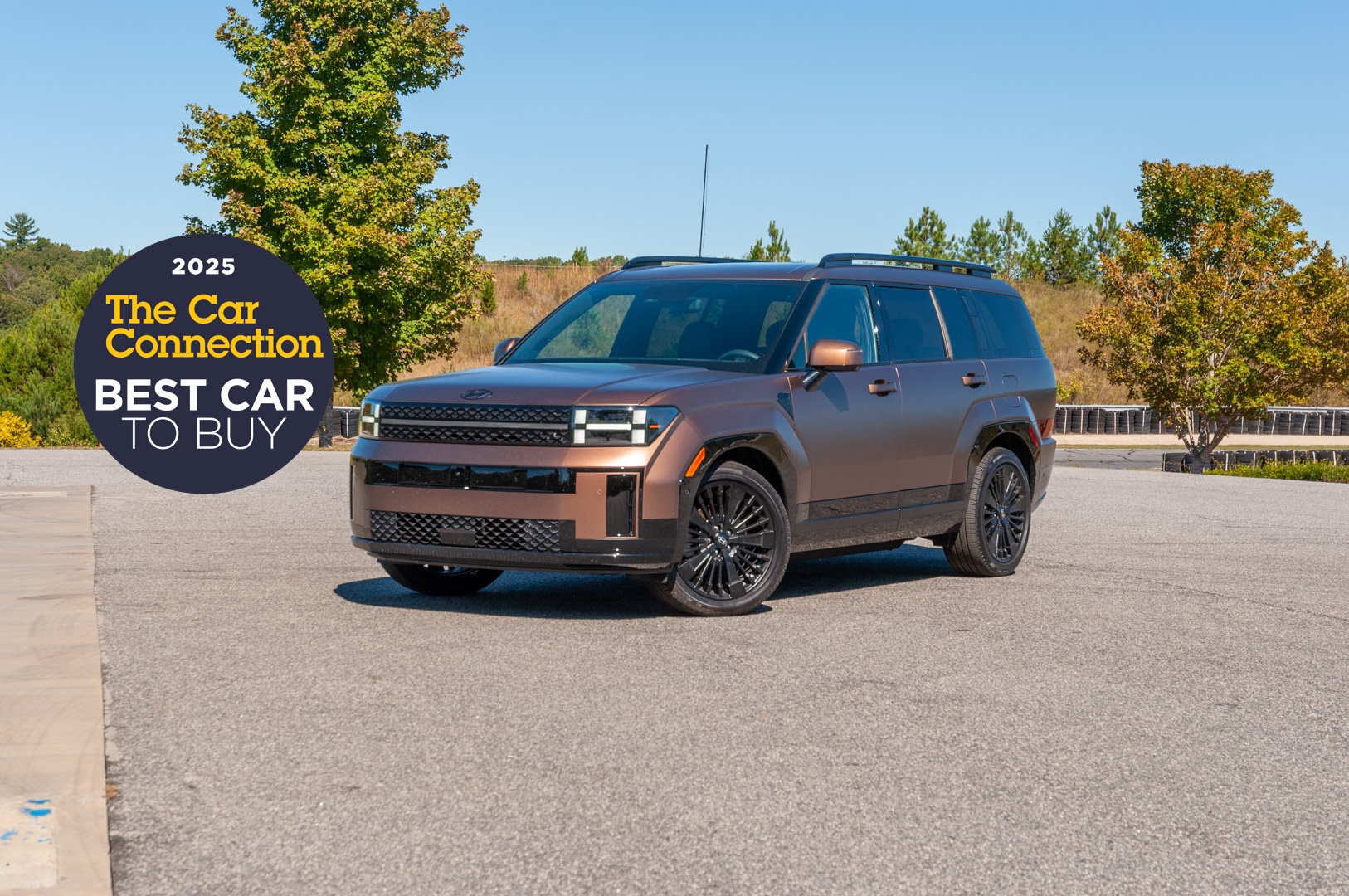
This accolade comes after an exhaustive evaluation process where The Car Connection’s team of automotive experts rigorously tested well over a hundred new vehicles introduced to the market. Each year, contenders are judged on a comprehensive set of criteria including comfort, efficiency, refinement, performance, and distinctive style, all aimed at identifying vehicles that truly elevate the ownership experience and redefine expectations within their segments. The 2025 Hyundai Santa Fe Hybrid not only met these high standards but significantly exceeded them, outshining a highly competitive field that included other strong contenders like the Chevrolet Equinox EV and the Subaru Forester. Its victory underscores Hyundai’s relentless pursuit of innovation and its ability to deliver vehicles that resonate deeply with modern drivers’ diverse needs.
The Santa Fe’s journey to this prestigious award is particularly noteworthy given its recent redesign. Introduced as a completely new model for the 2024 model year, it narrowly missed the eligibility window for last year’s competition. However, this delay only served to amplify anticipation, allowing the Santa Fe Hybrid to burst onto the scene in 2025 with an undeniable impact. Its dramatic transformation, both inside and out, represents a bold departure from its predecessor. While the previous generation was lauded for its pleasing contours and a surprising degree of upscale appointments at its higher trims, the new Santa Fe embraces an entirely different design philosophy.

The most striking aspect of the 2025 Santa Fe Hybrid is undoubtedly its exterior styling. Hyundai designers have consciously moved away from the sleek, organic lines prevalent in many modern crossovers, opting instead for a "raffish, angular charm" that immediately commands attention. This blocky, almost monolithic aesthetic draws clear parallels to iconic off-road vehicles like the Land Rover Defender and even the nascent electric adventurers from Rivian, but crucially, it does so at a price point tens of thousands of dollars less. This design choice is not merely superficial; it signals a fundamental shift in the Santa Fe’s persona, projecting an image of capability, ruggedness, and readiness for adventure, while still being perfectly suited for urban and suburban life. Its lengthy profile and pronounced, boxy silhouette stand in stark contrast to the often-homogenized designs of other large SUVs that frequently sacrifice visual distinctiveness in the name of perceived utility. The Santa Fe proves that utility and pizzazz are not mutually exclusive, delivering a vehicle that is both practical and undeniably stylish. This design language, often dubbed "H-motif" due to the distinctive H-shaped daytime running lights and taillights, creates a cohesive and instantly recognizable identity that sets it apart in a crowded marketplace.
Step inside, and the narrative of thoughtful design and enhanced utility continues to unfold with even greater conviction. The interior of the Santa Fe Hybrid is a masterclass in modern ergonomics and technological integration. Dominating the dashboard are twin 12.3-inch displays, seamlessly integrated to form a panoramic digital interface. One serves as a vibrant digital instrument cluster, providing critical driving information with crisp clarity, while the other is a responsive touchscreen that acts as the command center for the infotainment system. This system is a delight to use, offering intuitive navigation and seamless connectivity through wireless Apple CarPlay and Android Auto – a feature that eliminates cable clutter and enhances convenience. Crucially, Hyundai has resisted the industry trend of burying essential climate controls within layers of digital menus. Instead, a well-organized array of physical buttons and dials for climate functions sits directly below the main screen. This deliberate choice significantly enhances usability, allowing drivers to adjust temperature and fan speed without diverting their attention from the road, a testament to Hyundai’s commitment to driver safety and user-centric design. Furthermore, the interior design adheres to the "Open for Anything" concept, emphasizing expansive space, versatile storage solutions, and an overall sense of airiness that contributes to passenger comfort, particularly on longer journeys.
While the Santa Fe Hybrid’s striking wrapper is a major draw, its powertrain truly solidifies its position as a segment leader. The decision to champion the hybrid variant over the standard 277-hp turbo-4 engine is rooted in a pragmatic understanding of consumer priorities, particularly in an era of fluctuating fuel prices and increasing environmental consciousness. The hybrid system, a sophisticated blend of traditional combustion and electric propulsion, delivers an impressive 231 horsepower and a robust 271 lb-ft of torque. This power is generated by a highly efficient 1.6-liter turbocharged inline-four engine, paired with a smooth-shifting 6-speed automatic transmission. Complementing the internal combustion engine is a potent 47.7-kW electric motor and a compact yet effective 1.5-kWh battery pack. This synergistic combination provides several distinct advantages. The electric motor’s instant torque delivery grants the three-row SUV a noticeably quicker step off the line and more responsive power on tap compared to the non-hybrid turbo-4. This translates into a more engaging and confident driving experience, whether navigating city traffic or merging onto highways.

The integration of the hybrid components with the legacy gasoline pieces is remarkably smooth and refined. Transitions between electric-only, hybrid, and gasoline-only power modes are virtually imperceptible, a testament to Hyundai’s advanced powertrain management systems. For those seeking a more spirited drive, the Santa Fe Hybrid offers a Sport mode that sharpens throttle response and optimizes transmission shift points, allowing drivers to fully exploit the combined power output. Paddle-controlled shifts further enhance driver engagement, providing manual control over the gears. Beyond performance, the hybrid system excels in efficiency. It intelligently recaptures otherwise lost braking energy through four distinct regenerative-braking modes. These modes allow drivers to tailor the energy recovery to their preference, ranging from subtle deceleration that recharges the battery to more aggressive settings that simulate engine braking, allowing the hybrid to coast efficiently with battery power readily available to maintain momentum. This advanced system not only boosts fuel economy but also reduces wear on conventional brake components.
The culmination of this sophisticated powertrain and aerodynamic design is an impressive EPA-estimated fuel economy rating of up to 36 mpg combined. This figure positions the Santa Fe Hybrid at the forefront of the three-row SUV segment, offering a compelling alternative to gas-guzzling rivals and even outperforming some smaller, less capable vehicles. For families and commuters, this translates directly into significant savings at the pump and a reduced carbon footprint, aligning with growing desires for more sustainable transportation options.
Beyond its mechanical prowess and fuel efficiency, the Santa Fe Hybrid truly shines in its interior design and passenger accommodation. The "utility in SUV" promise is delivered in spades, offering a glowed-up cabin that comfortably seats up to seven people. The first two rows boast terrific space and comfort, with ample head, leg, and shoulder room for adults. Even the third row, often an afterthought in many crossovers, is surprisingly accommodating for children and even average-sized adults on shorter journeys, thanks to thoughtful packaging and clever seat design. Access to the third row is facilitated by wide door openings and easily folding second-row seats.

The interior trim levels offer a spectrum of luxury. While the base models provide a robust and functional cabin with durable materials, the top-tier Calligraphy trim elevates the experience to truly luxurious heights. Here, occupants are enveloped in premium leather upholstery, meticulously stitched and soft to the touch. The Calligraphy trim also introduces an array of creature comforts designed to enhance long-distance travel, including exceptionally good adaptive cruise control that maintains a safe distance from vehicles ahead and assists with lane keeping, as well as heated and cooled seats for both the driver and front passenger, ensuring comfort in any climate. Practicality extends to thoughtful storage solutions throughout the cabin, including a unique dual-sided center console that can be accessed from both the front and rear, numerous USB-C ports, and wireless charging pads, catering to the connectivity needs of modern families.
Safety, a paramount concern for any family vehicle, is another area where the 2025 Santa Fe Hybrid excels. While official crash test ratings from organizations like the National Highway Traffic Safety Administration (NHTSA) and the Insurance Institute for Highway Safety (IIHS) are typically released later in a model’s lifecycle, the Santa Fe’s robust construction and comprehensive suite of standard safety features suggest it will perform exceptionally well. Every Santa Fe Hybrid model comes equipped with Hyundai’s advanced SmartSense suite of driver-assistance technologies. This includes critical features such as automatic emergency braking, which can detect potential collisions and apply the brakes autonomously, and blind-spot monitors, which provide visual and audible warnings of vehicles in the driver’s blind spots. Moving up to the upper trim levels unlocks even more sophisticated driver assistance systems, such as Highway Driving Assist (HDA), which combines adaptive cruise control with lane-centering capabilities to provide semi-autonomous driving assistance on highways, reducing driver fatigue on long journeys. Other available features include rear cross-traffic alert, parking sensors, and a surround-view camera system, all working in concert to provide a secure and confident driving environment for occupants and peace of mind for parents.
Perhaps one of the most compelling arguments for the 2025 Hyundai Santa Fe Hybrid is its exceptional value proposition. Despite the significant technological advancements and fuel economy benefits, the hybrid model commands only a modest $500 premium over a similarly equipped gasoline-only model. This minimal price difference makes the hybrid a virtually undeniable choice for savvy consumers. With a recommended starting price of $38,615 for the well-appointed Santa Fe Hybrid SEL, climbing to $48,865 for the opulent Calligraphy trim, the vehicle offers a wide range of options to suit various budgets and preferences. The immediate and ongoing savings from improved gas mileage quickly offset the slight initial cost difference, making the hybrid variant an economically sound investment that no driver should refuse.

In the broader context of Hyundai’s electrification strategy, the Santa Fe Hybrid also serves a crucial role. While the company is actively pushing towards a fully electric future with upcoming models like the Ioniq 9 – an eagerly anticipated electric SUV that shares its platform with the Kia EV9, The Car Connection’s Best Car To Buy 2024 – the Santa Fe Hybrid offers a perfect transitional solution. For a significant segment of the population not yet ready to fully embrace the EV leap due to range anxiety, charging infrastructure concerns, or budget constraints, the Santa Fe Hybrid presents an eminent and practical choice. It delivers a substantial boost in fuel efficiency and a reduced environmental impact without requiring any changes to fueling habits or lifestyle.
The 2025 Hyundai Santa Fe Hybrid stands as a testament to Hyundai’s strategic vision and engineering prowess. It masterfully combines an attention-grabbing design with practical utility, a highly efficient and refined powertrain, advanced safety features, and exceptional value. Its victory as The Car Connection’s Best Car To Buy 2025 is not just an award; it’s a clear declaration that Hyundai has created a vehicle that not only meets but anticipates the evolving demands of the modern family SUV market. It’s a vehicle that pushes boundaries, sets new standards, and offers a glimpse into the future of practical, stylish, and sustainable family transportation.
For those interested in exploring the pinnacle of performance and green automotive innovations, The Car Connection’s sister sites, Motor Authority and Green Car Reports, provide in-depth analyses of their respective category winners.