
 By admin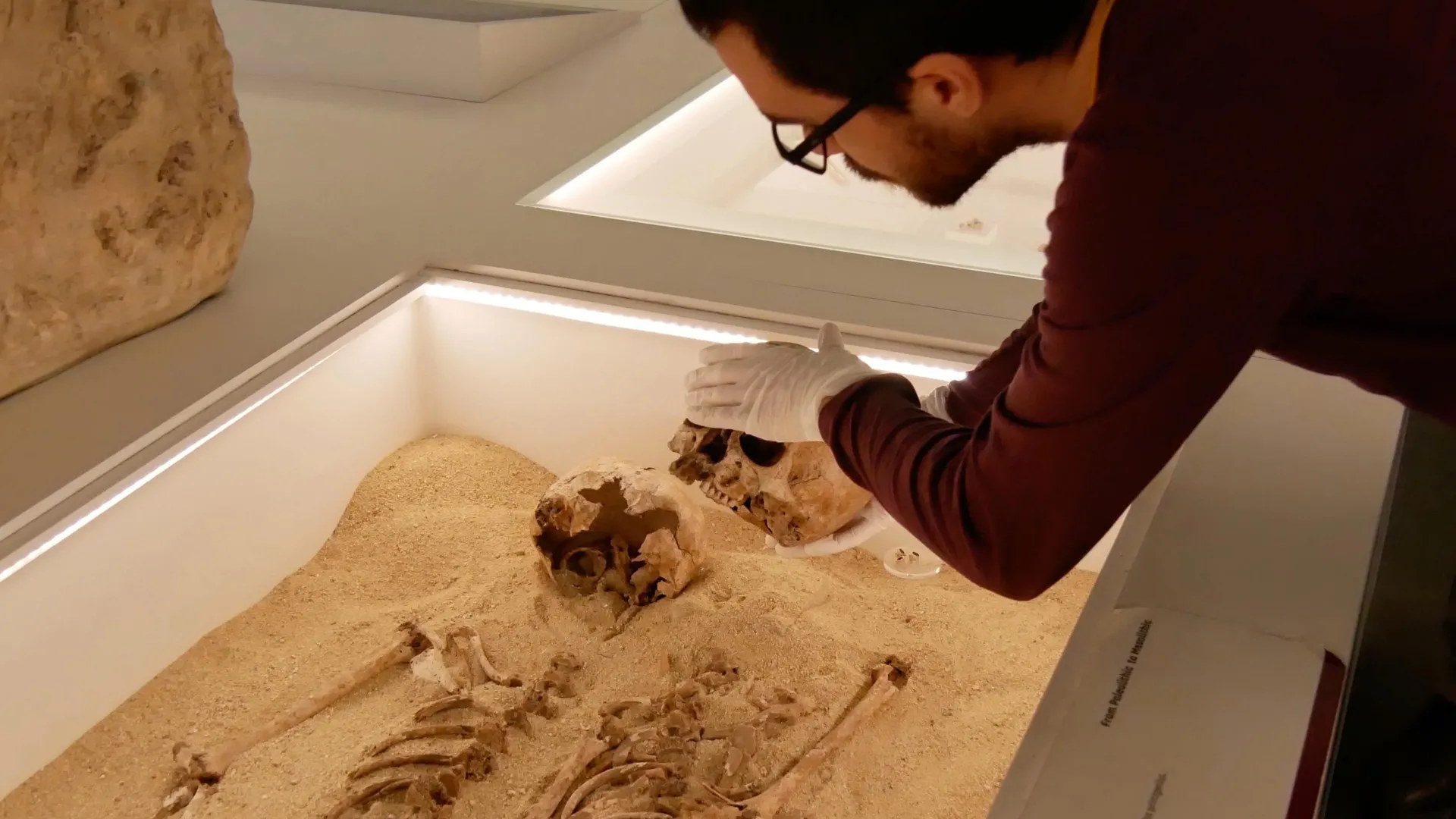
An international team, spearheaded by researchers from the University of Vienna and Liège University Hospital Centre, has achieved a groundbreaking feat, uncovering the precise genetic changes linked to a rare inherited growth disorder in two individuals who lived over 12,000 years ago during the Upper Paleolithic era. This pioneering research, published in the esteemed New England Journal of Medicine, represents a monumental leap in paleogenomics, demonstrating its capacity not only to trace ancient population histories but also to pinpoint and diagnose specific genetic diseases in prehistoric humans. By meticulously combining cutting-edge ancient DNA (aDNA) analysis with modern clinical genetics, the scientists were able to conclusively diagnose acromesomelic dysplasia, Maroteaux type, in two individuals found buried together in the Grotta del Romito in southern Italy.
The work builds upon a fresh and exhaustive investigation of a famous Upper Paleolithic burial site, initially discovered in 1963 at Grotta del Romito in Calabria, southern Italy. For decades, this particular site has captivated and perplexed scientists due to the unusual skeletal traits exhibited by the two interred individuals and the distinct manner in which they were laid to rest. The enduring questions revolved around the precise relationship between the pair and whether a shared medical condition could account for their notably short stature, an anomaly in a period where survival often depended on physical robustness.
The Grotta del Romito: A Window into the Upper Paleolithic
The Upper Paleolithic period, roughly spanning from 50,000 to 10,000 years ago, was a time of significant cultural and technological advancement for Homo sapiens. It saw the proliferation of sophisticated tool technologies, the emergence of complex symbolic behaviors including cave art and personal adornments, and increasingly elaborate burial practices. Grotta del Romito, nestled in the mountainous region of southern Italy, is one of Europe’s most important Paleolithic sites, yielding rich archaeological evidence of human occupation, including tools, animal remains, and several human burials. The discovery of multiple burials at the site, particularly the double burial in question, offered rare glimpses into the social structures and perhaps even emotional lives of these early communities.
The 1963 excavation unearthed a deeply poignant scene: two individuals, henceforth designated "Romito 1" and "Romito 2," carefully placed in an embrace. This posture alone suggested a profound connection, sparking immediate interest and hypotheses among archaeologists and physical anthropologists. Romito 2, a younger individual, was positioned resting in the arms of Romito 1, who was believed to be an adult. Initial osteological examinations revealed that Romito 2 exhibited significantly shortened limbs and an overall stature of approximately 110 cm (3’7"), a height strikingly consistent with a severe skeletal disorder. Romito 1 was also shorter than the average for the time, measuring around 145 cm (4’9"). The absence of any signs of injury or violent death in either skeleton further deepened the mystery, leading researchers to speculate about congenital conditions.
Over the years, numerous experts engaged in spirited debates regarding the sex of each individual, their precise familial relationship, and whether a single medical condition could explain the stature of both. Traditional methods of sexing and determining kinship from skeletal remains, while advanced for their time, often faced limitations, especially with subadults or individuals with atypical skeletal development. These debates highlighted the need for more precise analytical tools, which eventually emerged with the advent of molecular archaeology.
The Revolution of Paleogenomics: Unlocking Ancient Secrets
The breakthrough in solving this long-standing enigma came with the application of paleogenomics, a rapidly evolving field that allows scientists to extract and analyze genetic material from ancient remains. The researchers specifically targeted the petrous portion of the temporal bone in both skeletons. This dense, pyramid-shaped bone, located at the base of the skull, is renowned among paleogeneticists for its exceptional ability to preserve ancient DNA, often yielding significantly higher quantities and better quality genetic material compared to other skeletal elements like teeth or long bones. Its compact structure protects the delicate DNA molecules from environmental degradation over millennia.
Once the ancient DNA was meticulously extracted in sterile, purpose-built clean rooms to prevent contamination, it underwent sophisticated sequencing. The genetic data was then compared against vast modern medical databases and known gene functions. This interdisciplinary approach, a hallmark of modern scientific discovery, brought together diverse expertise: paleogenomics specialists from the University of Vienna, clinical geneticists from the Liège University Hospital Centre, physical anthropologists, and archaeologists from institutions in Italy, Portugal, and Belgium. This collaborative effort was crucial, as deciphering the meaning of ancient genetic variants requires a deep understanding of human biology, disease mechanisms, and the intricate pathways of bone development.
Earliest Known Genetic Diagnosis in Humans: A Mother-Daughter Revelation
The genetic testing delivered astounding clarity, resolving decades of speculation. Firstly, the ancient DNA conclusively revealed that both individuals were female. This corrected previous assumptions about Romito 2 being male. More significantly, the genetic markers indicated that they were first-degree relatives, most likely a mother and daughter, a discovery that profoundly recontextualized the emotional embrace of their burial.
The genetic analysis pinpointed the exact cause of their unusual statures. In Romito 2, the individual with severe short stature and significantly shortened limbs, researchers discovered a homozygous mutation in the NPR2 gene. The NPR2 gene encodes natriuretic peptide receptor 2, a crucial protein involved in the regulation of bone growth, particularly endochondral ossification, the process by which cartilage is replaced by bone. A homozygous mutation means that Romito 2 inherited two altered copies of the NPR2 gene, one from each parent. This finding provided irrefutable genetic evidence for acromesomelic dysplasia, Maroteaux type—a very rare inherited disorder characterized by severe short stature, disproportionately short limbs, and distinctive skeletal abnormalities. This diagnosis, made across 12 millennia, represents the earliest definitive genetic diagnosis of a human disease in the archaeological record.
Romito 1, the presumed mother, carried a single altered copy of the same NPR2 gene. This genetic pattern, known as a heterozygous mutation, is associated with a much milder form of short stature. Individuals with one functional copy of the NPR2 gene can still produce some normal protein, mitigating the severity of the condition. This elegantly explained the observed difference in height between the two women and provided a compelling genetic narrative for their familial connection and shared genetic predisposition. The discovery of this specific genetic inheritance pattern in such ancient remains offers an unparalleled opportunity to study the natural history and phenotypic expression of rare genetic disorders over vast spans of human history.
Rare Genetic Diseases Deep in Human History: Bridging the Past and Present
The implications of these findings extend far beyond the Grotta del Romito. As Ron Pinhasi of the University of Vienna, who co-led the study, emphasized: "By applying ancient DNA analysis, we can now identify specific mutations in prehistoric individuals. This helps establish how far back rare genetic conditions existed and may also uncover previously unknown variants." This capability transforms paleogenomics into a powerful tool for understanding the evolutionary history of human health and disease. It demonstrates that rare genetic diseases are not merely modern afflictions but have been an integral, albeit often hidden, part of the human experience throughout our evolutionary journey.
Daniel Fernandes of the University of Coimbra, the first author of the study, highlighted the familial aspect: "Identifying both individuals as female and closely related turns this burial into a familial genetic case. The older woman’s milder short stature likely reflects a heterozygous mutation, showing how the same gene affected members of a prehistoric family differently." This insight provides a unique, ancient case study of Mendelian inheritance, illustrating how genetic traits, both dominant and recessive, manifested within a family unit in a prehistoric context. It offers a tangible example of genetic variation and its phenotypic consequences, preserved for millennia.
Adrian Daly of Liège University Hospital Centre, another co-leader of the study, reinforced this perspective: "Rare genetic diseases are not a modern phenomenon but have been present throughout human history. Understanding their history may help recognizing such conditions today." By tracing the origins and ancient prevalence of such conditions, researchers can gain valuable insights into their genetic landscape, potential founder effects, and how they might have impacted ancient populations. This knowledge could even inform modern clinical genetics, aiding in the diagnosis of complex or newly identified genetic disorders by providing a deeper historical context. The study also opens avenues for exploring how different environmental pressures or cultural practices in the past might have interacted with genetic predispositions to disease.
Evidence of Social Care and Compassion in the Ice Age
Perhaps one of the most profound and moving aspects of this discovery is what it reveals about the social fabric of Upper Paleolithic society. Despite facing the severe physical challenges posed by acromesomelic dysplasia, Romito 2 lived into adolescence or even early adulthood. Her condition would have significantly impacted her mobility, dexterity, and overall ability to participate in the physically demanding life of a hunter-gatherer community. In an environment where survival often hinged on physical prowess and self-sufficiency, her prolonged existence strongly suggests that she received consistent and dedicated support from her community.
Alfredo Coppa of Sapienza University of Rome, who also co-led the study, commented: "We believe her survival would have required sustained support from her group, including help with food and mobility in a challenging environment." This implies a level of social complexity, empathy, and altruism that challenges simplistic views of "primitive" societies. The care provided to Romito 2 would have necessitated the reallocation of resources and labor, tasks typically undertaken by able-bodied individuals. This could have involved specialized food preparation, assistance with movement across rugged terrain, protection from environmental hazards or predators, and perhaps even the creation of adapted tools or living spaces.
The burial itself, with Romito 2 embraced by her mother, further underscores this deep bond and commitment. It speaks volumes about the emotional lives of these early humans and their capacity for compassion, transcending mere survival instincts. Such archaeological evidence of care for individuals with severe disabilities in prehistoric times is rare but incredibly significant, offering critical insights into the development of human social behaviors, ethics, and community cohesion. It aligns with other scattered findings from the Paleolithic that suggest early humans possessed a sophisticated understanding of their social responsibilities and a capacity for collective welfare.
Conclusion and Future Horizons
The study from Grotta del Romito stands as a landmark achievement, marking the earliest confirmed genetic diagnosis of a human disease and providing unprecedented insights into the life and social context of a prehistoric family. It unequivocally demonstrates the transformative power of paleogenomics when integrated with clinical genetics and traditional archaeology.
This research not only solved a 60-year-old archaeological mystery but also opened new avenues for understanding the deep history of human health. It confirms that genetic diseases are ancient phenomena, offering a unique perspective on their prevalence and evolution. More importantly, it provides compelling evidence of sophisticated social care and compassion within an Upper Paleolithic community, challenging preconceived notions about the "brutality" of prehistoric existence.
Looking ahead, the techniques pioneered in this study promise to unlock countless other secrets hidden within ancient remains. Future paleogenomic research will undoubtedly continue to reveal the genetic underpinnings of ancient diseases, human adaptations to changing environments, and the intricate co-evolutionary relationship between humans and pathogens. As our ability to recover and interpret ancient DNA continues to advance, the past will undoubtedly yield more extraordinary stories, enriching our understanding of what it means to be human, both genetically and socially, across the vast expanse of time.