
 By Rifan Muazin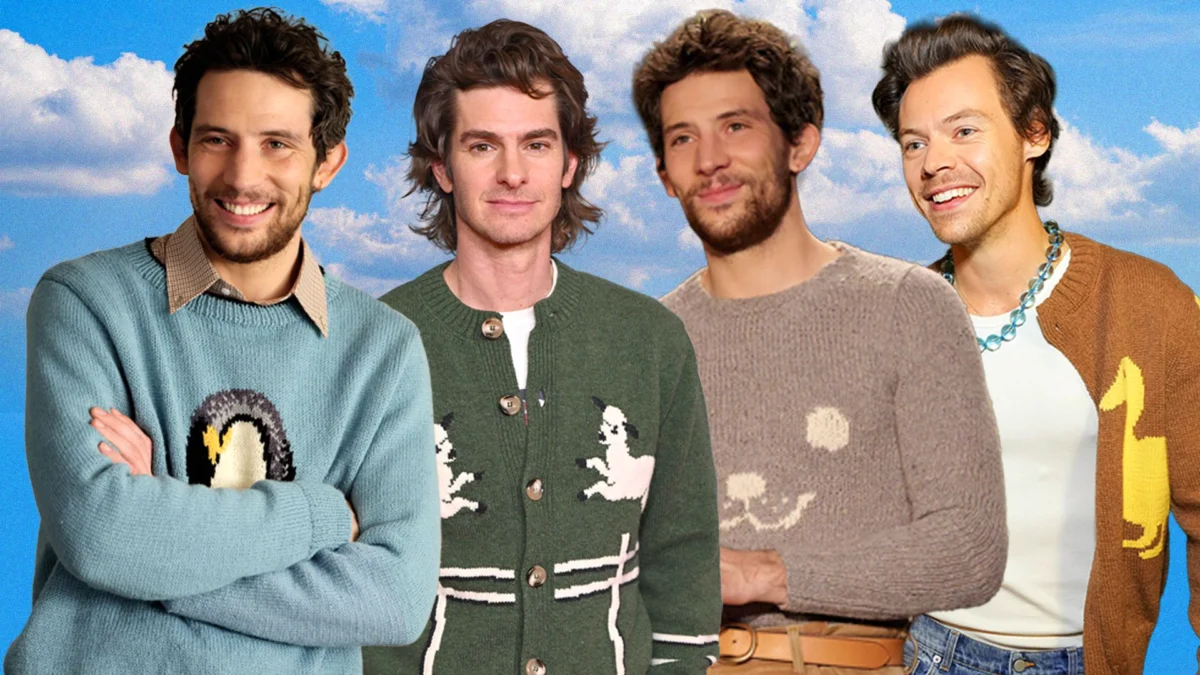
The catalyst for this recent conversation was Andrew Garfield, who recently appeared at a London screening for his new film, The Magic Faraway Tree. The choice of attire was far from accidental. Garfield arrived wearing a cardigan that was, by all reasonable definitions, purer than a Sunday afternoon spent picking organic apples with a saintly grandfather. The piece featured two knitted lambs mid-leap over a fence, set against a backdrop of lush, rolling green hills. It was a garment that didn’t just suggest a mood; it dictated a world-view. Garfield’s stylist, Warren Alfie Baker, noted that the objective was to find something "whimsical" to align with the fantastical, Enid Blyton-inspired tone of the actor’s latest project. They landed on S.S. Daley, the eponymous label of London designer Steven Stokey-Daley, who has carved out a niche by blending 1970s silhouettes with a touch of British folk horror—think The Wicker Man, but filtered through a lens of high-fashion tenderness.
This "cute" sweater trend is not an isolated incident but rather a cornerstone of a broader movement often referred to as "Cottagecore" or "Grandpa-chic." It represents a departure from the "sexy" menswear that has dominated runways recently—the sheer shirts, the skin-tight vests, and the hyper-masculine silhouettes. Instead, designers are leaning into the "hand-crafted" and the "sentimental." As Baker told GQ, there is an inherent joy in these pieces that is hard to ignore: "You can’t not love a cute sweater." This sentiment is being echoed by a vanguard of Hollywood’s most influential dressers.
Josh O’Connor, the Challengers star and a perennial muse for Jonathan Anderson at Loewe and JW Anderson, has become a poster boy for this aesthetic. During a Saturday Night Live appearance last December, O’Connor leaned heavily into the animalia theme. He donned a light brown knit featuring a smiling pet, followed by a penguin-adorned jumper sourced directly from the World Wildlife Fund (WWF). By wearing a piece associated with global conservation rather than a legacy luxury house, O’Connor signaled a shift toward fashion that prioritizes character and cause over raw status. This "animalia" trend serves as a bridge between high fashion and a sort of universal, childhood nostalgia.

To understand why this is happening now, one must look at the psychological state of the modern consumer. We are living in an era of "Dopamine Dressing," where color, texture, and playful imagery are used as a form of emotional regulation against a backdrop of global uncertainty. The "happy jumper" is a sartorial antidepressant. It rejects the stoicism of traditional menswear in favor of vulnerability and humor. When a man wears a sweater featuring a jumping lamb or a waddling penguin, he is signaling that he does not take himself—or the rigid expectations of masculinity—too seriously.
The high-fashion world has been quick to institutionalize this whimsy. At Bode, creative director Emily Adams Bode Aujla has essentially turned "the most expensive crafternoon on the planet" into a multi-million dollar business. Her collections are a masterclass in narrative textiles, often featuring scenes that look like they were pulled from a 1920s tapestry. Currently, the brand offers a chunky cream cardigan depicting a colorful huntsman and his dancing dogs—a piece that manages to be both incredibly sophisticated and utterly charming. Similarly, Junya Watanabe has experimented with the pastoral, knitting entire cottages complete with white picket fences into his garments. These are not merely clothes; they are wearable dioramas of a peaceful, idealized life.
Even the high street is following suit, though often with a more subtle approach. The resurgence of the "grandma cardigan"—plain, slightly oversized, and reminiscent of something one might wear while watching Songs of Praise—is everywhere. This trend owes a significant debt to Harry Styles, the singer-actor who has spent the last five years dismantling the boundaries of gendered clothing. In 2019, Styles famously wore a remix of the iconic "black sheep" knit once favored by Princess Diana. That original sweater, produced by Warm & Wonderful in the 1980s, is perhaps the ultimate ancestor of the modern "cute" sweater. Its recent reissue and subsequent popularity prove that the appetite for "chintzy" British irony has never been higher.
The rise of the "pastoral" in menswear also serves as a necessary foil to the "workwear" obsession that has gripped the industry for the last decade. While a significant portion of the male population is currently "cosplaying" as blue-collar workers in rugged Dickies jackets and Carhartt beanies, the "cottage-y" guys are moving in the opposite direction. They are embracing a fictional, cartoonish version of rural life—a world of dewy meadows, Morris dancing, and village fetes. This isn’t about the reality of farming or labor; it’s about the aesthetic of the bucolic. It is a form of escapism that feels fresher and more subversive than the hyper-masculine "rugged" look.

Styling these pieces is surprisingly straightforward, which adds to their appeal. Because the sweater is the "show-off" piece, the rest of the outfit should remain palatable and grounded. The standard formula involves pairing a novelty knit with classic blue jeans, a crisp white T-shirt, and "torpedo-shaped" sneakers or sturdy boots. For those looking to lean further into the "eccentric academic" look, a pair of loafers provides the perfect finishing touch. The goal is to look like you might spend your afternoon growing heirloom tomatoes on a windowsill or hosting a children’s television program, even if your actual reality involves a corporate office in a glass skyscraper.
The broader cultural impact of this trend cannot be understated. It reflects a maturing of the male wardrobe, where "style" is no longer synonymous with "looking tough." By embracing the "cute," men are reclaiming a sense of play that was previously reserved for womenswear or children’s clothing. It is a quiet rebellion against the "exhausting amount of sexy menswear" that has dominated the digital age. In a world of thirst traps and gym-honed silhouettes, there is something deeply radical about a man in a cardigan covered in lambs.
As we move further into the decade, expect this pastoral obsession to evolve. We are likely to see more collaborations between high-fashion houses and traditional craft organizations, as well as an increased focus on the sustainability of the wools used to create these pieces. The "cute" sweater is, at its heart, a celebration of the artisanal and the human. It is a rejection of the cold, impersonal nature of fast fashion and the digital world.
Ultimately, this quiet swell of "cute" is a tonic for the modern soul. It offers a sense of purity and invigoration that is hard to find elsewhere. Whether it’s Andrew Garfield’s jumping lambs or Josh O’Connor’s penguins, these garments provide a moment of levity in a serious world. They remind us that fashion should, above all else, be fun. And who knows? After a week of wearing some pastoral happiness, even the most cynical observer might find themselves waking up with a smile, ready to embrace the day with a newfound sense of whimsy. The "cottage-y" trend isn’t just a fleeting fad; it is a long-overdue invitation for men to soften their edges and find the joy in the everyday.