
 By Isnaini Azizah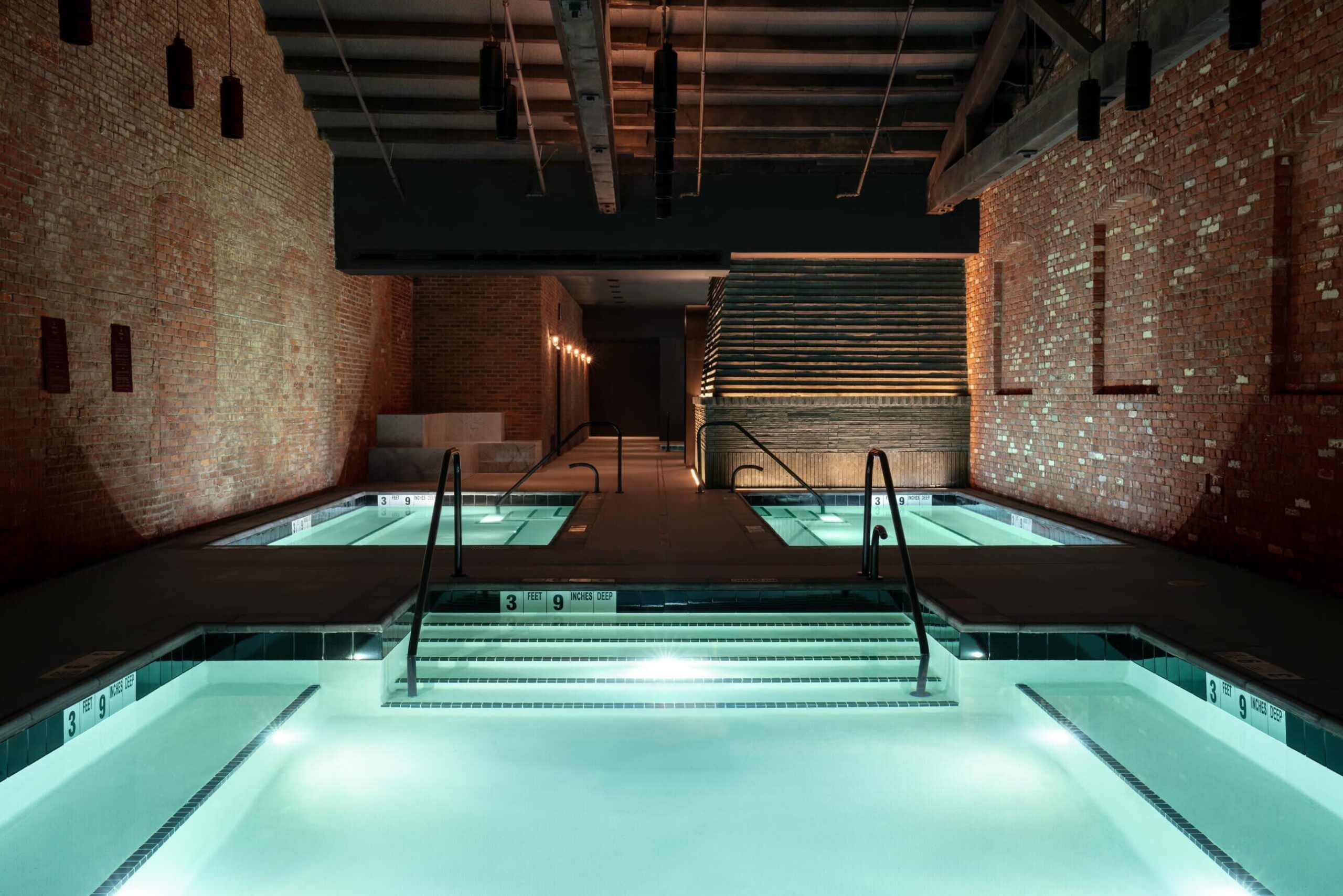
"Honestly, it kind of just feels like going to a spa together and spending an afternoon together," Guo told CNBC, reflecting on her shift from bars to saunas. "I think for me, it just feels much better rather than staying out late at night." Guo’s experience is far from isolated; she is part of a massive demographic wave of consumers who are deserting traditional social hubs in favor of "third spaces" that facilitate physical recovery and emotional connection. These spaces—defined as the environments between the "first place" (home) and the "second place" (work)—are no longer just coffee shops or libraries. They are becoming multi-million-dollar enterprises centered on cold plunges, infrared saunas, and guided meditation.
The financial data underscores the magnitude of this trend. Bathhouse, which launched its first location in a converted 1930s factory in Brooklyn in 2019, exclusively revealed to CNBC that it expects to reach approximately $120 million in run-rate revenue by the end of 2024. Despite the high capital expenditure required to build out massive thermal facilities, the company reports healthy margins and a "surplus of demand" that has fueled plans for seven additional locations through 2027. Similarly, the publicly traded fitness giant Life Time has seen its strategic pivot toward "premium wellness" pay off handsomely. After an initial period of investor skepticism regarding the company’s heavy spending on luxury amenities, Life Time’s stock has more than doubled since October 2023, signaling a Wall Street endorsement of wellness-as-an-experience.
The resurgence of the third space is rooted in a sociological concept first articulated by Ray Oldenburg in his 1989 book, The Great Good Place. Oldenburg argued that for a society to thrive, individuals need informal gathering places that are accessible, egalitarian, and distinct from the pressures of domestic or professional life. Historically, these roles were filled by the English pub, the French café, or the American general store. However, as Richard Kyte, a professor at Viterbo University and author of Finding Your Third Place, explains, these traditional anchors have been in steady decline for decades.
The pandemic acted as a powerful catalyst for this evolution. "During that time, all of a sudden, we were talking more about the cost of loneliness, the cost of social isolation," Kyte told CNBC. "It really came home to us during the pandemic that this was not healthy." The subsequent "loneliness epidemic" has been well-documented. According to Cigna’s 2025 "Loneliness in America" report, a staggering 67% of Gen Zers and 65% of millennials report feeling lonely. A 2024 Harvard survey echoed these findings, noting that 67% of adults suffer from social and emotional loneliness because they lack membership in meaningful groups.
In this vacuum of connection, wellness clubs have emerged as the new town squares. Unlike the digital "connections" offered by social media or the nascent companionship of AI chatbots, these physical spaces offer what Kyte calls "social fulfillment through interaction." For younger generations who have grown up in an increasingly digital-forward society, the tactile, sensory experience of a sauna or a communal bath provides a necessary "shock" to the routine. "Having a space to go to where it kind of shocks us out of our routine and complacency is really important," Guo noted, highlighting the psychological benefit of shared physical discomfort, such as a cold plunge, as a bonding mechanism.
Othership, founded by Harry Taylor along with his wife and friends, was built specifically to combat this modern isolation. With locations in Toronto and New York, Othership offers a tiered social experience: free-flow sessions for independent use, guided classes that alternate between extreme heat and cold, and "socials" that mimic the atmosphere of a nightclub without the presence of alcohol. Taylor believes the "vulnerability" required to sit in a 200-degree sauna or a 35-degree tub creates a shortcut to intimacy. "We understand that there’s a huge market for people to meet other people," Taylor told CNBC. "It has the capacity for people to come together and just be themselves, be vulnerable."

This vulnerability is being commodified at a premium. As Equinox chairman Harvey Spevak famously noted, "health is the new luxury." The Global Wellness Institute estimates that the global wellness market will reach nearly $10 trillion by 2030, driven by a consumer base that increasingly views wellness spending as a non-negotiable utility rather than a discretionary treat. While traditional third spaces were characterized by "low barriers to access," these modern iterations often carry significant price tags. A drop-in session at Bathhouse starts at $40, while some elite wellness clubs charge thousands of dollars in monthly membership fees.
Despite the cost, the demand remains insatiable. Bathhouse’s two New York locations see roughly 1,000 customers per day. Co-founder Travis Talmadge attributes this to the "human experience" the space provides. "Our spaces are really large scale, so one of the nice things is that everybody kind of feels like a background actor on set," Talmadge said. This allows for a "Goldilocks" level of social interaction—intimate enough to feel connected, but anonymous enough to feel private.
The trend is also moving beyond the hyper-dense urban corridors of Manhattan and Los Angeles. Glo30, a skincare-focused membership studio, has expanded to over 100 locations in states like Texas, Arizona, and North Carolina. Founded 13 years ago by Arleen Lamba, Glo30 utilizes a unique operational model to foster community: appointments are scheduled on the hour, ensuring that members arrive and depart at the same time. "We recognize that they recognize each other; they would actually make new friends," Lamba told CNBC. By turning a routine skincare treatment into a recurring social touchpoint, Glo30 provides a "constant" in the lives of its members.
"The third space is interesting because it creates a true connection," Lamba added. "We get to be witness to someone’s life—their highs, their lows, their middles—and we are the constant." This sense of being "seen and known" is the ultimate value proposition of the modern wellness club. Whether it is a skincare studio in the suburbs or a high-tech bathhouse in Brooklyn, these businesses are selling more than just health; they are selling a cure for the alienation of the digital age.
However, the rise of these premium spaces also raises questions about social equity. As traditional, free, or low-cost third spaces—like public parks, libraries, and community centers—face budget cuts or decline, the "third space" is increasingly becoming a tiered experience accessible only to those who can afford the "wellness" entry fee. Yet, for consumers like Grace Guo, the investment is worth it. For her, these spaces provide a sanctuary where the pursuit of health and the pursuit of community are one and the same.
As the industry continues to grow, with Othership and Bathhouse both planning aggressive expansions, the "wellness third space" is poised to become a permanent fixture of the urban landscape. It represents a synthesis of ancient traditions—the Roman baths, the Finnish saunas, the Japanese onsens—and modern consumer demands for efficiency, luxury, and social validation. In an era defined by the "loneliness epidemic" and the "sober-curious" movement, the message from the market is clear: the next generation of social life will not be found at the bottom of a glass, but in the heat of the sauna and the communal chill of the cold plunge. For the modern consumer, the most valuable "third space" is one that leaves them feeling better when they walk out than they did when they walked in.