
 By admin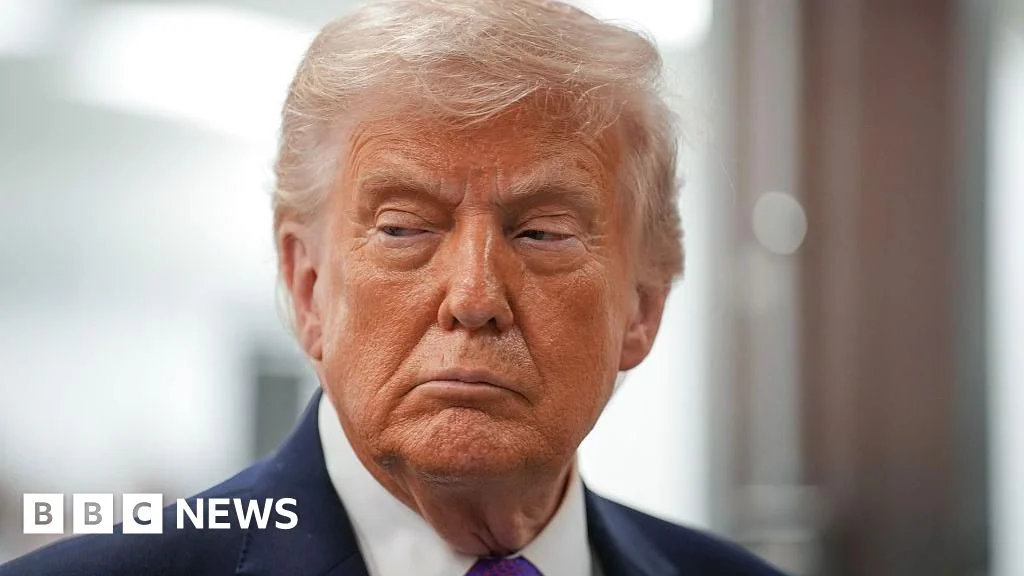
Three weeks into what has been publicly characterized as a joint US-Israeli military campaign against Iran, the conflict has devolved into a perplexing state of contradictory pronouncements and ambiguous objectives. President Donald Trump’s public pronouncements, often delivered with his signature blend of bold assertion and strategic vagueness, frequently appear at odds with the unfolding realities on the ground, creating a disorienting narrative for both domestic and international audiences. While the President has declared the war to be "very complete, pretty much," a significant influx of American ground forces, including a Marine expeditionary unit, is actively maneuvering into the region. This deployment, coupled with the continuation of unabated US and Israeli bombing and missile strikes on Iranian targets, casts doubt on any notion of an imminent winding down of hostilities.
The critical chokepoint of the Strait of Hormuz, through which an estimated 20% of the world’s oil exports transit, has been repeatedly described by Trump as a "simple military maneuver" to secure. However, the current reality is that only Iranian-approved vessels are permitted to traverse these vital international waters. Adding to this perplexing dichotomy, the Iranian military is proclaimed to be "gone," yet drones and missiles continue to strike targets with alarming regularity, with the operational reach of these attacks extending as far as the joint US-UK base on the remote island of Diego Garcia in the Indian Ocean. This geographical expansion of Iranian strikes suggests a resilience and reach that belies claims of decisive military defeat.
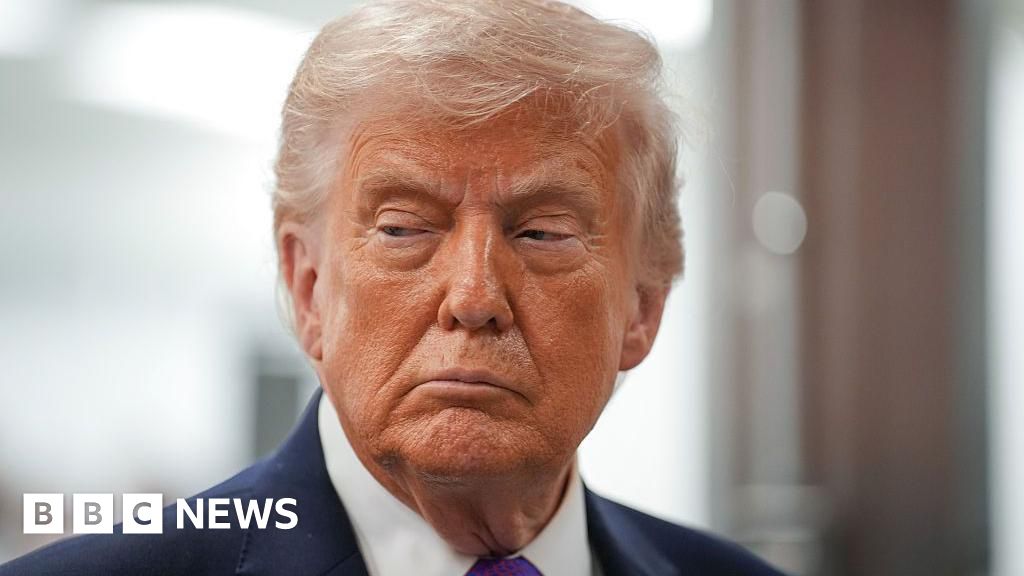
In a candid Friday evening post on his Truth Social platform, disseminated while en route from Washington to his Florida resort for the weekend, President Trump offered his most detailed enumeration of American military objectives in the Iran war to date. He presented a numbered list, stating that the US was "getting really close" to fulfilling these aims. These objectives, as outlined by the President, encompassed the degradation or outright destruction of Iran’s military capabilities, its critical defense infrastructure, and its nascent nuclear weapons program. Additionally, the protection of American allies within the volatile Middle East region was cited as a paramount goal.
Notably absent from this comprehensive list was any explicit objective concerning the securing of the Strait of Hormuz. Trump reiterated his stance that the responsibility for this crucial maritime passage should fall upon other nations that are more heavily reliant on oil exports from the Persian Gulf. He has consistently emphasized that the United States, as a net exporter of energy, does not directly depend on Middle Eastern oil. However, this perspective, while politically resonant, tends to overlook the interconnected and global nature of the fossil fuel market, where price fluctuations in one region can have direct and tangible impacts on the cost of gasoline at American pumps. The complex interplay of global energy economics means that even a net exporter like the US is not entirely insulated from regional supply disruptions.
Further underscoring a potential shift in strategic focus, Trump’s Truth Social post conspicuously omitted any call for regime change in Iran. Gone were the references to approving the nation’s next leader or demanding "unconditional surrender," pronouncements that had been central to his rhetoric in the early stages of the conflict. This evolution in stated objectives suggests a possible scenario where the United States could conclude its military operation with Iran’s current leadership remaining in power, its oil exports continuing, and its capacity to exert some degree of influence over the Strait of Hormuz largely intact. This outcome, if realized, represents a significant departure from the more maximalist demands initially articulated by the President and his administration.
However, an alternative and potentially more decisive strategic pathway remains, one that directly involves the ground forces currently en route to the Middle East. Just over a week prior, US media outlets reported on the dispatch of a Marine expeditionary unit, comprising approximately 2,500 combat-ready soldiers, supported by a formidable contingent of ships and aircraft, from its base in Japan to the Middle East. This deployment is expected to reach its destination in the coming days. Concurrently, another Marine force of similar size recently departed its base in California, with its arrival anticipated in mid-April.
These significant troop movements have led military analysts to speculate about a potential US strategy to capture Kharg Island. This strategically vital island, measuring roughly 3 square kilometers (8 square miles), houses Iran’s primary oil export terminal. The seizure of Kharg Island, in theory, could effectively sever Iran’s oil shipments, thereby crippling its access to much-needed revenue and compelling it to make substantial concessions to the United States in exchange for a cessation of hostilities. Such a move would represent a direct and powerful blow to the Iranian economy and its ability to sustain its war effort.
When pressed on the matter of deploying ground troops, President Trump offered a characteristically ambiguous response on Friday, stating that he was not sending ground troops to Iran but adding, "If I were, I certainly wouldn’t tell you." This deliberate cultivation of uncertainty appears to be a cornerstone of his communication strategy, leaving adversaries and allies alike to speculate about his ultimate intentions. The inherent lack of clarity, while perhaps designed to maintain strategic leverage, also contributes to the overall "fog of war" that has come to define this conflict.
The mere threat of such a decisive action has already elicited a strong response from Iran’s state media. Reports on Saturday indicated that any attack on Kharg Island would provoke Iran to create "insecurity" in the Red Sea, another critical global shipping transit point, and to "set fire" to energy facilities throughout the region. This veiled threat underscores the significant risks inherent in any US escalation that further exposes American military personnel to potential Iranian reprisades. The interconnectedness of global energy infrastructure and key maritime routes means that any destabilization in one area could have cascading and unpredictable consequences across the region and beyond.
Adding another layer of complexity and suggesting a commitment to a protracted engagement, US media reported earlier this week that the Trump administration was preparing to request approximately $200 billion (£150 billion) in emergency funding from Congress for the ongoing military operation in Iran. Such a substantial funding request would strongly indicate that, far from winding down, the White House is bracing for a long and financially taxing conflict. This prospect has been met with a degree of caution, even among President Trump’s staunchest Republican allies in Congress.
Congressman Chip Roy of Texas, a prominent Republican voice, expressed concerns about the potential implications of such a request, stating, "We’re talking about boots on the ground. We’re talking about that kind of extended activity." He further emphasized the need for greater transparency and justification, adding, "They have got a whole lot more briefing and a whole lot more explaining to do on how we’re going to pay for it, and what’s the mission here." This sentiment reflects a broader concern within Congress regarding the escalating costs and the undefined endgame of the military engagement.
The "fog of war," a term often invoked in military discourse, not only obscures the clear thinking of planners and commanders but also significantly impacts the perceptions of politicians and the general public. In the case of the Iran war, this obfuscation seems to be a deliberate tactic, contributing to a sense of strategic ambiguity. The conflict appears to be at a critical pivot point, with the potential for multiple divergent paths forward. However, the precise direction it will ultimately take remains a profound puzzle, shrouded in a mix of presidential pronouncements, troop movements, and geopolitical uncertainties. The ongoing tension between Trump’s optimistic pronouncements and the deployment of substantial military assets creates a challenging environment for accurate assessment and strategic clarity. The coming days and weeks will be crucial in determining whether the current strategy leans towards de-escalation or a more forceful assertion of American military power in the region.