
 By admin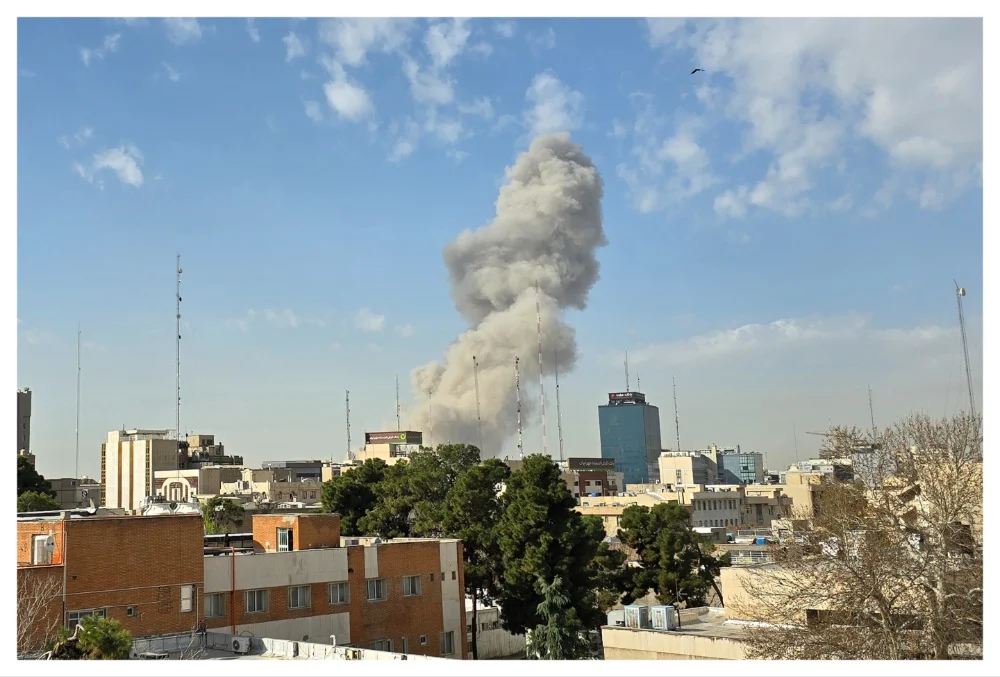
The Iranian Independent Filmmakers Association (IIFMA) has publicly declared its support for the recent U.S. and Israeli military actions targeting Iran, a development that has culminated in the death of Supreme Leader Ali Khamenei and has ignited widespread speculation about a seismic shift in the nation’s political landscape. This endorsement, articulated in a strong statement from the organization, places the IIFMA at the forefront of a dissident movement calling for international intervention and a fundamental restructuring of Iranian governance. The association, which claims to represent hundreds of members of Iran’s embattled independent film community, framed their stance as a desperate plea for humanitarian aid and a necessary response to years of what they describe as severe oppression.
The IIFMA’s statement directly references the "national uprising and tragic massacre of January 2025," an event they allege left Iran’s "defenseless citizens with no option but to seek urgent humanitarian intervention from the international community." This refers to a brutal crackdown by Iran’s Islamic Revolutionary Guard Corps (IRGC) on nationwide anti-government protests. Reports from HRANA, a Washington-based Iranian rights group, indicated that between January 8th and 9th, 2025, the IRGC’s actions resulted in the deaths of over 40,000 civilians. This immense loss of life, coupled with widespread allegations of systematic human rights abuses, has fueled the IIFMA’s call for external engagement.
In this dire context, the IIFMA explicitly called upon the "international community to uphold Iran’s sovereignty and to prioritize the protection of tens of millions of citizens held hostage by the Islamic regime." The phrasing "held hostage" underscores the IIFMA’s perception of the current government as an oppressive force that has effectively imprisoned its own populace. The filmmakers’ association further clarified their advocacy, stating, "We advocate for targeted actions against government officials and oppressive agents while avoiding harm to innocent civilians." This nuanced position highlights a desire for precision in any international response, aiming to dismantle the existing power structures without exacerbating the suffering of the general population. The statement concluded with a powerful call to "put an end to this archaic cycle of patriarchal violence," framing the struggle as a fight against a deeply ingrained system of control.
The death of Supreme Leader Ali Khamenei, a pivotal figure in the Islamic Republic since 1989, represents a significant turning point. Khamenei’s demise, confirmed by Iran’s state-run IRNA news agency and other media outlets, was a direct consequence of the coordinated air strikes, which also reportedly claimed the lives of Iran’s chief of army staff and defense minister. The scale of these casualties among the highest echelons of Iranian leadership suggests a meticulously planned and executed operation by the U.S. and Israel, aimed at decapitating the current regime.
The international community has reacted with a mixture of concern and anticipation. While the U.S. and Israeli militaries have yet to issue official comments regarding the specifics of the strikes, the timing and the reported targets strongly indicate a deliberate and coordinated effort to destabilize the Iranian government. The impact of these attacks on Iranian civilians, however, remains a critical concern. Early reports from HRANA, though not immediately confirmed by U.S. or Israeli authorities, suggested that at least 133 civilians were killed and 200 others injured in the initial waves of strikes. These figures, if accurate, paint a grim picture of the collateral damage and underscore the IIFMA’s plea for civilian protection.
In response to the aerial bombardment, Iran has retaliated by launching missiles and drones targeting Israel and U.S. military installations in Bahrain, Kuwait, and Qatar. This escalation signifies a dangerous regionalization of the conflict, raising fears of a wider conflagration. The retaliatory measures, while expected from a regime under attack, further complicate the humanitarian situation within Iran and increase the risk to civilian populations in neighboring countries.
The death of Khamenei has triggered a complex and volatile situation within Iran. Reports from Tehran on Sunday indicated massive explosions, suggesting ongoing military activity or internal unrest. While some accounts described spontaneous celebrations for the Supreme Leader’s death, complete with fireworks and dancing in the streets, other reports highlighted protests from Khamenei supporters, indicating a deep societal division and a potential for internal conflict. This duality of reaction underscores the precariousness of the current moment and the unpredictable nature of the ensuing political vacuum.
The potential for regime change in Iran is a matter of profound geopolitical significance. The Islamic Republic has been in power for over four decades, deeply embedding itself within the country’s social, political, and economic structures. Despite widespread internal opposition, the regime’s deep roots and extensive control mechanisms have historically made significant political upheaval a challenging prospect. However, the death of its most powerful figure, combined with external military pressure and internal dissent, may create an unprecedented opportunity for transformation.
The IIFMA’s endorsement of the strikes is particularly noteworthy, given the historical role of independent filmmakers in Iran as voices of dissent and social commentary. Prominent Iranian auteurs such as Jafar Panahi, Asghar Farhadi, and Mohamed Rasoulof, known for their critical portrayals of Iranian society and their struggles with state censorship, have yet to issue public statements. Their silence, at this juncture, could be interpreted in various ways – perhaps indicating a strategic waiting period, a need for careful deliberation in a rapidly evolving situation, or a desire to observe the immediate consequences of the attacks before taking a public stance. Their eventual commentary will undoubtedly carry significant weight, given their international recognition and their established platforms for artistic expression.
The historical context of the IIFMA’s statement is crucial. For years, independent Iranian filmmakers have operated under severe restrictions, facing censorship, harassment, and imprisonment. Their art has often served as a clandestine form of protest, offering glimpses into the realities of life under the Islamic Republic and subtly challenging its narrative. The IIFMA’s willingness to publicly support foreign military intervention, even with caveats for civilian protection, reflects a deep level of desperation and a belief that internal avenues for change have been exhausted. This is not a decision taken lightly, but rather a stark indicator of the perceived severity of the current crisis.
The "national uprising and tragic massacre of January 2025" mentioned by the IIFMA likely refers to a period of intense civil unrest, possibly building upon the widespread protests seen in previous years. The specific mention of a "massacre" suggests a particularly brutal response from the state security forces, which have a documented history of using excessive force against protesters. The IRGC, as the ideological arm of the Iranian military, has been consistently implicated in maintaining the regime’s grip on power, often through violent suppression of dissent. The estimated death toll of over 40,000 civilians during this crackdown represents a horrific human tragedy, and it is this scale of loss that the IIFMA is now using to justify its call for international intervention.
The IIFMA’s call for the international community to "uphold Iran’s sovereignty" while simultaneously advocating for intervention is a delicate balancing act. It suggests a desire to see a transition to a new form of governance that is domestically legitimate and internationally recognized, rather than a foreign occupation. Their emphasis on protecting "tens of millions of citizens held hostage" frames the current regime as illegitimate and the populace as victims requiring liberation. This framing aims to garner international sympathy and support by portraying the situation as a humanitarian crisis requiring external assistance.
The call for "targeted actions against government officials and oppressive agents" is a direct response to the IIFMA’s experience with the Iranian state. Independent filmmakers and artists have frequently been targets of state repression, with many facing arrest, travel bans, and even imprisonment for their work. The desire to avoid harm to innocent civilians reflects a recognition of the potential for unintended consequences in any military action and a commitment to a more just and humane approach to political change. The phrase "archaic cycle of patriarchal violence" is a powerful indictment of the regime’s perceived authoritarian and misogynistic underpinnings, suggesting that the struggle for freedom in Iran is also a fight against deeply entrenched patriarchal structures.
The death of Khamenei has created a significant leadership void. As the Supreme Leader, he held ultimate political and religious authority, making him the central figure of the Islamic Republic’s power structure. His demise will undoubtedly trigger a succession process, which could be fraught with internal power struggles and uncertainty. The existing political system in Iran, characterized by a complex interplay between elected officials and unelected clerical bodies, is now facing its most profound test since the 1979 revolution.
The current geopolitical climate surrounding Iran is already tense. The U.S. and Israel have long viewed Iran’s nuclear program and its regional influence as significant threats. The recent strikes, therefore, can be seen as a culmination of years of escalating tensions and a strategic attempt to neutralize these perceived threats by dismantling the current regime. The involvement of both the U.S. and Israel suggests a coordinated strategy, likely aimed at maximizing the impact of the strikes and preventing Iran from retaliating effectively.
The long-term implications of these events are uncertain. A successful transition to a more democratic and open society in Iran could have profound positive effects on regional stability and international relations. However, the path to such a transition is likely to be challenging and potentially tumultuous. The political vacuum left by Khamenei’s death could lead to internal conflict, the rise of extremist factions, or a prolonged period of instability. The role of the international community, particularly in ensuring humanitarian aid and supporting a peaceful transition, will be critical in shaping the future of Iran. The IIFMA’s statement, by aligning itself with external intervention, has placed itself and the independent film community at the heart of this unfolding drama, advocating for a radical departure from the status quo. The world watches to see if this moment marks the beginning of a new era for Iran, or another chapter in its long and complex history of political struggle.