
 By Isnaini Azizah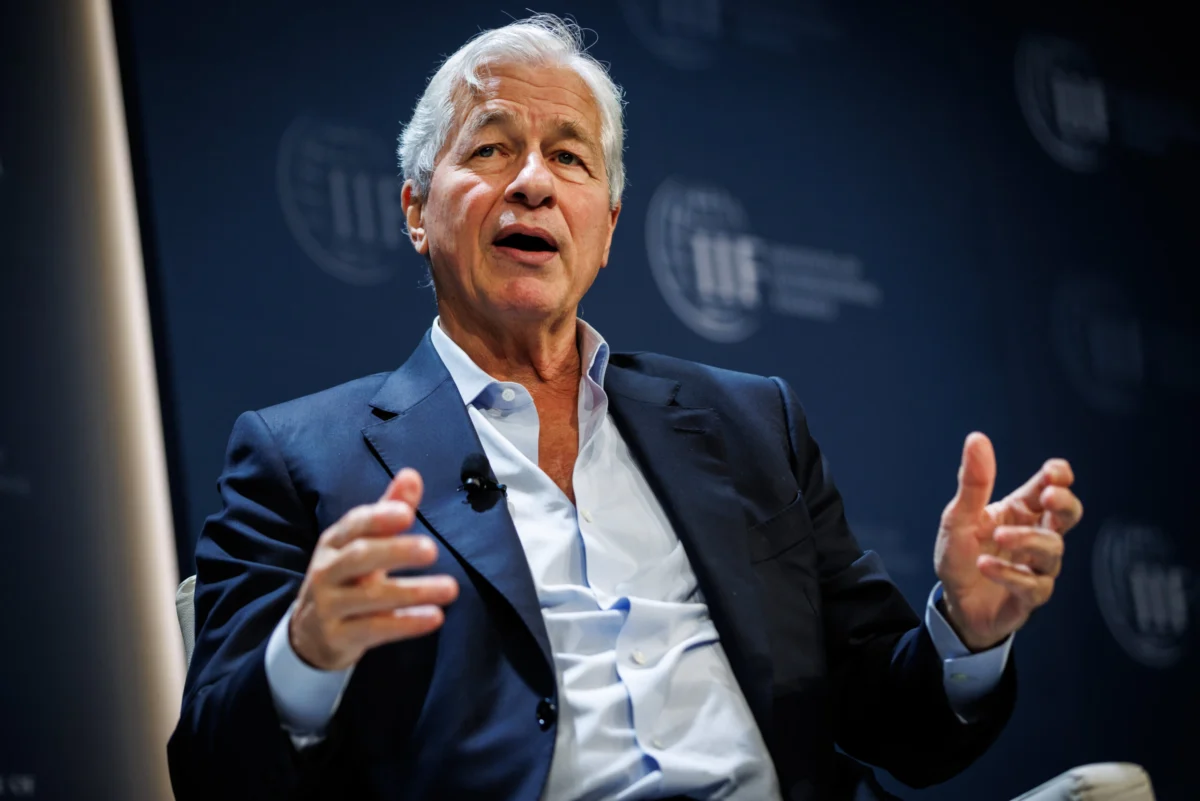
Speaking at the Hill and Valley Forum in Washington, D.C., Jamie Dimon, the Chairman and Chief Executive Officer of JPMorgan Chase & Co., offered a complex and ultimately contrarian perspective on the current geopolitical upheaval in the Middle East. While acknowledging the severe immediate dangers posed by the escalating conflict with Iran, the leader of the world’s largest bank by market capitalization suggested that the current state of warfare might serve as a painful but necessary catalyst for a durable, generational peace in a region long defined by volatility. Dimon’s remarks, delivered during a fireside chat with Palantir executive and former Congressman Mike Gallagher, underscored a shift in the geopolitical landscape where economic interests and shared security concerns are beginning to outweigh decades of ideological animosity.
Dimon’s thesis hinges on the idea that the "Iran war," which saw a dramatic escalation last month following a series of precision strikes by the United States and Israel—including the historic and destabilizing elimination of Iran’s Supreme Leader—has forced a moment of clarity for regional powers. According to Dimon, the short-term risks are undeniable and difficult to quantify, largely because the ultimate governance and territorial outcomes remain in flux. However, he argued that the underlying desire for stability among the "big players" in the region has never been more aligned. Saudi Arabia, the United Arab Emirates (UAE), Qatar, Israel, and the United States now find themselves sharing a singular, urgent objective: the establishment of a permanent security architecture that allows for economic modernization.
“I think the Iran war makes it a better chance in the long run—it’s probably riskier in the short run, because we don’t know the outcome of it,” Dimon told the audience of policymakers and tech executives. He noted that the prevailing attitude in Riyadh, Abu Dhabi, and Doha is fundamentally different from the sentiment that dominated the region twenty years ago. The modern Gulf states are no longer solely focused on religious or proxy hegemony; instead, they are engaged in a frantic race to diversify their economies away from hydrocarbons and toward technology, tourism, and high-tech manufacturing. This "Vision 2030" era of development requires a level of regional tranquility that is incompatible with the "resistance arc" previously led by Tehran.
Dimon’s perspective is rooted in the hard realities of global finance. As the head of a bank with operations in over 100 markets, he views geopolitical stability through the lens of Foreign Direct Investment (FDI). For years, capital has been flowing into the Persian Gulf as sovereign wealth funds and private investors sought to build the "cities of the future." However, Dimon warned that this capital is cowardly and will vanish if the physical security of the region remains under constant threat. In a particularly vivid illustration of the stakes, Dimon remarked, “They can’t have neighbors lobbing ballistic missiles into their data centers.” This comment highlights the evolution of the Middle Eastern economy; while a generation ago the threat was to oil pipelines, the modern threat is to the digital infrastructure that underpins the global AI and cloud computing sectors.
The conflict has already sent shockwaves through the global economy. In the weeks following the commencement of the U.S.-Israeli strikes, oil prices surged as markets priced in the risk of supply disruptions in the Strait of Hormuz. While equity markets showed a brief rally on Monday following a social media post from President Donald Trump—who claimed that discussions were underway for a "complete and total resolution" to the hostilities—the volatility returned quickly after Iranian officials denied that any such talks were taking place. This diplomatic "he-said, she-said" illustrates the fog of war that Dimon referenced, yet he remains convinced that the structural incentives for peace will eventually override the tactical obstacles to a ceasefire.

Beyond the immediate crisis in the Middle East, Dimon used the forum to voice a broader, more systemic frustration with American domestic and foreign policy. He described himself as "deeply frustrated" with a U.S. bureaucratic machine that he believes has become sclerotic and unable to adapt to the rapid shifts in the global power balance. Drawing a sharp comparison, Dimon suggested that the United States is beginning to mirror the economic and regulatory stagnation of Europe, characterized by an inability to move quickly on critical infrastructure, budgeting, and military procurement.
One of Dimon’s primary concerns is the U.S. defense industrial base. He cited the nation’s current struggle to manufacture sufficient quantities of basic munitions as a glaring example of policy failure. This lack of industrial agility, he argued, undermines the nation’s deterrent capabilities. This frustration was a primary motivator behind JPMorgan Chase’s announcement last year of a $1.5 trillion initiative aimed at investing in key industries essential to national security, including domestic manufacturing, energy independence, and advanced technology. Dimon believes that the private sector must step in where the government has faltered, ensuring that the "arsenal of democracy" is not just a historical concept but a functional reality.
The conversation inevitably turned to China, which Dimon views as the ultimate strategic challenge for the United States. He was unsparing in his critique of how the American government and corporate sector have handled the relationship with Beijing over the past thirty years. He argued that the U.S. made a "huge mistake" by allowing itself to become overly dependent on China for critical components, ranging from pharmaceutical ingredients to rare earth minerals and microelectronics. Dimon suggested that the era of "blind engagement" is over and that Americans must now operate under the assumption that a direct conflict—particularly over the sovereignty of Taiwan—is a distinct and dangerous possibility.
Despite his critiques of the U.S. system, Dimon was quick to acknowledge the "magnificent" successes of the Chinese model in specific sectors. He pointed to China’s dominance in the production of electric vehicle batteries, automobiles, drones, and shipbuilding as evidence of a disciplined, long-term industrial strategy that the U.S. has yet to match. “We should look at our own shortcomings, and then be prepared, if they ever become an adversary, to face off against them,” he said. In Dimon’s view, the global geopolitical theater is interconnected; he argued that achieving decisive "wins" in the conflicts in Ukraine and Iran would be "very helpful" in establishing a position of strength when dealing with China. By stabilizing Eastern Europe and the Middle East, the U.S. could consolidate its alliances and refocus its industrial and military resources on the Indo-Pacific.
The wide-ranging interview also touched on the transformative power of artificial intelligence and the future of the financial system. Dimon discussed the potential for AI to reshape the global workforce, noting that while it will undoubtedly displace certain roles, it will also create entirely new categories of employment and drive unprecedented productivity gains. He also briefly addressed the rise of stablecoins and digital assets, reinforcing JPMorgan’s commitment to blockchain technology while maintaining a cautious stance on the regulatory environment. Additionally, he touched on the bank’s new global headquarters at 270 Park Avenue in New York City, describing the 1,388-foot skyscraper as a symbol of the bank’s enduring faith in the resilience of urban centers and the necessity of face-to-face collaboration in the high-stakes world of global finance.
Throughout the session, Dimon’s tone was that of a pragmatic realist who is nonetheless hopeful about the capacity for leadership to change the course of history. His willingness to speak plainly about "winning" wars and the necessity of industrial dominance reflects a shift in the public discourse of major American CEOs, who are increasingly finding themselves at the intersection of commerce and statecraft. As the world watches the fallout of the strikes in Iran and the subsequent market reactions, Dimon’s "long-run" optimism provides a stark contrast to the prevailing sense of crisis. His message to Washington was clear: the path to peace and continued American relevance lies in a radical return to efficiency, a rebuilding of the industrial base, and a clear-eyed recognition of the shared economic interests that link the West with the emerging powers of the Middle East. Whether the "complete and total resolution" mentioned by the administration comes to fruition or not, Dimon’s analysis suggests that the geopolitical tectonic plates have already shifted, and the financial world is bracing for the new landscape that emerges from the rubble.