
 By Isnaini Azizah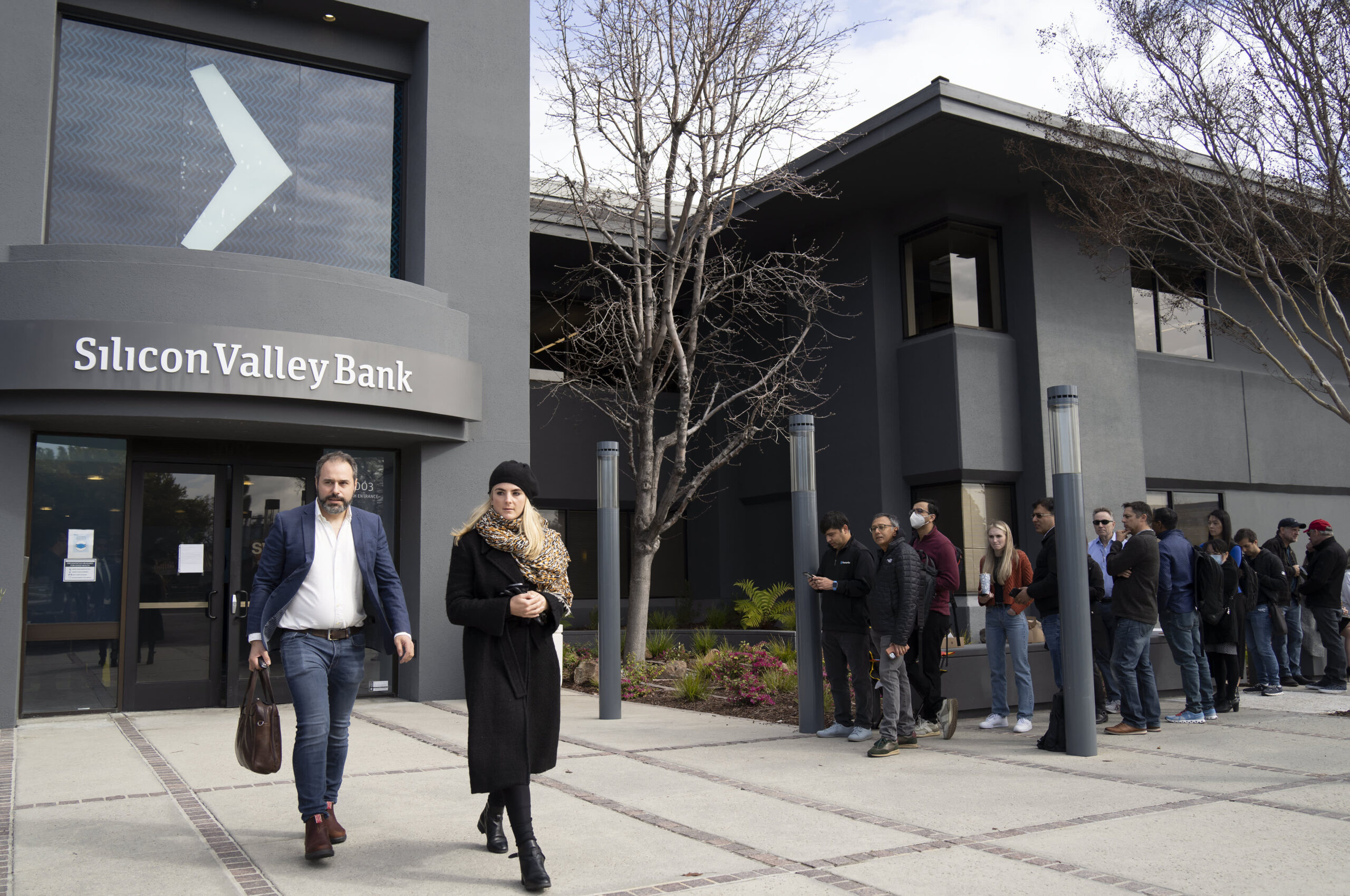
The story of how the world’s most powerful bank decided to aggressively court the world’s riskiest companies began not in a boardroom, but at a retirement party in New York City. On March 9, 2023, as the atmosphere of the celebration hummed in the background, Jamie Dimon, the Chairman and CEO of JPMorgan Chase, received a call that would signal the end of an era for American venture finance. He beckoned Doug Petno, a veteran executive and current co-head of the firm’s commercial and investment bank, away from the festivities. The situation on the West Coast was deteriorating with unprecedented speed. Silicon Valley Bank (SVB), the forty-year-old cornerstone of the global startup ecosystem, was in the midst of a terminal bank run. Regulators were on the line with a desperate question: Was the nation’s largest bank prepared to step in and acquire the failing lender?
The collapse of Silicon Valley Bank was a watershed moment for the financial industry. For decades, SVB had operated as a specialized "concierge" for the innovation economy, providing venture debt, personal mortgages for founders, and specialized banking services that traditional "bulge bracket" banks often found too niche or too risky. However, a fatal combination of rising interest rates, a concentrated deposit base, and significant unrealized losses on its bond portfolio triggered a panic. On that Friday, March 10, 2023, California regulators officially seized the bank, marking the second-largest bank failure in U.S. history at the time.
In the frantic weekend that followed, the leadership team at JPMorgan Chase—including Dimon, Petno, and other top lieutenants—conducted a high-stakes assessment of whether to bid for the shuttered institution. While the prospect of absorbing SVB’s massive client list was tempting, the internal data suggested a different path. JPMorgan didn’t necessarily need to buy the bank to win its business. In a phenomenon known as a "flight to safety," thousands of panicked founders and venture capital firms were already hammering at JPMorgan’s digital doors. As Petno later revealed to CNBC, the bank processed three years’ worth of new client onboardings in a single weekend. The demand was so overwhelming that the firm’s operations teams worked around the clock to open accounts for startups that, just days earlier, might have viewed JPMorgan as too bureaucratic or indifferent to their needs.
This surge of activity emboldened Petno and his colleagues to recognize a fundamental shift in the market. There was a massive "vacuum" left by SVB’s disappearance, and while smaller players like Brex, Mercury, and Ramp were moving quickly to fill it, JPMorgan saw an opportunity to leverage its massive balance sheet and global reach to become the definitive home for the "innovation economy." The strategy was clear: JPMorgan would no longer wait for startups to become "unicorns" or reach late-stage maturity before courting them. They would start at the seed stage, building relationships with founders when they were still operating out of garages and co-working spaces.
The strategic importance of this pivot goes far beyond the immediate influx of deposits. For a banking behemoth like JPMorgan, which reported over $180 billion in revenue last year, the startup sector represents a crucial pipeline for its investment banking and private banking divisions. By capturing a company at its inception, JPMorgan positions itself to earn lucrative fees when that company eventually seeks an Initial Public Offering (IPO), pursues a merger or acquisition, or requires complex international treasury services. Furthermore, the founders of these companies eventually become high-net-worth individuals, feeding the bank’s private wealth management arm.
Beyond the financial incentives, staying close to the startup world is a defensive and offensive technological necessity. JPMorgan allocates a staggering $20 billion annually to its technology budget, a figure that dwarfs the total valuation of many of its competitors. By banking the next generation of artificial intelligence, cybersecurity, and quantum computing firms, the bank gains a front-row seat to the innovations that will eventually disrupt the financial services industry. Petno noted that when a client implements AI-driven job cuts or operational efficiencies, JPMorgan often sends teams to analyze the process. This "intelligence gathering" allows the bank to internalize best practices and stay ahead of the curve in its own digital transformation.
Historically, however, JPMorgan faced a significant cultural and technological barrier in winning over the Silicon Valley crowd. For years, the consensus among venture capitalists was that big banks were too slow. Opening an account at a traditional institution could take weeks and often required physical visits to a branch—a non-starter for a generation of founders who expect "one-click" financial services. Startups like Mercury and Ramp capitalized on this friction, offering sleek digital interfaces and near-instant account approval. Petno acknowledged this deficit, noting that if a founder cannot open an account online within 15 minutes, they will simply go elsewhere.
To bridge this gap, JPMorgan didn’t just rely on its existing staff; it went on a talent offensive. Following the SVB collapse, the bank hired several key executives from the fallen lender, most notably John China, the former President of SVB Capital. China now co-leads JPMorgan’s innovation economy business alongside Andrew Kresse. This infusion of "SVB DNA" helped the bank understand the nuances of venture lending and the specific needs of VC-backed firms. The momentum accelerated in late April 2023, when JPMorgan successfully bid for First Republic Bank, another casualty of the regional banking crisis. First Republic brought with it a sophisticated venture banking arm and a portfolio of high-touch relationships that perfectly complemented JPMorgan’s scale.
The results of this aggressive expansion have been stark. JPMorgan has quadrupled its client base in the startup sector to nearly 12,000 companies, supported by a dedicated force of 550 bankers stationed in key tech hubs across both coasts. While the bank does not disclose specific revenue for this segment, Petno confirmed that the growth rate of the startup business is "dramatically higher" than the firm’s core business lines. The goal is to create a "one-stop shop" where a founder can transition from a seed-stage startup to a "Magnificent 7" level titan without ever needing to switch banks.
However, the competitive landscape remains fierce and is rapidly evolving. The "neo-banks" and fintechs that initially challenged SVB are not standing still. Mercury has expanded its offerings to include sophisticated treasury products, while Ramp has integrated corporate spend management with deep accounting automation. Meanwhile, the traditional banking sector is consolidating its tech-focused offerings. In a major move in early 2026, Capital One announced the acquisition of Brex for $5.15 billion, signaling that other large lenders are equally hungry for a piece of the innovation economy. Stifel and Customers Bank have also carved out significant niches, and First Citizens Bank, which eventually acquired the remnants of SVB, continues to leverage the brand’s legacy relationships.
JPMorgan’s long-term success in this arena will depend on its ability to maintain the "small bank" feel and agility that founders crave while providing the "big bank" stability and resources that became so valuable during the 2023 crisis. The bank is currently developing new digital solutions aimed at "leapfrogging" the existing fintech competition, focusing on seamless international expansion capabilities—a major pain point for growing startups that smaller fintechs often struggle to solve.
The logic behind JPMorgan’s move is grounded in the reality of the venture lifecycle. Since the majority of startups inevitably fail, the bank’s strategy relies on identifying the winners early. By providing the core bank account and basic credit facilities to thousands of companies, JPMorgan ensures it is the first call when a "winner" emerges and needs a $100 million credit line, a complex currency hedge for European expansion, or an underwriter for a multi-billion dollar IPO. As Doug Petno succinctly put it, the vision is that once a company is onboarded into the JPMorgan ecosystem, they will never outgrow it. In the high-stakes game of global finance, JPMorgan is betting that the road to the next trillion-dollar company starts with a 15-minute digital onboarding process for a founder with nothing but an idea and a pitch deck.