
 By admin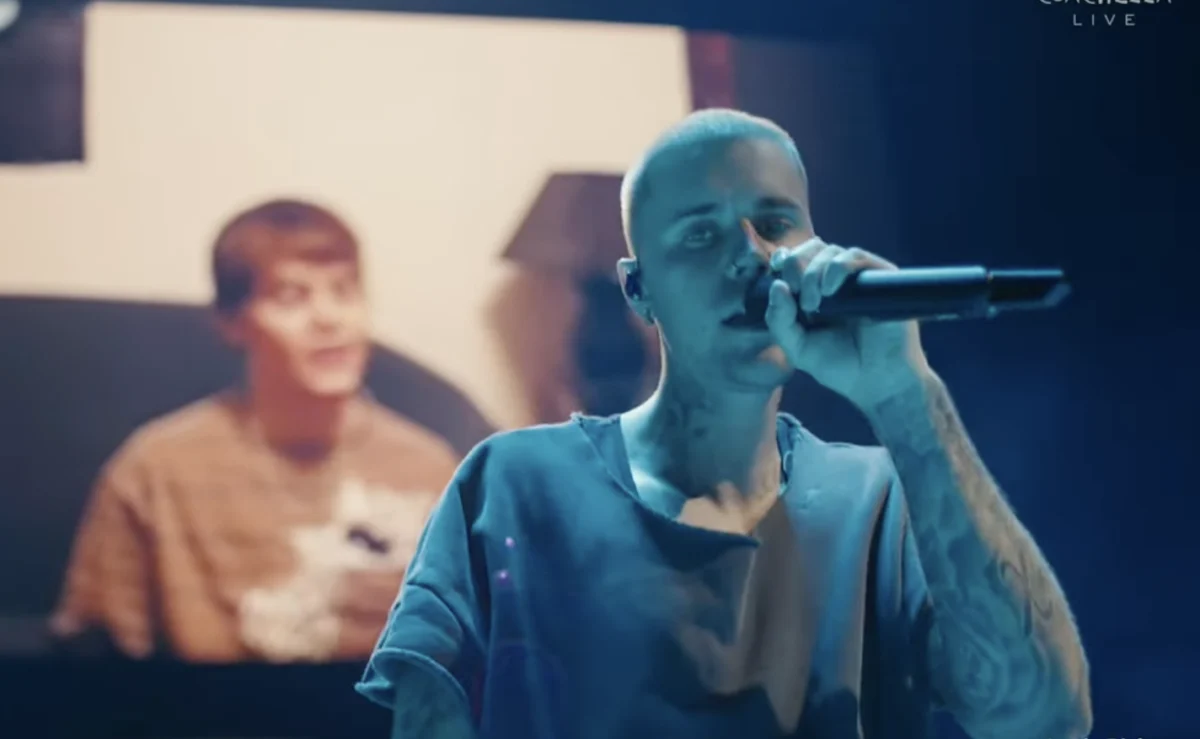
In a stark departure from the maximalist spectacle of Sabrina Carpenter’s preceding headlining performance, Justin Bieber’s Saturday night set at Coachella presented a vision of deliberate minimalism, a stark contrast that underscored a unique artistic choice. The production and musical design were notably sparse, fostering an intimate atmosphere that felt less like a grand concert and more like a personal communion. This "Personal Time With Justin," as it might be characterized for his 2026 persona, eschewed elaborate sets and the presence of other performers for a significant portion of his show, focusing intently on a singular "Swag" experience.
However, this initial impression of a stripped-down, one-man show evolved into a surprisingly multi-faceted and deeply engaging experience. The most captivating element was an unexpected journey through Bieber’s own digital archives. Alone on stage, seated at a desk with a laptop, he transformed into a digital archeologist, spontaneously unearthing and interacting with old videos of himself. This "boy and his MacBook" segment was the sole portion of the nearly hour-and-a-half set that delved into his extensive back catalog. For an artist who has largely focused on newer material like "Daisies," this was a significant and welcome concession to fans who harbored hopes of hearing older hits. The act of Bieber himself binge-watching his past YouTube clips resonated deeply with an audience that has likely done the same, creating a shared sense of nostalgia and self-awareness.
The meta-narrative of the performance was truly remarkable: Bieber was "Bieb-scrolling" through YouTube while simultaneously being broadcast on YouTube to hundreds of thousands more viewers than were physically present in Indio. This was an unprecedented moment in major artist performances, where a substantial portion of the set was dedicated to real-time internet video self-karaoke. The inclusion of visual cues like spinning balls and simulated dodgy Wi-Fi connections further emphasized the digital nature of the experience. While undeniably self-indulgent, the segment was also surprisingly endearing. It offered a glimpse of a genuinely unscripted Bieber, and by extension, a generous offering of nostalgia to his fans. It was a clever compromise for the Coachella stage, a way to acknowledge his legacy without fully orienting the set towards older material, and while not a sustainable model for a nightly tour, it was a perfect fit for the festival’s experimental spirit.
As the performance progressed, the stage gradually became more populated. Bieber was joined by two guitarists for an acoustic interlude on a B-stage, strategically placed a short distance from the main A-stage, reinforcing the restrained design ethos. The first celebrity cameo arrived in the form of The Kid Laroi, who joined Bieber to perform their chart-topping collaboration "Stay." Later in the night, as the early morning hours approached, Tems made an appearance to deliver their soulful duet "I Think You’re Special" from Bieber’s "Swag" album. The collaboration then expanded to a trio with the addition of Wizkid for their infectious hit "Essence." The final guest, Mk.gee, materialized at the rear of the stage to perform his signature fuzzy electric guitar part on the closing track, "Daisies."
This carefully curated sequence of events suggested a show that Bieber had meticulously constructed, particularly after an initial phase that seemed to struggle in fully galvanizing the audience, both in person and online. The comments section of the YouTube livestream was a hotbed of anxiety and dissatisfaction, with viewers expressing sentiments like, "He is serving vocals but it’s still way too chill for a headliner show," and "Shameful performance, no dancing, no production set, embarrassing." These critical observations were met with fervent defenses from loyal fans who pleaded for patience, anticipating the eventual rollout of older material: "Omg guys, he’s gonna sing his old songssss, wait for it!!!!" Their faith was not entirely unfounded, as widespread reports of catalog hits being heard during soundcheck had fueled expectations. However, it’s now a point of speculation whether those soundcheck rehearsals were, in fact, tests of his YouTube connectivity.
On the downside, during the initial half-hour of the show, Bieber appeared somewhat withdrawn, enveloped in a peachy hoodie. This segment featured the performance of 11 songs from his 2025 "Swag" and "Swag II" albums, offering little visual stimulation beyond his partially obscured face. One could interpret this as a deliberate, slow-burn reveal, a visual "striptease" that saw him eventually shedding the hood mid-set and progressing to a T-shirt, though he notably refrained from going shirtless, as he had at a recent warm-up show at the Roxy. Despite the visual restraint, his vocal performance was consistently warm and flawless. The "Swag" albums, particularly the first, were intrinsically designed around the relaxed vibe of an after-hours jam session among friends. Therefore, hearing this material performed in the late hours of the night, with the show commencing at 11:30 p.m. PT/2:30 a.m. ET, felt like a natural and fitting alignment of form and function.
The arrival of The Kid Laroi about 30 minutes into the set served as a pivotal moment, injecting a welcome shift in energy. Following this collaboration, Bieber was joined by the two guitarists for an approximately 20-minute acoustic segment. This proved to be a moment of collective relaxation for the audience, though for some, it also heightened their anticipation, or perhaps unease, regarding the continued resistance to incorporating older hits.
Then came the unforgettable laptop interlude, a nearly 25-minute deep dive into Bieber’s personal history and memories. For many viewers, this segment was the epitome of "their swag" for the evening. Witnessing Bieber acknowledge and even sing along with iconic songs like "Baby" was a powerful moment. His rendition of this breakout hit, though brief, was impactful, echoing the affectionate, fleeting cover performed by Geese earlier that day in one of the tents. He interspersed snippets of other songs that hadn’t graced a stage in over a decade, including "Favorite Girl," "That Should Be Me," and "Beauty and a Beat." His digital search extended beyond music, uncovering video clips of his younger self, "Mini-Justin," achieving internet fame through homemade covers of Chris Brown and Ne-Yo songs.
Bieber’s nostalgic expedition also included non-musical clips, such as a humorous recounting of a personal mishap: "This is me walking into a glass door… Yep. Did not see that glass there." He further revisited his 2025 public confrontation with the paparazzi, reciting lines from his rant from memory, including the poignant assertion, "You don’t think I’m a real guy." This demonstrated a keen understanding that a truly resonant hit transcends its original form and era; it becomes an indelible part of an artist’s legacy.
The grand finale saw the anticipated appearances of Tems, Wizkid, and Mk.gee. They joined Bieber in a uniquely constructed stage element resembling a tilted cat food dish, adding a communal and less solipsistic dimension to the performance. Tems, in particular, was skillfully foregrounded by the camera work, enhancing the sense of shared experience. The closing number, "Daisies," provided a fitting end to the set. While long-time fans might have yearned for a more deeply venerated classic to conclude the night, the distorted guitar riff of "Daisies" proved to be an excellent sonic accompaniment to the 1 a.m. fireworks display.
Regardless of individual fan reception, the diverse reactions to Bieber’s set generated a lively and entertaining commentary stream on the live feed. Comments ranged from the bemused observation, "The guy forgot about the show and is just having fun on YouTube!" and the relatable "We’re just doomscrolling with the Biebs rn," to the more profound, "Justin is giving us the purest most intimate performance and he is pouring out his soul." Another touching observation noted, "It’s good to see Justin smile." These varied sentiments underscored the profound impact of the performance. Crucially, this unique Coachella appearance offers viewers something to anticipate in the weekend’s subsequent livestreams, as a precise rerun is highly unlikely, especially given the unpredictable nature of the digital nostalgia segment.
This performance was not the "Eras"-style career retrospective that some fans had hoped for. While Bieber undoubtedly received a substantial headlining fee, he made no attempt to lavish it on elaborate production. The long-term implications of this unconventional set design on his future touring strategies remain uncertain. However, his inherent charm and undeniable talent proved to be potent forces. Once he revealed his face and embraced the spotlight, it became evident that four years away from extensive live performances had done nothing to diminish his magnetic charisma. His ability to connect with the audience, even through unconventional means, reaffirmed his status as a compelling and enduring artist. The risk-taking nature of his Coachella set, while divisive for some, ultimately showcased an artist comfortable in his own skin and willing to experiment, offering a memorable and deeply personal experience for his devoted fanbase.