
 By admin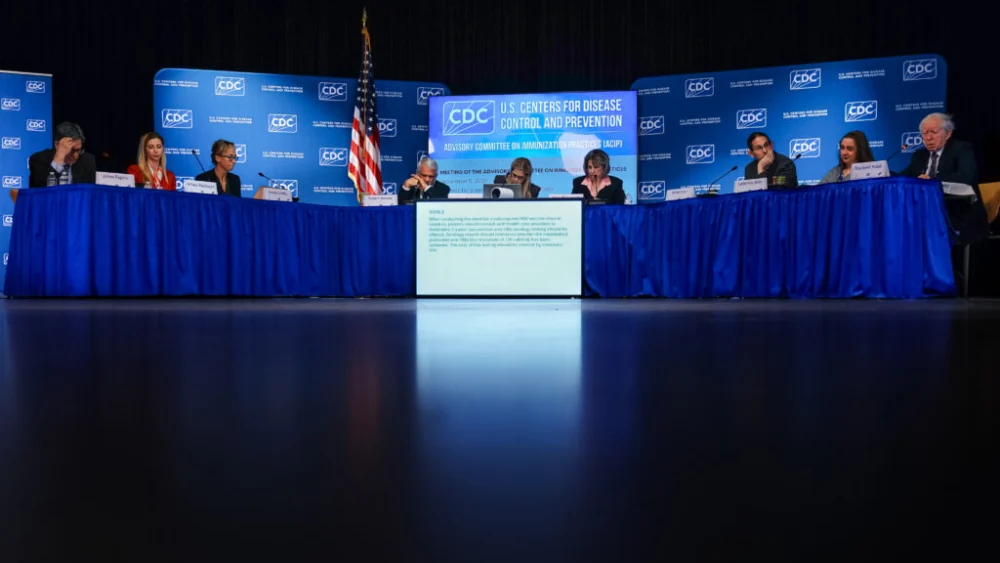
In a move that further signals a radical restructuring of the nation’s public health infrastructure, Health and Human Services (HHS) Secretary Robert F. Kennedy Jr. announced on Friday the appointment of two new members to the Advisory Committee on Immunization Practices (ACIP). The appointments of Dr. Sean G. Downing and Dr. Angelina Farella come at a precarious moment for the federal government’s vaccine policy framework, as the department grapples with internal leadership shifts, a high-stakes legal challenge from the medical establishment, and the abrupt rescheduling of critical regulatory meetings.
The ACIP is traditionally a non-partisan body of independent experts responsible for advising the Centers for Disease Control and Prevention (CDC) on the most effective ways to use vaccines to control diseases in the United States. Its recommendations carry immense weight, often dictating which immunizations are added to the official childhood schedule, which are covered by private insurance under the Affordable Care Act, and which are included in the federally funded Vaccines for Children (VFC) program. By handpicking these new members following his wholesale dismissal of the previous committee, Kennedy is effectively steering the committee toward a "medical freedom" platform that prioritizes individual clinical judgment over centralized federal mandates.
Dr. Sean G. Downing, one of the new appointees, represents a departure from the traditional academic and epidemiological backgrounds typically found on the ACIP. A primary care physician licensed in Florida, Downing operates a concierge medicine practice in Sarasota. Concierge medicine, a model where patients pay a membership fee for enhanced access and personalized care, often caters to a specific demographic of patients seeking alternatives to the standard insurance-based medical system. According to his practice’s website, Downing offers "adult and pediatric vaccination," but emphasizes a highly personalized approach to medical care. HHS officials highlighted Downing’s residency at Brown University and his history of working with uninsured populations as evidence of his clinical breadth. However, critics suggest that his background in private, membership-based medicine may not align with the public health mandate of managing large-scale, population-level immunization programs.
The second appointee, Dr. Angelina Farella, is a Texas-based pediatrician who has previously gained national attention for her vocal skepticism regarding federal pandemic responses. Farella, the owner of a pediatric clinic in Texas and a graduate of the University of Texas Medical Branch, became a figure of controversy in 2021 following an appearance on NewsMax. During the segment, she challenged the necessity of widespread COVID-19 vaccination, arguing that the focus should remain on treatment rather than prevention through immunization. "You know how you fight a pandemic, and you know how you fight disease? You treat it," Farella stated during the broadcast, suggesting that vitamins and steroids were more effective tools for "crushing" a pandemic than mass vaccination campaigns. Her appointment to a committee tasked with evaluating vaccine safety and efficacy is seen by supporters as a necessary infusion of dissenting thought, while public health advocates view it as a direct threat to the scientific integrity of the nation’s immunization guidelines.
The expansion of the ACIP comes as the committee faces an unprecedented administrative crisis. Originally scheduled to meet in February, the first gathering of Kennedy’s newly constituted panel was abruptly pushed back to March. HHS has notably declined to provide a formal explanation for the delay, fueling speculation about internal procedural hurdles or a lack of consensus on the upcoming agenda. This delay is particularly significant given the legal clouds hanging over the department. A major medical group, representing thousands of pediatricians and public health researchers, has filed a lawsuit challenging Kennedy’s authority to dissolve the previous ACIP and replace it with members who may not meet the stringent requirements of the Federal Advisory Committee Act (FACA). A federal judge is currently weighing whether to grant an injunction that would prevent the committee from meeting at all until the legal merits of the challenge are decided.
The lawsuit argues that the purge of the original ACIP members was arbitrary and capricious, potentially violating the Administrative Procedure Act. Traditionally, ACIP members serve staggered four-year terms to ensure institutional memory and continuity of expertise. By clearing the board, Kennedy has disrupted decades of established protocol, leading to fears that the committee’s future recommendations will be viewed through a political rather than a scientific lens. The legal challenge also points to the specific expertise required for the committee, which includes specialists in immunology, infectious diseases, and public health. The plaintiffs contend that the new appointments lack the rigorous peer-reviewed research background necessary to evaluate complex vaccine data.
Amidst this external pressure, HHS is also undergoing an internal "shakeup" described by insiders as an effort to align the department with the administration’s "Make America Healthy Again" (MAHA) initiative. This policy pivot aims to shift the department’s focus away from traditional infectious disease management and toward issues that resonate more strongly with the administration’s base, such as food safety, chronic disease prevention, and the reform of the Food and Drug Administration (FDA). This shift was punctuated by the recent departure of Deputy Secretary Jim O’Neill, who had been serving as the acting director of the CDC. O’Neill’s exit left a leadership vacuum at the nation’s premier public health agency, which has since been filled by Dr. Jay Bhattacharya on an acting basis.
Bhattacharya, who also serves as the Director of the National Institutes of Health (NIH), is a polarizing figure in the public health community. An architect of the Great Barrington Declaration, Bhattacharya rose to prominence for his opposition to COVID-19 lockdowns and mandates, advocating instead for "focused protection" of the elderly and vulnerable. In his capacity as acting CDC director, Bhattacharya issued a statement on Friday praising the new ACIP appointments. “These appointments strengthen ACIP with experienced clinicians who understand how immunization guidance matters for patients and families,” Bhattacharya said. His endorsement underscores the administration’s goal of centering clinical experience and "patient-centered" care over the broad epidemiological models that have historically informed ACIP decisions.
The broader implications of a Kennedy-led ACIP are profound. If the committee begins to walk back long-standing recommendations for vaccines such as those for measles, mumps, and rubella (MMR) or the human papillomavirus (HPV), the ripple effects would be felt across the entire American healthcare system. Under current law, most private health insurance plans are required to cover any vaccine that receives an "A" or "B" recommendation from the ACIP without any out-of-pocket costs for the patient. A change in these recommendations could lead to insurance companies dropping coverage or introducing high co-pays, effectively creating barriers to access for millions of families. Furthermore, many state laws regarding school entry requirements are pegged directly to the ACIP’s recommended childhood immunization schedule. If the federal schedule is thinned or modified, it could trigger a chaotic patchwork of state-level battles over school mandates.
The appointment of Farella, in particular, suggests that the committee may move to prioritize "early treatment" protocols over prophylactic vaccination. This aligns with Kennedy’s long-standing critique of the "vaccine-industrial complex," a term he uses to describe the relationship between pharmaceutical companies and federal regulators. By placing clinicians like Farella and Downing on the committee—individuals who operate outside the traditional academic-industrial nexus—Kennedy is attempting to build a firewall against what he characterizes as corporate capture of the regulatory process.
However, the medical community remains deeply skeptical. Organizations like the American Academy of Pediatrics (AAP) have expressed concern that the new direction of the ACIP could lead to a resurgence of vaccine-preventable diseases. Data from the CDC already shows a troubling decline in routine childhood vaccination rates in several states, a trend that began during the pandemic and has been exacerbated by rising skepticism of federal health guidance. Public health experts warn that if the ACIP—the "gold standard" of vaccine evaluation—loses its credibility, the resulting loss of public trust could lead to outbreaks of diseases that were once considered eradicated in the United States.
As the March meeting approaches, the eyes of the global health community are on Washington. The outcome of the pending lawsuit will determine if Kennedy’s handpicked advisers are even allowed to convene. If they do, their first order of business will likely be a comprehensive review of the current immunization schedule, a process that Kennedy has promised will be "transparent" and "data-driven," but which his critics fear will be the beginning of the end for the modern era of American public health. The inclusion of Downing and Farella is not just a personnel change; it is a declaration of intent for a new, more contentious chapter in the history of the Department of Health and Human Services.