
 By Lina Irawan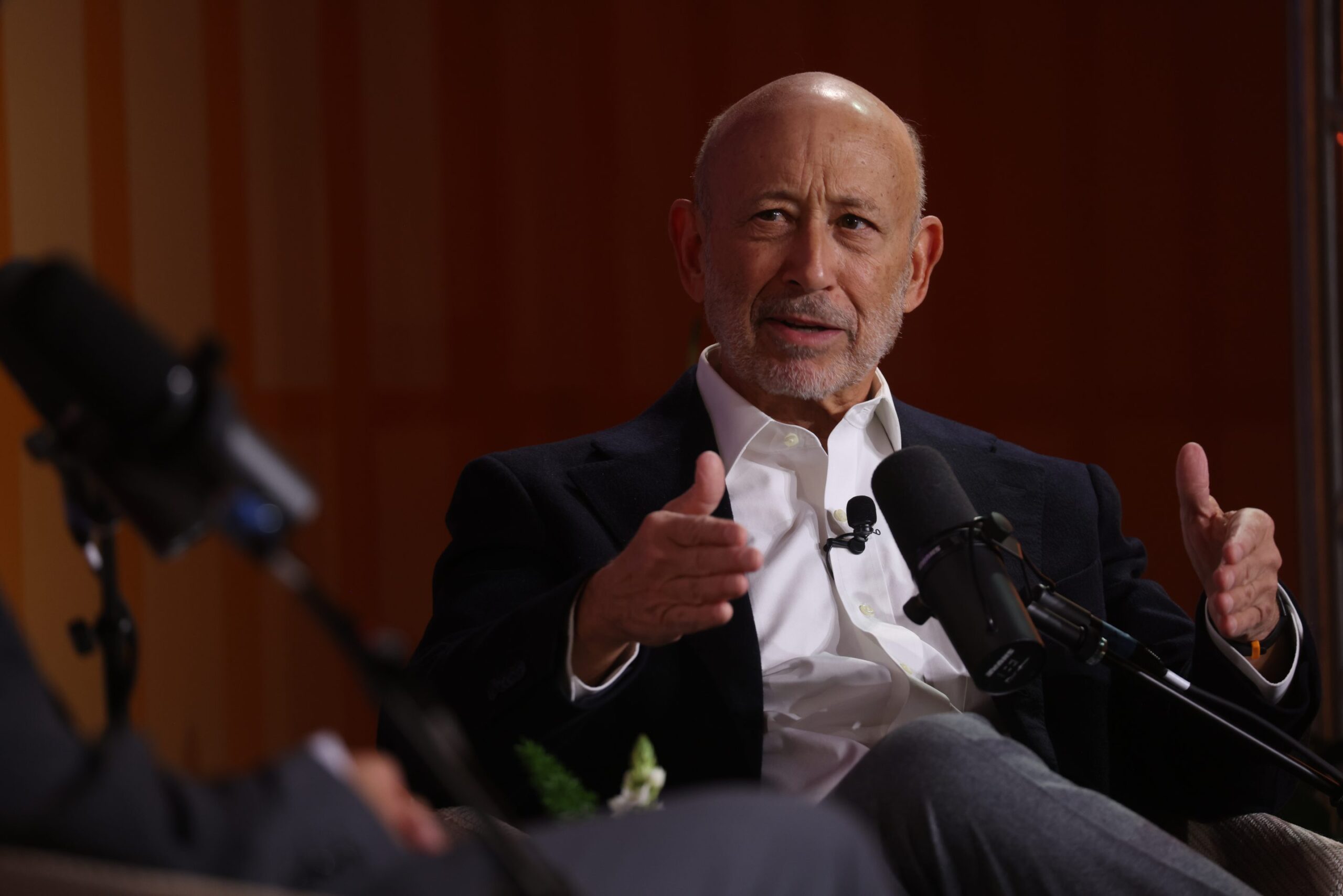
Lloyd Blankfein, the highly influential former CEO who steered Goldman Sachs through the tumultuous waters of the 2008 financial crisis, has weighed in on the escalating conflict in Iran, positing in a recent CNBC interview that the intense pressures generated by the hostilities will inevitably lead to a rapid conclusion. Blankfein, who led the venerable investment bank from 2006 to 2018, suggested that the conflict’s pervasive negative consequences are simply unsustainable, forcing a resolution sooner rather than later. His commentary, published on Tuesday, emerges as a notable departure from his typically guarded public persona during his tenure, now expressed more candidly as he promotes his new memoir, Streetwise: Getting to and Through Goldman Sachs.
"It’s so impossible to live with, and it’s bad for everyone, for the U.S., for our allies, and the only, and the ones who are worse affected by it are our enemies," Blankfein articulated, outlining a comprehensive web of adverse impacts. This statement implies a multi-faceted crisis—economic, social, and geopolitical—that afflicts all parties involved, including the combatants themselves. For the U.S. and its allies, the costs manifest in disrupted energy markets, increased defense spending, and heightened regional instability. However, Blankfein’s assertion that the "enemies" (presumably Iran and its proxies) are "worse affected" points to the severe internal and external pressures bearing down on the Islamic Republic, including crippling sanctions, military losses, and the profound human cost of prolonged warfare on its own populace and regional proxies. Such an environment, he suggests, fosters an urgent, albeit painful, impetus for de-escalation.
Blankfein’s career at Goldman Sachs is legendary, most notably for his skillful navigation of the firm through the unprecedented global financial meltdown of 2008. Under his leadership, Goldman Sachs not only survived the crisis but emerged as one of the world’s preeminent investment banks by revenue, a testament to his strategic acumen and resilience. His transformative decision to convert Goldman from an investment bank to a bank holding company, accepting government bailout funds, was a pivotal moment that secured the institution’s future amidst the collapse of rivals like Lehman Brothers. During his 12-year reign, Blankfein was known for his meticulous focus on the markets and the bank’s bottom line, largely eschewing public commentary on geopolitical affairs. This contrasts sharply with contemporaries like JPMorgan Chase CEO Jamie Dimon, who has frequently offered outspoken views on global political and economic issues, including the war in Ukraine and its implications for the global order. Blankfein’s current willingness to delve into the complexities of the Iran conflict signals a new chapter for the seasoned financier, leveraging the platform provided by his recently published memoir, Streetwise, to share broader perspectives gleaned from decades at the pinnacle of global finance. The memoir itself delves into his journey from Brooklyn to the top of Wall Street, offering insights into leadership, decision-making under pressure, and the intricate dynamics of the financial world.
Further elaborating on the global dimension of the conflict, Blankfein noted in the CNBC interview that "resistance to the war is not limited to the U.S. and is taking place around the world." He expanded on this, stating, "The effect of it is so severe that all the countries that surround the Gulf and everybody else in the world are—this is going to be the unifying factor for the world." This perspective underscores the broad international concern over the conflict’s ramifications. Such "resistance" could manifest in various forms: diplomatic initiatives from world powers urging de-escalation, public protests against the violence, humanitarian efforts, and concerted economic pressure from countries dependent on Gulf energy supplies. The idea of the conflict becoming a "unifying factor" suggests that its widespread destabilizing impact could compel disparate nations, including those with differing geopolitical agendas, to coalesce around the common goal of restoring regional stability. This might involve intensified multilateral negotiations, sanctions regimes, or even the deployment of international peacekeeping or monitoring forces, all driven by the shared imperative to prevent a broader catastrophe.
Blankfein’s comments arrive amidst a dramatic intensification of the Iran conflict over the past weekend. The United States and Israel have significantly escalated their bombing campaigns against targets within Iran, signaling a more aggressive posture. Simultaneously, Israel has extended its operations into Lebanon, aiming to neutralize the Iran-backed militant group Hezbollah, a critical proxy in Tehran’s regional strategy. In a retaliatory move, Iran has launched strikes against U.S. military bases located in Saudi Arabia, the United Arab Emirates, and Qatar, underscoring the widening geographical scope of the hostilities and the direct engagement of major regional players. A development of immense political significance also occurred as Iran announced the naming of Mojtaba Khamenei as the new Supreme Leader, replacing his father, the long-reigning Ayatollah Ali Hosseini Khamenei, who was tragically killed in a U.S. airstrike. This succession event, particularly under such fraught circumstances, carries profound implications for Iran’s future trajectory. Mojtaba Khamenei, often viewed as a hardliner, takes the helm during a period of unprecedented internal and external pressure, raising questions about potential shifts in Iran’s foreign policy, its nuclear ambitions, and its engagement with regional and global adversaries. The death of the elder Khamenei, a figure who had dominated Iranian politics for decades, marks the end of an era and introduces a period of uncertainty for the theocratic state.
The rhetoric from Washington has been mixed, further complicating the global outlook. President Donald Trump, in a press conference on Monday, declared that the war "will be over very soon," a statement that initially provided a temporary boost to global stock markets hoping for a swift resolution. However, Trump immediately tempered this optimism by adding that the U.S. would "go further," suggesting that while an end might be near, it would be preceded by decisive military action. This dual message—promising an end while threatening escalation—reflects a complex strategic calculus aimed at both reassuring markets and projecting strength. In stark contrast to Trump’s ambiguous optimism, Secretary of War Pete Hegseth, a prominent figure in the administration known for his hawkish stance and military background, delivered a resolute message in a joint press conference with the chairman of the Joint Chiefs on Tuesday. Hegseth affirmed that the U.S. "will not relent until the enemy is totally and decisively defeated." This uncompromising declaration underscores the administration’s commitment to achieving its strategic objectives, potentially prolonging military operations despite calls for a quick end. The conflicting signals from senior U.S. officials create a volatile environment, leaving allies and adversaries alike to decipher the true intent behind Washington’s strategy.
Economically, the conflict has already exacted a severe toll. The prospect of prolonged instability in the Middle East, a region critical for global energy supplies, sent oil prices skyrocketing. On Monday, crude oil briefly touched a staggering $117 a barrel, a level not seen in years, before retreating slightly on the back of President Trump’s comments. This surge in oil prices has had an immediate and tangible impact on consumers worldwide. According to AAA, average gas prices in the U.S. jumped by 20.4% in just 17 days, climbing from $2.93 per gallon on February 21 to $3.53 per gallon by Tuesday. This rapid increase in energy costs threatens to fuel inflation, erode consumer purchasing power, and potentially trigger a broader global economic slowdown, further validating Blankfein’s assessment that the conflict is "bad for everyone." The economic reverberations extend beyond energy, affecting supply chains, manufacturing costs, and the stability of financial markets globally, leading to increased volatility and investor uncertainty.
Blankfein’s unusually candid observations on the Iran conflict truly mark a significant departure from his previously buttoned-up style as the CEO of one of the world’s most prestigious investment banks. Throughout his 12-year tenure at Goldman Sachs, he presided over multiple international conflicts, including the protracted Iraq War and Russia’s annexation of the Crimean Peninsula in 2014. Yet, he consistently maintained a disciplined focus on the financial realm, rarely offering public commentary on geopolitical events. This reticence was partly a function of Goldman Sachs’ corporate culture, which traditionally emphasized discretion and a focus on client interests over political grandstanding. His current willingness to engage openly on such a sensitive geopolitical issue underscores the profound shift in his post-CEO life and the platform his memoir now provides for broader societal discourse.
In an interview last week with PBS News Hour, Blankfein delved deeper into his views on the relationship between geopolitical events and market performance. He expressed a belief that, generally, geopolitical events do not significantly affect markets as long as they are short-lived. However, he cautioned that if the Iran war were to become a long-term conflict, the economic effects could be far more pronounced and damaging. He specifically highlighted a critical choke point: "I suppose if they close the Straits of Hormuz, oil prices stayed up, that would feed into inflation, and that would create other kinds of dislocation." This scenario represents a worst-case economic outcome.
The Strait of Hormuz, a narrow waterway bordering Iran to the south, is an absolutely critical maritime artery. An estimated 20% of the world’s total liquefied natural gas (LNG) and crude oil shipments pass through this strategic passage from the Persian Gulf. Any closure or significant disruption of this route, whether due to military action or a blockade, would unleash an unprecedented global energy crisis. Experts widely agree that such an event would amount to an oil shock far greater in magnitude than those experienced in the 1970s. The 1973 oil crisis, triggered by the Yom Kippur War and an OPEC embargo, saw gas prices surge by 40%, leading to long lines at the pump, rationing, and a severe global recession characterized by stagflation—a toxic combination of high inflation and stagnant economic growth. A closure of Hormuz today, given the world’s even greater reliance on global energy flows and the absence of comparable strategic petroleum reserves or alternative routes, would have catastrophic consequences for global trade, manufacturing, and consumer economies, far exceeding the historical precedent.
Despite the dire implications of a Strait of Hormuz closure, Blankfein, in his PBS interview, somewhat downplayed the potential for a broader, long-term escalation of the conflict. He asserted, "We’re not dealing in a part of the world that’s a really big part of the global economy other than the fact that it sources a lot of energy." While it is true that the Middle East’s direct contribution to global GDP (excluding energy) might not rival that of major industrial powerhouses, his statement potentially understates the systemic risk. The region’s unparalleled role as a primary source of global energy makes it an indispensable lynchpin of the world economy. Furthermore, any prolonged conflict here has the potential to draw in other major global powers, disrupt critical shipping lanes beyond Hormuz, trigger humanitarian crises, and divert immense resources away from productive economic activities worldwide. The interconnectedness of modern global finance and trade means that even localized conflicts in strategically vital areas can have disproportionately large ripple effects, challenging the notion that the region’s overall economic weight (beyond energy) diminishes its global significance. Blankfein’s nuanced, if somewhat contradictory, assessments reflect the inherent difficulty in forecasting the trajectory of complex geopolitical events and their far-reaching economic consequences.