
 By admin
The Marriott Bonvoy program stands as a titan in the travel industry, boasting a portfolio of over 30 diverse brands and more than 8,000 properties scattered across the globe. For many frequent travelers, the secret to extracting consistent value from this massive network lies not just in the accumulation of points through stays, but in the strategic use of credit card benefits. Among the most prized of these perks is the annual free night award, a certificate that can serve as a powerful tool for offseting the costs of luxury or high-demand travel. While Marriott offers various tiers of these awards, the 35,000-point certificate remains a cornerstone for many cardholders, offering a balance between accessible annual fees and high-quality redemption opportunities.

The utility of these certificates often transcends individual travel styles. Whether one is a digital nomad like Katie, moving through international hubs with a focus on efficiency and location, or a family traveler like Summer, seeking the convenience and space of suite-style accommodations, the 35,000-point certificate provides a flexible safety net. It is a benefit that justifies keeping specific Marriott-branded credit cards in one’s wallet year after year, effectively turning a modest annual fee into a premium lodging experience.
To leverage these certificates effectively, one must first understand the primary avenues for earning them. The most consistent method is through the renewal of specific co-branded credit cards. The Marriott Bonvoy Boundless® Credit Card, issued by Chase, and the Marriott Bonvoy Business® American Express® Card are the two primary vehicles for these awards. Each year, upon the anniversary of your account and the payment of the annual fee, you are granted a free night award redeemable for a one-night stay at a property with a redemption level up to 35,000 points.

The Marriott Bonvoy Boundless card, which typically carries a $95 annual fee, is a favorite for casual travelers and loyalists alike. Beyond the free night award, it offers 15 Elite Night Credits toward Bonvoy status, which can help bridge the gap to Silver, Gold, or Platinum tiers. The Marriott Bonvoy Business American Express Card, while carrying a slightly higher annual fee, offers a similar 35,000-point certificate upon renewal. However, the business version provides an additional incentive for high spenders: an extra free night award after reaching $60,000 in purchases within a calendar year. This "double-dip" potential makes it an attractive option for small-business owners who can funnel their operating expenses through the card.
Timing is a crucial factor in the administration of these awards. For Boundless cardholders, the certificate typically populates in the Marriott Bonvoy account within eight weeks of the account anniversary. Business Amex cardholders might see a slightly longer window, often ranging from eight to 12 weeks after the renewal month. Once issued, these certificates are generally valid for 12 months. Monitoring these dates is essential, as Marriott is historically strict about expiration, and letting a certificate lapse is a missed opportunity for hundreds of dollars in value.
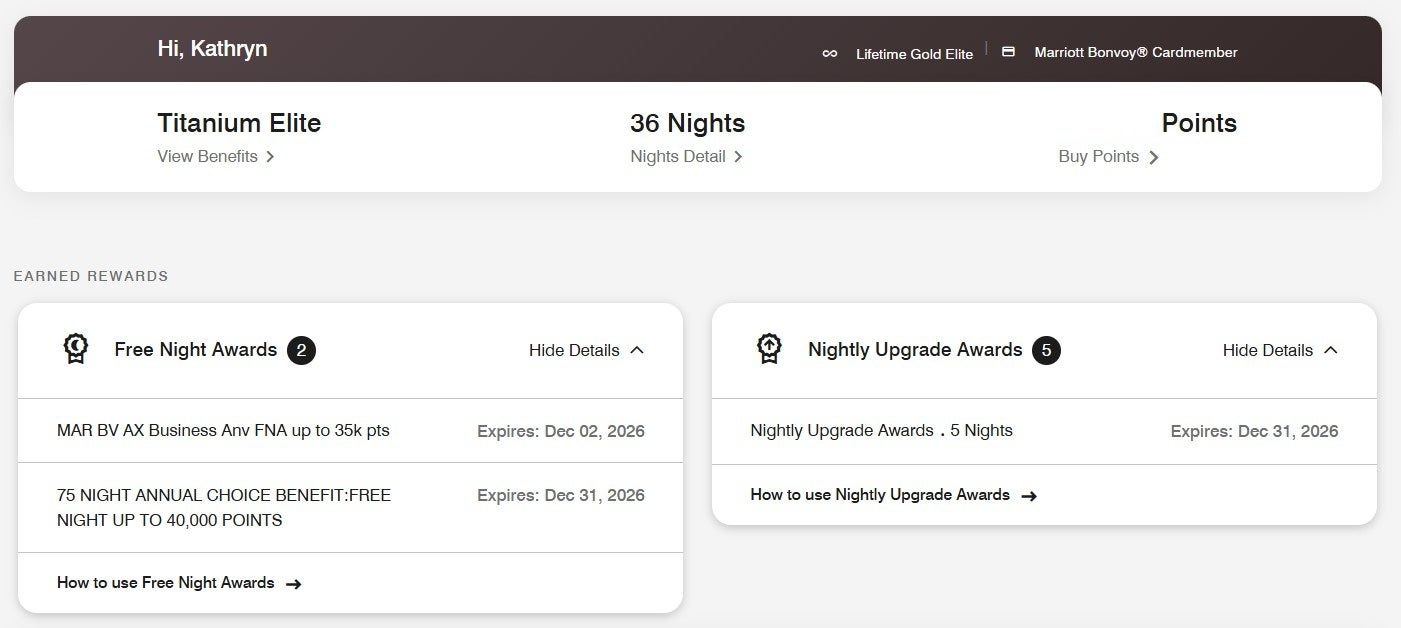
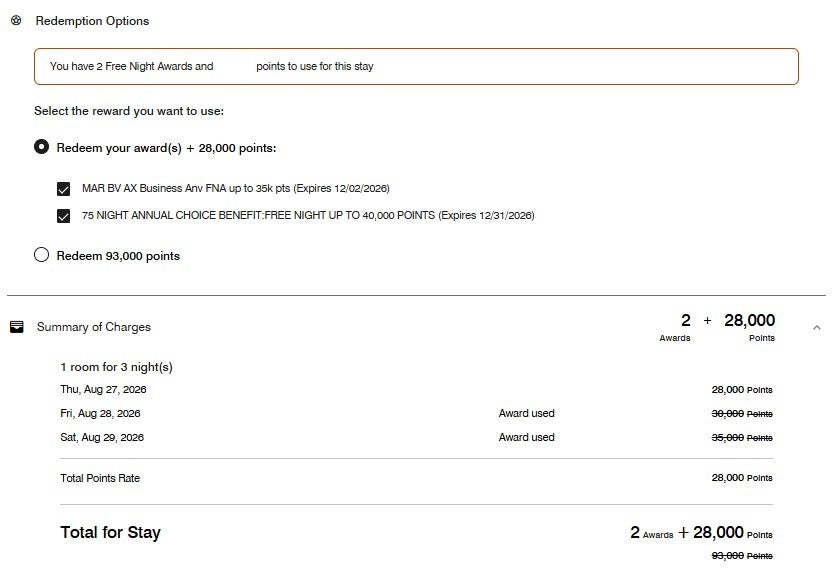
The true evolution of the Marriott free night award came with the introduction of the "top-off" feature. Historically, a 35,000-point certificate was strictly capped; if a room cost 36,000 points, the certificate was useless. Today, Marriott allows members to "top off" their certificates with up to 25,000 additional points from their Bonvoy account. This change fundamentally altered the value proposition of the 35,000-point award. It effectively transforms a mid-tier certificate into a high-tier one, allowing access to properties priced up to 60,000 points per night. This range encompasses many Autograph Collection, Westin, and even some Ritz-Carlton or St. Regis properties, particularly during off-peak periods or in markets where award pricing is more favorable.
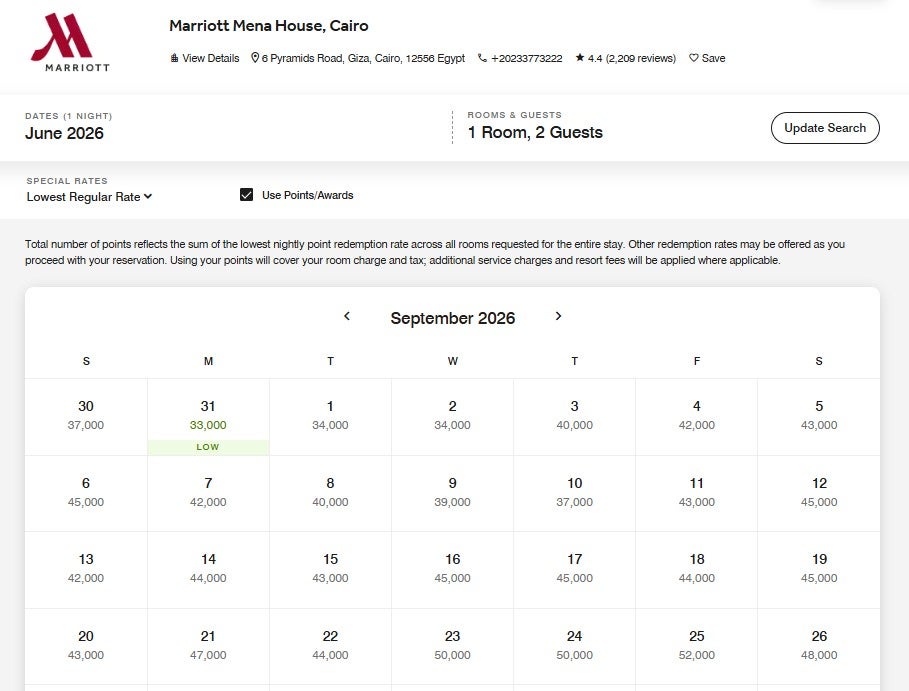
When it comes to the mechanics of redemption, the process is integrated directly into the Marriott booking engine. To find a suitable room, a member should search for hotels using the "Use Points/Awards" filter. For those with flexibility in their schedule, the "Flexible Dates" calendar is an indispensable tool. Because Marriott moved to a dynamic pricing model, the point cost for a single hotel can fluctuate wildly from one night to the next. A property that costs 45,000 points on a Friday might drop to 34,000 points on a Sunday, making it eligible for the certificate without any top-off required.
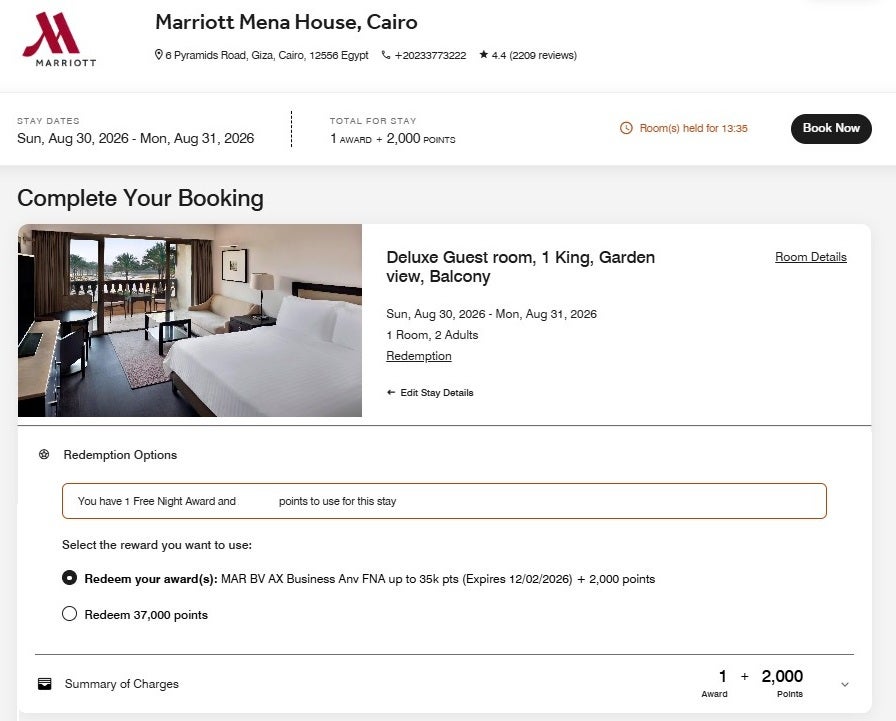
Once a property is selected, the checkout screen will present the option to apply the available certificate. If the room rate exceeds 35,000 points but stays under the 60,000-point threshold, the system will automatically calculate the difference and deduct the remaining points from the user’s balance. It is also possible to chain multiple certificates together or mix them with points for longer stays. However, travelers should remain aware of "resort fees" or "destination fees." While the certificate covers the room rate and taxes, Marriott generally does not waive these ancillary fees for award stays, unlike some competitors like Hilton or Hyatt.
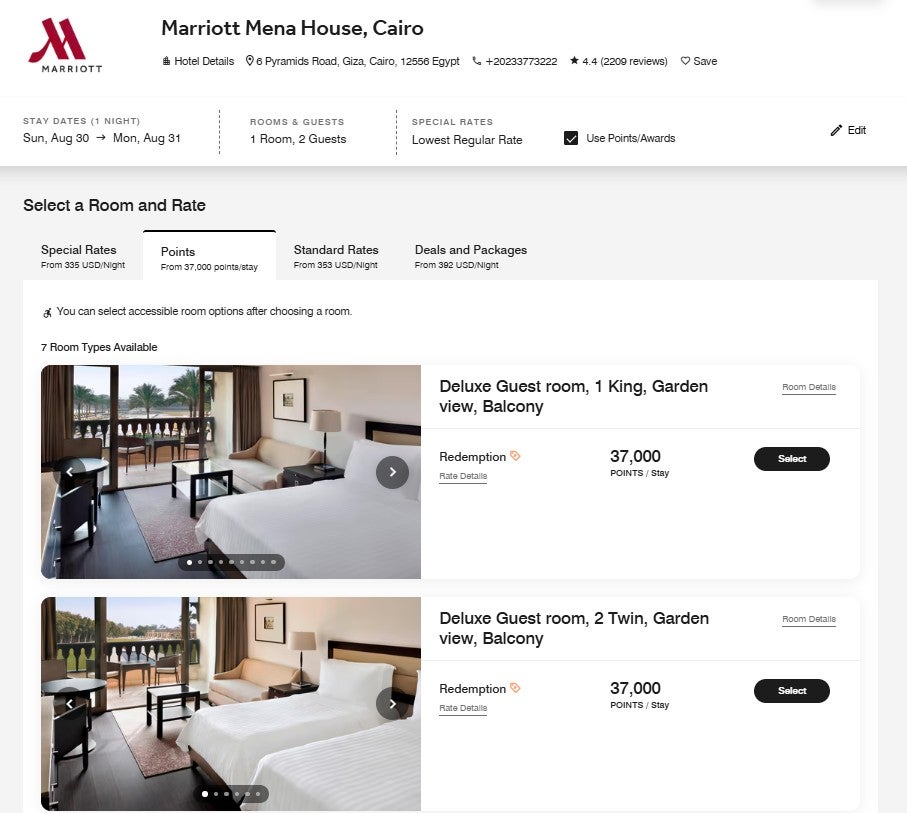
The real-world value of these certificates is best illustrated through recent staff experiences at The Points Guy. These anecdotes serve as a benchmark for what constitutes a "good" redemption. For instance, Katie utilized her 35,000-point certificates at several high-value international locations. At the Marriott Mena House in Cairo, she secured a stay that would have otherwise cost $419 in cash. This property, famous for its views of the Great Pyramid of Giza, represents an exceptional use of a certificate earned from a $95 or $125 annual fee card. Similarly, a stay at the Four Points by Sheraton Edinburgh would have cost $353, and a night at the Moxy Barcelona would have been $242. In each case, the cash savings far exceeded the cost of the credit card’s annual fee.
Summer’s experience in Edinburgh further highlights the utility of the top-off feature. By adding 12,000 and 15,000 points to her certificates, she was able to stay at the Moxy Edinburgh Fountainbridge and the Residence Inn Edinburgh. During peak travel seasons in historic European cities, cash rates can skyrocket, making these certificates a vital tool for budget management. Other staff members have found success in the domestic U.S. market. Zoe Jablow used a 35,000-point certificate plus a 15,000-point top-off to stay at the historic Westin St. Francis on Union Square in San Francisco. By pairing the certificate with a Nightly Upgrade Award, she was able to confirm a one-bedroom suite, maximizing both the comfort and the monetary value of the redemption.
Nick Ewen, another seasoned traveler, recently applied a certificate with a minor 2,000-point top-off for a night at the Asher Adams, an Autograph Collection property in Salt Lake City. With a cash rate of $263, the redemption provided a clear "win" against the annual fee. These examples underscore a vital strategy: the goal should always be to use the certificate for a stay that costs more than the annual fee of the card that provided it. According to current valuations, Marriott Bonvoy points are worth approximately 0.85 cents each. Therefore, a 35,000-point certificate has a baseline value of roughly $297. If a traveler can find a redemption where the cash price (including taxes) exceeds $300, they are achieving excellent value.
However, the strategy is not without its pitfalls. One common mistake is "saving" the certificate for a perfect trip that never happens, leading to expiration. Experts suggest that if a certificate is within three months of expiring, it is better to use it for a "good" redemption rather than waiting for a "great" one. Another consideration is the cancellation policy. If a reservation made with a certificate is cancelled within the hotel’s allowed window, the certificate should be redeposited into the account automatically. However, glitches can occur, and travelers are advised to verify the redeposit immediately or contact customer service to have it manually restored.
The landscape of hotel loyalty is constantly shifting, but the 35,000-point Marriott certificate remains a remarkably stable asset. While Marriott’s higher-tier cards, like the Marriott Bonvoy Brilliant® American Express® Card, offer 85,000-point certificates, those cards come with significantly higher annual fees (often $650). For the average traveler, the mid-tier cards provide a more manageable entry point into the world of "free" luxury travel. The ability to stack benefits—such as the 15 Elite Night Credits from a personal card with the 15 credits from a business card—allows a traveler to start the year with 30 nights toward status, halfway to the coveted Platinum Elite level, all while holding two certificates that can easily cover $600 to $800 in lodging costs.
In conclusion, the Marriott 35,000-point free night award is more than just a promotional gimmick; it is a sophisticated financial tool for the savvy traveler. By understanding the earning potential of the Boundless and Business Amex cards, mastering the "top-off" mechanic, and targeting high-cash-rate properties in global hubs, cardholders can ensure their annual fees are not just an expense, but an investment in future travel. Whether it’s a view of the Pyramids or a suite in San Francisco, these certificates prove that with a little bit of data and a lot of strategy, the world remains within reach.