
 By admin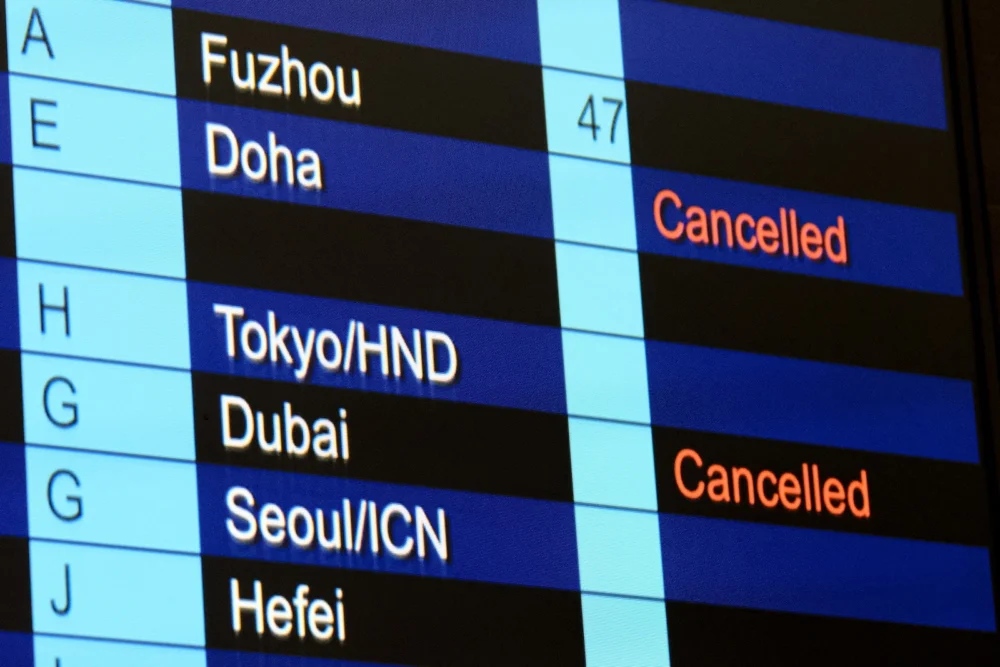
The geopolitical landscape of the Middle East shifted violently in the early hours of Saturday, triggering a massive aviation crisis that has left tens of thousands of international travelers stranded and paralyzed some of the world’s most critical flight corridors. Following a series of missile strikes launched by the United States and Israel against targets in Iran, the region descended into a cycle of retaliation. Iran responded not only by targeting Israeli territory but also by launching strikes against several key U.S. allies in the region, most notably the United Arab Emirates. This rapid escalation prompted an immediate and near-total shutdown of airspace across the heart of the Middle East, a move that sent shockwaves through the global travel industry and forced the cancellation of over 9,500 flights within a matter of days.
The timing of the conflict has been particularly devastating for the aviation sector. The Middle East serves as the "great bridge" between the East and the West, with Dubai International Airport (DXB) and Doha’s Hamad International Airport (DOH) acting as the primary transit points for millions of passengers traveling between Europe, North America, Asia, and Africa. When these hubs were forced to close their runways and clear their skies, the ripple effect was felt instantly in airports as far away as London, Sydney, and New York. As of Monday, March 2, the situation remains fluid and precarious. While some facilities like Dubai International and Abu Dhabi’s Zayed International Airport (AUH) have attempted to resume limited operations, the backlog of passengers and the continued threat of military activity have made a return to normalcy a distant prospect.
For those currently caught in the crosshairs of this travel emergency, the primary directive from global security experts is one of caution and patience. Healix International, a firm specializing in global risk assessment and security, issued a stern advisory to travelers in the region. "It is critical to adhere to all official directives amid renewed Iranian attacks and military activity. Travelers should be prepared to stand fast in a secure location for an extended period," the company stated. The emphasis on "standing fast" highlights the danger of attempting to reach airports that may be under-resourced, overcrowded, or situated near potential military targets. Security analysts suggest that the chaos at airport terminals can often become a secondary security risk during times of civil unrest or international conflict.
To mitigate these risks, the U.S. Department of State has urged all American citizens in the impacted areas to register for the Smart Traveler Enrollment Program (STEP). This free service is a cornerstone of consular assistance during overseas crises. By enrolling, travelers provide the State Department with their specific location and contact details, enabling the local embassy or consulate to send real-time security updates and instructions for evacuation or relocation if necessary. In a digital age, having a direct line to government-verified information is essential, as social media can often become a breeding ground for rumors and misinformation during a military crisis.
In an unprecedented move designed to maintain its reputation as a global hospitality leader, the United Arab Emirates government announced on Monday that it would step in to assist the more than 20,000 travelers currently stranded within its borders. The government has pledged to cover the costs of hotel accommodations and meals for those unable to depart due to the airspace closures. This gesture is aimed at providing a reprieve for families and business travelers who find themselves facing mounting costs in one of the world’s most expensive regions. However, despite this financial cushion, the logistical challenge of getting these travelers home remains immense.
The scale of the disruption is perhaps best illustrated by the data provided by FlightAware. In Dubai, more than 80% of all scheduled flights remained canceled as of Monday morning, while Abu Dhabi saw over half of its departures grounded. These statistics do not just represent numbers; they represent thousands of individual stories of missed connections and logistical nightmares. The crisis has also severely impacted "fifth freedom" flights and long-haul routes that rely on Middle Eastern airspace for efficiency. Travelers flying from Asia and Africa have found their routes severed. Mackenzie Roche, an editor for The Points Guy, recounted a harrowing experience of being stranded in Hanoi, Vietnam, after Qatar Airways canceled her connection through Doha. Her journey back to New York eventually required a grueling rebooking process involving three separate layovers in Hong Kong, Taipei, and Los Angeles.
For passengers attempting to navigate this crisis, the golden rule is to contact the airline before making any move toward the airport. Most major carriers operating in the region have issued travel waivers, allowing passengers to rebook their flights or request full refunds without the usual penalties. However, the terms of these waivers are highly specific to each airline and often have strict expiration dates. Navigating these options requires a proactive approach. Aviation experts recommend using an airline’s mobile app as the first line of defense, as call centers are currently overwhelmed with wait times often exceeding several hours. If digital tools fail, reaching out via social media platforms like X (formerly Twitter) can sometimes yield faster results, as airlines often staff these channels with dedicated crisis response teams.
A critical piece of advice for those who decide to take matters into their own hands by booking a new flight on a different carrier is to ensure their original booking is formally canceled. Michelle Couch-Friedman, a travel ombudsman, warns that airlines frequently use automated systems to reassign passengers to later flights. "If you book a new flight and don’t cancel your original one, you may be marked as a ‘no-show,’" she explained. This designation can void your right to a refund and complicate any future insurance claims.
The search for alternative routes has turned many travelers into amateur travel agents. Tools such as Google Flights and ExpertFlyer have become indispensable for identifying which airlines are still operating in the peripheral corridors of the conflict zone. When researching new routes, it is worth looking for flights that bypass the Middle East entirely, perhaps through hubs in Europe or Southeast Asia, though these seats are currently at a premium. Travelers should also be prepared for the financial reality that rebooking on a different airline is rarely covered by the original carrier or standard insurance providers.
The role of travel insurance in this crisis has been a point of significant confusion and frustration. Many travelers assume that a comprehensive policy will protect them from any unforeseen event, but the reality of "Act of War" clauses is far more restrictive. Michael Gusti, an analyst for InsuranceQuotes, points out that most standard policies specifically exclude losses resulting from war, whether declared or undeclared. "You aren’t going to be able to get help on that front," Gusti noted. Furthermore, insurance typically does not cover "fear of travel." If a flight is technically scheduled to depart but a passenger chooses not to fly due to the security situation, they are unlikely to be reimbursed for their decision.
There are, however, exceptions to these rigid rules. "Cancel for Any Reason" (CFAR) policies, while more expensive and offering lower reimbursement percentages (typically 50% to 75%), are often the only products that provide coverage in these scenarios. Additionally, many high-end credit cards, such as the Chase Sapphire Reserve or the American Express Platinum Card, offer built-in trip delay and cancellation protections. While these also have exclusions for civil unrest and war, they may cover secondary costs like meals and lodging if the delay is categorized as a "common carrier equipment failure" or a "weather-related" issue indirectly caused by the chaos.
As the week progresses, the aviation industry will be watching closely to see if the limited reopening of airports in the UAE signals a trend toward stabilization or if further retaliatory strikes will lead to a more permanent closure of the region’s skies. For now, the message to global travelers is clear: stay informed, stay secure, and prepare for a long road home. The Middle East travel crisis is not just a localized event; it is a stark reminder of how interconnected the modern world is and how quickly the lines of global commerce and movement can be severed by the flames of conflict. For those currently waiting in hotel lobbies or terminal lounges, the focus remains on safety first, with the hope that the diplomatic channels can eventually clear the way for the jet engines to roar once again.