
 By admin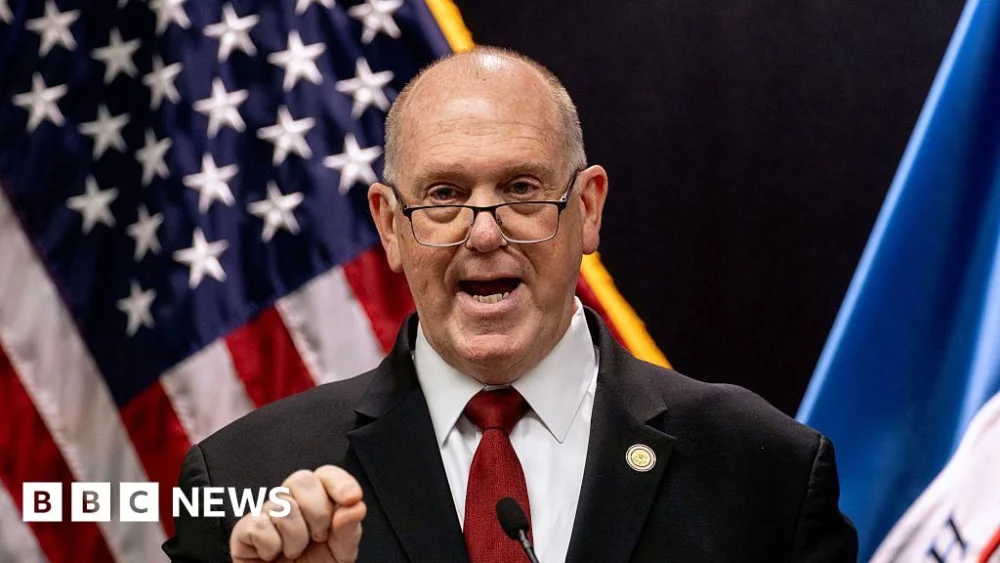
The intensive, large-scale immigration enforcement operation that has significantly increased the presence of federal agents across Minnesota is slated to conclude, according to Tom Homan, the Trump administration’s designated "border tsar." Homan, who has been overseeing the initiative, announced during a press conference on Thursday morning that President Donald Trump has formally approved his request to wind down the operation. This decision marks a significant shift in federal immigration strategy for the state, signaling a move away from the heightened enforcement posture that has been in place.
"I will also remain in Minnesota a little longer to oversee the drawdown, to ensure its success," Homan stated, emphasizing his continued personal involvement in the transition phase. His presence in the state is intended to guarantee a smooth and effective conclusion to the operation, ensuring that all objectives are met and that a sustainable federal immigration presence is maintained. This phased withdrawal aims to prevent any abrupt changes that could destabilize the situation or undermine the progress achieved.
Homan attributed the decision to end the surge to a perceived shift in Minnesota’s approach to immigration, suggesting that the state has become "less of a sanctuary state." This assertion stems from what he described as increased cooperation from local officials with federal immigration authorities. This newfound collaboration, according to Homan, has been instrumental in enabling federal agents to more effectively identify and apprehend individuals residing in the country unlawfully. The concept of "sanctuary cities" or "sanctuary states" has been a focal point of the Trump administration’s immigration policy, with federal officials often criticizing these jurisdictions for policies that they argue hinder immigration enforcement efforts. Homan’s statement implies that Minnesota has moved away from such policies, thus reducing the need for the extraordinary surge of federal personnel.
The recent deployment, which saw more than 2,000 immigration officers descend upon Minnesota, generated considerable controversy and sparked nationwide protests. The surge gained particular national attention last month following two highly publicized incidents where federal agents were involved in the deaths of two U.S. citizens. These tragic events amplified existing concerns about the tactics and potential for excessive force employed by immigration enforcement agencies, leading to widespread condemnation and calls for greater accountability. Critics argued that the increased federal presence, coupled with aggressive enforcement, created a climate of fear and could lead to unintended consequences, including the erosion of trust between immigrant communities and law enforcement.
Despite the controversy, Homan characterized the operation, known as "Operation Metro Surge," as a "great success." He elaborated on this assessment by stating that Minnesota officials have been able to "greatly reduce the number of targets" for immigration enforcement. This statement suggests that the operation has been effective in identifying and apprehending individuals who were previously considered targets for deportation. Homan’s definition of "targets" likely includes undocumented immigrants who have prior criminal convictions or are believed to pose a public safety risk.
During his remarks, Homan specifically highlighted the arrest of several undocumented immigrants, whom he referred to using the term "illegal aliens." He pointed to instances where men arrested were alleged to have been convicted of rape and other sexual misconduct. This emphasis on apprehending individuals with criminal histories aligns with the stated priorities of the Trump administration’s immigration enforcement strategy, which often focuses on deporting individuals who have committed crimes. By presenting these arrests as key achievements, Homan sought to underscore the purported public safety benefits of the enforcement surge. This narrative aims to justify the extensive resources and personnel deployed, framing the operation as a necessary measure to protect communities.
Homan also clarified that the conclusion of the surge does not signify a complete withdrawal of Immigration and Customs Enforcement (ICE) from Minnesota. He asserted that ICE has "always had a presence in Minnesota and will continue to have one." This assurance is crucial for maintaining ongoing immigration enforcement activities and for ensuring that federal agencies can respond to future immigration-related issues. The operational capacity of ICE in Minnesota is intended to remain robust, albeit at a more normalized level.
He further detailed the nature of this continued presence, stating, "A small footprint of personnel will remain for a period of time to close out and transition full command and control back to the field office." This indicates that a dedicated team will stay behind to manage the administrative and logistical aspects of winding down the surge operation. Their responsibilities will include finalizing ongoing investigations, transferring cases, and ensuring that the transition of authority back to the regular field office operations is seamless. This managed drawdown is designed to ensure continuity and prevent any disruption in essential federal immigration functions within the state.
The background context for this surge operation lies within the broader immigration policy agenda of the Trump administration. From its inception, the administration made immigration enforcement a central pillar of its platform. This included a commitment to increased deportations, enhanced border security, and a crackdown on what it termed "sanctuary cities" and "sanctuary states." The deployment of surge teams, like the one in Minnesota, was a tactic employed by the administration to amplify enforcement efforts in specific regions deemed to be priorities. These surges often involved reassigning agents from other parts of the country or drawing from specialized units to bolster local ICE field offices.
The stated objectives of such surges typically include increasing arrests of undocumented immigrants, particularly those with criminal records, and sending a strong message to immigrant communities and local law enforcement about the federal government’s commitment to enforcing immigration laws. However, these operations have frequently been met with significant opposition from immigrant rights advocates, civil liberties organizations, and local officials who argue that they are counterproductive, lead to community fear, tear families apart, and can strain resources at the local level.
In Minnesota, the specific context for the surge may have been influenced by a combination of factors, including perceived high numbers of undocumented immigrants, a desire to test the effectiveness of federal enforcement strategies in a Midwestern state, and potentially political considerations. The state’s demographic makeup, with a growing immigrant population, also makes it a significant area for immigration policy discussions and enforcement activities.
The protests that erupted following the deaths of the two U.S. citizens underscored the deep societal divisions and the intense scrutiny under which immigration enforcement operates. These incidents raised critical questions about the protocols, training, and oversight mechanisms governing federal immigration agents, particularly during large-scale enforcement operations. The calls for greater transparency and accountability in such situations highlight the complex ethical and legal dimensions of immigration enforcement.
The notion of Minnesota becoming "less of a sanctuary state" warrants further examination. Historically, "sanctuary" policies can vary widely, ranging from formal ordinances prohibiting local law enforcement from cooperating with federal immigration agents on immigration enforcement matters to more informal practices of declining to honor certain federal detainer requests. If local authorities in Minnesota have indeed increased their cooperation with ICE, it could involve actions such as sharing information about individuals in local custody, honoring detainer requests more consistently, or participating in joint enforcement task forces. Such cooperation can significantly enhance the effectiveness of federal immigration enforcement by providing access to individuals who might otherwise not be easily located.
The term "illegal aliens" used by Homan is a point of contention. Many immigrant rights organizations and legal scholars prefer terms like "undocumented immigrants" or "non-citizens," arguing that "illegal alien" is dehumanizing and legally inaccurate, as the term "alien" is a legal term of art and does not inherently denote criminality. The choice of language often reflects differing perspectives on immigration and the legal status of individuals residing in the country without authorization.
The lasting impact of "Operation Metro Surge" will likely be multifaceted. On one hand, the administration will point to the number of arrests and the perceived reduction in the pool of "targets" as evidence of success. This could be used to justify similar operations in other states or to bolster arguments for stricter immigration policies. On the other hand, the operation has undoubtedly left a mark on immigrant communities in Minnesota, potentially increasing fear and mistrust of government authorities. The controversy surrounding the surge and the tragic incidents that occurred during its tenure will likely continue to be debated, shaping discussions about immigration enforcement for years to come.
The transition back to a "small footprint" of personnel is a standard practice after surge operations. It allows for the integration of lessons learned, the reallocation of resources, and the return to more sustainable operational models. However, the effectiveness of ongoing ICE operations will depend on factors such as staffing levels, budget allocations, and the continued cooperation of state and local authorities. The long-term implications for immigration policy in Minnesota will also be shaped by future political developments and the priorities of subsequent administrations. The end of this surge marks a pause in a period of intensified federal immigration enforcement, but the underlying policy debates and operational challenges remain.