
 By admin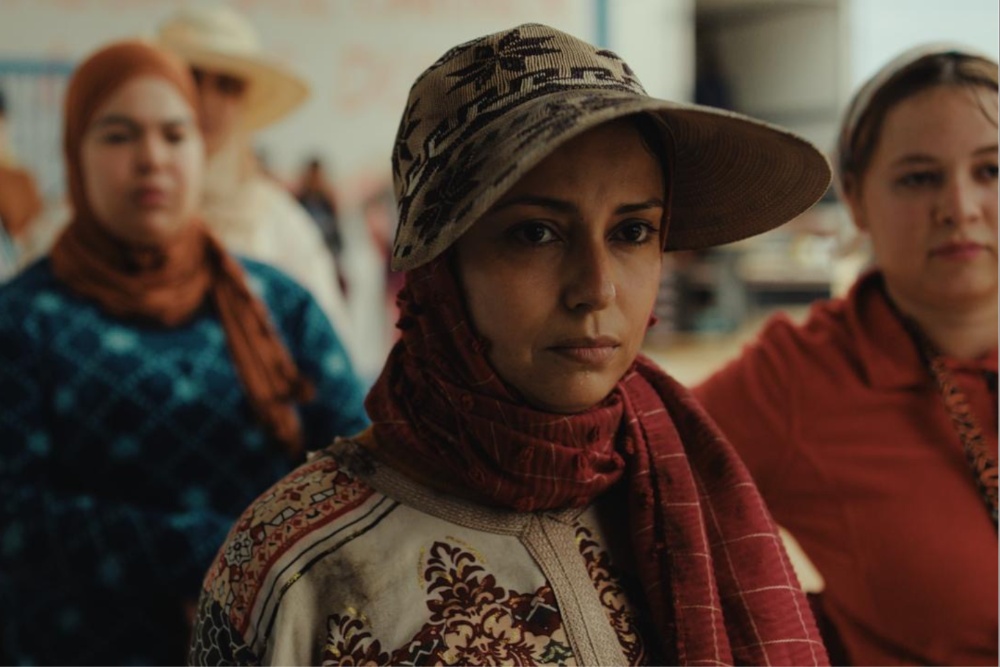
Morocco’s cinematic prowess is set to command global attention at this year’s European Film Market (EFM), a testament to a profound generational shift and the burgeoning maturity of the country’s film industry. For decades, Morocco has been a sought-after destination for international productions, lauded for its political stability, robust infrastructure, and breathtaking natural landscapes that have graced countless cinematic masterpieces. However, the industry’s trajectory shifted dramatically in 2018 with the introduction of a competitive tax credit, now offering up to a 30% rebate on eligible production expenditures. This pivotal year also witnessed the launch of the Marrakech Film Festival’s Atlas Workshops, an ambitious industry platform meticulously designed to foster connections between emerging filmmakers from the region and international sales agents and co-production partners, right on their home soil.
The Atlas Workshops have since undergone a remarkable expansion, evolving from a nascent initiative to a cornerstone of regional film development. To date, it has provided crucial support to over 150 projects, playing an instrumental role in launching the careers of filmmakers like Asmae El Moudir. Her 2023 hybrid documentary, "The Mother of All Lies," garnered widespread international acclaim, solidifying its position as one of the most celebrated Moroccan films in recent memory. Concurrently, Morocco has experienced a significant surge in foreign productions, drawn by the attractive incentives and the country’s unparalleled visual appeal. Prestigious titles such as Oliver Laxe’s "Sirát" and Christopher Nolan’s "The Odyssey" have masterfully utilized Morocco’s diverse terrains to create immersive cinematic worlds. The Moroccan Cinematographic Center (CCM) reported that in 2025 alone, the incentive scheme backed 23 foreign features, injecting over $165 million into the local economy and underscoring the country’s growing importance as a filming hub.
This influx of international projects has been mirrored by a significant upswing in domestic production. Last year, the Moroccan film industry delivered an impressive 54 films, a stark contrast to the turn of the millennium when output had dwindled to a mere four features. This dramatic increase signals a revitalized creative ecosystem and a growing confidence within the national filmmaking community.
Now firmly established as both a premier service destination for global productions and a rapidly developing industry hub in its own right, Morocco is strategically looking outward. The nation is fielding substantial delegations at key international platforms like the Venice Production Bridge and, notably, this year’s EFM. These appearances are designed to directly connect a new generation of Moroccan filmmakers with the global market, facilitating collaborations and expanding their reach.
Mohammed Reda Benjelloun, director of the CCM, eloquently captures this ambition: "We are a country of stories," he states. "But the challenge today is scale. It’s no longer enough for one, two, or three films a year to travel internationally; we need five or 10. Developing a project is one thing; pitching it on the international stage is another. A strong narrative and a solid dossier are essential, but convincing European producers and international funding bodies to invest is real work. That’s why it’s so important for our filmmakers to be here, confronting the market and understanding how it truly operates."

In alignment with these forward-thinking objectives, the CCM is presenting a delegation of 10 Moroccan producers at this year’s Berlin market. These individuals were carefully selected from a pool of over 75 applicants, with a rigorous vetting process prioritizing gender parity and demonstrable international potential. The EFM will also feature a special promotional screening of Laila Marrakchi’s highly anticipated film "Strawberries." Fresh from winning the top post-production prize at the Atlas Workshops, the film is poised to become one of the year’s most prominent Moroccan features, showcasing the country’s creative output on a global stage.
Simultaneously, a parallel and equally vital push is underway domestically. Film schools and professional training programs are expanding their curricula and reach, fostering the next wave of talent. Furthermore, renewed efforts are being made to engage the Moroccan diaspora, leveraging their global networks and experiences. As Benjelloun articulates the overarching vision: "The goal is to ‘internationalize the production process, but not the stories.’" This philosophy emphasizes maintaining the unique cultural authenticity of Moroccan narratives while embracing global production standards and market access.
A prime example of this evolving landscape is the police procedural series "K-1," which has been selected for the Berlinale Series Market. Showrunner Khadija Alami, a seasoned figure in bridging Moroccan and Hollywood productions through her company K-Films, spearheaded the project with an international standard in mind. She introduced the showrunner model to Morocco, a significant innovation for the local industry, and enlisted acclaimed feature directors Yasmine Benkiran, Nour-Eddine Lakhmari, and Hicham Ayouch to lend each episode a distinct cinematic flair.
"It’s a new way of working in Morocco, and I think it’s going to spark something," Alami remarks, highlighting the transformative potential of such collaborative and forward-thinking approaches. She emphasizes the long-standing presence of foreign productions in Morocco, noting that for a century, these shoots rarely considered the creative contributions of Moroccan directors. "K-1" represents her answer to this historical oversight. "We already have the skills, the crews, the vision," she asserts. "Now we’re proving it – on our own terms, and at the same level as British, French or American creators."
Producer Lamia Chraibi, a prominent voice in the Moroccan film community, echoes this sentiment of self-determination and cultural preservation. "We can’t just make small, insular projects for ourselves," she states. "We often talk about American soft power, but today every filmmaker in our region feels that if we don’t tell our own stories, Orientalist narratives will persist. We need to work carefully and with skill to challenge global audiences and get our stories out as widely as possible." Chraibi, along with Alami, is part of a significant wave of Moroccan film professionals who are actively repositioning the nation’s film industry from a mere service provider to a vital international creative partner. Their presence among the 10 producers heading to Berlin for the Moroccan Producers Spotlight underscores this strategic shift.
Chraibi further elaborates on the evolving role of producers in the Moroccan context: "There’s a big difference between a producer who simply manages funds and a creative producer who shapes the story, the script, and the strategy for financing and distribution. Until recently, that role barely existed in Morocco, yet this global understanding is essential in a country where budgets are limited." This recognition of the creative producer’s crucial role is vital for navigating the complexities of international co-productions and maximizing the impact of limited resources.

Through her Casablanca-based outfit LaProd, Chraibi has been instrumental in developing co-productions, notably facilitating Oliver Laxe’s debut, "Mimosas," which garnered the prestigious Grand Prize at the Cannes Critics’ Week in 2016. Beyond her production work, Chraibi has made an even broader impact as a co-founder of the Tamayouz Foundation. Established in the pivotal year of 2018, this non-profit organization is dedicated to empowering women in the film industry by providing entry-level training in directing, screenwriting, production, and post-production, coupled with crucial financial support and mentorship.
Over the past five years, the Tamayouz Foundation has provided a supportive environment for approximately 100 filmmakers through its residencies, training programs, and professional workshops. This initiative is specifically geared towards nurturing emerging talent and equipping them with the skills and connections necessary to transition into feature filmmaking. Among its notable alumni is producer Oumayma Zekri Ajarrai, who produced the critically acclaimed short film "L’amina," winner at Cannes Critics’ Week last year. Ajarrai will also be participating in the Moroccan Producers Spotlight, aiming to launch her Tamayouz-supported feature project, "Road to Limbo," directed by Ayoub Lahnoud.
"We focus on nurturing careers," Chraibi emphasizes, underscoring the foundation’s long-term commitment to its alumni. "We maintain a community-based approach, supporting alumni over the long term – whether they need legal advice or strategic guidance. With the active support of the CCM, our goal is to push the system forward: to renew it, open it up, and make room for an industry that is already transforming." This holistic approach to talent development and industry advancement is a hallmark of Morocco’s progressive vision for its cinematic future.
Filmmaker Alaa Eddine Aljem, another of the 10 producers selected for Berlin, embodies this generational shift and the revitalized spirit of Moroccan cinema. Two decades ago, Aljem was among the inaugural graduates of ESAV Marrakech, a film school co-founded with the esteemed Martin Scorsese. Today, he leads the very same institution, welcoming approximately 40 new students each year into bachelor’s and master’s programs that offer specialized tracks in cinematography, sound, editing, directing, and screenwriting. This signifies a full circle moment, with a former student now at the helm, shaping the future of cinematic education in Morocco.
The significant growth of Morocco’s film sector has not only generated more opportunities for local professionals but has also attracted an increasing number of international applicants to its educational institutions. This global appeal is directly reflected in Aljem’s own projects. In addition to his academic responsibilities, he continues to work actively as a producer and director, diligently integrating ESAV alumni into key technical roles on films such as "Out of School." This feature documentary, directed by Hot Docs winner Hind Bensari, recently secured two awards at Final Cut in Venice. Aljem is also set to shoot his upcoming feature, "El Dorado," later this year.
Looking towards the future, Aljem has ambitious plans to expand ESAV’s facilities, particularly in graphic design, VFX, and animation. This expansion aligns perfectly with the CCM’s overarching objective of transforming Morocco into a comprehensive full-service production and post-production hub. "Today, ESAV is operating at roughly half its potential," Aljem explains. "There’s still room to grow, both in scale and scope. Over the next five years, the goal is steady development, aligned with what festivals, the CCM, and other institutions are doing. We’re living through a pivotal period for Moroccan cinema; the sector is changing as the industry takes greater structure." This strategic expansion into post-production services will further enhance Morocco’s appeal to international filmmakers and solidify its position as a complete cinematic destination. The collective efforts of filmmakers, producers, institutions, and government bodies are coalescing to propel Moroccan cinema onto the global stage, showcasing its rich storytelling traditions and its burgeoning capacity for world-class film production.