
 By Isnaini Azizah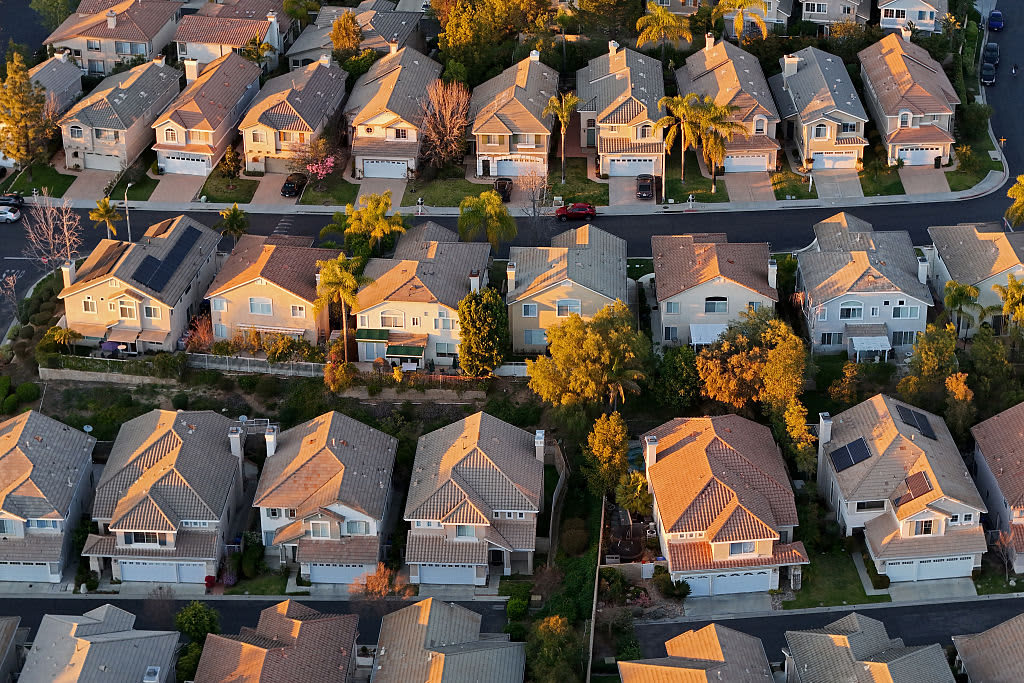
The American housing market faced a sharp reality check on Friday as mortgage rates climbed to their highest levels since early September, driven by a volatile cocktail of rising bond yields and escalating geopolitical instability in the Middle East. According to data provided by Mortgage News Daily, the average rate for a standard 30-year fixed mortgage hit 6.41%, marking a significant reversal from the brief period of optimism just two weeks ago when rates flirted with the psychological floor of 6.00%. While this current figure remains lower than the 6.78% peak recorded during the same period last year, the suddenness of the spike has sent ripples of concern through a real estate industry that was bracing for a robust spring selling season.
The primary catalyst for this most recent upward trajectory is the widening conflict involving Iran, which has fundamentally altered investor behavior in the bond market. Typically, in times of international strife, investors flee to the perceived safety of U.S. Treasuries—a phenomenon known as a "flight to quality." Under normal circumstances, this increased demand for bonds would drive prices up and yields down, consequently lowering mortgage rates. However, the current situation in the Middle East has introduced a more complex economic variable: the threat of energy-driven inflation.
Because the region is a critical hub for global oil production, the specter of a prolonged war has raised fears of a spike in crude prices. Sustained higher energy costs contribute directly to inflation, which is the primary enemy of fixed-income assets like bonds. When inflation expectations rise, investors demand higher yields to compensate for the eroding purchasing power of future interest payments. Consequently, the yield on the 10-year U.S. Treasury, which serves as the most influential benchmark for domestic mortgage pricing, surged on Friday, pulling mortgage rates upward in its wake.
Matthew Graham, the chief operating officer at Mortgage News Daily, noted that the market’s reaction highlights a shift in how geopolitical risk is being priced. "This is counterintuitive for those who expect bonds to serve as a safe haven in times of uncertainty," Graham explained. "But when war has a direct impact on inflation expectations, it’s more than enough to offset any of the safe-haven benefit that might otherwise be seen." This dynamic suggests that as long as the conflict remains unresolved or threatens to expand, the downward pressure on mortgage rates that many analysts predicted for the second quarter of the year may remain elusive.
The timing of this rate hike is particularly troublesome for the U.S. housing market, which is currently entering its most active phase. The "spring bounce" is traditionally the period when the highest volume of homes are listed and sold. Just last week, there were signs of burgeoning resilience; the Mortgage Bankers Association reported an uptick in mortgage applications from prospective homebuyers who were eager to lock in rates while they were still hovering near multi-year lows. Two weeks ago, the 30-year fixed rate briefly touched 5.99%, a milestone that many believed would unlock a wave of sidelined buyers. However, that window of opportunity has slammed shut, and any financial relief afforded by that temporary dip has been erased.
The impact of this 42-basis-point jump is far from academic; it translates into a tangible financial burden for the average American family. Consider a homebuyer purchasing a property at the national median price of approximately $400,000. With a standard 20% down payment and a 30-year fixed mortgage, the principal and interest portion of the monthly payment at today’s 6.41% rate is roughly $115 higher than it would have been at the 5.99% rate seen just fourteen days ago. Over the course of a 30-year loan, this represents more than $41,000 in additional interest payments. For many middle-income families already grappling with high grocery prices and utility costs, an extra $115 a month can be the difference between qualifying for a loan and being priced out of the market entirely.
The strain is also being felt at the corporate level, particularly among the nation’s largest residential developers. Lennar, a titan in the homebuilding industry, recently released first-quarter earnings that failed to meet the lofty expectations of Wall Street. The company’s performance is often viewed as a bellwether for the broader health of the new-construction market. In a statement accompanying the earnings report, Lennar CEO Stuart Miller was candid about the obstacles facing the sector. Miller identified a "cautious consumer sentiment" and "geopolitical uncertainty" as major deterrents, specifically citing the recent conflict in Iran as a complicating factor for the domestic economy.
Miller’s assessment points to a broader malaise: even if consumers can technically afford a 6.4% mortgage, the psychological weight of global instability and the fear of a potential recession often lead to a "wait-and-see" approach. This hesitation is a significant headwind for builders who have already been forced to offer expensive "rate buy-downs" and other incentives to keep their inventory moving. If rates remain elevated, the cost of these incentives will continue to eat into the profit margins of builders, potentially leading to a slowdown in new housing starts at a time when the country desperately needs more supply.
The current situation is further exacerbated by the "lock-in effect," a phenomenon where existing homeowners who secured mortgage rates in the 3% or 4% range during the pandemic era are unwilling to sell their homes. For these homeowners, moving to a new property would mean trading a historically low interest rate for one that is nearly double, resulting in a massive increase in monthly housing costs for a home of similar or even lesser value. This has led to a chronic shortage of existing home inventory, forcing buyers into the new-construction market where prices are often higher.
In regions like Thousand Oaks, California—where two-story single-family homes dominate the landscape—the sensitivity to interest rate fluctuations is even more pronounced. In high-cost coastal markets, where home prices often exceed the national median by a significant margin, a half-percentage point increase in rates can translate into hundreds of dollars in additional monthly costs. This regional disparity underscores the uneven nature of the current housing crisis; while some parts of the country may see continued growth, high-priced markets are becoming increasingly inaccessible to anyone without significant existing equity or high liquid assets.
Looking ahead, the trajectory of mortgage rates will likely remain tethered to the Federal Reserve’s broader battle against inflation and the unfolding events in the Middle East. The Fed has signaled that it remains data-dependent, looking for "greater confidence" that inflation is moving sustainably toward its 2% target before it considers cutting the federal funds rate. While the Fed does not set mortgage rates directly, its policy decisions influence the 10-year Treasury yield. If inflation remains sticky due to rising energy costs, the Fed may be forced to keep interest rates "higher for longer," a scenario that would keep mortgage rates elevated well into the second half of the year.
Furthermore, the housing market is currently navigating a period of structural change. The recent settlement by the National Association of Realtors regarding commission structures is expected to introduce new variables into the cost of buying and selling a home. When combined with the highest mortgage rates in months, the cost of entry into homeownership is reaching a breaking point for many.
In conclusion, the surge to 6.41% is more than just a statistical fluctuation; it is a reflection of a global economy that is deeply interconnected. The conflict in Iran, while geographically distant, has a direct pipeline to the kitchen tables of American families through the mechanism of bond yields and inflation expectations. As the spring season progresses, the industry will be watching closely to see if buyers can adapt to this "new normal" of higher rates, or if the dream of homeownership will be deferred for another season. For now, the optimism of early March has been replaced by a sober recognition that the path to a more affordable housing market remains fraught with geopolitical and macroeconomic obstacles. The $115 monthly increase serves as a stark reminder of how quickly the financial landscape can shift, leaving both buyers and builders searching for stability in an increasingly uncertain world.