
 By Lina Irawan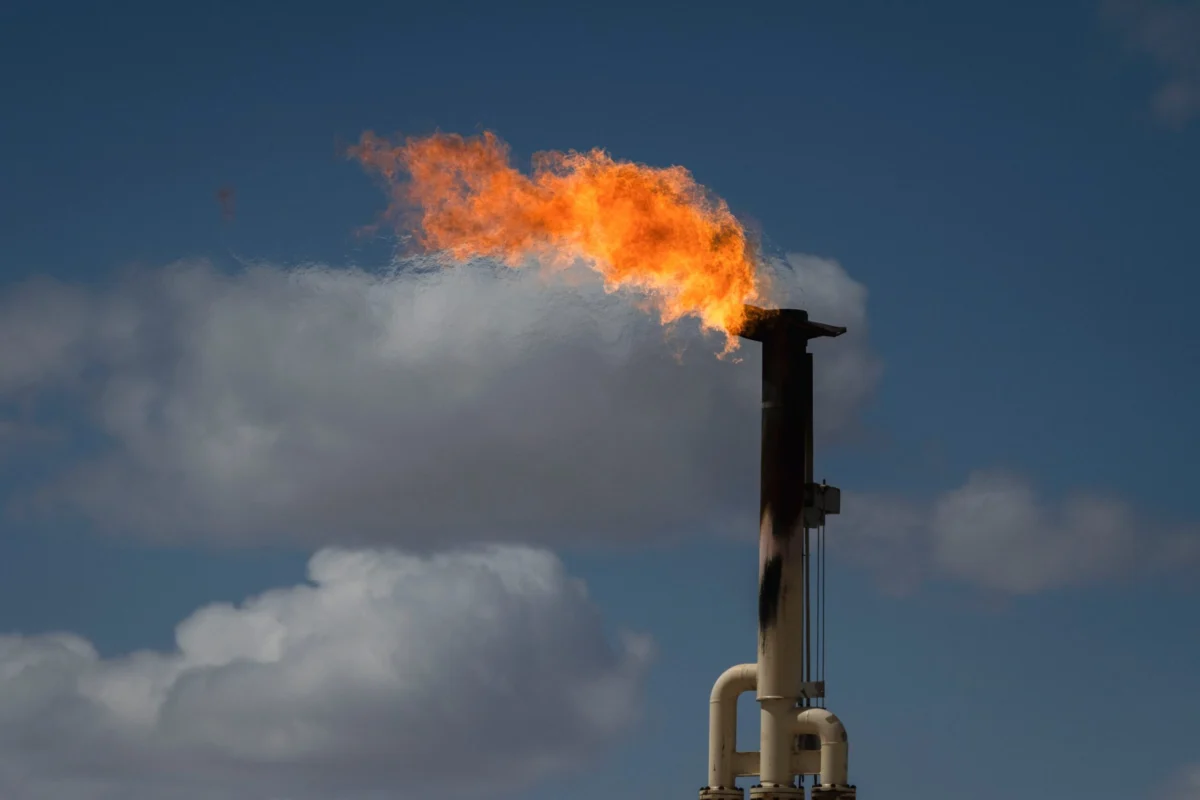
In the sprawling Permian Basin of West Texas, a region synonymous with America’s energy abundance, natural gas prices have plunged into negative territory, an economic anomaly that reflects a severe bottleneck in infrastructure. Over the past week, spot prices at the Waha gas trading hub, a crucial benchmark for the Permian, plummeted to as low as -$9.75 per million British thermal units (MMBtu). Traders, speaking to Bloomberg, have warned that this figure could dip further, potentially reaching -$10/MMBtu, as seasonal maintenance on critical pipelines later this year is expected to exacerbate existing capacity constraints. This phenomenon is not entirely novel for West Texas; negative gas prices have occurred more often than not this year, but the recent weekly average Waha spot price stands as the lowest on record, signaling a deepening crisis for producers in the region.
The root cause of this paradox lies in the geology and economics of the Permian Basin. This prolific oilfield yields not only vast quantities of crude but also significant volumes of associated natural gas, a byproduct of oil extraction. While the region boasts an extensive network of pipelines designed to transport crude oil to market, the infrastructure for natural gas transportation has lagged significantly. This imbalance creates localized surpluses that overwhelm existing pipeline capacity, particularly during periods of peak production or scheduled maintenance. For producers, negative prices mean they must pay counterparties to take the natural gas off their hands, effectively transforming a valuable commodity into a costly waste product. Consequently, excess natural gas is frequently burned off in a process known as flaring. This season has seen flaring events reach five-year highs, raising significant environmental concerns about greenhouse gas emissions and resource waste. Despite these punitive gas prices, Permian drillers are not expected to curb production. The sheer profitability of oil extraction, which far outweighs the losses incurred from negative gas prices, ensures that crude output remains robust. This economic calculus has only been reinforced by the recent surge in crude oil prices, which have approached $100 a barrel following the onset of the U.S.-Israel war on Iran, marking a 47% increase in just three weeks.
In stark contrast to the Permian’s predicament, other parts of the world are grappling with severe natural gas shortages and skyrocketing prices, directly attributable to the escalating conflict involving Iran. The U.S. war on Iran has triggered a series of retaliatory actions and disruptions that have sent shockwaves through global energy markets. One of the most critical developments has been Iran’s substantial closure of the Strait of Hormuz, a narrow maritime chokepoint through which approximately 20% of the world’s oil and liquefied natural gas (LNG) flows. This strategic waterway is indispensable for global energy trade, and its disruption carries immense implications for supply security and prices.
Further exacerbating the global supply crisis, Iran also launched a devastating attack on Qatar’s Ras Laffan Industrial City, a cornerstone of global LNG production. The assault inflicted significant damage on two critical LNG production trains, impacting approximately 17% of Qatar’s total LNG export capacity. Qatar is the world’s second-largest LNG exporter, making this disruption a major blow to global supply. Initial assessments suggest that repairs to the damaged facilities could take up to five years, signaling a prolonged period of reduced supply from one of the world’s most reliable sources. While a significant portion of Middle Eastern LNG typically flows to Asian markets, the magnitude of this supply shock is expected to ripple through the interconnected global LNG market, forcing Europe and Asia into fierce competition for the remaining available gas volumes.
The consequences for Europe have been immediate and severe. European benchmark gas futures, already sensitive due to the continent’s ongoing efforts to diversify away from Russian gas following the 2022 invasion of Ukraine, surged by as much as 35% on Thursday. Prices reached approximately 70 euros per megawatt-hour (MWh), equivalent to over $20/MMBtu—more than double their pre-war levels. Although these figures remain significantly below the record highs of 345 euros/MWh observed in 2022, the current price spike arrives at a particularly vulnerable juncture for Europe. The continent has just emerged from a demanding winter heating season, which drew down crucial gas inventories. Countries now face the critical task of replenishing these strategic reserves during the summer months, a period typically characterized by lower demand and more favorable pricing. The prospect of doing so amid a constricted global supply and heightened competition presents a formidable challenge, threatening to undermine economic stability and energy security across the bloc.
In Asia, the situation is even more dire, prompting countries to consider drastic energy rationing measures. Governments are exploring options such as implementing four-day workweeks and encouraging widespread remote work to conserve energy. This region, heavily reliant on LNG imports to fuel its rapidly growing economies and vast industrial sectors, is particularly exposed to supply disruptions. Analysts, speaking to Bloomberg, predict that a prolonged closure of the Strait of Hormuz could push LNG spot prices in Asia above $30/MMBtu this summer, up from $26/MMBtu in the spring. Should the strait remain shut for six months or longer, prices could even soar past $40/MMBtu, levels that would inflict severe economic pain across the continent.
Faced with such precarious energy prospects, several Asian nations are reverting to their 2022 playbook, turning to coal-fired power generation to meet electricity demand. This pivot, while addressing immediate energy security concerns, represents a significant setback for global climate goals and environmental commitments. For instance, the Thai government has already ordered its coal-fired power plants to operate at full capacity, prioritizing energy supply over emissions targets. Similarly, utilities in Bangladesh have substantially boosted their coal consumption. The ripple effect extends to critical global industries, with South Korea and Taiwan—two nations that collectively produce a substantial portion of the world’s semiconductors—signaling their preparedness to increase reliance on coal. This strategic shift highlights the extreme pressures these industrial powerhouses face, as uninterrupted energy supply is paramount for their technologically advanced economies.
Henning Gloystein, a managing director for energy at Eurasia Group, articulated the prevailing sentiment, telling the New York Times, "Asia is in full price competition, with any country that can switch from gas to coal doing so." This statement encapsulates the grim reality of a fragmented global energy market where economic necessity and immediate energy security are overriding environmental considerations. The current crisis not only exposes the fragility of global energy supply chains but also underscores the profound geopolitical leverage wielded by key energy-producing and transit regions. As West Texas grapples with an overwhelming surplus, the rest of the world faces a deepening energy crisis, a stark testament to the profound and uneven impacts of geopolitical instability on the global economy. The long-term implications for climate policy, industrial competitiveness, and international relations remain deeply uncertain, with the world bracing for a prolonged period of energy market volatility and strategic realignments.