
 By admin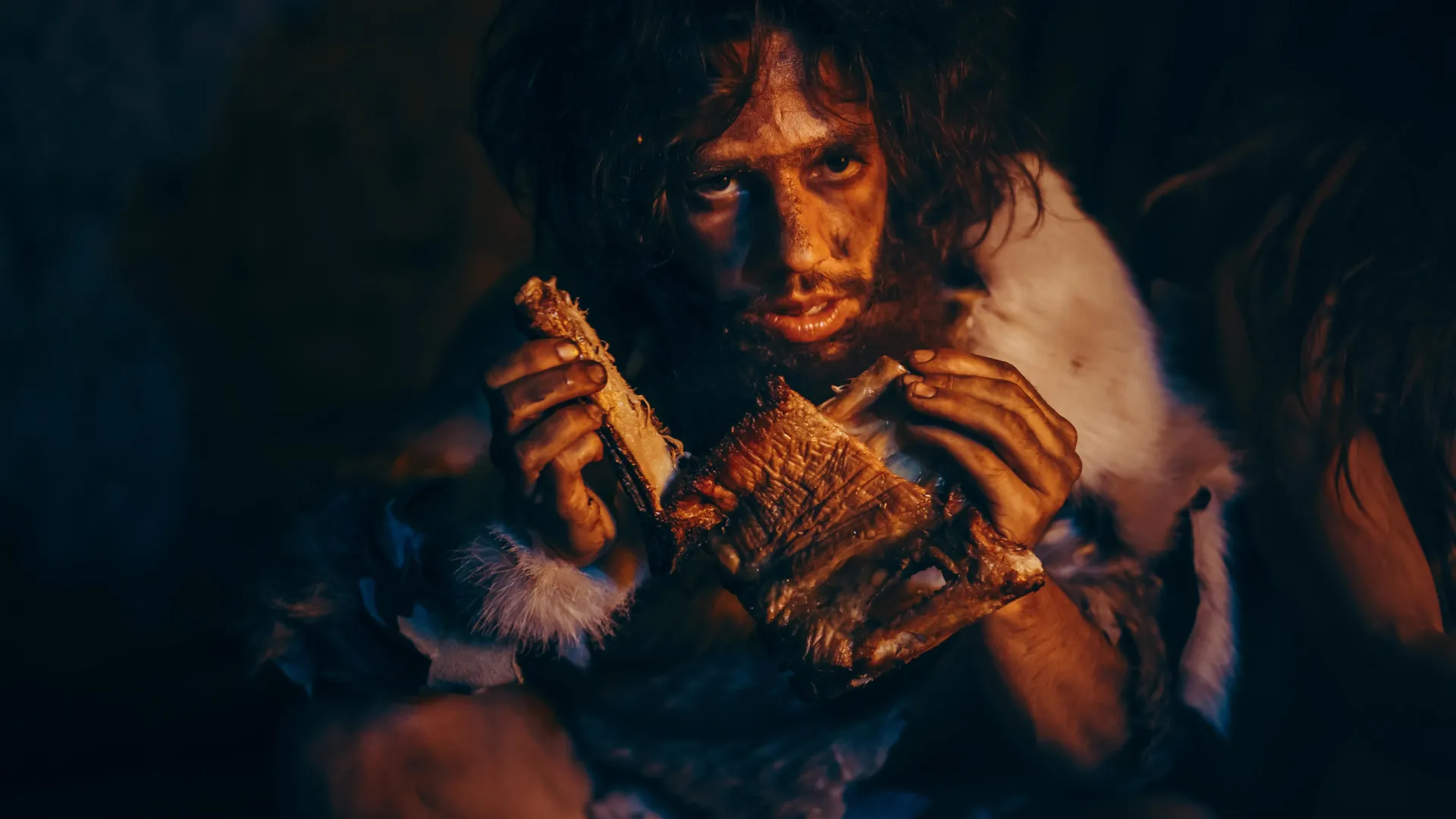
For the first time, scientists were able to build a comprehensive biological profile of the individuals whose bones were unearthed at the site. Their meticulous findings suggest that these people did not belong to the local Neanderthal group habitually occupying the Goyet cave system. Instead, sophisticated analyses indicate they likely originated from a different geographical region, implying they were either captured elsewhere and brought to the cave or encountered at the site. This "outsider" status of the victims is a critical element, transforming the interpretation of the cannibalistic act from a potential survival strategy within a group (endocannibalism) to a far more sinister inter-group phenomenon, possibly driven by conflict or territorial disputes.
The Unveiling of a Dark Practice: Evidence of Butchering and Consumption
The condition of the bones themselves provides the most compelling and chilling evidence of what transpired at Goyet. Many of the recovered skeletal fragments bear unambiguous marks consistent with systematic cutting, breaking, and processing, strikingly similar to the techniques employed by Neanderthals when butchering large game animals for food. Archaeologists and paleoanthropologists meticulously examined thousands of bone surfaces under high magnification, identifying distinctive striations, incisions, and percussion marks that could only have resulted from stone tools used for defleshing, disarticulation, and marrow extraction.
In particular, the lower limbs – a rich source of muscle and marrow – appear to have been specifically selected and processed. The long bones, such as femurs and tibias, were deliberately fractured using heavy blows to gain access to the highly nutritious marrow within their medullary cavities. The patterns of these spiral fractures, along with impact points, mirror precisely those found on the bones of reindeer, horses, and other animals hunted by Neanderthals. This stark similarity in processing techniques strongly suggests that the human bodies were treated not as objects of ritual veneration or funerary rites, but as a direct source of sustenance. The scientific team concluded that the evidence unequivocally points to anthropophagy for food, making it a clear case of nutritional cannibalism.
The research, a culmination of over a decade of painstaking analysis, was published in the prestigious journal Scientific Reports. It was carried out by an international and multidisciplinary team that included leading scientists from the CNRS (Culture, Environment and Anthropology unit), l’Université de Bordeaux, and l’Université d’Aix-Marseille, along with researchers from the Environmental Geosciences Research and Teaching Centre (Aix-Marseille Univ/CNRS/INRAE/IRD). Their collaborative expertise spanned archaeology, anthropology, genetics, and geochemistry, highlighting the intricate nature of modern paleoanthropological investigations.
A Violent Time in the Late Middle Paleolithic: Contextualizing the Discovery
These findings emerge from a critical and often tumultuous period known as the late Middle Paleolithic, a prehistoric era spanning roughly from 300,000 to 40,000 years ago. In Europe, this epoch is most commonly associated with Neanderthals, who had adapted remarkably to the challenging glacial and interglacial cycles of the continent. During this time, Neanderthal groups across Northern Europe displayed a wide range of complex cultural behaviors, including sophisticated tool technologies (Mousterian industry), the use of personal ornaments, care for the elderly and infirm, and even rudimentary forms of symbolic thought, as evidenced by cave art and deliberate burials at some sites.
However, this was also a period of significant environmental flux and increasing demographic pressures. Climate fluctuations were intense, impacting resource availability and forcing populations to adapt or perish. Crucially, the late Middle Paleolithic also witnessed the gradual, yet inexorable, arrival of early Homo sapiens (modern humans) into nearby regions of Europe, setting the stage for what would become a complex and often competitive interaction between the two hominin species.
In this context, the targeted nature of the cannibalism at Goyet is especially striking and provides a chilling window into the potential darker aspects of Neanderthal social dynamics. The fact that the victims appear to have been outsiders, rather than members of the local group, suggests that different Neanderthal communities may have come into direct and violent conflict. Researchers propose that this behavior could reflect severe territorial tensions between Neanderthal communities, possibly linked to intense competition for dwindling or fluctuating resources such as prime hunting grounds, reliable water sources, or sheltered cave sites. As climate conditions worsened and resources became scarcer, such pressures could have escalated inter-group rivalry to the point of lethal violence and, ultimately, cannibalism as a desperate survival tactic or a grim assertion of dominance.
Advanced Techniques Reveal New Details: Revisiting the Goyet Collection
The groundbreaking conclusions of this study are the result of more than a decade of dedicated research, which involved revisiting and re-examining the extensive Goyet collection. These precious remains, originally excavated in the 19th and early 20th centuries, are meticulously curated at the Royal Belgian Institute of Natural Sciences in Brussels, Belgium. The research team applied an array of cutting-edge modern analytical tools and methodologies that were simply unavailable during the initial phases of excavation. This approach allowed them to extract unprecedented levels of detail from bones that had been in storage for decades.
Among the advanced techniques employed were:
- DNA analysis: While ancient DNA is often degraded and challenging to recover, fragments of mitochondrial DNA (mtDNA) were successfully extracted. This allowed researchers to study genetic relationships, specifically maternal lineages, which helped confirm the "outsider" status of the victims by demonstrating a lack of direct genetic link to other Neanderthal populations known from the region.
- Radiocarbon dating: This absolute dating technique, using the decay of the carbon-14 isotope, provided precise chronological markers for the remains, placing the cannibalistic events squarely within the 41,000 to 45,000 years ago timeframe. This era is crucial as it predates the widespread establishment of Homo sapiens in Western Europe, firmly attributing the actions to Neanderthals.
- Isotopic measurements: Analysis of stable isotopes, particularly strontium (Sr), oxygen (O), carbon (C), and nitrogen (N), provided critical insights into the individuals’ lives before death.
- Strontium isotopes in tooth enamel and bone can reveal the geological signature of the environment where an individual grew up, effectively identifying their geographical origin. The strontium signatures of the victims at Goyet differed significantly from local faunal remains, further supporting the "outsider" hypothesis.
- Oxygen isotopes in tooth enamel can reflect local drinking water sources and climate conditions during tooth formation.
- Carbon and Nitrogen isotopes in bone collagen provide information about long-term dietary patterns. The analysis confirmed a diet rich in terrestrial protein, typical for Neanderthals, but also helped distinguish potential differences from the local group.
- Digital reconstruction techniques: Utilizing high-resolution 3D scanning and sophisticated computational modeling, researchers were able to virtually piece together highly fragmented bones. This allowed for accurate anatomical reconstruction, better understanding of bone morphology, and precise identification of cut marks and fracture patterns that might have been ambiguous on individual fragments. These digital models also facilitated virtual articulation, helping to visualize the original position and orientation of the bones.
Together, these powerful and complementary methods allowed scientists to go far beyond simply identifying the remains as Neanderthal. They were able to reconstruct intricate aspects of the victims’ origins, their dietary habits, and, most chillingly, the precise events that led to their violent deaths and subsequent consumption. This comprehensive approach offers a clearer and more detailed picture of Neanderthal behavior during a critical and often enigmatic period in human history.
A Glimpse Into Neanderthal Survival Strategies: Broader Implications
While cannibalism among Neanderthals has been documented at several other sites across Europe – such as El Sidrón in Spain, Krapina in Croatia, Marillac in France, and Moula-Guercy also in France – this study from Goyet highlights something more specific and particularly disturbing. Unlike some instances which might suggest ritualistic practices or even "defleshing" for burial, the Goyet evidence is overwhelmingly indicative of nutritional cannibalism. Furthermore, the selective targeting of certain demographics (adult women and children) and, crucially, the strong evidence that these victims were "outsiders," sets Goyet apart.
This finding adds a new layer of complexity to our understanding of Neanderthal social structures and inter-group relations. It suggests that while Neanderthal groups might have cared for their own, their interactions with other groups could be intensely hostile, even leading to extreme violence and the consumption of defeated adversaries. Whether driven purely by desperate survival needs during periods of extreme resource scarcity, by strategic conflict over territory, or a grim combination of both, this behavior reveals a complex, brutal, and pragmatic side of Neanderthal life that challenges romanticized notions of our extinct cousins.
As researchers continue to study sites like Goyet, they are uncovering new evidence that consistently challenges older assumptions about Neanderthals. For a long time, they were often portrayed as brutish, unsophisticated cave dwellers. However, archaeological and paleoanthropological discoveries over the past few decades have revealed them to be highly adaptable, intelligent, and culturally complex hominins. The Goyet findings, while unsettling, further contribute to this nuanced portrait. Rather than simple or uniform, Neanderthal behavior appears to have been profoundly shaped by a dynamic interplay of social structures, environmental pressures (especially during glacial periods), and complex interactions with other groups, including, eventually, early modern humans.
The selective nature of the cannibalism at Goyet opens up new avenues for research into Neanderthal territoriality, resource management, and the potential role of inter-group conflict in their eventual decline. It forces us to confront the harsh realities of prehistoric survival and the desperate measures that even intelligent hominins might resort to under duress. The ongoing study of these ancient bones, empowered by ever-advancing scientific techniques, continues to peel back the layers of time, revealing a richer, more intricate, and often more unsettling narrative of Neanderthal existence. The Troisième caverne of Goyet now stands as a stark testament to a dark chapter in our shared human evolutionary story, a chilling reminder of the struggles and adaptations that characterized life in the Late Middle Paleolithic.