
 By admin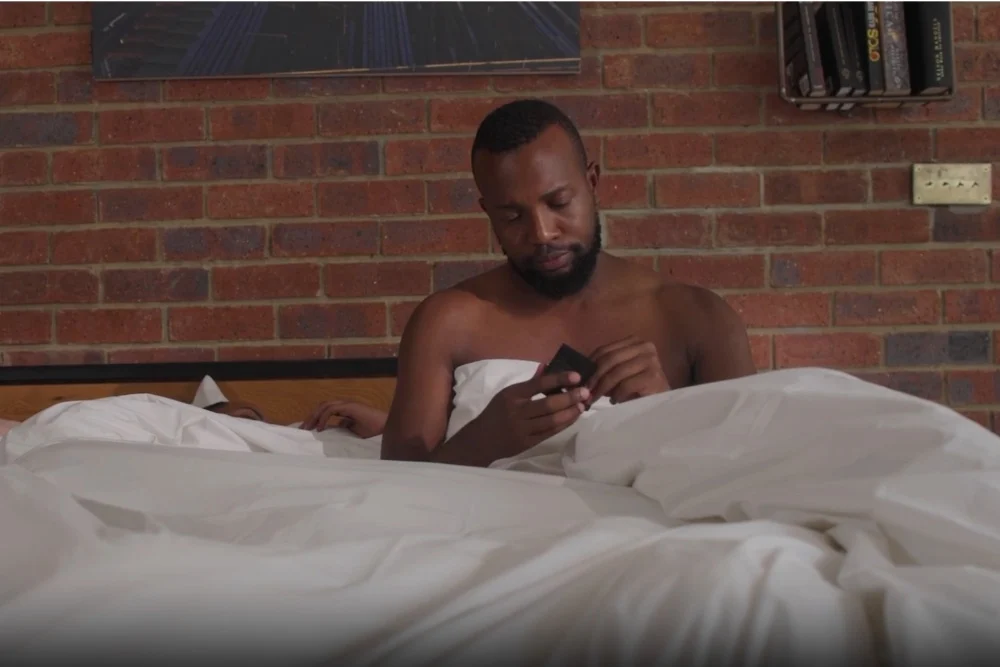
The poignant narrative of "Ngwato," a film delving into the journey of a young, gay Black South African man returning to his ancestral village to seek his parents’ blessing for his impending marriage to another man, is set to captivate audiences. More than just a depiction of queer life on screen, the film profoundly explores the often-fractured relationships between sons and their fathers. Written and directed by Magangwe Mahlase, "Ngwato" is making its anticipated premiere this week at the 8th Joburg Film Festival in Johannesburg, South Africa. This compelling production, brought to life by producer Kevin Moeketsi through Ongamavile Pictures with vital support from South Africa’s National Film and Video Foundation (NFVF), promises to be a thought-provoking cinematic experience, potentially stirring introspective moments for many viewers.
The film features a talented ensemble cast, including Gifter Ngobeni, Collen Modise, Molobane Maja, Mpho Molepo, Bathabile Mashigo, and Ray Neo Buso. "Ngwato" unfolds as a dual narrative, intertwining a coming-out story with a deeply personal exploration of a father-son bond. The protagonist’s return home, coupled with his identity as a fashion designer, introduces a disruptive force to the established family and village traditions. As news of his sexuality spreads among the villagers, it ignites tensions, with a tribal elder seizing the opportunity to challenge the leadership of Ngwato’s father, Lesiba.
Director Magangwe Mahlase explained that the genesis of "Ngwato" stemmed from his observations of contemporary South African men and their sons. "I realized that a lot of men don’t have a relationship with their fathers," Mahlase shared. "Previously, kids would follow in their dad’s footsteps, work on the farm in the village and bond. Many sons no longer have those strong relationships with their fathers." He strategically employed the narrative device of the son being gay and the village’s reaction to this revelation as a catalyst. "I used the idea of the son being gay and the village discovering it, leading to people who say the father now can’t be seen as an advisor to the village chief, as the conflict point leading to an exploration of the existing breakdown and strained relationship over years between father and son."
Filmed entirely in the Sepedi language, "Ngwato" was shot over a concentrated period of two weeks in February 2024, in Matibidi, a village located in South Africa’s Mpumalanga province. Mahlase, at 34 years old, emphasized the film’s commitment to exploring themes that resonate widely across South Africa and the African continent. "In South Africa and across Africa, a lot of people still face that," he stated in an interview with Variety. "It still hasn’t changed. In many communities, far from Johannesburg and the bigger cities, it’s still when kids return home to their families that there are cultural and other clashes, and that’s why we picked that issue."
The production itself presented a series of logistical hurdles, particularly the decision to shoot in Matibidi. "Shooting in Matibidi, we had to transport most of our crew to Mpumalanga, and when we got there, the logistics of everything – accommodation for the actors and travel – were a challenge," Mahlase recounted. However, the team remained resolute in their vision. "But we were adamant to work with a Pedi crew and Pedi-speaking actors to make the film." This commitment extended to the casting process, where finding authentic voices was paramount. "We had to find Pedi-speaking actors who were really good and audition. Then, when we started filming, we worked with service people who were not accustomed to film production. But we wanted to bring people in who have never had opportunities."
Mahlase offered a critical perspective on the prevailing trends within South Africa’s film industry, suggesting that while transformation is often discussed, the practical implementation can be compromised. "South Africa’s film biz, although doing lip-service to transformation and opening up the industry, often sacrifices patience and waiting to find people to show and be the change practically, for the sake of speed, efficiency, and production costs," he observed. His personal connection to the Pedi culture and storytelling traditions fueled his dedication to authentic representation. "I grew up around Pedi people and the world of their stories. The most important thing for me in transformation is telling your own stories. There are so many stories in the villages still left untold. And we don’t tell stories physically in the villages. We just recreate villages on sets in Johannesburg and in the cities."
He further elaborated on the true meaning of transformation in filmmaking: "For transformation to happen, we have to sacrifice the temporary satisfaction of production for long-term gain. Filmmakers just think, ‘Let’s shoot in Soweto and it’s quick, and we’re done.’ But if you have to sacrifice, scratch for real solutions, that’s where transformation happens." This philosophy is visibly embedded in the casting of "Ngwato," with Mahlase noting, "Only the top five cast are from Johannesburg. Everyone else on screen are from the village – all the men, all the villagers, even the guy acting as a homeless man, are all locals."
From its inception, Mahlase aimed to create a visual and thematic contrast between the son’s urban existence and his parents’ rural life, mirroring his own background. "The city is hustling and bustling; in the village, it’s slow. You get a better chance to reflect, to figure out life. The village gives more time to rediscover, whereas the city is about chasing work and deadlines. So we were intentional about separating and juxtaposing those two worlds."
"Ngwato" is characterized by several intense and emotionally charged scenes. Among these are a physical altercation where the son is beaten by others and a powerful moment where the mother demands the father leave the house. Mahlase highlighted the pivotal emotional arcs within the film. "The first highly emotional moment is when the son tells the dad that he’s gay. The second is where the mom kicks the dad out – it’s beautiful because that’s where he says, ‘All I’ve ever wanted was to make you proud, but every time I try, it’s like I’m moving backwards and you don’t even allow me to be seen.’"
The director identified a universal yearning at the heart of these father-son conflicts. "I think a lot of young men desperately want their fathers’ attention and their fathers’ love and acceptance and recognition – whether gay or not – and they’re not getting it." The film culminates in a deeply resonant scene: "The last scene is when the dad comes back and gives his son a hug. That’s what we need. We need a hug from our dads, but we so seldom get those."
"Ngwato" deliberately eschews a simplistic "happily ever after" ending, introducing a twist that redefines the son’s journey of self-discovery. Upon returning to the city and reuniting with his partner after receiving his parents’ blessing, he experiences a profound realization that is poised to surprise viewers.
Mahlase also shared a personal anecdote that mirrors the film’s themes of pursuing one’s passion against familial expectations, drawing a parallel to his own mother’s initial reservations about his choice to study filmmaking. "When I wanted to go study filmmaking, my mother said, ‘No, my son, you should go into mining because it pays better and look at your cousins, they’re working at the mine and they have money.’ But I sat her down, and I said I can go and be a miner, but deep down, I still have that desire. So I can either go and do what you want and eventually quit, or do what I want. And she said, ‘Okay, it’s fine, go be yourself.’ My message to young African filmmakers is stick to your guns."
He extended this encouragement to aspiring creatives across the continent. "It doesn’t matter if the industry – like the film industry anywhere in Africa – is difficult or suffering. Look at examples from sport, music, acting – the people who decided that there’s nothing else they want to do except that and who were willing to put in the work to make their dream a reality."
Mahlase views the creation of "Ngwato" as a deeply personal undertaking. "About making ‘Ngwato,’ Mahlase calls it a ‘personal recollection and introspection of myself, put on screen.’" His own experiences shaped the emotional core of the film. "I didn’t grow up with a dad. He died when I was younger. When I was writing ‘Ngwato,’ I placed elements in the film of what I’ve wanted from my father. If my father were here, I would have wanted him to give me a hug. I would have wanted him to say to me, ‘Everything’s going to be fine, you’ve got this, my boy.’"
He concluded by emphasizing the film’s origins in his own unfulfilled desires: "I wrote it from the perspective of a man who didn’t have a relationship with my father. And if I had a relationship with my father, these are the things that I would have wanted from him." Through "Ngwato," Mahlase not only brings a vital story of queer South African identity to the screen but also offers a profound commentary on the enduring complexities of familial love and reconciliation.