
 By Isnaini Azizah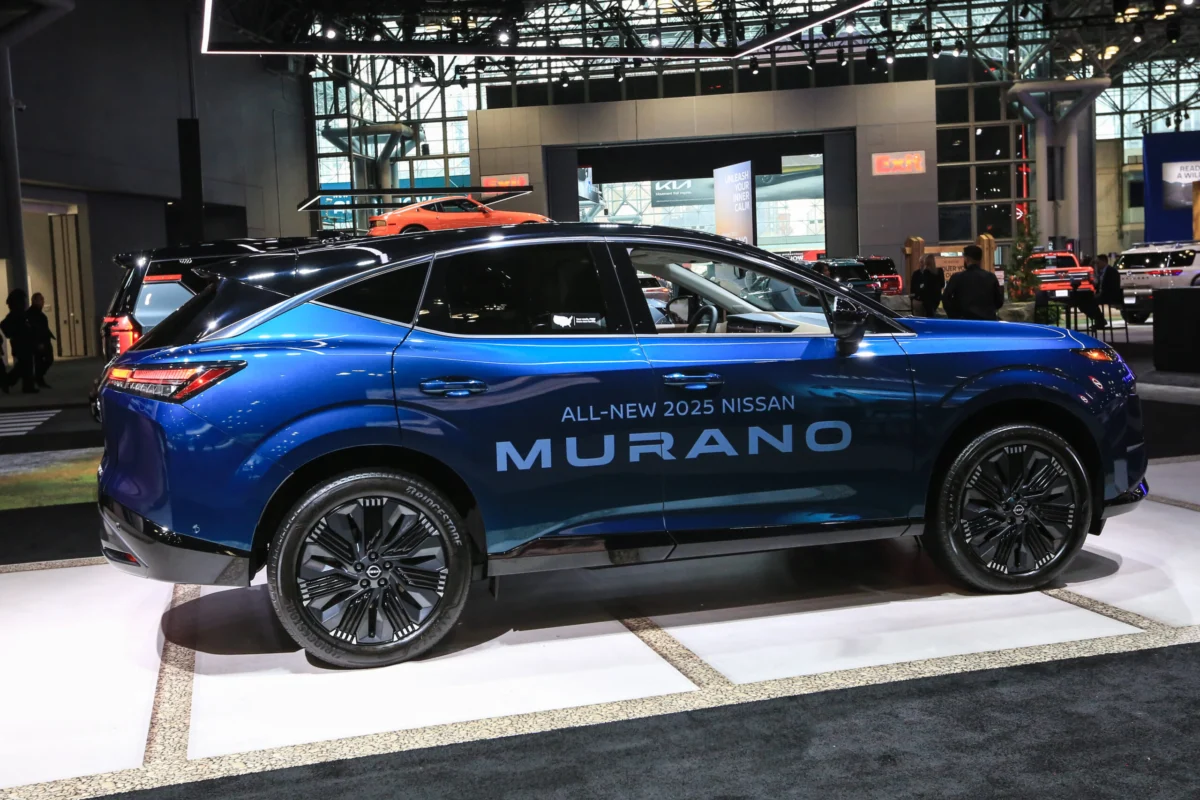
In a move that signals a significant shift in the global automotive supply chain and a thawing of long-standing trade barriers, Nissan Motor has announced plans to join its Japanese rivals, Toyota Motor and Honda Motor, in exporting vehicles manufactured in the United States back to its home market of Japan. This strategic pivot, confirmed on Tuesday, marks a historic return to a practice that has been largely dormant for decades, driven by a combination of regulatory changes, evolving consumer tastes in Japan, and the lingering effects of trade agreements established during the Trump administration.
Nissan’s centerpiece for this new initiative is the midsize Murano crossover, a vehicle that has become a staple of the American suburban landscape but has lacked a significant presence in Japan in recent years. The Murano is currently assembled at Nissan’s sprawling manufacturing complex in Smyrna, Tennessee—a facility that stands as a cornerstone of the company’s North American operations. According to a Nissan spokesperson, the commencement of Murano exports to Japan, scheduled for early next year, will represent the first time an American-made Nissan vehicle has been sold in the Japanese market since the 1990s.
"With the introduction of this model, Nissan aims to further strengthen its product lineup in Japan and meet the diverse needs of Japanese customers," Nissan CEO Ivan Espinosa stated in a press release. The move is not merely a logistical adjustment but a calculated effort to leverage the economies of scale found in U.S. production facilities to satisfy a niche but growing demand in Japan for larger, "American-style" SUVs and crossovers.
The catalyst for this shift can be traced back to a series of regulatory modifications and trade negotiations. For years, the Japanese automotive market was often criticized by U.S. officials and manufacturers as being "closed" due to a web of unique safety and environmental certifications that acted as non-tariff barriers. However, following a trade deal brokered last year, which sought to balance the scales between the two economic powerhouses, the Japanese government agreed to ease these restrictive import rules.
Under the new regulatory framework, which was officially ratified and confirmed last month, vehicles manufactured in the United States are no longer required to undergo the exhaustive and costly Japanese domestic vehicle certification process, provided they comply with the Federal Motor Vehicle Safety Standards (FMVSS) of the United States. This "reciprocity" of standards effectively slashes the red tape that previously made low-volume exporting of U.S. models to Japan financially unviable.
Interestingly, Nissan confirmed that the Murano units bound for Japan will retain their left-hand-drive configuration. While Japan is a right-hand-drive market, there is a long-standing cultural quirk where left-hand-drive foreign vehicles are viewed as a status symbol or a "halo" product, emphasizing their exotic, imported origin. By maintaining the left-hand steering wheel, Nissan avoids the significant engineering costs associated with retooling the Smyrna production line for a right-hand-drive variant, while simultaneously appealing to a segment of the Japanese public that desires the authentic "American" driving experience.
Nissan is not alone in this endeavor. The announcement follows a similar, high-profile declaration by Toyota Motor in December. Toyota, the world’s largest automaker, revealed plans to begin exporting the Kentucky-built Camry sedan, the Indiana-built Highlander SUV, and the Texas-built Tundra full-size pickup truck to Japan starting this year. The inclusion of the Tundra is particularly notable, as full-size American pickups have historically been considered too large for Japan’s narrow urban streets and tight parking structures. However, Toyota is betting on a growing "outdoor lifestyle" trend among Japanese consumers who value the towing capacity and rugged aesthetic of American trucks.
Honda Motor, Japan’s second-largest automaker, joined the fray earlier this month. The company announced it would begin exporting the Acura Integra Type S (marketed under the Acura performance brand in the U.S.) and the Honda Passport TrailSport Elite SUV to Japan in the latter half of this year. The Passport, in particular, is designed specifically for the North American market and is built in Lincoln, Alabama. Its export to Japan highlights a strategy of offering "rugged luxury" that is distinct from the more compact, efficiency-focused models typically produced in Honda’s Japanese factories.
Despite the symbolic weight of these moves, industry analysts remain cautious about the actual volume of trade these exports will generate. The Japanese automotive market is notoriously insular; approximately 95% of all vehicles sold in the country are produced locally by Japanese firms. Of the remaining 5%, the vast majority are luxury imports from Germany, such as Mercedes-Benz, BMW, and Audi.
Sam Fiorani, vice president of global vehicle forecasting for AutoForecast Solutions, notes that the total market for all imported vehicles in Japan typically hovers below 250,000 units per year. Within that slice, American brands—and American-made vehicles from Japanese brands—represent a minuscule fraction. "Vehicles sold under U.S. brands, including models built in other countries, are a small fraction of that group," Fiorani explained. To put the challenge into perspective, Fiorani pointed out that annual sales for Jeep in Japan sit at roughly 8,700 units, while Cadillac moves only about 500 units.
The logistical and cultural hurdles are significant. Stephanie Brinley, a principal automotive analyst at S&P Global Mobility, emphasizes that the sheer physical size of American-built vehicles remains a barrier to mass-market adoption in Japan. "These vehicles are still—with the exception of the Integra—relatively large for Japan," Brinley said. "I think they’re still going to be niche, low-volume products within that market. But because they are a little bit different and a little bit bigger, they can position them as a special halo product in Japan."
The "halo product" strategy is a key component of this trend. For Nissan, the Murano isn’t expected to compete with the high-volume "Kei" cars (ultralight vehicles) that dominate Japanese city centers. Instead, it is aimed at the affluent buyer in suburbs like Yokohama or parts of Tokyo who wants a vehicle that stands out from the sea of domestic minivans and compact hatches. By importing the Murano, Nissan can offer a premium crossover experience without the overhead of developing a new, Japan-specific platform.
From a broader economic perspective, these exports serve as a vital political olive branch. Trade tensions between the U.S. and Japan have often centered on the "automotive deficit," with American politicians frequently lamenting the disparity between the number of Japanese cars sold in the U.S. and the number of U.S. cars sold in Japan. By shipping thousands of Tennessee-built Muranos or Alabama-built Passports to Japan, these companies can demonstrate a "two-way street" in trade, potentially heading off future tariffs or political pressure.
Furthermore, the decision reflects the maturity of the U.S. manufacturing base. The Nissan Smyrna plant, which opened in 1983, has evolved from a simple assembly site into a sophisticated hub capable of producing vehicles that meet the quality expectations of the discerning Japanese consumer. When Nissan last exported U.S.-made cars to Japan in the 90s, the quality gap was a frequent point of contention. Today, the "Made in USA" label on a Nissan or Toyota carries a different weight, often associated with the robust engineering required for the demanding North American climate and terrain.
The financial viability of these exports is also influenced by currency fluctuations. While a weak Yen generally makes imports more expensive for Japanese consumers, the streamlining of regulatory hurdles offsets some of these costs. Moreover, because these vehicles are already being produced in massive quantities for the U.S. market, the incremental cost of shipping a few thousand extra units across the Pacific is relatively low compared to the cost of maintaining a separate production line in Japan.
As Nissan prepares for the early 2025 launch of the Murano in Japan, the industry will be watching closely to see if other models follow. If the Murano finds success, it could open the door for other U.S.-exclusive models, such as the Nissan Pathfinder or the rugged Frontier pickup, to make the journey westward.
In conclusion, while the total number of American-made Nissans, Toyotas, and Hondas arriving on Japanese shores may not radically alter the balance of trade in the short term, the move represents a landmark shift in automotive diplomacy. It highlights a future where "global" platforms are truly global—not just in their design, but in their ability to move freely across borders that were once defined by rigid regulations and protectionist sentiment. For the workers in Smyrna, Tennessee, the sight of their handiwork heading to the streets of Tokyo is a testament to the enduring relevance and competitiveness of American automotive manufacturing in the 21st century.