
 By Isnaini Azizah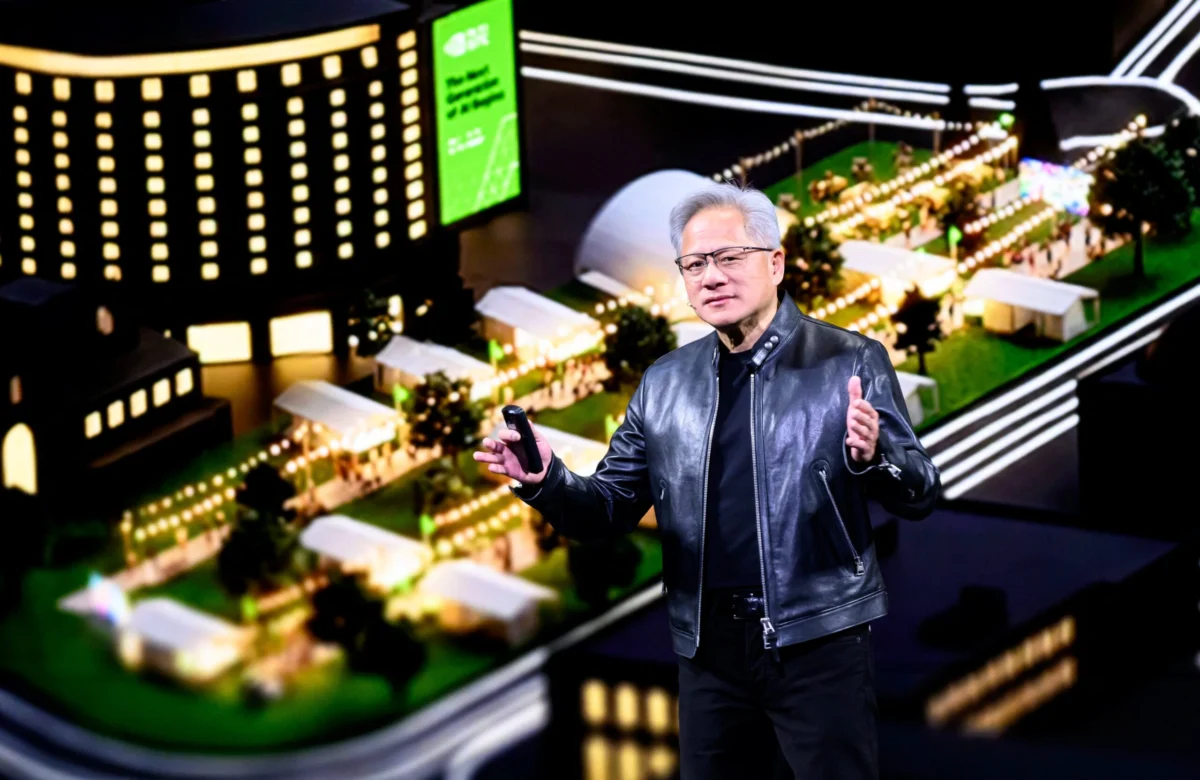
Standing before a capacity crowd at the SAP Center in San Jose, California, for the 2026 GTC developers conference, Nvidia CEO Jensen Huang signaled a definitive shift in the trajectory of the global automotive industry. In a keynote address that blended technical prowess with a bold vision for the future of mobility, Huang announced a massive expansion of the company’s automotive ecosystem. The silicon giant has secured pivotal new partnerships with global manufacturing heavyweights Hyundai Motor, Nissan Motor, and Isuzu, alongside Chinese electric vehicle titans BYD and Geely. These agreements center on Nvidia’s Drive Hyperion platform, a comprehensive software and hardware architecture designed to propel the industry toward the elusive goal of Level 4 autonomy.
The timing of the announcement is significant. For nearly a decade, the promise of self-driving cars has fluctuated between breathless hype and sobering setbacks. However, Huang’s declaration that the "ChatGPT moment of self-driving cars has arrived" suggests that the underlying technology—specifically generative AI and transformer models—has finally reached a level of maturity where mass-market deployment is no longer a distant dream but an imminent reality. Just as large language models transformed human-computer interaction, Nvidia believes its end-to-end AI platform is now capable of navigating the infinite "edge cases" of the physical world that have long stymied traditional rule-based programming.
Drive Hyperion serves as the nervous system for this new generation of vehicles. It is an "end-to-end" platform, meaning it encompasses everything from the massive data centers used to train AI models to the high-performance computers installed within the cars themselves. At the heart of this system is Nvidia’s ability to process vast amounts of sensor data—from cameras, lidar, and radar—in real-time, allowing the vehicle to make split-second decisions that are safer and more reliable than those of a human driver. The new partnerships are specifically aimed at developing Level 4 autonomous vehicles, which are defined as being capable of operating without human intervention within specific geographic areas or under certain conditions. This is the gold standard for the burgeoning robotaxi industry, a sector that Huang predicts will see "incredible" growth in the coming years.
The inclusion of Hyundai and Nissan in this expansion marks a critical win for Nvidia in the traditional automotive sector. These legacy manufacturers are under immense pressure to evolve as the industry shifts from mechanical engineering to software-defined mobility. By integrating Drive Hyperion, Hyundai and Nissan can accelerate their development timelines, leveraging Nvidia’s research and development rather than attempting to build entire autonomous stacks from scratch—a task that has proven prohibitively expensive for even the largest automakers. Isuzu’s involvement further highlights the expansion of AI into the logistics and commercial trucking sectors, where autonomous solutions could address chronic driver shortages and improve fuel efficiency through optimized driving patterns.
Equally consequential is Nvidia’s deepening relationship with Chinese automakers BYD and Geely. BYD, which has recently rivaled Tesla for the title of the world’s largest electric vehicle manufacturer, represents a massive volume opportunity for Nvidia. Geely, the parent company of Volvo, Polestar, and Lotus, has also been aggressive in its pursuit of high-tech integration. Despite geopolitical tensions and trade restrictions surrounding high-end semiconductor technology, Nvidia’s continued dominance in the Chinese automotive market underscores the global nature of the AI revolution. For these Chinese firms, Nvidia’s chips and software provide the competitive edge necessary to compete on a global stage, particularly in the premium EV segment where advanced driver-assistance systems (ADAS) are a primary selling point.
To understand the magnitude of this shift, one must look at the current state of autonomous driving. Most vehicles currently available to consumers are classified as Level 2, offering features like adaptive cruise control and lane-keeping assistance that require the driver’s constant attention. While Tesla’s "Full Self-Driving" (FSD) has garnered significant media attention, it remains a Level 2 system that necessitates human oversight. In contrast, true Level 4 autonomy has largely been restricted to controlled pilot programs. Alphabet’s Waymo has emerged as the clear leader in this space, successfully operating commercial robotaxi fleets in cities like Phoenix, San Francisco, and Los Angeles. By providing a "robotaxi-ready" platform to a wider array of manufacturers, Nvidia is effectively democratizing the technology that Waymo spent billions to develop in-house.

The road to this "ChatGPT moment" has been littered with high-profile failures and immense financial losses. Perhaps the most cautionary tale is that of Cruise, the autonomous unit backed by General Motors. Once considered a frontrunner alongside Waymo, Cruise saw its operations grind to a halt following a series of safety incidents, including a 2023 accident where a pedestrian was dragged by one of its vehicles. The fallout was catastrophic: GM eventually halted funding for the project after investing more than $10 billion, and the company underwent a massive leadership shakeup. Similarly, Ford and Volkswagen shuttered their multi-billion dollar joint venture, Argo AI, in late 2022, concluding that the path to profitable Level 4 autonomy was longer and more difficult than previously anticipated.
Nvidia’s strategy differs from these failed ventures in one crucial way: it is a platform provider, not a fleet operator. By focusing on the "picks and shovels" of the AI gold rush—the chips, the simulation software, and the training architecture—Nvidia avoids the massive capital expenditures and operational risks associated with managing a fleet of taxis. This allows the company to benefit from the growth of the entire industry regardless of which specific automaker wins the market share battle. The automotive segment has become a vital growth engine for Nvidia, providing a hedge against potential fluctuations in the gaming or enterprise data center markets.
The "end-to-end" nature of Nvidia’s platform is its primary competitive advantage. Autonomous driving is essentially a massive data problem. To train a vehicle to drive safely, it must "experience" millions of miles of diverse driving conditions. Nvidia’s Omniverse and Drive Sim platforms allow automakers to conduct these tests in a virtual environment, simulating rare and dangerous scenarios—such as a child running into the street or a sudden blizzard—without any real-world risk. Once the AI model is trained in the data center, it is deployed to the car’s onboard computer, such as the Nvidia DRIVE Thor, which possesses the massive computational power required to run complex neural networks in real-time.
Wall Street analysts view the autonomous vehicle sector as a multitrillion-dollar opportunity, encompassing not just ride-hailing, but also long-haul trucking, last-mile delivery, and software-as-a-service (SaaS) subscriptions for consumer vehicles. Jensen Huang’s comparison to ChatGPT suggests that we are moving past the "if" and "how" of autonomous driving and into the "when" and "where." The integration of generative AI allows vehicles to better understand context and intent, moving away from rigid "if-then" logic to a more fluid, human-like understanding of the road.
However, significant hurdles remain. Regulatory frameworks are still patchwork, with different countries and states adopting wildly different approaches to AV testing and liability. Public trust also remains fragile; the Cruise incident in San Francisco served as a stark reminder that a single high-profile accident can set the entire industry back by years. Furthermore, the hardware requirements for Level 4 autonomy—including expensive lidar sensors and high-performance computing—remain high, though costs are expected to decline as production scales through the partnerships announced today.
As the GTC 2026 conference continues, the industry is watching closely to see how these new partners will implement Nvidia’s technology. The transition from Level 2 to Level 4 represents a quantum leap in complexity, but with the backing of Nvidia’s AI infrastructure, the world’s largest automakers are betting that the "ChatGPT moment" will finally turn the dream of self-driving cars into a ubiquitous reality. For Nvidia, these deals represent more than just revenue; they solidify the company’s position as the indispensable architect of the autonomous age, ensuring that whether it is a Hyundai in Seoul, a Nissan in Tokyo, or a BYD in Shenzhen, the "brain" behind the wheel will likely be powered by Nvidia.