
 By admin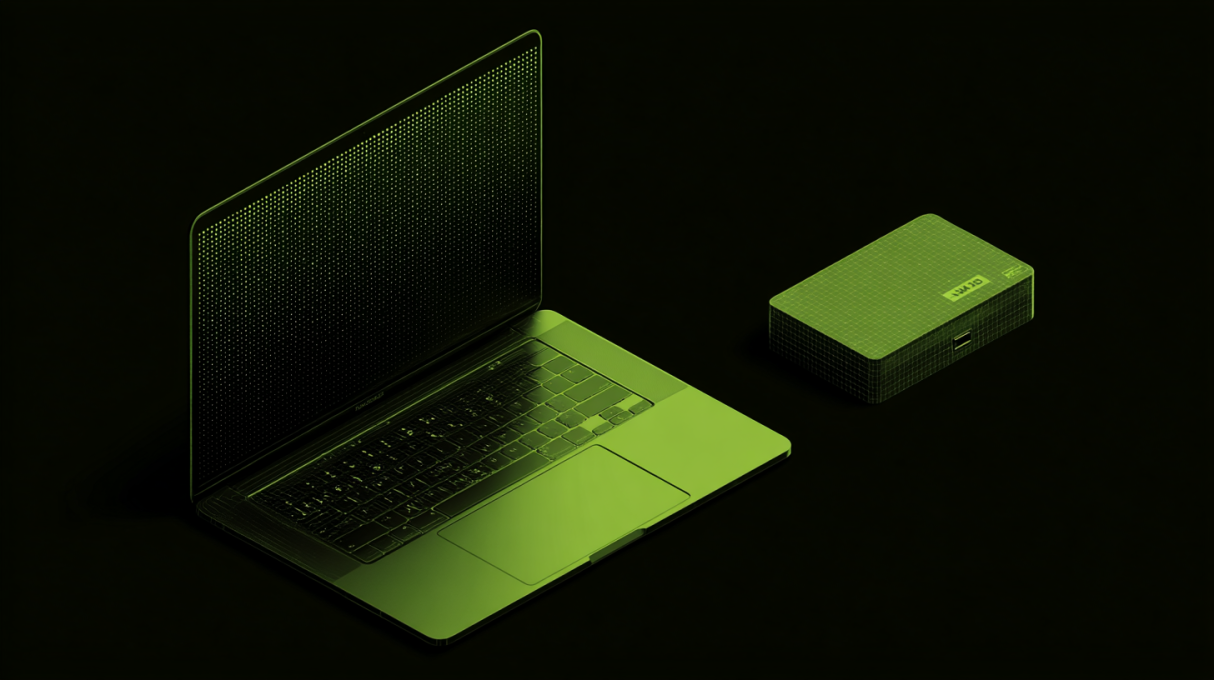
Nvidia has dramatically redefined the landscape of personal computing with the unveiling of its groundbreaking DGX Station, a deskside supercomputer engineered to tackle artificial intelligence models of unprecedented scale, boasting the capacity to run AI with up to one trillion parameters – a capability approaching that of models like GPT-4 – entirely offline, without necessitating reliance on cloud infrastructure. This revolutionary machine, officially named the DGX Station, is a marvel of engineering, integrating a colossal 748 gigabytes of coherent memory and delivering a staggering 20 petaflops of computational power within a compact form factor designed to reside alongside a user’s monitor. Industry analysts are already drawing parallels between this announcement and the transformative impact of the original Macintosh Pro, which fundamentally shifted the paradigm for creative professionals by bringing powerful workstations directly to their desks.
The announcement, made with considerable fanfare at Nvidia’s prestigious annual GTC conference held in San Jose, arrives at a critical juncture for the artificial intelligence industry. The sector is currently navigating a fundamental tension: while the most sophisticated and powerful AI models demand immense, data-center-grade infrastructure, a growing number of developers and enterprises are expressing a strong desire to maintain local control over their sensitive data, proprietary agents, and intellectual property. The DGX Station represents Nvidia’s direct and potent answer to this demand – a high-end, six-figure system that effectively bridges the chasm between the bleeding edge of AI development and the immediate reach of a single engineer’s workspace.
The Profound Implications of 20 Petaflops on Your Desktop
At the heart of the DGX Station lies the formidable new GB300 Grace Blackwell Ultra Desktop Superchip. This cutting-edge processor artfully fuses a high-performance 72-core Grace CPU with a powerful Blackwell Ultra GPU, interconnected by Nvidia’s proprietary NVLink-C2C technology. This advanced interconnect achieves an astonishing 1.8 terabytes per second of coherent bandwidth between the CPU and GPU, a throughput that dwarfs the capabilities of PCIe Gen 6 by a factor of seven. The critical advantage of this unified architecture is the creation of a single, seamless pool of memory accessible by both processors, effectively eliminating the performance bottlenecks that have historically plagued complex AI computations on desktop systems.
To contextualize the raw power of 20 petaflops – equivalent to 20 quadrillion operations per second – it’s worth noting that such a level of performance would have placed this machine among the world’s elite supercomputers less than a decade ago. For comparison, the Summit system at Oak Ridge National Laboratory, which held the global number one ranking in 2018, delivered approximately ten times the performance of the DGX Station but occupied a physical space equivalent to two basketball courts. Nvidia’s achievement lies in its ability to condense a significant fraction of that immense capability into a device that conveniently plugs into a standard wall outlet.
However, the 748 gigabytes of unified memory might be considered an even more significant figure. Trillion-parameter models, which are essentially vast neural networks, require the entirety of their parameters to be loaded into memory for efficient operation. Without sufficient memory capacity, even the most advanced processing speeds become irrelevant, as the model simply cannot be loaded and executed. The DGX Station not only meets this critical requirement but does so with a coherent architecture that eradicates the latency penalties traditionally associated with transferring data between separate CPU and GPU memory pools.
The Imperative of Always-On Hardware for Autonomous Agents
Nvidia has explicitly designed the DGX Station to cater to what it perceives as the next evolutionary phase of artificial intelligence: autonomous agents. These are not merely systems that respond to direct prompts but rather intelligent entities capable of continuous reasoning, complex planning, sophisticated code generation, and autonomous task execution. Every major announcement made at GTC 2026 reinforced this central thesis of "agentic AI," and the DGX Station is positioned as the foundational hardware platform for both building and operating these advanced agents.
A key component of this new ecosystem is NemoClaw, a novel open-source software stack also introduced by Nvidia on Monday. NemoClaw integrates Nvidia’s own Nemotron open models with OpenShell, a secure runtime environment designed to enforce stringent policy-based security, network, and privacy guardrails for autonomous agents. The convenience of this integrated solution is further enhanced by its ease of deployment, with the entire stack installable via a single command. Nvidia’s founder and CEO, Jensen Huang, articulated the strategic significance of this pairing with unambiguous clarity, referring to OpenClaw – the broader agent platform that NemoClaw supports – as "the operating system for personal AI" and drawing a direct parallel to the foundational importance of operating systems like Mac and Windows.
The underlying argument is compelling: while cloud instances are designed for on-demand scalability, the vision of always-on agents necessitates persistent compute resources, consistent memory access, and stable state management. A machine situated directly beneath a user’s desk, operating 24/7 with local data and models securely contained within a robust security sandbox, is architecturally far better suited to these demanding workloads than a remotely rented GPU residing in a third-party data center. The DGX Station is versatile, capable of serving as a personal supercomputer for individual developers or as a shared compute resource for collaborative teams. Furthermore, it supports air-gapped configurations, making it suitable for highly sensitive environments such as classified projects or regulated industries where data containment is paramount and must never leave the premises.
Seamless Transition from Desk Prototyping to Data Center Production
One of the most ingenious aspects of the DGX Station’s design is what Nvidia terms "architectural continuity." This principle ensures that applications developed and fine-tuned on the DGX Station can be migrated to Nvidia’s GB300 NVL72 data center systems – massive, 72-GPU racks engineered for hyperscale AI deployments – without requiring any modification to the existing codebase. Nvidia is effectively offering a vertically integrated pipeline: developers can prototype and iterate on their AI models locally at their desks, and then seamlessly scale their operations to the cloud or enterprise data centers as their needs evolve, without the costly and time-consuming burden of rewriting code.
This architectural continuity is profoundly significant, as a substantial hidden cost in current AI development often stems not from the compute power itself, but from the engineering hours lost to rewriting applications for disparate hardware configurations. A model that has been meticulously fine-tuned on a local GPU cluster frequently necessitates extensive rework to be deployed on cloud infrastructure that may feature different memory architectures, networking stacks, or software dependencies. The DGX Station effectively eliminates this friction by running the same comprehensive NVIDIA AI software stack that powers every level of Nvidia’s infrastructure, from the DGX Spark workstation to the Vera Rubin NVL72 data center systems.
Complementing the DGX Station, Nvidia has also enhanced its smaller sibling, the DGX Spark, by introducing new clustering capabilities. Up to four DGX Spark units can now be configured to operate as a single, unified system, offering near-linear performance scaling. This "desktop data center" solution can be deployed on a conference table without the need for extensive rack infrastructure or the involvement of IT support. For teams focused on fine-tuning mid-size models or developing smaller-scale agents, these clustered Spark units provide a compelling departmental AI platform at a significantly lower cost than the full DGX Station.
Early Adopters Signal the Future Trajectory of the AI Market
The initial roster of DGX Station customers offers a clear glimpse into the industries where AI is rapidly transitioning from an experimental technology to an indispensable operational tool. Snowflake, a leader in data warehousing, is leveraging the DGX Station to locally test its open-source Arctic training framework. The Electric Power Research Institute (EPRI) is employing AI-powered weather forecasting capabilities to bolster the reliability of electrical grids. Medivis is integrating advanced vision language models to enhance surgical workflows. Furthermore, Microsoft Research and Cornell University have deployed these systems to facilitate hands-on AI training at an unprecedented scale.
The DGX Station is available for order now, with shipments expected to commence in the coming months from prominent hardware manufacturers including ASUS, Dell Technologies, GIGABYTE, MSI, and Supermicro. HP is slated to join this list later in the year. While Nvidia has not publicly disclosed specific pricing details, the advanced GB300 components and Nvidia’s historical pricing strategies for its DGX systems suggest an investment in the six-figure range. Although this represents a substantial expenditure by traditional workstation standards, it is remarkably cost-effective when contrasted with the ongoing cloud GPU costs associated with running trillion-parameter inference at scale.
The extensive list of supported AI models underscores the increasing openness and interoperability of the AI ecosystem. Developers can now readily run and fine-tune a wide array of leading models, including OpenAI’s gpt-oss-120b, Google’s Gemma 3, Qwen3, Mistral Large 3, DeepSeek V3.2, and Nvidia’s own Nemotron models, among many others. The DGX Station is intentionally designed to be model-agnostic, positioning it as a neutral hardware platform in an industry where model allegiances can shift dramatically on a quarterly basis.
Nvidia’s Grand Strategy: Dominance Across All Layers of the AI Stack, from Orbit to Office
The introduction of the DGX Station is not an isolated event but rather a crucial component of a broader strategic vision unveiled at GTC 2026. This comprehensive suite of announcements collectively articulates Nvidia’s ambition to provide AI computing solutions at virtually every conceivable physical scale.
At the apex of this strategy, Nvidia has launched the Vera Rubin platform, comprising seven new chips now in full production. This platform is anchored by the Vera Rubin NVL72 rack, which integrates 72 next-generation Rubin GPUs and boasts an impressive inference throughput per watt that is reportedly up to 10 times higher than the current Blackwell generation. The Vera CPU, featuring 88 custom Olympus cores, is specifically engineered to address the complex orchestration layer that is increasingly critical for agentic AI workloads. Pushing the boundaries even further, Nvidia has also announced the Vera Rubin Space Module, designed for orbital data centers, which is set to deliver a staggering 25 times more AI compute for space-based inference compared to the H100.
Bridging the gap between orbital and terrestrial applications, Nvidia has forged strategic partnerships across various sectors. These include collaborations with Adobe for advanced creative AI, automotive manufacturers such as BYD and Nissan for the development of Level 4 autonomous vehicles, and a coalition with Mistral AI and seven other leading research labs to advance the development of open frontier models. Additionally, Nvidia has introduced Dynamo 1.0, an open-source inference operating system that has already garnered significant adoption from major cloud providers like AWS, Azure, and Google Cloud, as well as prominent AI-native companies such as Cursor and Perplexity.
The overarching pattern is clear and undeniable: Nvidia aims to establish itself as the foundational computing platform – encompassing hardware, software, and models – for every AI workload, regardless of location or scale. The DGX Station serves as the critical element that bridges the gap between the vast capabilities of cloud computing and the immediate needs of the individual user.
The Cloud’s Monopoly on Serious AI Work is Crumbling, But Not Disappearing
For the past several years, the prevailing assumption within the AI community has been that any serious AI development or deployment necessitates the use of cloud GPU instances – essentially renting Nvidia hardware from providers like AWS, Azure, or Google Cloud. While this model has proven effective, it comes with significant inherent costs: data egress fees, latency issues, potential security vulnerabilities arising from transmitting proprietary data to third-party infrastructure, and the fundamental loss of control that accompanies utilizing someone else’s computing resources.
The advent of the DGX Station does not signal the obsolescence of cloud computing; indeed, Nvidia’s data center business continues to outpace its desktop revenue and shows robust growth. However, it does introduce a compelling and credible local alternative for a significant and expanding category of AI workloads. Training a frontier model from scratch will undoubtedly continue to demand vast clusters of GPUs housed within large data centers. Yet, for tasks such as fine-tuning a trillion-parameter open model on proprietary data, running inference for an internal agent that processes sensitive internal documents, or prototyping new AI applications before committing to extensive cloud expenditure, a machine situated directly on one’s desk begins to emerge as the most rational and cost-effective choice.
This represents the strategic brilliance of the DGX Station: it expands Nvidia’s addressable market into the realm of personal AI infrastructure while simultaneously reinforcing its existing cloud business. This is because every application and model developed locally on the DGX Station is inherently designed to scale seamlessly upwards to Nvidia’s robust data center platforms. The paradigm is shifting from a binary choice of "cloud versus desk" to a more integrated approach of "cloud and desk," with Nvidia strategically positioned to supply both.
A Supercomputer for Every Desk, Topped by an Unsleeping AI Agent
The defining slogan of the personal computer revolution four decades ago was "a computer on every desk and in every home." Today, Nvidia is updating this premise with a profound and potentially unsettling escalation. The DGX Station effectively places genuine supercomputing power – the kind that once powered national laboratories – directly alongside a user’s keyboard. Furthermore, when paired with NemoClaw, it installs an autonomous AI agent on top of this formidable hardware, an agent capable of operating around the clock, writing code, interacting with various tools, and completing complex tasks even while its human owner is asleep.
Whether this future inspires exhilaration or apprehension is largely a matter of individual perspective. However, one aspect is no longer subject to debate: the essential infrastructure required to build, operate, and own frontier AI has decisively moved from the secluded confines of the server room to the more accessible space of the desk drawer. And the company that currently supplies nearly every cutting-edge AI chip on the planet has strategically ensured that it also supplies the desk drawer itself.