
 By admin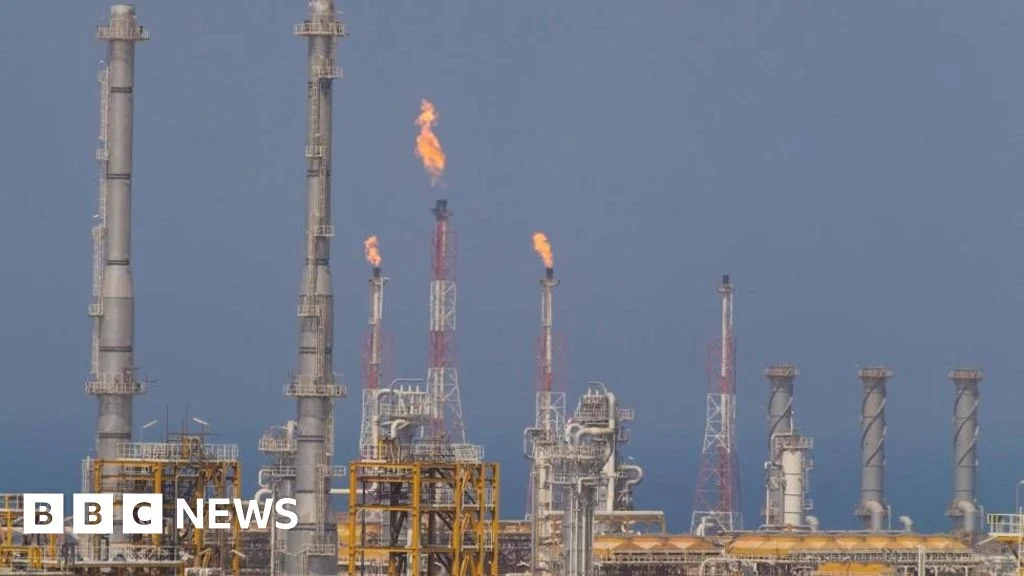
Global energy markets are once again on tenterhooks as oil prices surged to near $110 a barrel following reports of an airstrike targeting a key facility on the South Pars gas field, the world’s largest. The Brent crude oil benchmark experienced a significant jump, reaching $109.91 a barrel shortly after 14:30 GMT, marking a more than 5% increase from Tuesday’s closing prices, and has since remained precariously above the $108 mark. This sharp upward movement underscores the persistent volatility in oil markets, driven by geopolitical tensions and potential disruptions to vital energy supply chains.
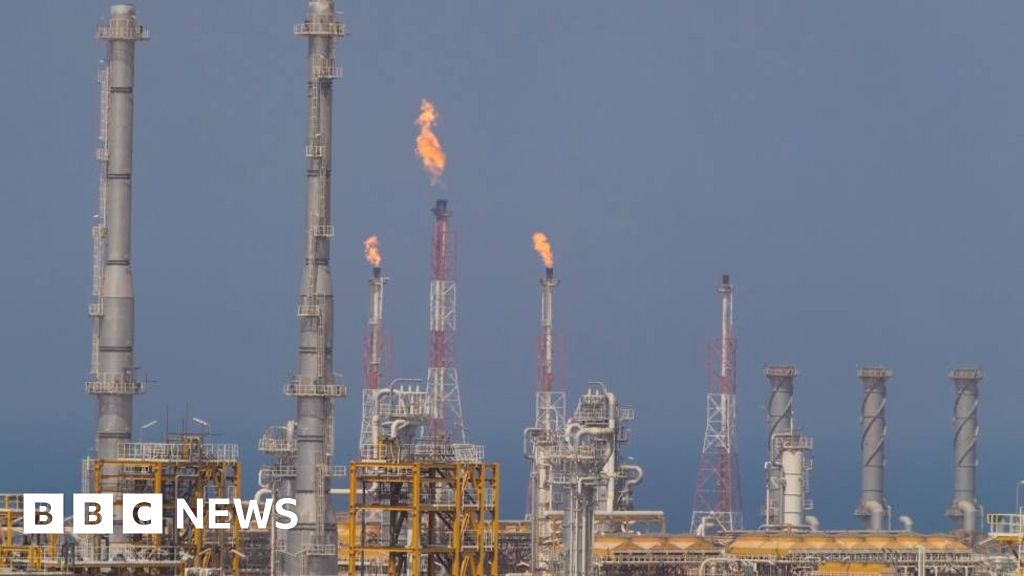
The immediate catalyst for this price escalation was a report from Tasnim, a news agency closely aligned with the Islamic Revolutionary Guard Corps, alleging that Iran’s petrochemical complex situated on the South Pars gas field had been struck. This development sent ripples through the commodity markets, with the benchmark UK gas price also registering a notable jump of 6% to 143.53 pence per therm, before a slight retraction below the 140p mark. While the price spikes for both oil and gas were significant, they have not yet reached the peak levels witnessed earlier in the ongoing global geopolitical conflicts. For context, oil had previously touched $116.78 a barrel on March 9th, and UK gas had reached 162.55p a therm on March 3rd, highlighting the sensitivity of these markets to perceived threats.
In response to the incident, Iran’s oil ministry, as reported by Tasnim, stated that a fire at the petrochemical complex had been brought under control by Wednesday afternoon. However, the full extent of the damage to the facility remains unclear, leaving room for continued speculation and market apprehension. Adding to the escalating tensions, Iran’s military issued a stern warning, vowing to take "decisive action" in retaliation for any strike on its energy infrastructure. A statement published by Tasnim quoted the military as saying, "As previously warned, if the fuel, energy, gas, and economic infrastructures of our country are attacked by the American-Zionist enemy, in addition to a powerful counterattack against the enemy, we will severely strike the origin of that aggression as well." The statement further declared, "We consider targeting the fuel, energy, and gas infrastructures of the countries of origin legitimate and will retaliate strongly at the earliest opportunity." This assertive stance signals a potential for further escalation and a broadening of the conflict’s impact.
It is important to note that Qatar also operates significant facilities on the South Pars gas field, which it refers to as the North Dome. Qatar, a global powerhouse in liquefied natural gas (LNG) production, responsible for approximately one-fifth of the world’s supply, had already taken the precautionary measure of halting production earlier in March in response to the prevailing conflict. The Qatari foreign ministry spokesman, Majed Al Ansari, commented on the broader implications of such attacks, stating that strikes against energy infrastructure "constitute a threat to global energy security." This statement from Qatar underscores the interconnectedness of global energy markets and the far-reaching consequences of disruptions in key production regions.
The incident and Iran’s subsequent retaliatory warnings have "helped dial up the temperature once again and put renewed upward pressure on oil prices," according to Danni Hewson, head of financial analysis at AJ Bell. She further elaborated, "Any solution to the blockage of the Strait of Hormuz looks pretty distant at this point and unless, and until, there is progress on that front, energy markets will likely remain volatile." The Strait of Hormuz, a vital chokepoint for global oil shipments, has been a consistent source of concern, and any perceived threat to its stability invariably leads to heightened market anxiety and price volatility.
In an attempt to mitigate the impact of rising oil prices on its domestic economy, the White House announced on Wednesday a temporary suspension of the Jones Act. This century-old legislation, enacted in 1920, mandates that only American-built, owned, and crewed ships can transport goods between U.S. ports. US Press Secretary Karoline Leavitt explained that this 60-day waiver of the rules, which are primarily intended to support the American shipbuilding industry, will facilitate the "free flow of vital resources like oil, natural gas, fertilizer, and coal" by allowing non-American-made ships to be utilized. However, maritime industry groups in the U.S. have expressed skepticism regarding the practical impact of this measure, arguing that rising oil prices are primarily driven by global supply and demand dynamics rather than shipping costs. They contend that the effect of the Jones Act waiver on pump prices will be minimal.
Adding another layer to the unfolding energy crisis, Iran has reportedly suspended the flow of natural gas to Iraq in direct response to the airstrike, aiming to bolster its domestic supplies. This development was communicated to Reuters by a senior Iraqi official. The reliance of neighboring countries on Iranian energy exports highlights the regional implications of such disruptions. Data from the Gas Exporting Countries Forum reveals that the vast majority of Iran’s gas production, an estimated 94%, is consumed domestically, underscoring the strategic importance of these resources for the Iranian economy and its ability to meet internal demand. The suspension of gas to Iraq, therefore, represents a significant disruption for Baghdad, which depends on Iranian imports to meet a substantial portion of its energy needs. This move by Iran not only impacts Iraq but also serves as a potent signal of its willingness to leverage its energy resources as a political tool in response to perceived aggression.
The complex interplay of geopolitical events, energy supply, and international relations continues to cast a long shadow over global economic stability. The incident at the South Pars gas field serves as a stark reminder of the fragilities within the global energy system and the potential for localized conflicts to trigger widespread market repercussions. As nations grapple with the implications of these developments, the focus remains on safeguarding energy security, managing price volatility, and navigating the delicate diplomatic landscape to prevent further escalation. The coming days and weeks will be crucial in determining the long-term impact of this latest event on global energy markets and the broader geopolitical environment. The ongoing conflict in Eastern Europe has already significantly reshaped energy flows and market dynamics, and this latest development in the Middle East adds another layer of uncertainty and risk, further complicating efforts to achieve energy stability and price predictability. The interconnectedness of these global events means that any disruption in one region can have cascading effects across the entire energy spectrum, impacting everything from industrial production to household energy bills. The current situation demands a multifaceted approach, encompassing diplomatic engagement, strategic energy reserve management, and a continued commitment to diversifying energy sources to build greater resilience against future shocks.