
 By Lina Irawan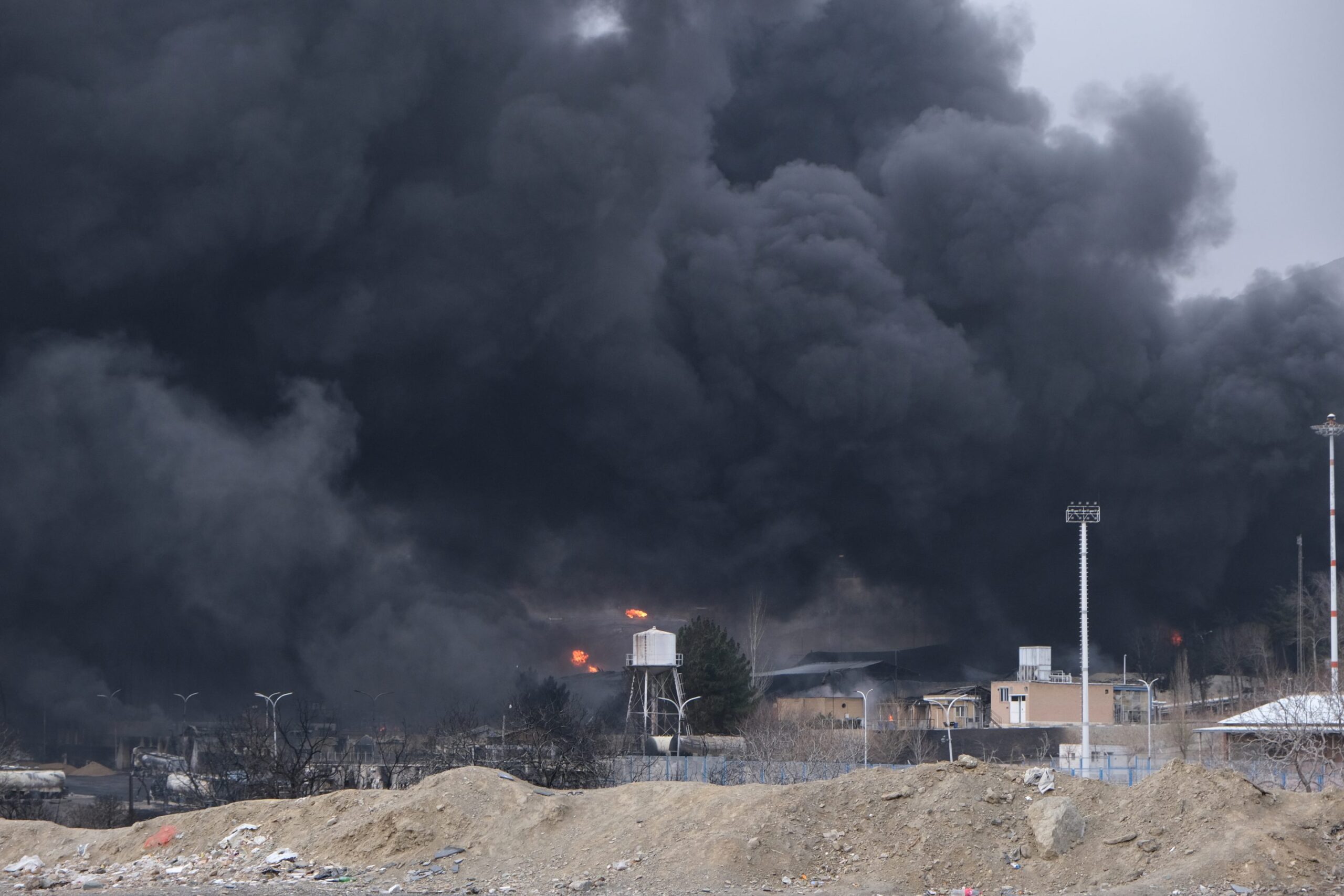
The economic repercussions of this rapidly intensifying conflict have been immediate and severe, particularly in the energy sector. U.S. oil futures (West Texas Intermediate) surged by a staggering 17.2% in a single day, settling at $106.57 a barrel, a level not seen in years. Simultaneously, Brent crude, the international benchmark, gained 15.2% to reach $106.81. This dramatic spike is a direct consequence of the war’s expansion, particularly the effective closure of the Strait of Hormuz, a critical chokepoint through which roughly a fifth of the world’s total oil supply passes daily. Analysts had long warned that a disruption in this strategic waterway would trigger an energy crisis of global proportions, a "nightmare scenario" that has now materialized. Over the weekend, President Donald Trump further rattled markets by downplaying the possibility of releasing oil from the Strategic Petroleum Reserve (SPR) to ease the escalating price pressure. The SPR, designed for emergencies, has been tapped sparingly in the past, most notably during the 1991 Gulf War and in response to Hurricane Katrina in 2005, and more recently after Russia’s invasion of Ukraine. Trump’s reluctance signals a potential shift in strategy, prioritizing strategic leverage over immediate consumer relief. He articulated his stance on Truth Social on Sunday, stating, “Short term oil prices, which will drop rapidly when the destruction of the Iran nuclear threat is over, is a very small price to pay for U.S.A., and World, Safety and Peace.” This declaration underscores a political calculation that frames economic pain as a necessary cost for achieving broader security objectives, a position likely to face increasing scrutiny as prices continue to bite.
The ripple effect is already being felt at the pump, with prices for gasoline nationally now poised to top $4 a gallon, a threshold not breached since the market volatility of 2022. Patrick De Haan, head of petroleum analysis at GasBuddy, indicated on X that the probability of reaching this milestone within the next month now stands at a stark 80%. This surge in fuel costs is expected to exacerbate inflationary pressures across the economy, impacting transportation, manufacturing, and consumer spending, potentially pushing already fragile global economies closer to recession. The economic fallout extends far beyond energy. Futures tied to the Dow Jones Industrial Average crashed by 911 points, a significant 1.91% decline, reflecting widespread investor anxiety. S&P 500 futures were down 1.69%, and Nasdaq futures, representing the tech-heavy sector, lost 1.73%. This broad market sell-off signals a flight from riskier assets as investors brace for prolonged uncertainty and potential economic slowdowns.
Paradoxically, traditional safe-haven assets have shown mixed signals. Gold, often seen as a hedge against geopolitical instability and inflation, dipped by 1.56% to $5,078 per ounce, while silver fell even more sharply by 3.4% to $81.43. This unusual behavior for precious metals in a crisis could be attributed to a liquidity crunch, with investors selling even safe assets to cover losses elsewhere, or a belief that the dollar’s strength will ultimately prevail. Meanwhile, the yield on the 10-year Treasury note climbed 5.1 basis points to 4.183%, reflecting investor expectations of hotter, sustained inflation and potentially more aggressive monetary tightening from central banks. The U.S. dollar, often considered the ultimate safe-haven currency, strengthened, rising 0.87% against the Euro and 0.37% against the Japanese Yen, underscoring its appeal amidst global turmoil.
The war’s rapid spiral into greater levels of peril has stoked fears that multiple worst-case scenarios, long contemplated by geopolitical strategists, are now being realized. The Strait of Hormuz remains effectively closed, choked by naval blockades and threats, fulfilling a "nightmare" that has been feared for decades due to its critical role in global oil transit. With top oil producers in the Persian Gulf, including Saudi Arabia, Kuwait, and the UAE, unable to export their crude, they have been forced to significantly pump less, as their storage capacity has rapidly filled up. Iraq, a major global supplier, has seen its output collapse by an alarming 60%, highlighting the devastating impact on regional economies and global supply chains.
Beyond energy, the conflict has taken a dire turn with attacks on vital civilian infrastructure. Bahrain and Iran have both reported that their desalination plants were targeted, a development that threatens the very water supply of the Middle East. This region is critically reliant on processed seawater, with some countries obtaining as much as 90% of their potable water through desalination. Prior intelligence assessments had grimly warned that extensive damage to this infrastructure could necessitate mass evacuations from already parched cities, potentially triggering an unprecedented humanitarian crisis and mass displacement. Meanwhile, the U.S. and Israel launched a coordinated strike on a major oil depot in Tehran, obliterating supplies crucial for both civilian consumption and military operations. The aftermath saw the city cloaked in thick, acrid smoke, with reports of highly unusual acid rain and oily rain falling over residential areas, raising immediate environmental and public health concerns. In retaliation, Iran’s missile and drone arsenals have been unleashed, targeting oil installations and civilian infrastructure across the Gulf, escalating the cycle of destruction.
The human cost of the conflict is also mounting. The Pentagon confirmed the death of a seventh U.S. service member, adding to the somber tally and deepening the domestic debate over the extent of American involvement. In a development that signals a dramatic escalation of strategic objectives, sources close to Bloomberg have reported that President Trump is contemplating a special forces mission involving troops entering Iran to seize near-bomb-grade uranium. This highly sensitive material, if not secured, could potentially be used in a nuclear weapon, transforming the conflict from a regional conventional war into one with global nuclear proliferation implications. Such a move would be fraught with immense risks, echoing historical precedents of covert operations in hostile territories and raising questions about the international legal framework surrounding preemptive military action to prevent nuclear armament.
The conflict’s tendrils are also spreading, drawing in more regional and international actors. Gulf states, increasingly nervous about the stability of their own territories and economies, have reportedly issued stern warnings to Tehran, indicating that continued attacks on their infrastructure could result in direct military action against Iran. This possibility raises the specter of a wider regional war, pitting Gulf Arab monarchies against Iran, with unpredictable consequences for global energy markets and security. Further afield, Turkey is reportedly considering sending fighters to northern Cyprus, a move that could ignite tensions in the Eastern Mediterranean, where Turkey has long-standing geopolitical interests and rivalries. Perhaps most concerning is the role of global powers. Intelligence reports suggest that Russia has been actively feeding intelligence to Iran concerning U.S. military aircraft and warships in the region. This tacit support from Moscow not only emboldens Tehran but also transforms the conflict into a proxy battleground between major global powers, complicating any potential path to de-escalation and raising the stakes for a broader confrontation.
Amidst this escalating chaos, Iran has remained defiant, swiftly announcing Mojtaba Khamenei, the son of the recently deceased Ayatollah Ali Khamenei, as the next supreme leader. This succession came barely a week after his father was reportedly killed in a military strike, marking a critical juncture in Iranian political history. The choice of Mojtaba is highly symbolic and deeply significant. Just days before the announcement, President Trump had publicly rejected him as a viable successor, telling Axios, “Khamenei’s son is unacceptable to me. We want someone that will bring harmony and peace to Iran.” Iran’s swift and defiant embrace of Mojtaba is widely interpreted as a clear signal that the regime’s hardliners are firmly in control and are poised to resist any form of compromise or negotiation with the U.S. This consolidates power within the clerical establishment, strengthening the resolve of those who advocate for a confrontational stance against Western influence. The new leader’s ascent under such fraught circumstances suggests a deepening of Iran’s commitment to its current trajectory, making diplomatic breakthroughs seem increasingly remote. Reflecting on the profound challenges of intervention and regime change, President Trump, when asked in the Oval Office last week for the worst-case scenario in Iran, mused, “I guess the worst case would be we do this and then somebody takes over who’s as bad as the previous person, right? That could happen.” His words, uttered amidst the growing crisis, underscore the complex and often unpredictable nature of geopolitical interventions, where even decisive military action can fail to achieve desired long-term political outcomes, leaving behind a legacy of instability and continued conflict. The world now watches with bated breath as a conflict once hoped to be swift descends into a protracted struggle with far-reaching and devastating consequences.