
 By admin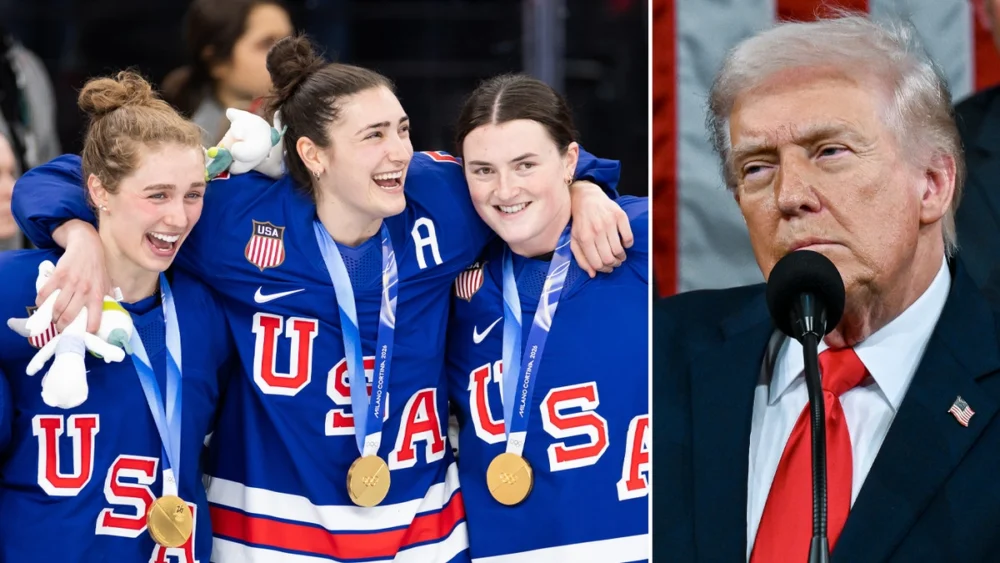
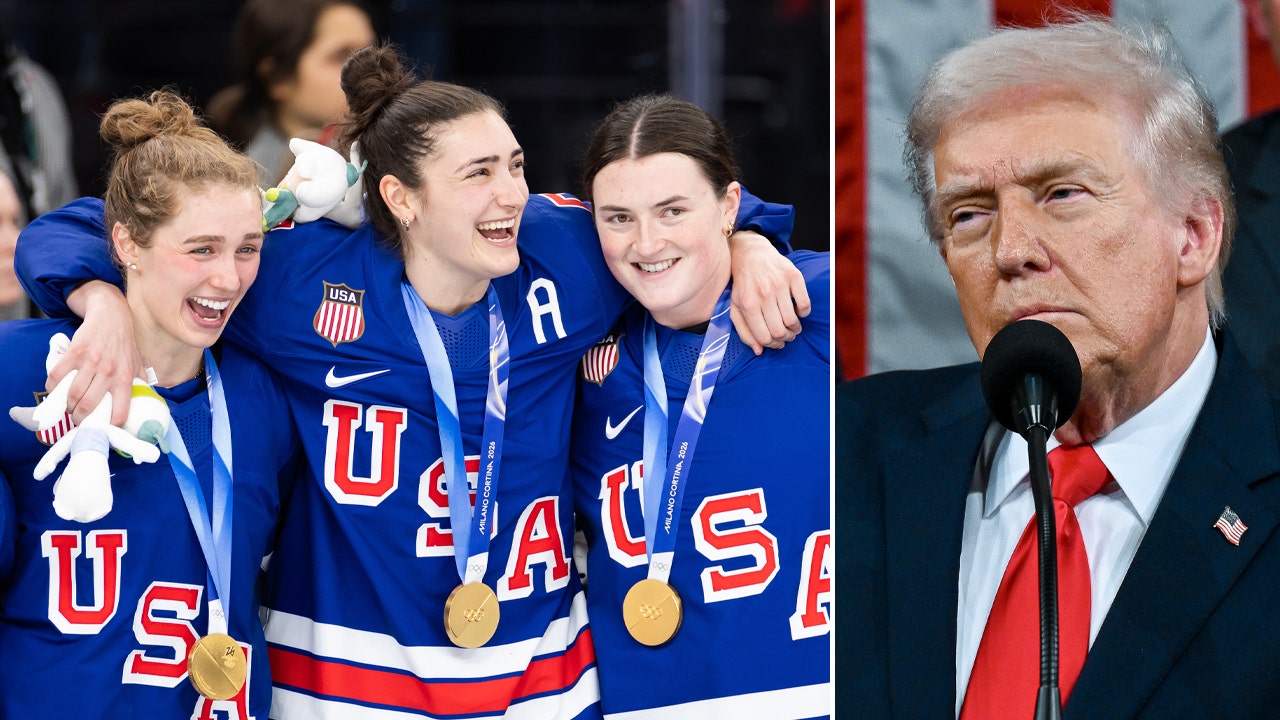
In a move that captivated audiences and addressed a recent political firestorm, members of both the men’s and women’s Olympic gold-medal winning U.S. hockey teams appeared together on the iconic sketch comedy show, "Saturday Night Live." The joint appearance, a rare occurrence for rival sports programs, served as a platform to playfully acknowledge and diffuse the tension surrounding a controversial remark made by President Donald Trump following the men’s team’s victory. The incident, which sparked significant debate and criticism, saw the athletes, particularly the men’s team, thrust into the center of a political crossfire, highlighting the delicate balance between athletic achievement and public scrutiny.
The controversy originated after President Trump extended congratulations to the men’s hockey team for their hard-fought gold medal win against Canada. During a phone call, the President reportedly invited the team to the White House for the State of the Union address. In a lighthearted, albeit ill-received, jest, President Trump remarked that he would have to invite the women’s team as well, or he’d risk being "impeached." This joke, intended perhaps as a moment of camaraderie, unexpectedly ignited a firestorm, primarily among American and Canadian liberal commentators, who perceived the men’s team’s laughter in response as dismissive of the women’s achievements and potentially indicative of a broader disregard for gender equality in sports. The ensuing backlash saw the men’s team facing accusations of insensitivity, casting a shadow over their momentous victory.
On the "Saturday Night Live" stage, the players found a way to address this delicate situation with humor and grace. U.S. women’s team stars Hilary Knight and Megan Keller stood alongside their male counterparts, brothers Jack and Quinn Hughes, offering a united front. Knight, a seasoned veteran and a vocal advocate for women’s sports, masterfully referenced President Trump’s controversial remark, setting the stage for a humorous exchange. "It was going to be just us," Knight quipped, "but we thought we’d invite the guys, too." This opening line immediately acknowledged the underlying tension and signaled a willingness to engage with the narrative in a lighthearted manner, earning a positive reception from the live studio audience.
The playful banter continued as Quinn Hughes, reflecting on the men’s team’s long drought between Olympic gold medals, noted that their recent triumph marked the first time the men’s team had achieved this feat in 46 years, dating back to the legendary 1980 Lake Placid Games. This historical context provided an opening for Knight to deliver another sharp, yet good-natured, punchline. She swiftly countered by pointing out that the women’s team had secured their gold medal a mere two Olympics prior, at the 2018 Pyeongchang Winter Games. This pointed comparison underscored the women’s consistent success and recent achievements, subtly reinforcing their standing in the sport.
Jack Hughes, ever the quick wit, responded with a classic sports comeback, "Nice burn." He then broadened the perspective, stating, "These gold medals aren’t just for us, they’re for all hockey fans." This statement served to bridge the perceived divide, emphasizing the collective pride and shared accomplishment that both teams represented for the United States. The presence of "Heated Rivalry" actor Connor Storrie as the episode’s host further amplified the comedic undertones, providing a seasoned performer to guide the segment and ensure its comedic impact.
The "Saturday Night Live" appearance was particularly significant given the intense media scrutiny the men’s team had faced in the weeks prior. Several mainstream media outlets had published op-eds that sharply criticized the men’s team for their reaction to President Trump’s joke, their decision to visit the White House, and their attendance at the State of the Union address. These critiques painted a narrative of a team that had, intentionally or not, diminished the accomplishments of their female counterparts.
However, the narrative of division began to unravel when members of the men’s team themselves spoke out. In a candid interview on ESPN’s "The Pat McAfee Show," Jack Hughes offered a passionate defense of his team’s actions and, more importantly, expressed profound respect for the women’s team. When McAfee alluded to the controversy by jokingly suggesting Hughes and his teammates "hate" the women players, Hughes emphatically refuted the notion. "We are hanging out with them so much, the women’s team. We were supporting them. Like, we were at their games, they were at our games," Hughes stated, painting a picture of genuine camaraderie and mutual support.
Hughes then directly addressed the criticism his team had received, expressing his frustration with those who were quick to judge without fully understanding the context or the depth of their support for the women’s program. "Like all these people talking, how many of them watched their gold medal game? Me and Quinn Hughes were at the game. We were at the game until, like, overtime ended on the glass, and we were jumping up and down so excited for these girls, so excited they won," he revealed, providing concrete evidence of their personal investment in the women’s success. He continued to challenge the critics, asking, "And how many of these people watched the gold medal game, watched their semifinals game? Like 10 of the 10 of our players went to their game in the round-robin. Like, we supported them so much, and we’re so proud of them. We’re so happy that they won, and they brought a gold medal back and that, you know, I said it, the men’s and women’s team both brought gold medals back. So, just unbelievable for USA hockey." His words painted a picture of unwavering solidarity and genuine pride, contrasting sharply with the narrative of division that had been amplified by some media outlets.
Hughes also shared a personal anecdote that powerfully illustrated the bond between the players. He recalled a moment in the Olympic village cafeteria after the women’s team had secured their gold medal. He and Megan Keller, who had also scored the game-winning overtime goal for the women’s team, shared a heartfelt embrace. "Me and her had a great moment in the cafeteria after her gold medal game," Hughes recounted. "We played Slovakia the next night, and it was like a late game. And we were in the pasta line – me and Megan. They were just getting ready to go out again, and I just gave her a massive hug, and I said, ‘I’m so happy for you. I’m so proud of you.’" He further elaborated on their continued positive interactions, noting, "A couple nights later, saw her again in the [cafeteria], and we took a great picture and, uh, she just gave me a big hug and was so pumped for me as well." This intimate exchange humanized the athletes and underscored the genuine respect and shared joy that permeated the Olympic village, irrespective of gender or team affiliation.
U.S. women’s hockey captain Hilary Knight, while acknowledging the "distasteful joke" from President Trump, also expressed her frustration that the incident had overshadowed the women’s remarkable achievements. Speaking on ESPN’s "SportsCenter," Knight stated, "I thought it was sort of a distasteful joke, and, unfortunately, that is overshadowing a lot of the success, the success of just women at the Olympics carrying for Team USA and having amazing gold medal feats." Her sentiment highlighted the broader issue of women’s accomplishments being sidelined or diminished, even when achieved at the highest level. She emphasized the team’s focus: "We’re just focusing on celebrating the women in our room, the extraordinary efforts, and continue to celebrate three gold medals in program history as well as the double gold for both men’s and women’s at the same time. And really not detract from that with a distasteful joke." This statement underscored the team’s determination to reclaim the narrative and ensure their success was recognized on its own merits.
Further reinforcing the narrative of unity was Ellen Hughes, the mother of Jack and Quinn Hughes. A former Team USA player herself and currently serving on the player development staff for the women’s team, she offered a perspective grounded in deep understanding of the sport and its athletes. She stated that for the players, the ultimate goal was "bring[ing] so much unity to a group and to a country." Her words provided an insider’s view, emphasizing the intrinsic motivations of the athletes and their desire to foster a sense of collective pride and national unity through their athletic endeavors.
The "Saturday Night Live" appearance, therefore, served as more than just a comedic segment; it was a strategic platform to address a divisive issue head-on, using humor as a tool for reconciliation and clarification. By appearing together, the men’s and women’s teams demonstrated a united front, showcasing the genuine respect and admiration they hold for each other. The players, through their witty remarks and candid reflections, effectively countered the narrative of division that had been propagated by some media outlets, highlighting the deep-seated camaraderie and mutual support that defines USA Hockey. This joint appearance underscored the power of sport to transcend political controversies and foster a sense of shared national pride, reminding the public that behind the medals and the headlines are athletes who champion each other’s successes. The ability of these athletes to navigate such a sensitive situation with grace and humor on a national stage speaks volumes about their character and their commitment to the spirit of sportsmanship.