
 By admin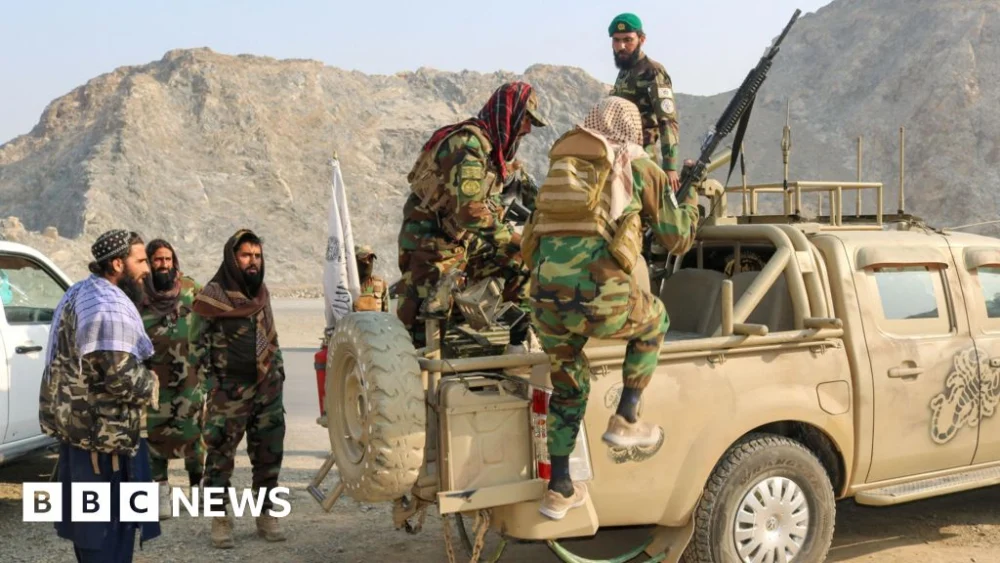
Tensions between Pakistan and Afghanistan have dramatically escalated, with Pakistan launching significant bombing operations across the border into Afghanistan on Friday. This retaliatory action followed an announcement by the Afghan Taliban that they had initiated a major offensive against Pakistani military posts situated near their shared, porous frontier. This latest eruption of hostilities marks a serious deterioration in the already strained relationship between the two neighboring nations, raising fears of a wider conflict.
The unfolding events began on Thursday, February 26th, when the Afghan Taliban government declared the commencement of a large-scale operation targeting Pakistani military installations. According to statements from Taliban officials, the offensive was launched at approximately 20:00 local time (15:30 GMT) and spanned multiple provinces along the border, including Nangarhar, Nuristan, Kunar, Khost, Paktia, and Paktika. This move by the Taliban was met with a swift and forceful response from Pakistan. Islamabad asserted that the Taliban had "miscalculated and opened unprovoked fire on multiple locations" across the border in its north-western province of Khyber Pakhtunkhwa. Pakistan’s security forces claimed to have delivered an "immediate and effective response" to these alleged provocations.
In the early hours of Friday morning, Pakistan launched a series of bombing raids, reportedly targeting key areas within Afghanistan. Official sources indicate that strikes were carried out in the Afghan capital, Kabul, as well as in the southern provinces of Kandahar and Paktika, which lie in close proximity to Pakistan’s extensive 2,600-kilometer (1,615-mile) border. The Torkham border crossing, a crucial transit point situated between the Pakistani city of Peshawar and the Afghan city of Jalalabad, also witnessed further exchanges of fire, as reported by AFP journalists present at the scene.
While details are still emerging and the full extent of casualties on both sides remains unconfirmed by the BBC, these bombings represent the most significant development in the ongoing tensions between the two countries. This escalation comes just months after a fragile ceasefire was agreed upon in October, following a week of deadly clashes that had raised international concern.
Adding another layer of complexity, the Afghan Taliban spokesman, Zabihullah Mujahid, initially published a post on the social media platform X detailing strikes carried out early on Friday against Pakistani military positions in Kandahar and Helmand provinces. This post was subsequently deleted. However, sources within the Taliban government later informed the BBC that the group had indeed conducted drone strikes from Afghan territory targeting several locations within Pakistan on Friday morning.
A Pakistani military officer corroborated that Afghan Taliban drones had targeted three specific locations: the army’s artillery school in Nowshehra, an area near a military academy in Abbottabad, and a site that reportedly fell near a primary school in Swabi. The officer asserted that all these drone threats were successfully neutralized. The use of drones, even those carrying improvised explosives, by the Taliban represents a significant development, as their operational range and targeting capabilities are generally considered limited compared to conventional military assets.
Both nations have adopted familiar stances, each accusing the other of initiating the hostilities and claiming to have inflicted substantial losses on their adversary. Pakistan’s Prime Minister Shehbaz Sharif declared that his country’s forces had successfully "crushed" their opponents. In a more bellicose tone, Pakistan’s Defence Minister had earlier proclaimed "open war" on the Taliban in Afghanistan.
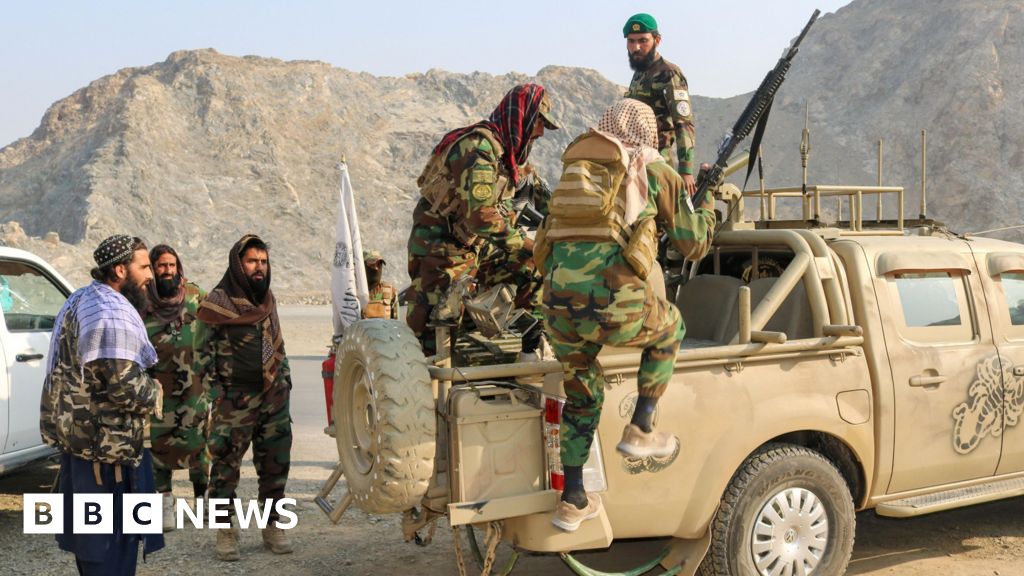
Conversely, a Taliban military spokesperson told the BBC that while the group would retaliate if attacked, they would not be the instigators of further conflict at this moment. However, the Taliban’s chief spokesman, Zabihullah Mujahid, asserted that their offensive had resulted in the deaths of "numerous" Pakistani soldiers and the capture of others, a claim vehemently denied by Pakistani authorities. Mosharraf Zaidi, a spokesperson for the Pakistani prime minister, provided figures on Thursday evening, stating that Pakistani forces had killed 133 Afghan Taliban fighters and wounded over 200. The BBC has not been able to independently verify these casualty figures.
The international community has reacted with concern, calling for an immediate de-escalation of the violence. Iran, which shares borders with both Pakistan and Afghanistan, has offered its mediation services. Iranian Foreign Minister Abbas Araqchi highlighted the significance of the current month, Ramadan, as a period for "self-restraint and strengthening of solidarity in the Islamic world." China, which maintains friendly relations with both nations, has urged both sides to "remain calm and exercise restraint" and called for a ceasefire. The foreign minister of Saudi Arabia, a key ally of Pakistan, also met with his Pakistani counterpart to discuss strategies for reducing tensions.
The root causes of this recurring conflict are multifaceted and deeply entrenched. The current air strikes follow a period of intense hostilities that have characterized the relationship between Pakistan and the Taliban government in Afghanistan. The last major confrontation occurred in October, leading to the fragile ceasefire that has now been shattered. Pakistan has consistently accused the Afghan Taliban government of harboring and supporting "anti-Pakistan terrorists," holding them responsible for a series of deadly suicide attacks within Pakistan, including a recent bombing at a mosque in Islamabad.
The Taliban government, however, has repeatedly denied these accusations, maintaining that Afghan territory is not being used to threaten the security of other countries. Instead, they accuse Pakistan of conducting unprovoked attacks on Afghan soil, which they claim have resulted in civilian casualties. Pakistan, in turn, asserts that its military actions are solely targeted at militants.
Given Pakistan’s nuclear arsenal and superior military might, analysts generally believe that a conventional war with the Taliban is unlikely. However, the Afghan Taliban possesses extensive experience in guerrilla warfare, a tactic they have honed over decades of conflict.
What distinguishes the latest round of Pakistani strikes is their apparent targeting of Taliban government facilities, as opposed to solely focusing on militant groups operating within Afghanistan. Michael Kugelman, a senior fellow for South Asia at the Atlantic Council, commented on the BBC’s Newsday programme that this shift signifies Pakistan is "now targeting the regime itself." This direct targeting of government infrastructure could have profound implications for the stability of the region.
Furthermore, rhetoric emanating from the Taliban leadership suggests a resolute commitment to "staging relentless attacks" on Pakistan. This stance has created a "precarious situation" that could indeed escalate into a full-blown conflict. Qari Muhammad Fasihuddin, the Afghan Taliban’s military chief, issued a video message on Friday warning that Pakistan could anticipate "an even more decisive response" in future engagements. This heightened rhetoric, coupled with the direct military actions, paints a grim picture for the immediate future of the Pakistan-Afghanistan border region, underscoring the urgent need for de-escalation and diplomatic intervention.
The BBC Afghan and Urdu teams contributed to this report.