
 By Isnaini Azizah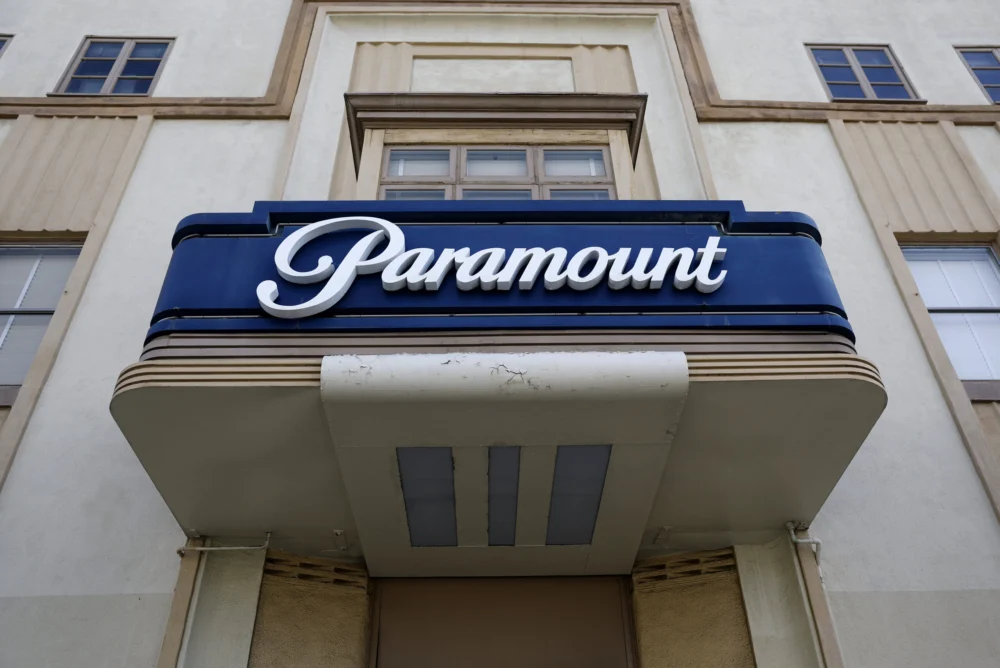
In a seismic shift for the global media landscape, Paramount Skydance has officially emerged as the victor in the high-stakes battle to acquire Warner Bros. Discovery (WBD), marking the conclusion of one of the most contentious bidding wars in Hollywood history. The decision, finalized by the Warner Bros. Discovery board on Thursday, February 26, 2026, cements a $31-per-share offer from Paramount, a valuation that proved too rich for the previous frontrunner, Netflix. The move not only consolidates two of the "Big Five" legacy film studios but also creates a content titan with an unprecedented portfolio of news, sports, and intellectual property.
The road to this merger was paved with aggressive financial maneuvering and strategic retreats. Netflix, which had initially appeared to have the inside track with a $27.75-per-share bid, officially withdrew from the process following Paramount’s revised offer. Netflix co-CEOs Ted Sarandos and Greg Peters issued a joint statement noting that while they remained confident in their own vision for WBD’s assets, the escalating price tag had reached a point where it was "no longer financially attractive" for the streaming giant’s shareholders. This withdrawal cleared the path for David Ellison’s Paramount Skydance to take the reins of a media empire that includes HBO, CNN, and the historic Warner Bros. film lot.
Paramount’s victory was anything but guaranteed. The company launched a hostile bid for Warner Bros. Discovery in late 2025, a move that initially met with resistance from the WBD board. However, the financial terms eventually became impossible to ignore. Beyond the $31-per-share price point—a significant premium over WBD’s trading price throughout much of 2025—Paramount demonstrated its commitment by assuming immediate financial liabilities. According to a Friday SEC filing, Paramount has already disbursed $2.8 billion to cover the breakup fee WBD owed to Netflix when their preliminary agreement was scrapped. Furthermore, Paramount has agreed to a staggering $7 billion breakup fee of its own, a massive financial guarantee intended to reassure WBD shareholders that the deal will either clear regulatory hurdles or provide a massive windfall if it fails.
Industry analysts are now dissecting the regulatory path forward, which many believe is more favorable for Paramount than it would have been for Netflix. While a Netflix-WBD merger would have combined the world’s largest streaming service with the prestige of HBO Max, creating a potential "streaming monopoly" that would have drawn intense scrutiny from the Department of Justice (DOJ), the Paramount-WBD tie-up presents a different set of challenges and opportunities. Raymond James analysts noted in a Friday briefing that Paramount’s regulatory path is "meaningfully easier," largely because the merger is viewed as a consolidation of legacy media entities attempting to survive in a tech-dominated era, rather than a tech giant swallowing a legacy competitor.
The political dimension of the deal cannot be overstated. The current U.S. administration, led by President Donald Trump, has signaled a shifting stance on media consolidation. While the President initially expressed concerns in late 2025 that a Netflix-WBD deal would grant Netflix too much market power, he has since moderated his rhetoric, stating that the DOJ would have the final word. However, Paramount’s leadership enjoys a unique standing with the administration. David Ellison, the CEO of Paramount Skydance, is the son of Oracle co-founder Larry Ellison, a prominent figure with established ties to the President. Furthermore, SEC filings reveal that Jared Kushner, the President’s son-in-law, is a financial backer of the Paramount bid. These connections have led some experts, such as Joseph Kalmenovitz of the University of Rochester’s Simon Business School, to suggest that Ellison "timed the regulatory cycle perfectly," moving as the "deal-friendly establishment" regained influence in Washington.
Despite the favorable political climate, the merger faces significant opposition from consumer advocates and Democratic lawmakers. Senator Elizabeth Warren of Massachusetts has already labeled the deal an "antitrust disaster," warning that the combination of Paramount and WBD will lead to higher subscription prices and fewer choices for American families. The concern centers on the "horizontal consolidation" of the media market. Unlike Netflix, which primarily sought WBD’s library and streaming infrastructure, Paramount is acquiring the entire company. This includes a massive footprint in linear television, news, and sports.

The merger will bring CBS and CNN under the same corporate umbrella, a move that is expected to trigger intense debate over media plurality and newsroom independence. In the sports world, the combined entity would control an overwhelming share of broadcasting rights, including the NFL, the NCAA March Madness tournament, the NBA, MLB, and the NHL. This concentration of live sports rights gives the new Paramount-WBD entity immense leverage over cable and satellite providers, potentially driving up the "retransmission fees" that ultimately get passed down to consumers.
California Attorney General Rob Bonta has also entered the fray, reminding the public that the merger is "not a done deal." The California Department of Justice has an open investigation into the merger’s impact on the state’s massive entertainment economy. Bonta has vowed a "vigorous review," focusing on potential job losses in Los Angeles and the impact on creative competition. The concentration of intellectual property is another flashpoint. A single company will now own the rights to "Star Trek," "Harry Potter," the DC Cinematic Universe, "Game of Thrones," "Yellowstone," and "Mission: Impossible." Paren Knadjian, a partner at EisnerAmper, noted that the biggest concern for regulators will be the "concentration of intellectual property under one roof" and the power it gives the new entity to dictate terms to exhibitors and digital platforms.
From a streaming perspective, the numbers are formidable. As of the most recent earnings reports, Paramount+ boasts 78.9 million subscribers, while HBO Max (formerly Max) counts 131.6 million. Combined, the two services would command over 210 million subscribers globally, placing them in a direct "Big Three" competition with Disney+ and Netflix. Morningstar analysts argued that this consolidation is a "best outcome" for Warner shareholders, as it preserves the value of the linear network business that Netflix was uninterested in managing. By keeping the cable networks—such as TBS, TNT, and Discovery—integrated with the streaming and studio assets, Paramount aims to create a "virtuous cycle" of content monetization that spans from theatrical release to cable broadcast to streaming library.
However, the financial health of the combined entity will depend on its ability to manage a significant debt load. Warner Bros. Discovery has spent years attempting to deleverage following its own previous mergers, and the Paramount acquisition adds a new layer of financial complexity. To mitigate these concerns, Paramount has sought investment from various sources, including sovereign wealth funds from Saudi Arabia, Abu Dhabi, and Qatar. While these entities have reportedly agreed to forgo governance rights and board representation to avoid "foreign influence" concerns from U.S. regulators, their involvement remains a point of contention for critics of the deal.
As the legal and regulatory review begins in earnest, the industry is bracing for a series of potential concessions. Regulators may demand the divestiture of certain cable networks or require "firewalls" between the CBS and CNN newsrooms to ensure editorial independence. There is also the possibility that the DOJ could force the company to license some of its blockbuster IP to third parties to prevent a total market lock-out.
The Paramount-WBD merger represents the definitive end of the "streaming wars" as they were known in the early 2020s. It marks the transition into a new era of "mega-consolidation," where the survival of legacy media depends on achieving a scale that can compete with the deep pockets of Big Tech. For David Ellison and Paramount Skydance, the victory over Netflix is a validation of their belief that content is still king, provided you own enough of it to command the market. For the rest of the industry, it is a signal that the landscape is shrinking, and the players who remain must be larger, more integrated, and more politically savvy than ever before. The coming months of DOJ scrutiny will determine if this new media colossus is allowed to stand or if the "antitrust disaster" warned of by its critics will lead to a forced dismantling of Hollywood’s newest empire.