
 By admin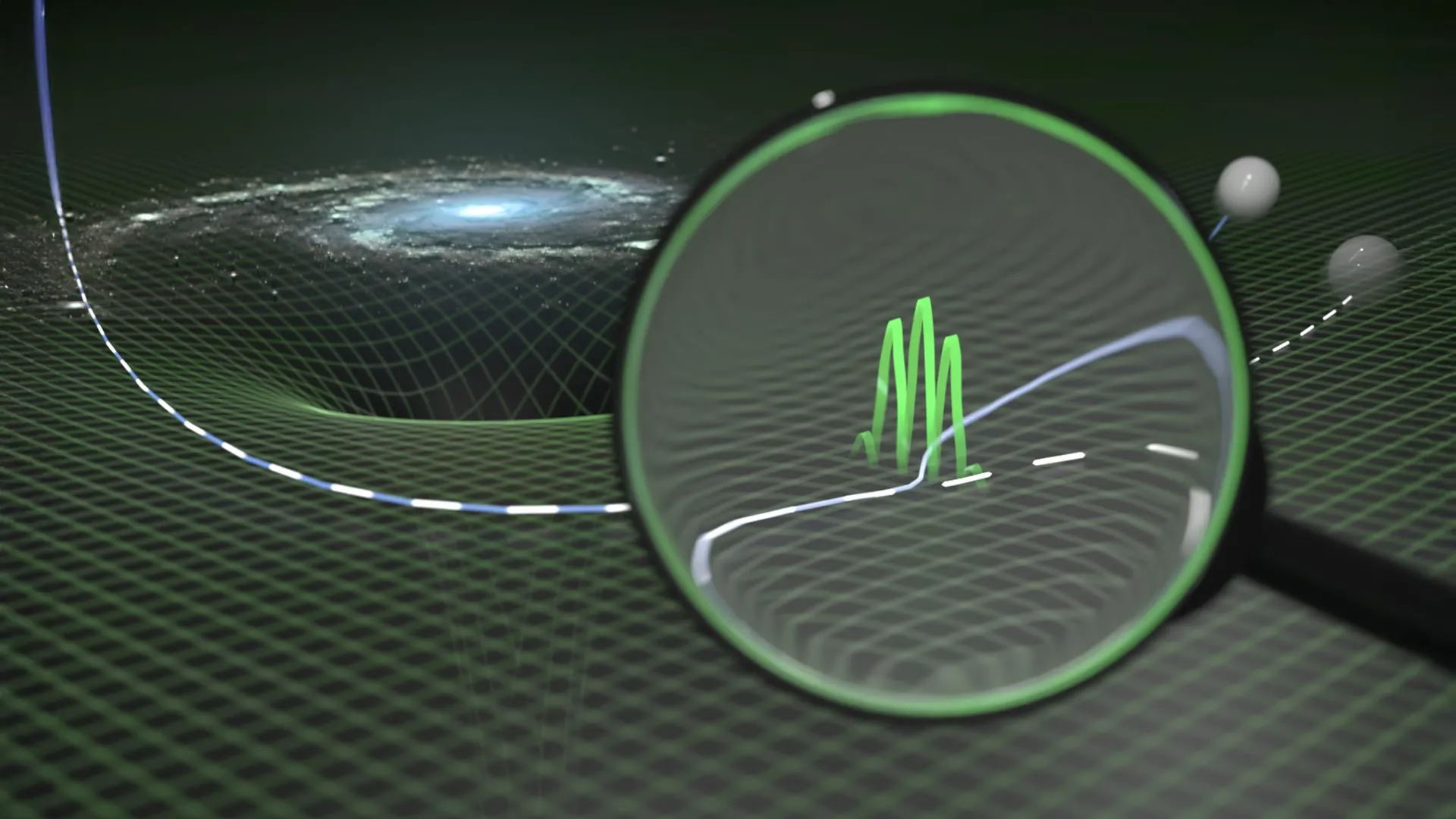
Einstein’s general theory of relativity, on the other hand, operates on a vastly different scale, describing gravity as a manifestation of the curvature of spacetime. It governs the motion of planets, stars, galaxies, and the large-scale structure and evolution of the universe itself. General relativity has delivered profound insights, accurately predicting phenomena like the bending of light by massive objects, the existence of black holes, and the expansion of the cosmos. Its predictions have been confirmed with exquisite precision, notably through the detection of gravitational waves and the operation of GPS systems, which account for relativistic effects. Yet despite their individual successes in their respective domains, these two fundamental frameworks still do not fully align. The elegant, continuous fabric of spacetime described by general relativity clashes with the inherently discrete, probabilistic, and quantum nature of reality at its most fundamental level, leading to a profound theoretical chasm when attempting to describe extreme environments like the singularity of a black hole or the very first moments of the Big Bang.
Physicists have proposed several possible ways to merge them into a single, unified theory of quantum gravity. The ambition is to create a comprehensive framework that can describe all forces and phenomena in the universe, from the quantum foam of spacetime to the dynamics of galaxy clusters. Ideas such as string theory, which posits that fundamental particles are not point-like but rather tiny, vibrating strings in higher dimensions, offer an elegant mathematical framework where gravity naturally emerges as a consequence of string interactions, often involving the hypothetical graviton particle. Loop quantum gravity (LQG), in contrast, attempts to quantize spacetime itself, suggesting that space and time are not continuous but are composed of discrete "quanta" or "atoms" of space, forming a network of loops. Other approaches include canonical quantum gravity, a more general effort to apply quantum principles to the Hamiltonian formulation of general relativity, and asymptotically safe gravity, which explores whether quantum field theory for gravity can be well-behaved at very high energies, suggesting a stable "fixed point" in its renormalization group flow. Each approach has distinct advantages and limitations, offering unique perspectives on how gravity might behave at quantum scales.
What researchers have lacked so far is a clear observable effect that experiments could measure to determine which theory best reflects how nature actually works. The current energy scales accessible in particle accelerators like the Large Hadron Collider are far too low to probe quantum gravitational effects directly, which are expected to manifest at the Planck scale (approximately 10^-35 meters and 10^-43 seconds). This has left the field largely in the realm of theoretical speculation, with little empirical guidance. A new study from TU Wien, published in the journal Physical Review D, may represent a significant step toward solving that problem by identifying a potential "slipper" – a measurable deviation from classical predictions that could hint at the true nature of quantum gravity.
Searching for the "Slipper" of Quantum Gravity
"It’s a bit like the Cinderella fairy tale," says Benjamin Koch from the Institute for Theoretical Physics at TU Wien. "There are several candidates, but only one of them can be the princess we are looking for. Only when the prince finds the slipper can he identify the real Cinderella. In quantum gravity, we have unfortunately not yet found such a slipper — an observable that clearly tells us which theory is the right one." This analogy eloquently captures the predicament facing theoretical physicists: a multitude of mathematically sophisticated theories, each with its own merits, but no decisive experimental evidence to distinguish one as the true description of reality. The "slipper" in this context refers to a unique, measurable prediction that, if observed, could provide compelling evidence for one specific quantum gravity theory over others, thereby guiding future research and potentially revolutionizing our understanding of the universe.
To identify the right "shoe size," meaning a measurable way to test different theories, the researchers focused on a central concept in relativity called geodesics. "Practically everything we know about general relativity relies on the interpretation of geodesics," explains Benjamin Koch. In Einstein’s framework, the force of gravity is not a force in the traditional sense, but rather a manifestation of the curvature of spacetime, and objects move along the "straightest possible paths" in this curved geometry. These paths are precisely what geodesics describe.
A geodesic describes the shortest path between two points in a given geometry. On a flat surface, such as a sheet of paper, that path is simply a straight line. However, on curved surfaces, the situation becomes more complicated and often counter-intuitive. For instance, traveling from the North Pole to the South Pole along Earth’s surface follows a great circle, which appears curved on a flat map but represents the shortest possible route on a sphere. Similarly, a ship following a great circle route across an ocean is moving along a geodesic. In the context of general relativity, light rays and freely falling objects (like planets orbiting a star or an apple falling to Earth in a vacuum) follow geodesics through the four-dimensional fabric of spacetime.
Einstein’s theory connects space and time into a single four-dimensional structure called spacetime. Massive objects such as stars and planets curve this spacetime, much like a bowling ball placed on a stretched rubber sheet. According to general relativity, the Earth circles the Sun not because the Sun exerts a pull in the Newtonian sense, but because the Sun’s immense mass bends spacetime around it, shaping the path the Earth follows into an elliptical orbit, which is a geodesic in the Sun’s gravitational field. This geometric interpretation of gravity has been extraordinarily successful in explaining a wide range of astrophysical phenomena.
Creating a Quantum Version of Spacetime Paths
The exact shape of these paths, and indeed the very structure of spacetime, depends on something called the metric. In general relativity, the metric is a mathematical object (a tensor) that measures distances and time intervals within spacetime, effectively encoding how strongly spacetime is curved at every point. It dictates how spacetime is stretched, squeezed, or warped by the presence of mass and energy. "We can now try to apply the rules of quantum physics to this metric," says Benjamin Koch. This is where the core innovation of the TU Wien study lies.
In standard quantum physics, particles do not have precisely defined properties like position or momentum simultaneously. Instead, both are described by probability distributions, and the more precisely one property is known, the more "fuzzy" and uncertain the other becomes – a principle famously encapsulated by Heisenberg’s uncertainty principle. Quantum theory replaces precise particle properties with mathematical objects known as wave functions or, more fundamentally, operators. In a similar conceptual leap, physicists can attempt to replace the classical, deterministic metric of relativity with a quantum version. If this happens, spacetime curvature is no longer perfectly defined at every point. Instead, it becomes subject to quantum uncertainty, meaning that at a fundamental level, spacetime itself might fluctuate, ripple, or even be discrete rather than smooth.
This idea creates extremely difficult mathematical problems. Quantizing gravity means dealing with a theory that is notoriously complex and resistant to conventional quantum field theory techniques, primarily due to its non-renormalizable nature when treated as a quantum field in the same way as other fundamental forces. The challenge lies in developing a consistent mathematical framework where the gravitational field, represented by the metric, is treated as a quantum entity, subject to superposition and uncertainty.
Benjamin Koch, working with his PhD student Ali Riahinia and Angel Rincón (Czech Republic), managed to quantize the metric using a new method for a specific but important case: a spherically symmetric gravitational field that remains constant over time. This simplified model, while not describing the entire universe, is highly relevant as it accurately describes the gravitational field of isolated massive objects like stars, planets, or even black holes (outside their event horizons). By focusing on this manageable scenario, the researchers could develop and test their novel quantization approach.
The researchers then calculated how a small object would move in this field when the metric itself is treated as a quantum quantity, rather than a fixed, classical background. This involved carefully considering how quantum operators corresponding to the metric would affect the path of a test particle.
"Next, we wanted to calculate how a small object behaves in this gravitational field — but using the quantum version of this metric," says Koch. "In doing so, we realized that one has to be very careful — for instance, whether one is allowed to replace the metric operator by its expectation value, a kind of quantum average of the spacetime curvature. We were able to answer this question mathematically." This crucial step involved rigorous mathematical analysis to ensure that the quantum treatment of the metric was consistent and physically meaningful. They found that simply replacing the quantum metric with its average value would obscure the subtle quantum effects they were seeking.
The team derived a new equation called the q-desic equation, named in reference to classical geodesics. "This equation shows that in a quantum spacetime, particles do not always move exactly along the shortest path between two points, as the classical geodesic equation would predict." This is the core finding: the quantum nature of spacetime itself introduces deviations from the paths predicted by classical general relativity. By examining how freely moving objects travel through spacetime (such as an apple falling toward Earth in outer space, or light rays traveling across cosmic distances), scientists could potentially detect these subtle quantum features of spacetime itself. The q-desic equation thus offers a theoretical tool to predict these deviations.
Tiny Differences and Cosmic Scale Effects
The immediate question arising from such a prediction is: how different are these quantum paths from the ones predicted by classical relativity? If researchers consider only ordinary gravity, without including other cosmological factors, the difference is indeed extremely small. "In this case, we end up with deviations of only about 10^-35 meters — far too small to ever be observed in any experiment," says Benjamin Koch. This magnitude of deviation is on the order of the Planck length, the smallest theoretically meaningful length scale in physics, where quantum gravitational effects are expected to dominate. Observing such minute deviations directly is currently beyond any conceivable experimental capability, reinforcing the challenge of empirically testing quantum gravity.
However, Einstein’s equations also include another fundamental factor known as the cosmological constant, often associated with "dark energy." This component, first introduced by Einstein to force a static universe (which he later called his "biggest blunder" when Hubble discovered the expanding universe), was resurrected decades later to explain the accelerating expansion of the universe observed on the largest scales. Dark energy is now thought to constitute about 68% of the universe’s total mass-energy density, driving the cosmic expansion. When the researchers incorporated the cosmological constant into their q-desic equation, the results changed dramatically.
"And when we did that, we were in for a surprise," reports Benjamin Koch. "The q-desics now differ significantly from the geodesics one would obtain in the usual way without quantum physics." This was the crucial breakthrough, turning an immeasurable theoretical curiosity into a potentially observable phenomenon. The inclusion of the cosmological constant, which represents a fundamental property of spacetime itself, amplified the quantum effects to scales that might be within the realm of astrophysical observation.
The predicted deviations appear both at extremely small distances (still immeasurable at the Planck scale) and, crucially, at very large cosmic scales. The small scale differences remain challenging, if not impossible, to measure directly. But at distances around 10^21 meters (approximately 100,000 light-years, roughly the diameter of a typical spiral galaxy), the effects could become substantial enough to be detected.
"In between, for example when it comes to the Earth’s orbit around the Sun, there is practically no difference. But on very large cosmological scales — precisely where major puzzles of general relativity remain unsolved — there is a clear difference between the particle trajectories predicted by the q-desic equation and those obtained from unquantized general relativity," says Benjamin Koch. This is a vital point: the new theory preserves the incredible accuracy of general relativity where it has been thoroughly tested (solar system scales), while introducing new physics where GR faces its biggest challenges (cosmological scales). This dual behavior makes the q-desic equation a compelling candidate for a "slipper" that could fit the complex reality of our universe.
A Potential Way to Test Quantum Gravity
The research, published in the journal Physical Review D, introduces a new mathematical framework for connecting quantum theory and gravity for a specific, yet relevant, spacetime geometry. More importantly, it may offer a path toward comparing theoretical predictions with real observations. The significant deviations predicted at cosmological scales open a tantalizing possibility for experimental verification of quantum gravity, moving the field from purely theoretical speculation to empirical testability.
"At first I would not have expected quantum corrections on large scales to produce such dramatic changes," says Benjamin Koch. This surprise underscores the non-trivial interplay between quantum effects and the cosmological constant, suggesting a profound connection between the quantum nature of spacetime and the large-scale structure of the universe. "We now need to analyze this in more detail, of course, but it gives us hope that by further developing this approach we can gain a new, and observationally well testable, insight into important cosmic phenomena — such as the still unsolved puzzle of the rotation speeds of spiral galaxies."
The reference to the rotation speeds of spiral galaxies is particularly significant. This long-standing puzzle is one of the primary pieces of evidence for the existence of dark matter. Observations show that stars at the outer edges of spiral galaxies orbit much faster than expected based on the visible matter alone, suggesting a vast halo of unseen, non-baryonic dark matter. The q-desic equation’s prediction of altered particle trajectories on galactic scales raises the intriguing possibility that these deviations, stemming from the quantum nature of spacetime, could either contribute to, or even entirely explain, the anomalous galactic rotation curves without the need for additional exotic dark matter. While speculative at this stage, it provides a concrete, observable phenomenon where quantum gravity effects could manifest.
Returning to the Cinderella analogy, physicists may finally have identified a measurable clue that can help distinguish between competing theories of quantum gravity. The "slipper" in the form of the q-desic equation’s predictions for large-scale cosmic phenomena may have been found. The next crucial step is determining which theory it truly fits – which specific model of quantum gravity can naturally produce these q-desic effects, and whether future astronomical observations can confirm these predicted deviations. This opens up a new frontier for both theoretical and observational cosmology, bringing the elusive quest for quantum gravity closer to empirical reality.