
 By Isnaini Azizah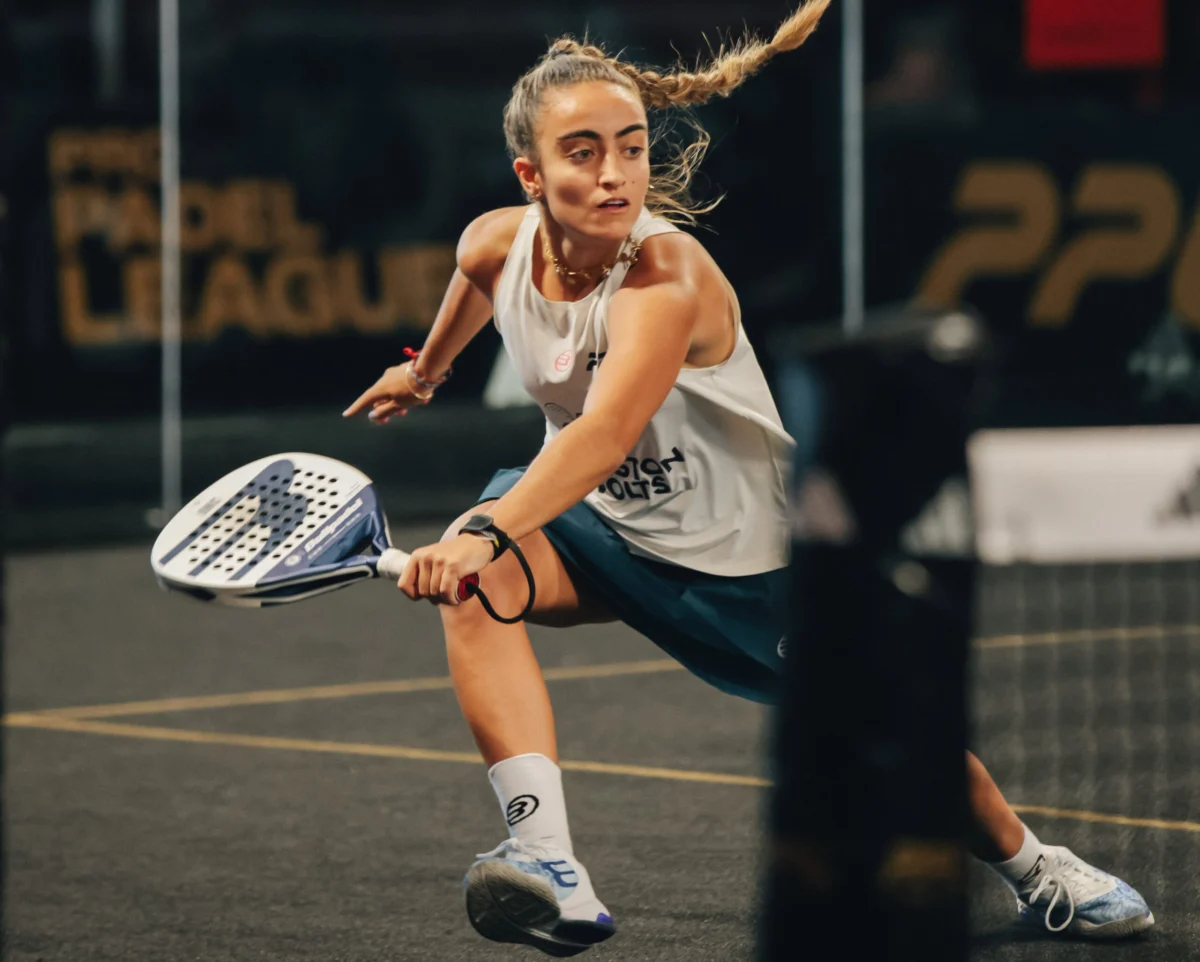
The $15 million raise comes on the heels of a $10 million seed funding round completed in March 2025, bringing the league’s total recent capital intake to $25 million. According to Pro Padel League (PPL) CEO Michael Dorfman, this financial momentum is a testament to the long-term viability of the sport. In an interview with CNBC, Dorfman emphasized that the new funds are earmarked for a comprehensive scaling of the league’s operations. This includes an aggressive expansion of the front office to handle increased commercial interest, the development of robust physical and digital infrastructure, and the curation of a year-round calendar of elite events designed to elevate the profiles of the world’s top players.
Since its inception in 2023, the Pro Padel League has rapidly established itself as the premier professional ecosystem for the sport in North America. Currently, the league comprises 10 city-based franchises strategically positioned across the United States, Canada, and Mexico. These include eight teams in major U.S. markets, one in Toronto, and one in Mexico City. The rapid appreciation of these franchises has been nothing short of meteoric. In 2023, the entry fee for a founding franchise was a modest $200,000. Fast forward to the current market, and valuations for PPL teams have surged past the $10 million mark—a 50-fold increase in just two years. This trajectory mirrors the explosive growth seen in other emerging leagues, such as Major League Pickleball or the early days of the MLS, as investors scramble to secure territory in a sport that is proving to be remarkably "sticky" for both participants and spectators.
To further solidify its talent pipeline, the league recently launched PPL 2, a developmental circuit specifically engineered to identify and nurture North American talent. By creating a clear pathway from amateur play to the professional ranks, the PPL is ensuring that the growth of the sport is sustainable and not merely reliant on importing established stars from Europe and South America. On the commercial front, the league has also secured high-profile sponsorship deals with luxury Swiss watchmaker Frederique Constant and sporting goods giant Franklin Sports, indicating that blue-chip brands are beginning to recognize the affluent and engaged demographic that padel attracts.
But what exactly is driving this "padel fever"? Often described as a hybrid of tennis and squash, padel is played almost exclusively in doubles on an enclosed court roughly one-third the size of a standard tennis court. The defining characteristic of the game is its glass walls, which are fully in play. This allows the ball to bounce off the back and side panels, keeping rallies alive far longer than in traditional tennis. The result is a fast-paced, dynamic game that requires strategic positioning and quick reflexes rather than just raw power.
While padel is frequently compared to pickleball—the other "disruptor" in the racket sport world—enthusiasts argue that padel offers a more athletic and multidimensional experience. Unlike pickleball, which uses a perforated plastic ball and a lower-speed profile, padel utilizes a pressurized ball similar to a tennis ball (though with slightly less pressure) and a solid, stringless racket made of composite materials with a perforated surface. Players note that padel is significantly easier on the joints than tennis because of the smaller court size and the emphasis on movement within a confined space, yet it retains a level of complexity and "cool factor" that appeals to a younger, more fitness-conscious audience.
The business model of padel, however, presents a different set of challenges and opportunities compared to pickleball. While a pickleball court can be set up on almost any flat concrete surface for a few thousand dollars, a padel court is a sophisticated piece of engineering. It requires tempered glass walls, specialized turf, and, for indoor facilities, exceptionally high ceilings to accommodate the "lob," which is a fundamental shot in the game. This higher barrier to entry—driven by real estate and construction costs—means that padel tends to skew toward a more affluent demographic. This "premium" positioning is precisely what attracts investors like Schnall. While the cost of entry for a club operator is higher, the return on investment can be significantly greater due to the ability to charge premium membership fees and the sport’s inherent social nature, which lends itself to high-end food and beverage revenue.

The sport’s rise is also being fueled by an unprecedented level of celebrity endorsement. Global icons such as Rafael Nadal and Serena Williams have expressed their passion for the game, while David Beckham, Cristiano Ronaldo, and Derek Jeter have gone a step further by investing in padel ventures and club expansions. This "celebrity halo effect" has transitioned padel from a niche sport played in the private clubs of Marbella and Buenos Aires to a global lifestyle brand. When stars of this caliber put their name and capital behind a sport, it provides a level of cultural currency that is difficult to replicate through traditional marketing.
According to a comprehensive report by Deloitte, the global padel market is already estimated to be worth $2 billion and is expanding at a double-digit annual rate. This growth is backed by staggering participation numbers: the International Padel Federation (FIP) reports that there are now more than 35 million players across 110 countries. Historically, the sport’s heartland has been Spain—where it is the second most popular sport after soccer—and Argentina. However, the 2025 World Padel Report highlights that the "third wave" of padel growth is firmly centered on North America and the Middle East.
In the United States, the potential for growth is immense. The United States Padel Association (USPA) has set an ambitious target of 20,000 courts and 15 million active players by 2030. Considering there are currently only a few hundred courts in the country, this projection suggests a massive upcoming boom in infrastructure development. Franchise operators are currently in a "land grab" phase, racing to lock up territories in affluent urban centers like Miami, New York, Los Angeles, and Houston.
The Pro Padel League is positioned at the center of this expansion, working to build a media-driven product that translates the excitement of the court into a broadcast-friendly format. "We’re now at a place where most people believe that padel is here to stay," said Dorfman. The league’s focus on team-based competition is a strategic move to foster fan loyalty, similar to the tribalism found in the NFL or European soccer leagues. By moving away from the individual-focused tournament model of traditional tennis, the PPL hopes to create a more engaging and narrative-driven experience for viewers.
Industry insiders believe the "stickiness" of the sport is its greatest asset. Jon Krieger, co-founder of Padel United Sports Club in Cresskill, New Jersey, describes it as "the most addictive sport that exists." Krieger notes that once players experience the social and tactical elements of the game, they rarely go back to other racket sports. "Once you feel that for yourself, it’s pretty clear to understand where this can exist as an asset class," he added.
As the Pro Padel League deploys its new $15 million in capital, the focus will shift toward professionalizing every aspect of the fan and player experience. From high-definition broadcasts and data-driven player analytics to the construction of "destination" padel clubs that serve as social hubs, the league is aiming to redefine what a professional sports league looks like in the 21st century. With the backing of heavy hitters from the world of professional basketball and venture capital, the Pro Padel League is no longer just a participant in the racket sport craze—it is aiming to lead it. The journey from a $200,000 franchise to a $10 million asset in just two years may only be the beginning for a sport that is rapidly capturing the imagination, and the wallets, of the North American sporting public.