
 By admin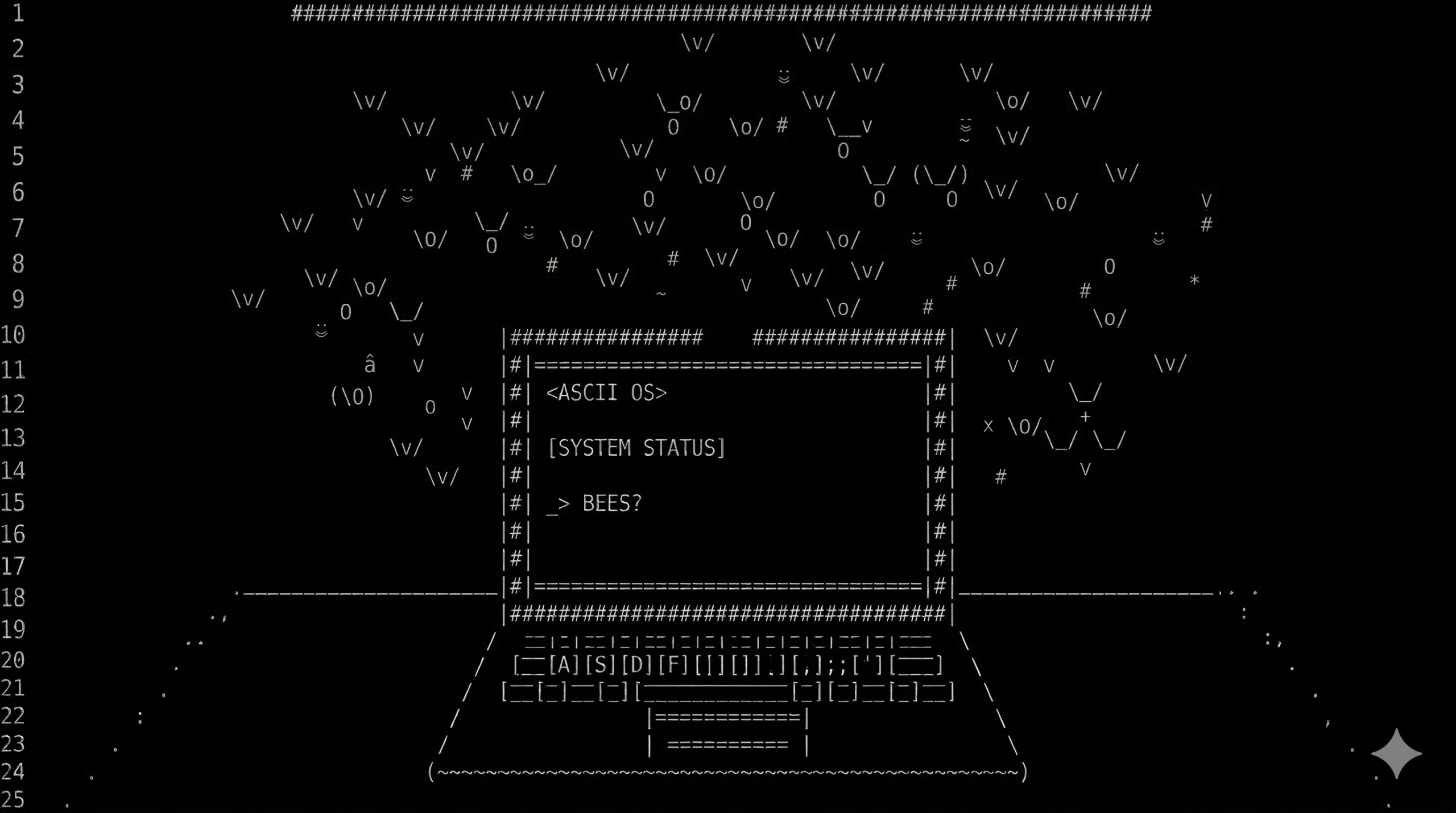
The software engineering landscape is currently grappling with a profound paradox inherent to the age of artificial intelligence. As AI models achieve unprecedented levels of capability, the very challenge of managing these sophisticated systems has emerged as the principal impediment to achieving genuine real-world productivity. While developers can now access the raw, potent intelligence of frontier AI models, this intelligence often falters and degrades when confronted with tasks demanding extended timelines or requiring the comprehension of vast, intricate context windows. This critical gap, between raw AI power and practical application in complex software development, is precisely what San Francisco-based, Y Combinator-backed startup Random Labs aims to bridge with the official launch of Slate V1, a groundbreaking platform described as the industry’s first "swarm-native" autonomous coding agent.
Slate V1 is engineered to execute massively parallel, complex engineering tasks, moving beyond the limitations of current AI coding assistants. Emerging from a successful open beta phase, the tool distinguishes itself through the implementation of a "dynamic pruning algorithm." This sophisticated algorithm is designed to meticulously maintain context within extensive codebases, a notoriously difficult challenge for AI, while simultaneously scaling its output capacity to meet the demands of enterprise-level complexity. Founded in 2024 by brothers Kiran and Mihir Chintawar, Random Labs positions Slate not as a replacement for human developers, but as a transformative collaborative tool intended to empower and augment the capabilities of the "next 20 million engineers" globally, thereby addressing the persistent engineering talent shortage.
The release of Slate V1 signifies Random Labs’ ambitious effort to architect a solution to the current AI-driven productivity bottleneck. By introducing the first "swarm-native" agentic coding environment, Slate transcends the limitations of mere wrappers or chatbots with basic file access. Instead, it embodies a "hive mind" philosophy, architected to scale the effectiveness of agentic work in proportion to the complexity of a human organization. At the core of this revolutionary approach lies a novel architectural primitive dubbed "Thread Weaving." This innovative mechanism allows Slate to move beyond the rigid task trees and lossy data compaction methods that have characterized the first generation of AI coding assistants, offering a more dynamic and intelligent approach to AI-driven development.
The strategic advantage of Slate V1 lies in its deep engagement with Recursive Language Models (RLMs) and its unique "action space" strategy. In conventional AI agent setups, a single prompt, such as "fix a bug," forces the model to simultaneously juggle high-level strategic planning and low-level execution. Random Labs identifies this as a fundamental failure to tap into the "Knowledge Overhang"—the latent, untapped intelligence a model possesses but cannot effectively access when it is tactically overwhelmed by the demands of a complex task. Slate circumvents this limitation by employing a central orchestration thread that essentially "programs in action space." This orchestrator does not directly write code; rather, it leverages a TypeScript-based Domain-Specific Language (DSL) to dispatch parallel worker threads, each assigned to handle specific, clearly bounded tasks. This design creates a crucial separation between the "kernel," responsible for managing the execution graph and maintaining strategic alignment, and the worker "processes" that execute tactical operations within the terminal. By mapping onto an operating system-style framework, conceptually inspired by Andrej Karpathy’s "LLM OS" concept, Slate treats the limited context window of an AI model as precious RAM, intelligently and actively managing what information is retained and what is discarded to optimize performance.
The true innovation driving Slate’s "Thread Weaving" approach is its sophisticated handling of memory. While most current AI agents rely on "compaction," a term that often masks lossy compression that risks discarding critical project state information, Slate generates "episodes." Upon completion of a task, a worker thread does not return a sprawling, potentially error-filled transcript of every failed attempt. Instead, it provides a compressed, concise summary of successful tool calls and the conclusions reached. Because these episodes share context directly with the orchestrator, rather than relying on fragile message-passing protocols, the system cultivates a robust "swarm" intelligence. This distributed architecture enables massive parallelism. A developer can, for instance, have Anthropic’s Claude Sonnet orchestrating a complex refactor, while OpenAI’s GPT-5.4 executes code, and GLM 5—a model favored for its advanced agentic search capabilities—simultaneously researches library documentation in the background. This multi-model orchestration echoes the innovative approach seen in Perplexity’s recent introduction of its Computer multi-model agent. By enabling users to select the "right model for the job," Slate ensures that they avoid overspending on high-intelligence models for simple tactical steps, while still benefiting from the strategic depth offered by the world’s most powerful AI systems.
From a commercial standpoint, Random Labs is navigating the early stages of its product lifecycle with a strategic blend of transparency and calculated ambiguity. While the company has not yet published a definitive fixed-price subscription model, the Slate CLI documentation clearly indicates a transition towards a usage-based credit system. Commands such as /usage and /billing empower users to monitor their credit consumption in real-time. Furthermore, the inclusion of organization-level billing toggles signals a deliberate focus on professional engineering teams, rather than individual hobbyists. A significant strategic move is also being made towards deep integration. Random Labs recently announced upcoming direct support for OpenAI’s Codex and Anthropic’s Claude Code, slated for release in the coming week. This suggests that Slate is not attempting to directly compete with the native interfaces of these individual models. Instead, its ambition is to serve as a superior orchestration layer, enabling engineers to leverage the strengths of all these models simultaneously, in a safe and cost-effective manner. Architecturally, the system is meticulously designed to maximize caching through subthread reuse, a "novel context engineering" technique that the Random Labs team claims prevents the swarm approach from becoming a prohibitive financial burden for its users. This focus on efficiency is crucial for the long-term viability of such a powerful, multi-agent system.
Perhaps the most compelling argument for the efficacy of the Slate architecture is its demonstrated stability. In rigorous internal testing, an early iteration of this threading system successfully passed two-thirds of the tests on the challenging make-mips-interpreter task within the Terminal Bench 2.0 suite. This is a task where even the most advanced frontier models, such as Opus 4.6, often achieve success rates below 20% when deployed in standard, non-orchestrated harnesses. This remarkable success in a "mutated" or dynamically changing environment is what fundamentally differentiates a practical tool from a true collaborative partner. According to documentation provided by Random Labs, a stealth founder in the Fintech sector based in New York City described Slate as their "best debugging tool." This sentiment strongly resonates with Random Labs’ overarching goal: to build AI agents that do not merely complete a given prompt, but that scale their operational capacity and effectiveness in a manner analogous to a human organization. As the software engineering industry progressively moves beyond simplistic "chat with your code" interfaces, the innovative "Thread Weaving" paradigm introduced by Slate V1 offers a profound glimpse into a future where the primary role of the human engineer will be to strategically direct a sophisticated hive mind of specialized AI models. Each of these specialized agents will work in concert, leveraging their unique strengths to tackle the complex, long-horizon problems that define modern software development, ushering in an unprecedented era of AI-augmented engineering productivity.