
 By admin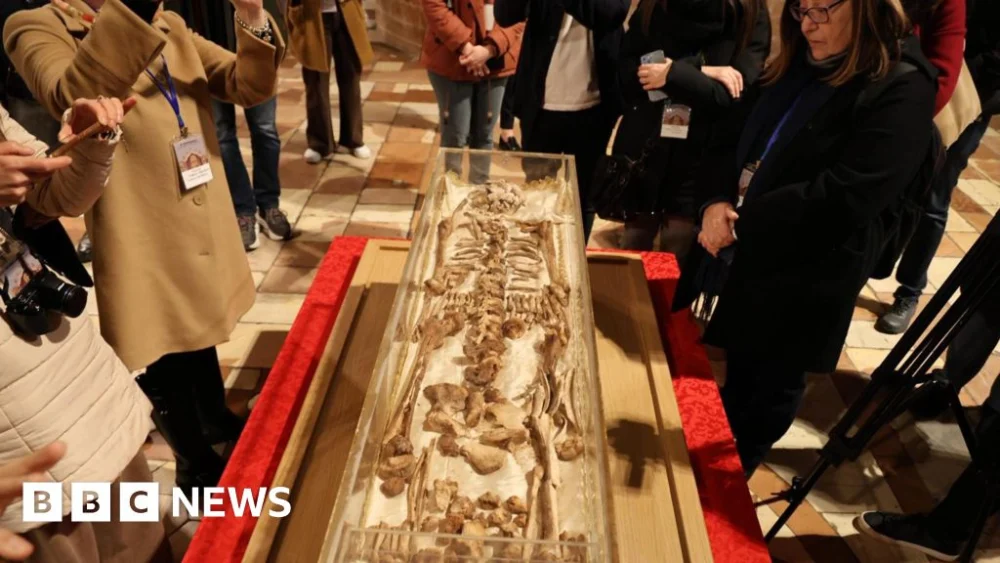
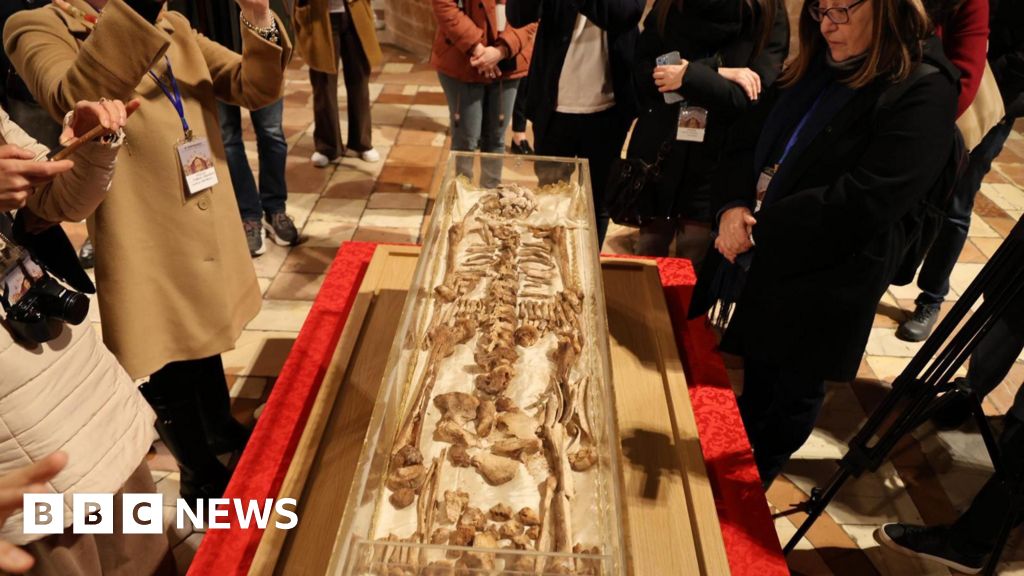
In a moment of profound historical and spiritual significance, the skeletal remains of St. Francis of Assisi, Italy’s beloved patron saint, have been made accessible to the public for an exceptionally rare viewing. This momentous occasion, marking the 800th anniversary of his death, has drawn an unprecedented wave of devotion, with approximately 400,000 individuals from across the globe having already secured reservations to witness these sacred relics. The venerated 13th-century skeleton is now on display within the hallowed confines of the lower church at the renowned Basilica of St. Francis of Assisi, a site that has long been a focal point for pilgrims and admirers of the saint’s enduring legacy.
This public exhibition marks only the second time in history that the physical remains of St. Francis have been presented for public veneration. The previous, solitary instance occurred in 1978, a brief and exclusive event made available to a very select group of individuals. The current display, however, offers a more extended opportunity for reflection and prayer, running until March 22nd, allowing a greater number of the faithful to connect with the physical presence of a figure who has profoundly shaped Christian history and spiritual thought. The skeletal remains are meticulously preserved within a nitrogen-filled plexiglass case, a state-of-the-art protective measure designed to ensure their continued preservation for future generations, positioned reverently before the basilica’s altar, a testament to the saint’s enduring importance.
St. Francis, born Giovanni di Pietro di Bernardone in the Umbrian city of Assisi between 1181 and 1182, is celebrated not only for his deep piety but also for his radical embrace of poverty and his unwavering dedication to the marginalized and the natural world. He is revered as the founder of the Franciscan Order, a mendicant religious order that continues to thrive today, and is widely recognized as the patron saint of animals and the environment, a testament to his profound connection with all creation. His life story is one of profound transformation, moving from a wealthy merchant’s son to a spiritual leader who renounced material possessions to live a life of evangelical poverty, mirroring the teachings of Christ. This commitment to simplicity and service resonated deeply with the people of his time and continues to inspire millions worldwide.
The Feast of St. Francis, observed annually on October 4th, commemorates the day of his death in 1226. This annual observance serves as a reminder of his earthly life and the profound spiritual legacy he bequeathed. The choice of the late Pope Francis to adopt the saint’s name as his own papal title was a deliberate and powerful statement, signaling his intention to emulate the radical humility and Christ-like compassion that characterized St. Francis’s papacy. Pope Francis has consistently pointed to St. Francis as a model for the Church, advocating for a renewed focus on poverty, care for the poor, and environmental stewardship, echoing the very principles that defined the life of his namesake. His papacy has been marked by a consistent effort to bring the Church closer to the people, a spirit deeply aligned with St. Francis’s own outreach to the common man and his dedication to serving the least among us.
The decision to display the remains in Assisi, a town intrinsically linked to the saint’s life and death, amplifies the significance of the event. Assisi, nestled in the rolling hills of Umbria, has been a pilgrimage destination for centuries, drawing those seeking spiritual solace and inspiration. The Basilica of St. Francis, a UNESCO World Heritage site, is a masterpiece of medieval art and architecture, housing frescoes by Giotto and Cimabue that vividly depict the life of the saint. The basilica itself is a testament to the enduring impact of St. Francis, a physical embodiment of his spiritual journey and influence. The current display, therefore, takes place within an environment that is already steeped in his memory and devotion.
The logistics of such a sensitive and high-profile exhibition are immense, requiring meticulous planning and coordination. The careful preservation of the remains is paramount, necessitating advanced scientific techniques and stringent environmental controls. The nitrogen-filled plexiglass case is a crucial element in this endeavor, preventing oxidation and degradation of the delicate bone structure, ensuring that the relics remain as intact as possible for the duration of the public viewing and beyond. Security measures are also exceptionally robust, reflecting the immense value and reverence attached to these artifacts.
The surge of interest in the remains of St. Francis can be attributed to several factors. Firstly, the 800th anniversary provides a natural focal point for a significant commemoration. Secondly, the enduring relevance of St. Francis’s message in contemporary society, particularly his advocacy for the poor, his environmental consciousness, and his call for humility, resonates deeply in a world grappling with social inequality, ecological crises, and a perceived spiritual void. His teachings offer a powerful counterpoint to the materialism and individualism that often characterize modern life.
The Franciscan Order, in its various branches (Friars Minor, Conventual, Capuchin, and the Third Order Regular and Secular Franciscans), plays a central role in facilitating this event. Their ongoing commitment to the Franciscan charism ensures that the legacy of St. Francis is not just remembered but actively lived. The friars serve as custodians of his spiritual heritage, guiding pilgrims, offering spiritual counsel, and continuing the work of social justice and environmental advocacy that St. Francis championed. Their presence at the basilica during this period is invaluable, providing a connection to the living tradition of the order.
The economic impact of this event on Assisi and the surrounding region is also considerable. The influx of hundreds of thousands of pilgrims translates into significant revenue for local businesses, hotels, restaurants, and tourism operators. This "pilgrimage economy" is a vital component of many religious destinations, and Assisi is no exception. The event underscores the multifaceted significance of religious heritage, encompassing not only spiritual and cultural dimensions but also tangible economic benefits.
Beyond the immediate spectacle of the public display, the event serves as a powerful reminder of the enduring human need for connection to the sacred and the historical. In an increasingly secularized world, moments like these offer a tangible link to figures who have shaped moral and spiritual landscapes. The veneration of relics, a practice with deep roots in Christian tradition, speaks to the belief that physical objects associated with holy individuals can serve as conduits of grace and inspiration.
The display of St. Francis’s remains is not merely a historical curiosity; it is a living testament to the enduring power of faith, humility, and radical love. As pilgrims gather in Assisi, they are not just observing a skeleton; they are connecting with the spirit of a man who dedicated his life to God and humanity, leaving behind a legacy that continues to inspire and challenge us centuries later. The opportunity to stand in the presence of such profound historical and spiritual significance is a rare gift, one that promises to leave an indelible mark on all who have the privilege to witness it. The echoes of St. Francis’s life, his love for the poor, his care for creation, and his unwavering faith, continue to resonate powerfully, making this 800th-anniversary commemoration a truly remarkable and deeply meaningful event for believers and admirers alike. The careful preservation and thoughtful presentation of his remains ensure that this connection to a foundational figure of Western spirituality remains vibrant and accessible for generations to come.