
 By Isnaini Azizah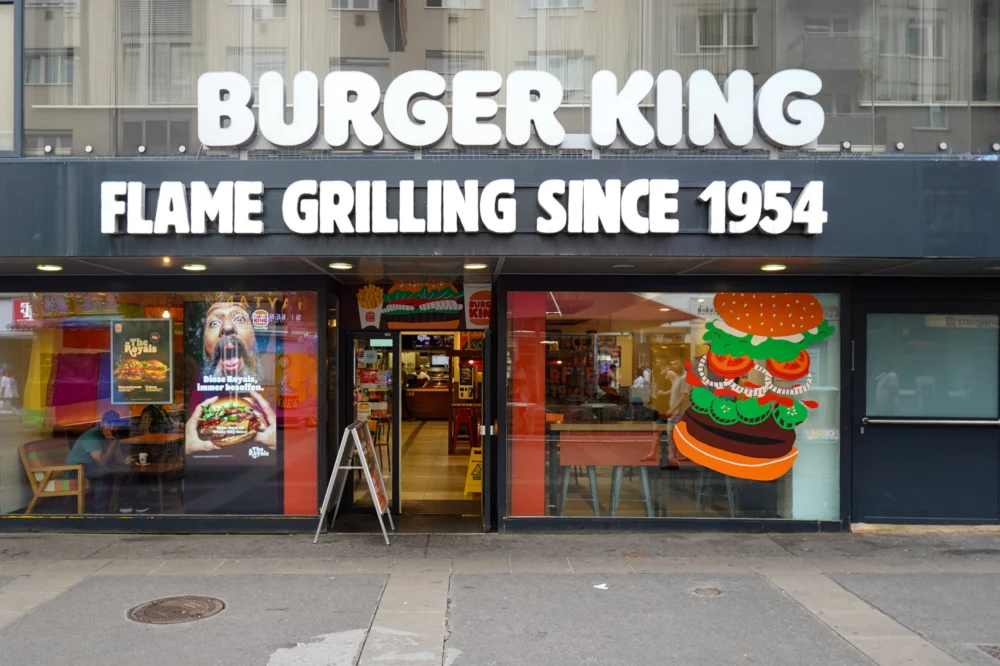
The parent company of Burger King, Tim Hortons, Popeyes Louisiana Kitchen, and Firehouse Subs reported its fourth-quarter and full-year financial results for the period ending December 31, 2025, revealing a complex landscape of global resilience tempered by domestic friction. While the company successfully cleared the hurdles set by Wall Street analysts regarding top-line revenue and adjusted earnings per share, the report highlighted a stark divergence in performance across its diverse portfolio. Driven primarily by a robust international expansion strategy and the continued stabilization of the Burger King brand in North America, Restaurant Brands International (RBI) managed to navigate a volatile macroeconomic environment characterized by what Executive Chairman Patrick Doyle describes as a "bifurcated consumer."
For the fourth quarter, RBI reported net income attributable to shareholders of $113 million, or 34 cents per share. This figure represents a significant decline from the $259 million, or 79 cents per share, reported during the same period in the prior year. However, this headline drop in GAAP earnings was largely attributed to non-recurring factors, including transaction costs, restructuring expenses, and strategic investments in brand revitalization. When adjusting for these one-time items, the company’s performance painted a much more optimistic picture for investors. Adjusted earnings reached 96 cents per share, comfortably ahead of consensus estimates. Total net sales for the quarter rose by 7.4% to $2.47 billion, while organic revenue—which strips out the volatility of currency fluctuations and the impact of restaurants slated for refranchising—grew by a healthy 6.5%.
The narrative of the quarter was undeniably written in the international markets. As domestic demand in North America faced headwinds from persistent inflation and a cautious lower-income demographic, RBI’s global footprint provided a vital cushion. The company’s consolidated same-store sales increased by 3.1%, but this average masks the exceptional 6.1% growth seen in markets outside of the United States and Canada. The international segment of Burger King, which constitutes the lion’s share of RBI’s global operations, saw same-store sales climb by 5.8%. This performance shattered the conservative projections of analysts, who had anticipated a more modest 3.7% growth rate for the international division.
To further capitalize on this global momentum, RBI is doubling down on its presence in Asia. In late 2024, the company announced a pivotal joint venture for Burger King China aimed at accelerating unit growth in one of the world’s most competitive quick-service restaurant (QSR) markets. The deal, which finalized in January, saw CPE—a prominent Chinese alternative asset manager—acquire a roughly 83% stake in the China operations. By retaining a 17% minority stake and a seat on the board, RBI maintains strategic influence while leveraging local expertise and capital to scale the brand. This move is part of a broader "asset-light" strategy that allows the parent company to focus on brand stewardship and menu innovation while franchise partners handle the capital-intensive work of physical expansion.
Back in North America, the results were more varied. Tim Hortons, the iconic Canadian coffee and donut chain, remains the financial bedrock of the corporation, accounting for approximately 46% of RBI’s total quarterly revenue. The chain reported same-store sales growth of 2.9%. While positive, this fell short of the 3.8% growth that Wall Street had modeled. Analysts suggest that while Tim Hortons has successfully expanded its "PM" (afternoon and evening) food offerings and digital loyalty programs, it is facing increased competition in the breakfast and specialty beverage categories from both local independents and global giants like Starbucks and McDonald’s. Nevertheless, Tim Hortons continues to dominate the Canadian landscape, and its recent foray into the U.S. market and international territories like the UK and India remains a key pillar of the company’s long-term growth thesis.
Burger King’s domestic performance offered a glimmer of hope for the "Reclaim the Flame" initiative, a multi-year, $400 million investment plan launched to modernize restaurants and improve operations. The brand reported domestic same-store sales growth of 2.7%, outperforming the 2.4% estimate. This growth suggests that the investments in advertising, digital transformation, and kitchen upgrades are beginning to resonate with consumers. Under the leadership of Executive Chairman Patrick Doyle—famed for his legendary turnaround of Domino’s Pizza—Burger King has focused on "fatting the middle" of its menu, emphasizing core products like the Whopper while simplifying operations to improve speed of service. Doyle has been vocal about the "bifurcated" nature of the current U.S. consumer, noting that while higher-income households continue to spend, lower-income diners are increasingly sensitive to price hikes, forcing brands to lean heavily into value-oriented marketing and digital-exclusive deals.

However, the report was not without its "laggards," a term analysts used to describe Popeyes Louisiana Kitchen this quarter. The fried chicken chain, which enjoyed a meteoric rise during the "Chicken Sandwich Wars" of 2019 and 2020, saw a disappointing 4.8% decline in same-store sales. This was significantly worse than the 2.4% contraction anticipated by the market. The decline underscores the intense competition in the chicken category, where rivals like Chick-fil-A, Raising Cane’s, and even KFC have ramped up promotional activity.
RBI leadership is not standing still in the face of Popeyes’ struggles. In a move to stabilize the brand, the company recently appointed Peter Perdue, a veteran of the Burger King turnaround, to lead the U.S. and Canadian operations for Popeyes. Additionally, Matt Rubin was brought on as Chief Marketing Officer to inject fresh creative energy into the brand’s positioning. The strategy for Popeyes moving forward involves the "Easy to Run" initiative, which focuses on automating kitchen processes and reducing the complexity of the menu to improve consistency and labor efficiency. The goal is to move beyond the "sandwich hype" and establish Popeyes as a reliable destination for family meals and everyday dining.
The fourth-quarter results also reflect the broader challenges facing the restaurant industry, including labor costs and supply chain stability. While commodity inflation has cooled from its 2022 peaks, the cost of labor remains a persistent pressure point, particularly in North American markets where minimum wage increases and a tight labor pool have forced operators to raise prices. RBI has responded by leaning into technology, increasing its mix of digital sales through apps and kiosks, which now account for a record portion of its total system sales. Digital integration not only improves order accuracy and labor efficiency but also provides the company with invaluable first-party data to drive personalized marketing.
Looking ahead, the investment community is turning its attention to Miami, where Restaurant Brands International will host its highly anticipated Investor Day on February 26. This event is expected to provide a comprehensive roadmap for the next five years of growth. Investors are looking for updates on several fronts: the integration and scaling of Firehouse Subs, the specific milestones for the Burger King China joint venture, and a more detailed recovery plan for Popeyes. There is also speculation that RBI may signal its appetite for further acquisitions, as its balance sheet remains strong and its management team has a proven track record of integrating diverse brands into its global platform.
The broader takeaway from the Q4 report is one of strategic pivot. By diversifying its geographical exposure, RBI has insulated itself from the localized economic slowdowns that can cripple domestic-only players. The strength of the international segment has effectively bought the company time to fix the operational issues at Popeyes and continue the long-term renovation of Burger King. As Patrick Doyle and CEO Joshua Kobza prepare to address shareholders in Miami, the focus will likely remain on "quality of growth"—ensuring that unit expansion is matched by healthy franchisee profitability and consistent guest experiences.
In the final analysis, Restaurant Brands International’s latest financial disclosure serves as a microcosm of the global QSR industry. It is an industry currently defined by a tug-of-war between high-level strategic expansion and the ground-level reality of a stretched consumer. With a portfolio that spans coffee, burgers, chicken, and sandwiches, and a footprint that touches nearly every corner of the globe, RBI remains a bellwether for the health of the global hospitality sector. While the 3.1% same-store sales growth may seem modest on the surface, the underlying data reveals a company that is aggressively repositioning itself to dominate the next decade of digital-first, globally-focused dining.