
 By admin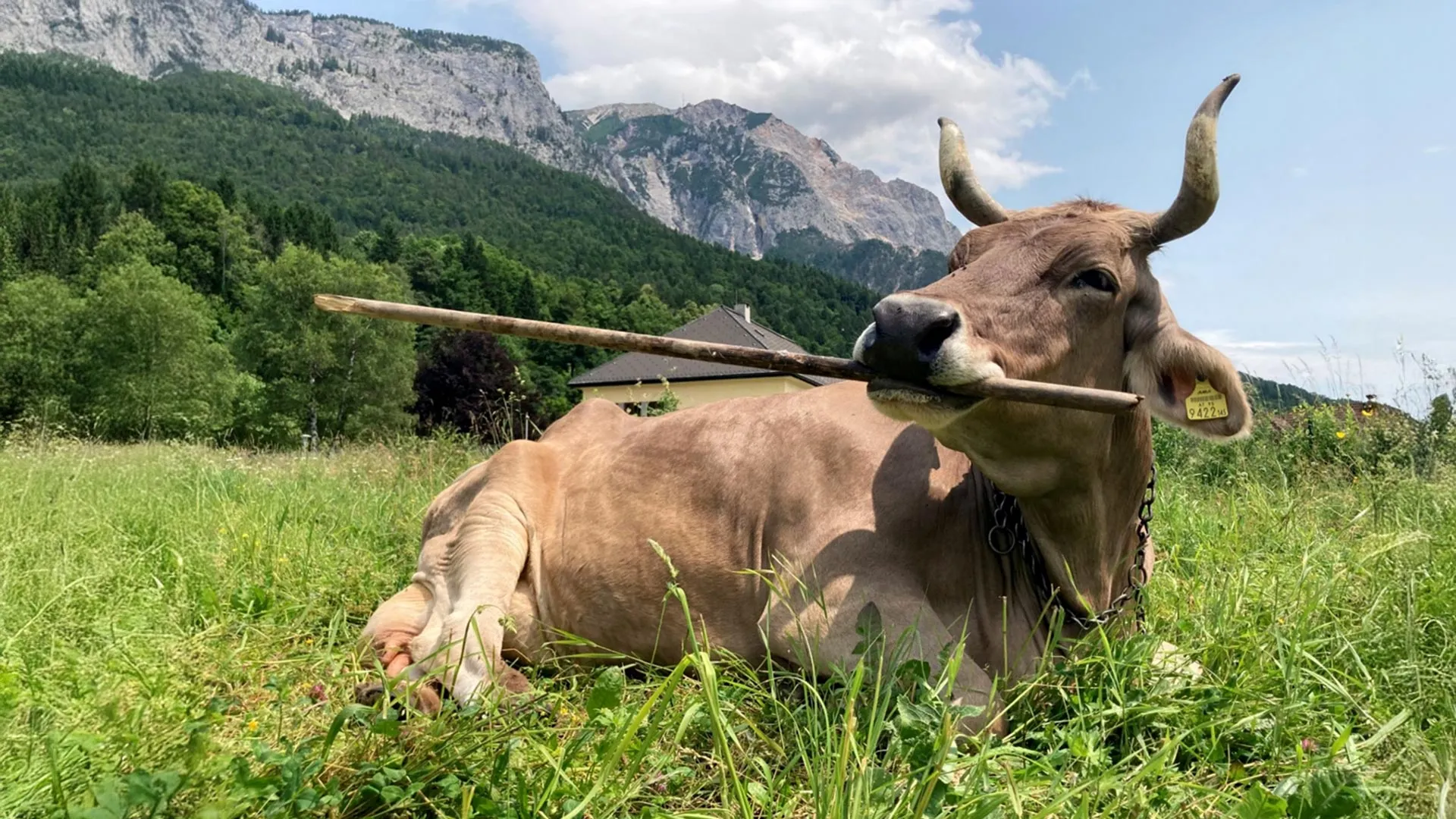
In 1982, the acclaimed cartoonist Gary Larson immortalized a humorous yet profoundly impactful observation in his iconic Far Side comic, Cow Tools. The single-panel illustration depicted a cow standing proudly beside a bizarre assortment of crudely fashioned, seemingly useless objects, all labeled "tools." The comedic genius of the piece lay in its subversion of a deeply ingrained cultural perception: the notion that cows, as livestock, are inherently unintelligent, certainly incapable of sophisticated cognitive feats like tool use. This widely accepted idea, often reinforced by their role in agricultural production, suggested a clear cognitive gulf between humans (and a select few primates) and the common farm animal. Yet, four decades later, this very assumption is not just being questioned, but actively dismantled, thanks to a remarkable Swiss Brown cow named Veronika and groundbreaking research published in the prestigious journal Current Biology. This study presents the first rigorously documented instance of flexible tool use in cattle, revolutionizing our understanding of bovine intelligence and challenging the very foundations of how we perceive the cognitive capabilities of commonly domesticated species.
The implications of Veronika’s discovery extend far beyond a single animal. It serves as a potent reminder, as Alice Auersperg, a renowned cognitive biologist at the University of Veterinary Medicine, Vienna, aptly puts it, that "the findings highlight how assumptions about livestock intelligence may reflect gaps in observation rather than genuine cognitive limits." Auersperg, whose extensive work has explored cognitive abilities in a diverse range of species, from parrots to tortoises, emphasizes that our understanding of animal minds is often constrained by our observational biases and the environments we typically provide for them. For centuries, cows have been viewed primarily through the lens of utility – producers of milk, meat, or labor. This utilitarian perspective often precludes a deeper appreciation of their individual behaviors, personalities, and potential cognitive complexities. The scientific community, and indeed society at large, may have systematically underestimated the intellectual capacities of these animals, simply because we haven’t been looking closely enough, or in the right contexts.
Meet Veronika, The Pioneer of Bovine Tool Use
Veronika’s story is as unique as her abilities. She is no ordinary farm animal destined for the production line; rather, she lives a privileged life as a companion animal on an organic farm in Austria, belonging to Witgar Wiegele, a farmer and baker who regards her as an integral part of his family. This distinction is crucial. Unlike the vast majority of cattle, who experience short, often constrained lives within industrial agricultural systems, Veronika has enjoyed a long, enriched existence, fostering a bond with her human caregiver and an environment conducive to exploration and individuality. This atypical upbringing likely played a significant role in nurturing her latent cognitive potential.
The genesis of this scientific breakthrough traces back over a decade. Witgar Wiegele, an astute observer of his bovine companion, began noticing Veronika engaging in an unusual behavior: she would deliberately pick up sticks and use them to scratch parts of her body that she couldn’t reach with her tongue or hind leg. This anecdotal observation, a testament to Wiegele’s attentive care, eventually caught the attention of the scientific community when video footage of Veronika’s stick-scratching was shared with researchers, including Dr. Auersperg’s team.
Upon reviewing the footage, Dr. Auersperg immediately recognized the significance. "When I saw the footage, it was immediately clear that this was not accidental," she stated. "This was a meaningful example of tool use in a species that is rarely considered from a cognitive perspective." The distinction between accidental interaction and intentional, purposeful tool use is a cornerstone of cognitive ethology. Many animals might inadvertently interact with objects, but true tool use implies an understanding of cause and effect, an intentional manipulation of an external object to achieve a specific goal. Veronika’s actions, even in the initial anecdotal observations, clearly pointed towards this higher level of cognitive processing.
Rigorous Testing: From Anecdote to Scientific Proof
To transition from compelling anecdotal evidence to robust scientific documentation, the research team, led by Antonio Osuna-Mascaró, designed a series of structured experiments. Their goal was to move beyond simple observation and systematically test Veronika’s behavior under controlled conditions, ensuring that her actions were indeed intentional, flexible, and repeatable. For these tests, they introduced a common deck brush – an object with distinct parts (bristles and a handle) that could be used for different types of scratching – and placed it in various positions around Veronika. The researchers meticulously observed and recorded her interactions with the brush.
The results were compelling and remarkably consistent. Across numerous trials, Veronika demonstrated a clear understanding of the brush’s properties and how to manipulate it to suit her specific needs. Her choices were far from random; she consistently selected particular parts of the brush depending on which area of her body required scratching. This precise selection indicated a sophisticated level of problem-solving and an ability to match a tool’s features to a desired outcome.
Osuna-Mascaró emphasized the profound implications of these findings: "We show that a cow can engage in genuinely flexible tool use. Veronika is not just using an object to scratch herself. She uses different parts of the same tool for different purposes, and she applies different techniques depending on the function of the tool and the body region." This statement encapsulates the core of the discovery: Veronika’s behavior goes beyond rudimentary tool use, demonstrating a level of cognitive flexibility that places her in a very select group of non-human animals.
Flexible and Multi-Purpose Tool Use: A Rare Cognitive Feat
The researchers observed distinct patterns in Veronika’s brush usage that underscored her advanced cognitive abilities. For larger, firmer, and less sensitive areas of her body, such as her back, she consistently opted for the bristled side of the deck brush, applying broad, robust motions. This choice allowed for more effective relief in areas requiring a coarser stimulus. Conversely, when addressing more sensitive regions on her lower body, she intelligently switched to the smoother, less abrasive handle of the brush. Her movements for these delicate areas were notably slower and more precise, indicating a careful calibration of force and technique. This differential application of tool features based on specific bodily needs is a hallmark of truly flexible, multi-purpose tool use.
In the scientific community, tool use is generally defined as the employment of an external object to achieve a goal through physical interaction. Veronika’s actions unequivocally meet this fundamental definition. However, what sets her apart is her demonstration of flexible, multi-purpose tool use. This advanced form of tool manipulation involves using different features of the same object to achieve distinct outcomes, adapting the tool’s application based on the immediate context or desired effect. This level of cognitive sophistication is exceedingly rare in the animal kingdom. Before Veronika, such clear and consistent evidence of flexible, multi-purpose tool use among non-human species had been unequivocally documented only in chimpanzees, widely considered one of the most intelligent non-human primates. The fact that a cow, a species often dismissed as intellectually unsophisticated, exhibits a behavior previously thought to be almost exclusive to our closest primate relatives, necessitates a fundamental re-evaluation of bovine cognition.
Overcoming Physical Limitations: A Testament to Ingenuity
Further enhancing the impressiveness of Veronika’s achievements is the context of her physical anatomy. Unlike chimpanzees or humans, cows lack dexterous hands or prehensile tails. Veronika must manipulate her tools using her mouth, a challenge that inherently limits fine motor control and precision. Despite this significant physical limitation, she demonstrates remarkable dexterity and control. Her tool use is classified as egocentric, meaning it is directed at her own body. While egocentric tool use is often considered less complex than using tools to manipulate external objects (e.g., a chimp using a stick to retrieve food), Veronika’s execution, given her anatomical constraints, elevates its significance.
Her ability to carefully adjust her grip on the brush, switching from bristles to handle, and to modify the force and rhythm of her movements, strongly suggests an anticipatory understanding of the effects of her actions. She isn’t just mindlessly scratching; she appears to comprehend which part of the tool, applied in which manner, will best alleviate an itch on a particular body part. This level of foresight and adaptive manipulation, performed with a mouth rather than hands, underscores a significant cognitive capacity for planning and problem-solving within the constraints of her species’ physiology.
Why This Behavior May Be Rare: The Environmental Factor
The researchers posit that Veronika’s unique living conditions are a critical factor in the development and expression of her tool-using behavior. Her life stands in stark contrast to that of the vast majority of cattle globally. Most cows in industrial agriculture are raised for specific production purposes, enduring relatively short lifespans, often in confined or highly standardized environments that offer minimal cognitive stimulation or opportunities for complex behavioral expression. These conditions, while efficient for production, are inherently impoverished from a cognitive standpoint.
Veronika, by contrast, has lived a long life, exceeding typical beef or dairy cattle lifespans. More importantly, her environment is complex, stimulating, and rich with opportunities for exploration and interaction. She engages in daily interactions with humans, fostering a unique human-animal bond, and has access to a variety of objects that she can manipulate and experiment with. These factors – longevity, environmental complexity, social enrichment, and human interaction – likely combined to create a fertile ground for innovation and the development of novel behaviors like tool use. It suggests that the perceived cognitive limitations of cattle may not be inherent to the species but rather an artifact of the environments we typically provide for them. If given the opportunity, freedom, and stimulation, other cows might also exhibit similar, previously unnoticed, intellectual capabilities.
The researchers eloquently conclude, referencing the very cartoon that inspired the initial skepticism: "[Veronika] did not fashion tools like the cow in Gary Larson’s cartoon, but she selected, adjusted, and used one with notable dexterity and flexibility. Perhaps the real absurdity lies not in imagining a tool-using cow, but in assuming such a thing could never exist." This statement serves as both a scientific conclusion and a philosophical challenge, urging a re-evaluation of our anthropocentric biases.
Rethinking Animal Intelligence and Welfare
This landmark discovery in Current Biology is more than just an interesting anecdote; it represents the first confirmed case of tool use in cattle and significantly expands the roster of species known to demonstrate this advanced cognitive ability. It compellingly argues that intelligence, even sophisticated forms like flexible tool use, might be far more widespread across the animal kingdom than previously assumed. This raises a profound possibility: that similar, complex behaviors may exist in other domesticated or wild species but have simply gone unnoticed due to our observational blind spots or the limiting conditions imposed by human interaction and environment.
The implications of Veronika’s story are far-reaching. For the scientific community, it reignites questions about the evolutionary pressures that drive tool use, suggesting that this cognitive trait may arise under diverse circumstances and in species with vastly different anatomical structures. For animal welfare advocates and the agricultural industry, it demands a critical re-evaluation of how we perceive and treat livestock. If cows possess such a high degree of cognitive capacity, what are our ethical responsibilities to provide them with richer, more stimulating environments that allow for the expression of their full behavioral repertoire? The discovery strengthens arguments for more humane and enriched living conditions for farm animals, moving beyond mere physical sustenance to address their psychological and cognitive needs.
The research team is not stopping with Veronika. They are now actively exploring which specific environmental and social conditions are most conducive to the development of such complex behaviors in cattle. Furthermore, recognizing the potential for similar observations to emerge from attentive caregivers and farmers, they have issued a public call to action. "Because we suspect this ability may be more widespread than currently documented," Osuna-Mascaró states, "we invite readers who have observed cows or bulls using sticks or other handheld objects for purposeful actions to contact us." This open invitation to citizen scientists underscores the collaborative nature of scientific discovery and the critical role that observant individuals can play in expanding our understanding of the natural world. Veronika, the unassuming Swiss Brown cow, has not only rewritten the textbook on bovine intelligence but has also challenged humanity to look closer, question assumptions, and perhaps, finally, give credit where cognitive credit is due.