
 By Titik Puspa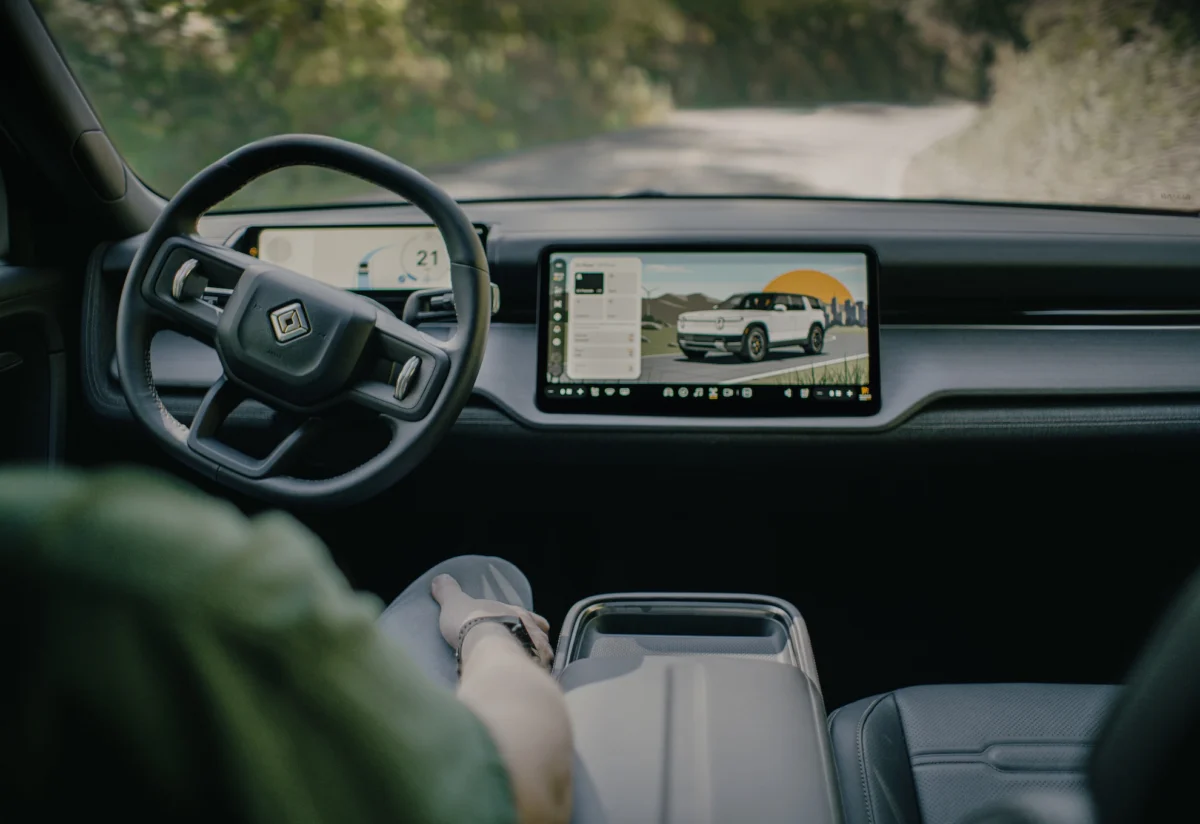
In a move poised to reshape the future of urban mobility, electric vehicle manufacturer Rivian has announced a groundbreaking partnership with ride-hailing giant Uber, aiming to deploy thousands of fully autonomous robotaxis based on Rivian’s anticipated R2 SUV. This ambitious collaboration, potentially valued at an impressive $1.25 billion for Rivian, signifies a significant leap forward in the pursuit of widespread autonomous ride-sharing.
The strategic alliance kicks off with an immediate $300 million investment from Uber into Rivian, underscoring the ride-hailing company’s commitment to this transformative venture. Uber is slated to acquire an initial fleet of 10,000 fully autonomous R2 robotaxis, with a planned rollout commencing in San Francisco and Miami in 2028. This initial deployment will serve as a critical testing ground for the integrated technology and operational strategies.
The agreement further grants Uber the option to expand its fleet significantly, with the potential to purchase up to 40,000 additional autonomous R2 SUVs from Rivian beginning in 2030. The shared vision of both companies extends to a substantial geographical expansion, with plans to launch these robotaxis across 25 cities in the United States, Canada, and Europe by the close of 2031. Crucially, this dedicated fleet will operate exclusively within Uber’s established network, offering a seamless and integrated experience for riders.
While the financial implications of this partnership are undeniably substantial for Rivian, the venture is not without its inherent risks and formidable challenges. The R2 SUV, the foundational vehicle for this ambitious robotaxi program, has yet to enter production. Rivian has indicated that manufacturing is expected to commence in June, a timeline that necessitates swift execution and adherence to schedule. Furthermore, the development and rigorous testing of a self-driving system specifically designed for the demanding environment of robotaxi operations are still in progress.
Adding another layer of complexity, the manufacturing of these robotaxis is slated to occur at Rivian’s new factory in Georgia, a facility that is currently under construction. This ambitious undertaking requires the simultaneous development of vehicle production capabilities and the sophisticated autonomous driving technology, all while establishing a new manufacturing hub.
Despite these considerable hurdles, the obstacles have not dampened Rivian’s resolve, nor that of its visionary founder and CEO, RJ Scaringe. Automated driving technology has been positioned as a paramount priority for the company, a strategic imperative that has guided its research and development efforts. Scaringe himself has previously alluded to the company’s ambitions in the ride-share sector, most notably during Rivian’s inaugural "Autonomy & AI Day" in December. At that event, he hinted that the company’s advancements in autonomous driving technology were laying the groundwork to "pursue opportunities in the ride-share space."
Scaringe’s commitment to this vision dates back to a pivotal decision in 2021 when Rivian shifted its approach to driver assistance systems. The company abandoned its previous rules-based framework in favor of an AI-first strategy. This new paradigm leverages large language models (LLMs) to train the system in sophisticated perception and navigation, enabling it to interpret complex environmental cues and make informed driving decisions. This evolving automated driving system is designed to learn from real-world fleet data, a process that continuously enhances its autonomy and safety.
This sophisticated AI-driven system, branded as the Rivian Autonomy Platform, made its debut in 2024 within the automaker’s second-generation R1 vehicles. It represents the core technology underpinning Rivian’s strategy to progressively enhance its vehicles’ autonomous capabilities. The roadmap includes advancements from hands-free driving on designated highways to a comprehensive point-to-point navigation feature, anticipated for release later this year. This feature aims to automate all driving controls throughout an entire journey, offering a glimpse into the future of effortless travel.
The ultimate objective for Rivian is to offer a truly hands-off, eyes-off driving experience. This level of autonomy will be enabled through hardware upgrades, including the integration of a lidar sensor and a dedicated "autonomy computer" capable of processing an astonishing 5 billion pixels per second. This advanced hardware suite is scheduled to launch in a specialized version of the R2 SUV in late 2026, bringing Rivian closer to its ambitious goals.
It is important to note that even with these advanced features, they do not yet constitute fully autonomous driving systems, where a driver is entirely absolved of responsibility for control. The industry standard for fully autonomous driving, as defined by the Society of Automotive Engineers (SAE), is Level 4 or Level 5. Level 4 autonomy means the vehicle can operate without human intervention within a defined operational design domain (ODD), such as specific geographic areas or weather conditions.
Rivian, however, is steadfast in its pursuit of this ultimate level of automated driving. During its autonomy day, the company articulated its vision for "personal L4," a clear nod to the SAE’s classification. This aspiration underscores Rivian’s long-term strategy to pioneer vehicles that can navigate complex environments independently.
Automated driving remains a central pillar of Rivian’s strategic focus, a point reiterated by Scaringe at SXSW 2026 just last week. He emphasized the significant investment being channeled into achieving hands-off, eyes-off driving by 2027, stating, "Our path to get to hands-off, eyes-off in 2027 is something we’re spending more money on than anything else." This commitment highlights the company’s dedication to pushing the boundaries of autonomous technology.
Scaringe also expressed a strong sense of optimism regarding the pace of progress in the field of autonomy. He articulated a belief that extrapolating current progress from the past five years to predict the next five would be a flawed approach. "If you were to look at the progress in autonomy in the last five years and try to use it as a rough metric or gauge to predict the next five years, you would be wildly wrong," Scaringe stated. "The rate of progress is so much different than looking forward five years than looking backwards five years. The past, in this case, is not a good predictor of the future." This perspective suggests that technological advancements in autonomy are accelerating at an exponential rate, making future developments potentially far more rapid and impactful than historical trends might indicate.
This partnership with Rivian is not Uber’s first foray into collaborating with electric vehicle startups for robotaxi development. In a previous move, the ride-hailing giant announced a collaboration with Lucid Motors, which would involve Nuro, an autonomous vehicle technology company, in building robotaxis based on Lucid’s Gravity SUV. Those particular robotaxis are anticipated for commercial deployment by the end of the current year in San Francisco, signaling Uber’s persistent efforts to integrate autonomous vehicles into its service.
Uber has cultivated a broad network of partnerships within the autonomous vehicle ecosystem, engaging with over 25 dedicated robotaxi or autonomous vehicle companies globally. Among its most significant existing collaborations is with Waymo, the autonomous driving technology company owned by Alphabet. Through this partnership, Waymo’s robotaxis are already integrated into Uber’s app and are operating in Austin and Atlanta. Furthermore, Uber has established agreements with other key players in the autonomous vehicle space, including Motional and Baidu. The company also holds a substantial investment stake in Wayve, a U.K.-based startup focused on autonomous driving technology, indicating a broad and diversified strategy for advancing its robotaxi ambitions.
The strategic alignment between Rivian and Uber represents a pivotal moment in the evolution of transportation. By leveraging Rivian’s innovative EV platform and its dedicated pursuit of advanced autonomous driving capabilities, coupled with Uber’s extensive ride-sharing network and operational expertise, the two companies aim to accelerate the widespread adoption of robotaxis. This partnership is not merely a commercial agreement; it is a bold declaration of intent to shape the future of personal mobility, promising a more efficient, sustainable, and potentially safer way to navigate our cities. The success of this venture will hinge on Rivian’s ability to overcome its production and technological challenges, while Uber will need to successfully integrate and scale these new autonomous fleets within its existing operational framework. The journey ahead is complex, but the potential rewards—a transformed urban transportation landscape—are immense.
Sean O’Kane, a seasoned reporter with a decade of experience covering the dynamic business and technology sectors of the transportation industry, including extensive reporting on Tesla and numerous startups attempting to emulate its success. His recent tenure at Bloomberg News saw him contributing to impactful stories concerning notable electric vehicle Special Purpose Acquisition Company (SPAC) failures. Prior to that, O’Kane was a journalist at The Verge, where he covered consumer technology, hosted a variety of video content, and engaged in product and editorial photography. He can be reached at [email protected] or via encrypted message on Signal at okane.01.
Kirsten Korosec, an accomplished reporter and editor, brings over a decade of expertise to her coverage of the future of transportation. Her journalistic focus encompasses electric vehicles, autonomous driving, urban air mobility, and in-car technology. Currently serving as the transportation editor at TechCrunch, she also co-hosts TechCrunch’s "Equity" podcast and is a co-founder and co-host of "The Autonocast." Her previous roles include writing for publications such as Fortune, The Verge, Bloomberg, MIT Technology Review, and CBS Interactive. Korosec can be contacted at [email protected] or via encrypted message on Signal at kkorosec.07.