
 By Isnaini Azizah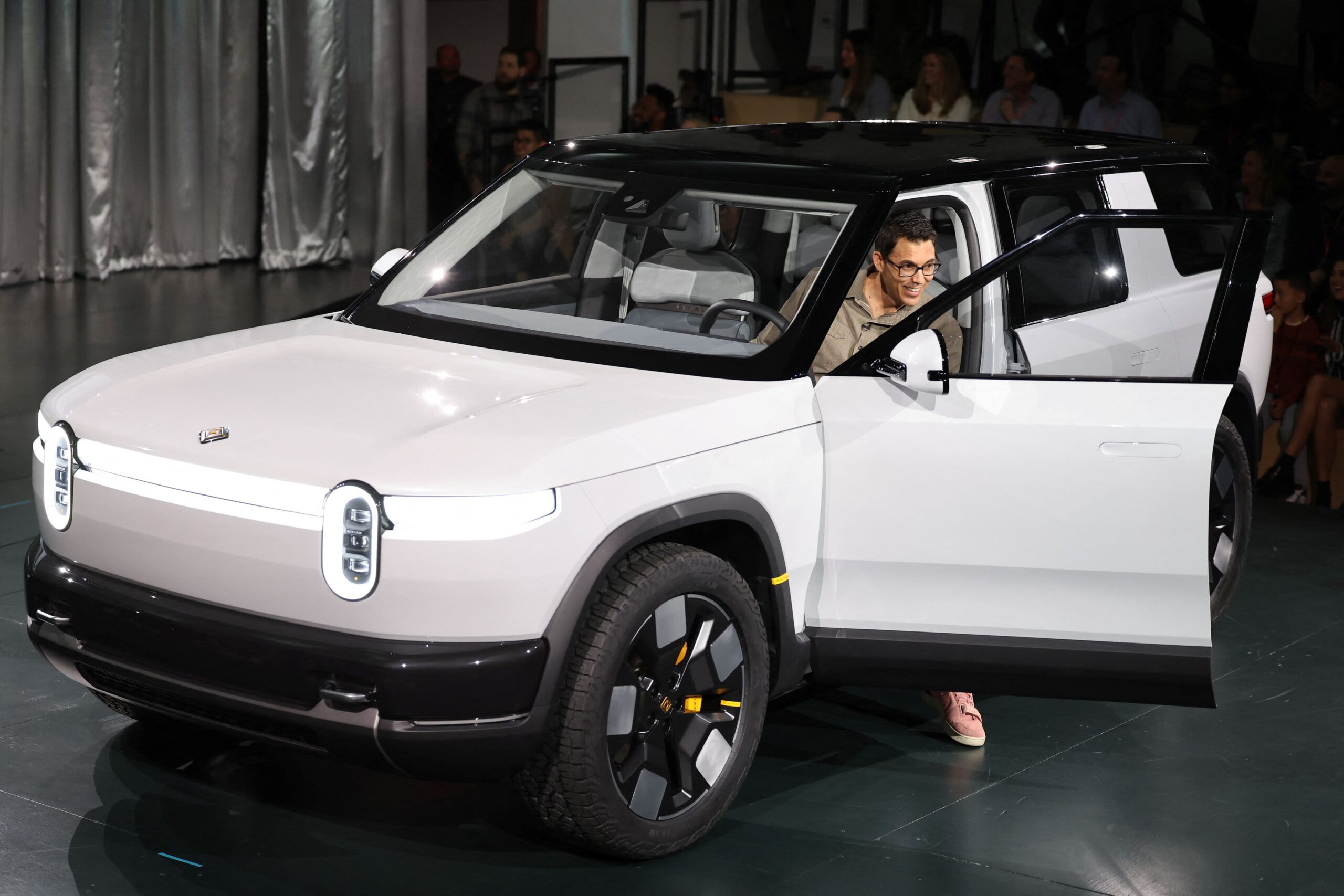
Rivian Automotive, the California-based electric vehicle manufacturer that has become a symbol of both the promise and the volatility of the EV sector, officially announced on Thursday the sales strategy for its highly anticipated R2 midsize SUV. This vehicle is widely regarded by industry analysts, investors, and the company’s own leadership as a "make-or-break" product—a bridge that must carry the company from its current status as a niche, luxury-oriented startup to a high-volume, profitable automotive powerhouse. According to the company’s latest update, Rivian will initiate sales of the R2 this spring, beginning with a premium special edition model priced at approximately $58,000. This "Launch Package" represents the first tier of a multi-year rollout intended to eventually bring a more affordable, $45,000 entry-level version to the mass market.
The first iteration of the R2 to hit the roads will be a high-performance variant equipped with a dual-motor configuration and a robust 330-mile range on a single charge. Beyond the hardware, this initial special edition is designed to entice early adopters with "lifetime" access to Rivian’s Autonomy+ advanced driver-assistance system, a move that underscores the company’s shift toward software-defined vehicle revenue. The performance specifications are aimed squarely at the top end of the midsize SUV market: the vehicle boasts 656 horsepower and 609 foot-pounds of torque, enabling it to sprint from 0 to 60 mph in a blistering 3.6 seconds. For comparison, these figures place the R2 in direct competition with high-performance internal combustion SUVs and the top-tier trims of the Tesla Model Y.
However, the tiered rollout strategy highlights a significant challenge for Rivian: the balance between brand aspiration and volume accessibility. While CEO RJ Scaringe has frequently touted an entry-level version of the R2 starting at $45,000, the company clarified on Thursday that this more affordable model—which is expected to carry lower profit margins—will not be available for delivery until late 2027. Until then, Rivian must rely on the more expensive Launch Package and its existing lineup of R1S SUVs and R1T pickups, both of which carry starting prices in excess of $70,000. This delay for the base model suggests that Rivian is prioritizing immediate cash flow and margin protection over rapid market share expansion in the short term.
The stakes for the R2 could not be higher. Since its blockbuster IPO in 2021, Rivian has grappled with the brutal realities of automotive manufacturing, losing billions of dollars as it scaled production at its flagship plant in Normal, Illinois. The company has also faced a cooling of demand for its current flagship R1 vehicles, which, while critically acclaimed, occupy a price bracket that limits their total addressable market. The R2 is the company’s response to this saturation. From an aesthetic standpoint, the R2 is essentially a more compact, distilled version of the R1 SUV, maintaining the brand’s signature "stadium" headlights and rugged, adventurous silhouette. Beneath the surface, however, the R2 represents a total re-engineering of the Rivian platform. The company has overhauled the vehicle’s software architecture, electrical systems, and component sourcing to drastically reduce complexity and cost.
RJ Scaringe has been vocal in promising investors that the R2 will serve as the "inflection point" for the company’s financial health. The goal is to prove that Rivian can not only design a world-class electric vehicle but also manufacture it with "operating leverage"—the ability to increase production without a linear increase in costs. Morgan Stanley analyst Andrew Percoco echoed this sentiment, noting that "R2 is the key transition vehicle for Rivian to transform into a scaled auto manufacturer." Percoco added that the success of the R2 platform would likely yield benefits for the R1 line as well, as the company applies its new, more efficient electrical architecture across its entire fleet.

Despite the optimism from the executive suite, the road ahead is fraught with macroeconomic and geopolitical obstacles. The R2 enters a market that is significantly more hostile than the one that greeted the R1 a few years ago. Barclays analyst Dan Levy has raised concerns regarding the volume outlook for the R2, citing a "perfect storm" of negative policy developments. Chief among these is the anticipated expiration of the $7,500 federal EV tax credit under the Inflation Reduction Act (IRA), a cornerstone of the U.S. government’s push for electrification. Without this credit, the effective price of the R2 for many American consumers rises significantly, potentially dampening the "affordability" narrative that Scaringe has worked to build. Furthermore, the threat of increased tariffs on automotive components and a general slowdown in the pace of EV adoption in the United States have forced many legacy automakers, such as Ford and GM, to scale back their own electric ambitions.
The competitive landscape is dominated by the Tesla Model Y, currently the best-selling vehicle in the world. The Model Y already occupies the price point Rivian is aiming for, with entry-level versions starting around $40,000 and a mature ecosystem of Superchargers and established software features. While Scaringe insists the R2 will compete effectively with both the Model Y and traditional gasoline-powered SUVs, the reality is that Rivian is playing catch-up in a segment where Tesla has already achieved massive economies of scale. To counter this, Rivian is banking on its brand identity—positioned as the "outdoor and adventure" alternative to Tesla’s tech-centric image—and its upcoming "hands-free, eyes-off" driving capabilities, which it hopes will surpass Tesla’s Autopilot and Full Self-Driving suites in reliability and consumer trust.
Financially, Rivian is bracing for a difficult transition period. During a recent call with investors, Scaringe described 2025 as a "foundational year," a euphemism for a period of heavy investment and continued losses before the R2 begins to contribute to the bottom line in 2026. The company’s guidance for 2026 remains sobering: adjusted pretax losses are projected to be between $1.8 billion and $2.1 billion, with capital expenditures forecasted at roughly $2 billion. These figures reflect the immense cost of completing the R2 development and preparing for its production, which will eventually anchor a new, multibillion-dollar manufacturing facility in Georgia. This planned Georgia plant is expected to have a capacity of 400,000 vehicles per year, a scale that would firmly place Rivian among the major global automakers if fully utilized.
The market’s reaction to Rivian’s recent updates has been cautiously optimistic, reflected in a recent stock upgrade by TD Cowen. Analysts there pointed to a "deep dive" into demand trends suggesting that the R2 has generated significant consumer interest, even in a cooling market. The "Launch Package" strategy is a classic play from the Tesla playbook: sell high-margin, high-spec versions of a new model first to recoup development costs and satisfy the most enthusiastic fans, then gradually move down-market as production efficiencies are realized.
As Rivian prepares for the spring launch, the focus will be on the execution of its "third-generation" electrical architecture. This system reduces the number of electronic control units (ECUs) and simplifies the wiring harness, two of the most expensive and labor-intensive parts of modern vehicle assembly. If Rivian can successfully implement these changes in the R2, it will validate Scaringe’s claim that the company can achieve gross profitability. If the rollout is marred by the same production bottlenecks and supply chain issues that plagued the R1 launch, the company may find its path to survival increasingly narrow.
Ultimately, the R2 is more than just a smaller SUV; it is a test of whether a "pure-play" EV startup can survive the transition from the era of "easy money" and high subsidies to a new era of grueling competition and fiscal discipline. "R2 is an exceptional vehicle and I believe will be a game changer for our customers, our company and the industry," Scaringe told investors. For the thousands of reservation holders and the investors who have poured billions into the company, the hope is that the R2 can deliver on that promise before the window of opportunity in the American EV market closes. The coming months will reveal whether the R2’s blend of 656-horsepower performance and rugged design is enough to overcome the headwinds of shifting federal regulations and a dominant incumbent in Tesla. For now, the "spring launch" marks the beginning of the most critical chapter in Rivian’s short but storied history.