
 By admin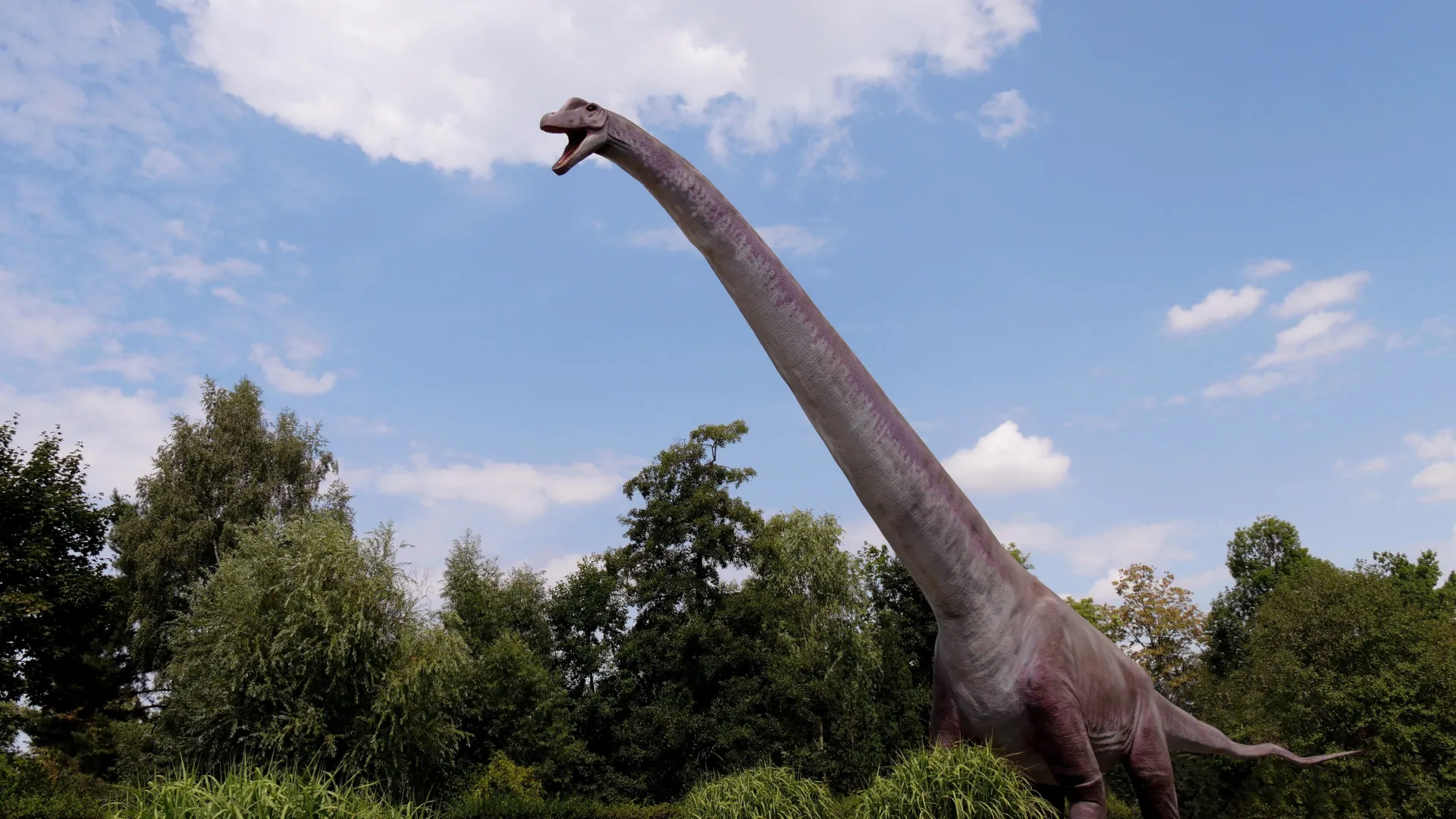
Thomas R. Holtz Jr., a distinguished principal lecturer in the University of Maryland’s Department of Geology, has dedicated his career to deciphering how dinosaurs functioned within their unique ecosystems and how those systems diverged profoundly from the world we inhabit today. In a pivotal research paper published in the Italian Journal of Geosciences, Holtz argues that the scientific community may have underestimated the profound impact of these parenting strategies on ecological diversity and structure. His work suggests that rather than simply being ancient equivalents of mammals, dinosaurs carved out a distinct ecological paradigm, influencing everything from food webs to community dynamics.
"A lot of people think of dinosaurs as sort of the mammal equivalents in the Mesozoic era, since they’re both the dominant terrestrial animals of their respective time periods," Holtz explained. "But there’s a critical difference that scientists didn’t really consider when looking at how different their worlds are: reproductive and parenting strategies. How animals raise their young impacts the ecosystem around them, and this difference can help scientists reevaluate how we perceive ecological diversity." This core hypothesis, termed "ontogenetic niche partitioning," posits that individual dinosaurs occupied dramatically different ecological roles throughout their growth stages, a phenomenon far less pronounced in most modern mammals.
Dinosaur Parenting vs. Mammal Parenting: A Fundamental Divergence
The disparity in parenting strategies between dinosaurs and mammals forms the bedrock of Holtz’s argument. Most modern mammals are characterized by extensive parental care, particularly maternal investment. This often involves lactation, prolonged protection, and teaching essential survival skills. Offspring typically remain with their mothers, or sometimes both parents, until they are nearly adult size, sharing the same diet, habitat, and thus, similar ecological roles. This intensive investment in a smaller number of offspring increases individual survival rates and allows for complex social learning and skill development.
"You could say mammals have helicopter parents, and really, helicopter moms," Holtz elaborated, using a relatable modern analogy. "A mother tiger still does all the hunting for cubs as large as she is. Young elephants, already among the biggest animals on the Serengeti at birth, continue to follow and rely on their moms for years. Humans are the same in that way; we take care of our babies until they’re adults." This extended period of dependence means that a young tiger, elephant, or human primarily occupies the same ecological niche as its parents, consuming similar resources and facing similar threats, albeit at a reduced capacity. The young are essentially smaller, less capable versions of the adults, but functionally, they are geared towards the same lifestyle.
Dinosaurs, by contrast, followed a vastly different reproductive and rearing pattern. As oviparous (egg-laying) creatures, they often produced sizable clutches of eggs, sometimes dozens at a time. While some dinosaur species, particularly certain ornithopods and theropods, likely guarded nests and provided brief protection to hatchlings, this parental investment was generally short-lived. Fossil evidence, such as fossilized nests with eggshells and juvenile remains, indicates that hatchlings were often precocial or semi-precocial, meaning they were relatively mobile and capable of fending for themselves shortly after birth. Within a matter of months or perhaps a year, juvenile dinosaurs would typically separate from adults and form groups with others of their age cohort, embarking on an independent life long before reaching adult size.
"Dinosaurs were more like latchkey kids," Holtz quipped, highlighting their early autonomy. This analogy is supported by compelling fossil evidence. Paleontologists have uncovered "pods of skeletons of youngsters all preserved together with no traces of adults nearby." These collections of similarly aged juvenile skeletons, found in various locations and species, strongly suggest that young dinosaurs often traveled, fed, and defended themselves in peer groups. This strategy, characterized by high fecundity and low individual parental investment, increased the statistical odds that at least some offspring would survive the perilous juvenile stage, without requiring the prolonged energy expenditure seen in mammalian parenting.
Modern crocodilians, close living relatives of dinosaurs, offer a useful comparative model. Crocodiles meticulously defend their nests and may guard newly hatched young for a short period, sometimes even transporting them in their mouths. However, this care is temporary. Juvenile crocodiles soon disperse and live independently, often in different habitats (e.g., smaller waterways, dense vegetation) than the adults, taking many years to reach full size and maturity. During this extended growth period, their diet, predators, and overall ecological role change dramatically with their increasing size, mirroring what Holtz proposes for dinosaurs.
How Juvenile Dinosaurs Filled Different Ecological Niches: The "Functional Species" Concept
The early separation of offspring from parents, coupled with the immense growth trajectory of many dinosaur species, led to what Holtz describes as "profound ecological consequences." Unlike mammals where young largely mimic adults, a juvenile dinosaur’s life was fundamentally different from its fully grown counterpart.
"Over different life stages, what a dinosaur eats changes, what species can threaten it changes and where it can move effectively also changes," Holtz explained. "While adults and offspring are technically the same biological species, they occupy fundamentally different ecological niches. So, they can be considered different ‘functional species.’" This concept of "functional species" is central to understanding the true ecological diversity of the Mesozoic. It implies that a single biological species could, across its life stages, effectively act as multiple distinct ecological entities, each interacting with the ecosystem in unique ways.
Consider the Brachiosaurus, a quintessential long-necked sauropod, as a prime example. A hatchling Brachiosaurus might have been no larger than a small domestic animal, perhaps a dog or sheep, subsisting on low-lying ferns, shrubs, and other ground vegetation. Its primary predators would have been small, agile theropods or even large lizards and crocodylomorphs. As it grew to the size of a horse, then a giraffe, and eventually into a colossal adult weighing tens of tons and towering over 40 feet, its ecological role shifted dramatically. An adult Brachiosaurus, capable of reaching leaves 10 meters (over 30 feet) above the ground, would have browsed on the highest tree canopies, a resource entirely inaccessible to its younger self. Its sheer size would have rendered it impervious to all but the largest and most specialized predators.
This ontogenetic niche partitioning wasn’t limited to sauropods. A juvenile Tyrannosaurus rex, while still a formidable predator, would have hunted smaller prey, such as young hadrosaurs or ceratopsians, and might have faced competition from other medium-sized carnivores. A fully grown T. rex, on the other hand, was an apex predator capable of tackling the largest herbivores. Similarly, a young triceratops, with smaller horns and a more vulnerable frill, would have grazed on different types of plants and had different defensive strategies than its massive, fully armored parents. Each life stage represented a distinct ‘functional species’ within the ecosystem, utilizing different resources, competing with different organisms, and falling prey to different predators.
"What’s interesting here is that this completely changes how scientists view ecological diversity in that world," Holtz emphasized. "Scientists generally think that mammals today live in more diverse communities because we have more species living together. But if we count young dinosaurs as separate functional species from their parents and recalculate the numbers, the total number of functional species in these dinosaur fossil communities is actually greater on average than what we see in mammalian ones." This re-evaluation fundamentally challenges the traditional metric of species richness, suggesting that the Mesozoic may have harbored a hidden depth of ecological complexity that we are only now beginning to appreciate.
Rethinking Mesozoic Ecosystem Productivity and the Capacity for Diversity
If dinosaur ecosystems supported a greater number of functional species, how could ancient environments sustain such a high degree of distinct ecological roles? Holtz proposes two compelling explanations, both rooted in fundamental differences between the Mesozoic and Cenozoic eras.
First, environmental conditions during the Mesozoic were vastly different from today. Global temperatures were significantly warmer, and atmospheric carbon dioxide levels were substantially higher. These factors are known to boost plant growth and overall primary productivity. Higher CO2 levels promote photosynthesis, while warmer temperatures extend growing seasons and facilitate faster decomposition and nutrient cycling. This means that the base of the food chain—the plant life—was likely far more abundant and robust than in many modern terrestrial ecosystems.
"Our world might actually be kind of starved in plant productivity compared to the dinosaurian one," Holtz suggested. A richer, more energetic base of the food chain provides more resources, allowing for the support of more individual organisms and a greater variety of ecological specialists. This surplus energy could have fueled a complex web of functional species, each carving out its unique niche based on size, diet, and habitat preference across its life stages.
Second, dinosaurs may have had somewhat lower metabolic demands than similarly sized mammals. While the debate over dinosaur metabolism (endothermy, ectothermy, or mesothermy) is ongoing and complex, it is generally accepted that many large dinosaurs likely had metabolic rates that were not as high as those of modern large mammals. A lower metabolic rate translates to a reduced daily food requirement.
"And if dinosaurs had a less demanding physiology, their world would’ve been able to support a lot more dinosaur functional species than mammalian ones," Holtz concluded. If individual dinosaurs required less energy to sustain themselves, an ecosystem could support a larger biomass of dinosaurs, or more distinct populations filling specialized roles, without exceeding the carrying capacity of the environment. This combination of high primary productivity and potentially lower metabolic demands could explain how Mesozoic ecosystems maintained such a high degree of functional diversity.
Holtz emphasizes that his findings do not necessarily mean dinosaur ecosystems were categorically "more diverse" than modern mammal-dominated ones in terms of sheer species count. Instead, the implication is that diversity in the past may have been structured fundamentally differently than scientists have previously assumed. It highlights a critical distinction between taxonomic diversity (the number of different species) and functional diversity (the number of different ecological roles). Dinosaurian functional diversity, driven by ontogenetic niche partitioning, could have allowed for a more complete utilization of available resources across various size classes and trophic levels.
This research opens new avenues for understanding not just the Mesozoic, but also the broader patterns of ecological evolution. It prompts questions about how these highly structured, functionally diverse ecosystems responded to major environmental changes, and how the transition from dinosaur-dominated to mammal-dominated worlds post-Cretaceous-Paleogene (K-Pg) extinction event led to a different structuring of biodiversity.
Holtz plans to continue examining how changes across dinosaur life stages shaped ancient ecosystems and how those systems ultimately transitioned into the modern world. His work serves as a powerful reminder for paleontologists and ecologists alike to avoid anthropocentric or mammocentric biases when reconstructing ancient life. "We shouldn’t just think dinosaurs are mammals cloaked in scales and feathers," Holtz asserted. "They’re distinctive creatures that we’re still looking to capture the full picture of." This holistic approach promises to unlock further secrets about the unparalleled ecological ingenuity of the Age of Dinosaurs.
Holtz’s insightful study, "Bringing up baby: preliminary exploration of the effect of ontogenetic niche partitioning in dinosaurs versus long-term maternal care in mammals in their respective ecosystems," was published in the Italian Journal of Geosciences.