
 By admin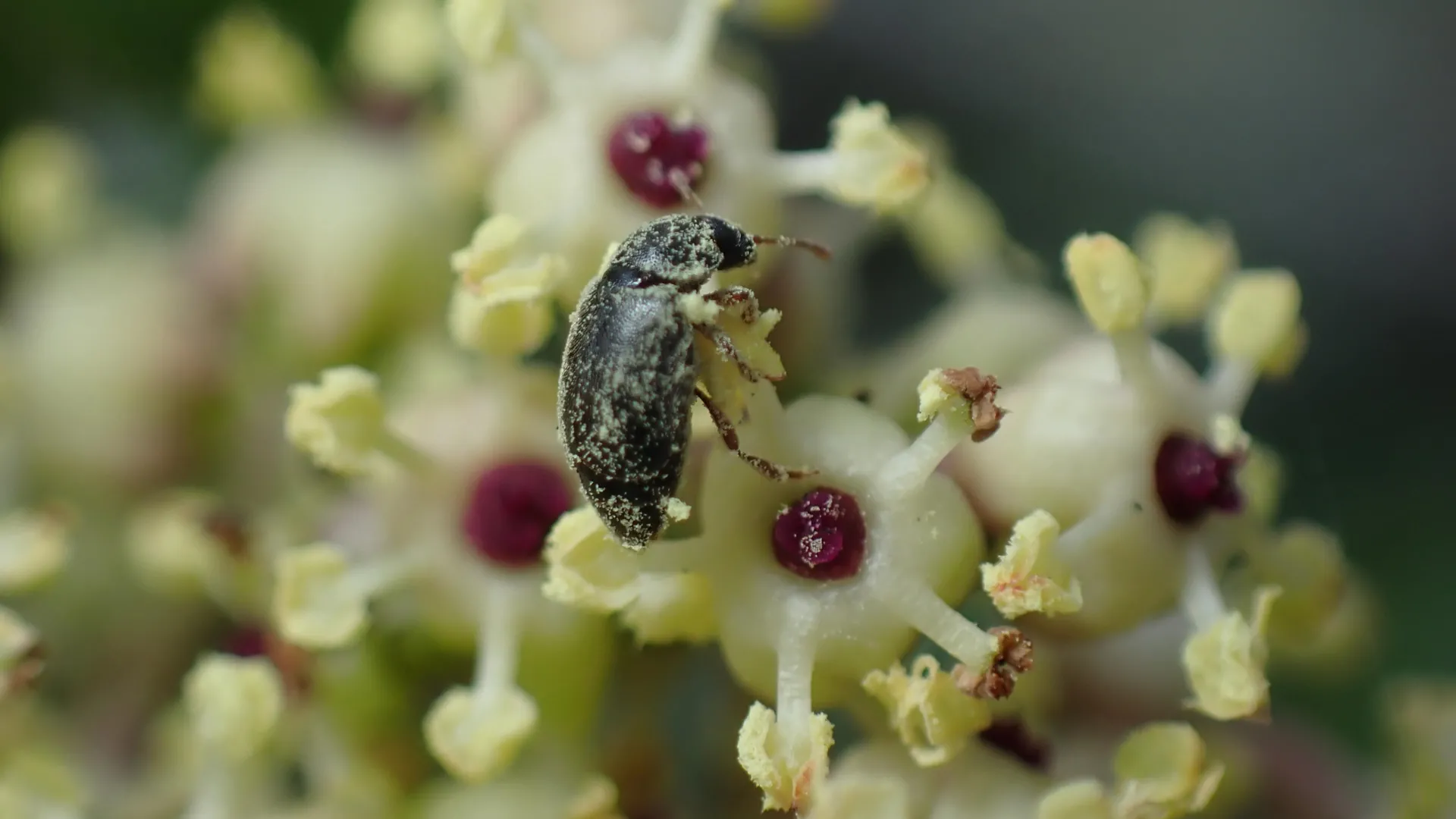
The intricate dance between flowering plants and their insect pollinators is a cornerstone of terrestrial ecosystems, shaping biodiversity and food webs across the globe. Among these relationships, a particularly fascinating and often paradoxical type known as "nursery pollination mutualism" stands out. In these partnerships, an insect not only serves as a vital pollinator for a plant but also utilizes the plant’s reproductive structures—typically its fruits or seeds—as a nursery for its developing offspring. This dual role creates an inherent tension, a delicate balancing act where cooperation and conflict perpetually intertwine.
Kobe University botanist Kenji Suetsugu, a leading expert in plant-insect interactions, eloquently captures this dynamic, explaining, "These interactions are fascinating because they sit on the boundary between cooperation and conflict." On one hand, the plant benefits from the insect’s pollination services, ensuring its reproductive success. On the other, the insect’s larvae consume a portion of the plant’s valuable resources—its developing seeds—which represent a direct cost to the plant. For decades, scientists have grappled with understanding the evolutionary mechanisms that maintain the stability of these mutualisms, preventing them from collapsing into pure parasitism where the insect simply exploits the plant.
Classic examples of nursery pollination mutualism, extensively studied and frequently cited in textbooks, include the iconic relationship between figs (Ficus species) and their highly specialized fig wasps, and the remarkable coevolutionary saga of yuccas (Yucca species) and yucca moths. In these well-established systems, plants have evolved sophisticated mechanisms to regulate insect populations and mitigate the costs of larval consumption. A widely accepted and dominant theory posits that plants employ a "sanctioning" strategy, where they selectively abort or drop fruits that contain an excessive number of larvae. The conventional wisdom has long held that when these fruits fall prematurely, the larvae inside are doomed to perish, effectively punishing the insects for over-exploitation and thereby maintaining an evolutionary equilibrium. This punitive action, it was believed, serves as a crucial deterrent, compelling the insects to limit their larval load and ensuring the mutualistic relationship remains beneficial for both partners over evolutionary time.
However, Suetsugu began to question the universality of this long-held explanation, particularly in the context of Japanese red elder plants, Sambucus sieboldiana. His doubts stemmed from a series of compelling field observations. "I once observed Japanese red elder flowers full of Heterhelus beetles mating and feeding, and I also saw fruits infested by the beetles’ larvae dropping in large numbers," Suetsugu recounts. The sheer volume of dropped, infested fruits struck him as anomalous. If the prevailing "punishment" model were strictly true, such extensive fruit abortion would imply significant losses for both the plant (lost reproductive potential) and the insect (mass larval mortality). "With such seemingly great losses to both sides, I wondered whether this was really punishment and how the insects keep their losses contained," Suetsugu states, voicing a profound suspicion that there was a critical piece missing from the current narrative of the sanction-driven balance in nursery pollination mutualisms. This intuition hinted at a more nuanced, perhaps even counterintuitive, mechanism at play.
Investigating the Plant-Beetle Relationship: A Deeper Dive into Sambucus sieboldiana and Heterhelus
The Japanese red elder, Sambucus sieboldiana, is a deciduous shrub or small tree native to East Asia, particularly common in Japan. It produces clusters of small, creamy-white flowers followed by vibrant red berries. These berries, while attractive to birds, are also the target of Heterhelus beetles, a genus of small, dark beetles belonging to the family Kateretidae. These beetles are known for their association with elder plants, upon which they feed and reproduce. The interaction between Sambucus sieboldiana and Heterhelus beetles represents a less-studied, yet potentially equally intricate, nursery pollination system compared to the more famous fig-wasp or yucca-moth examples.
To explore the puzzle that Suetsugu’s observations presented, he and his colleagues formulated two fundamental research questions. First, given the observed abundance of Heterhelus beetles on the flowers, were these beetles genuinely essential pollinators for Sambucus sieboldiana? Establishing obligate or highly effective pollination is crucial to confirming the mutualistic nature of the relationship from the plant’s perspective. Second, and perhaps more intriguingly, what underlying mechanism allowed this seemingly costly relationship—characterized by extensive fruit abortion—to remain beneficial for both the plant and the beetle species? This question directly challenged the prevailing "punishment" paradigm and sought to uncover an alternative pathway to mutualistic stability.
Suzu Kawashima, a master’s student in Suetsugu’s laboratory and the first author of the study, highlighted the demanding and multi-faceted approach required to unravel these complexities. "To tackle this issue, one requires an unusual combination of careful field observation of pollination events, exclusion and hand pollination experiments, as well as developmental tracking of the insects even after the fruit drop," Kawashima explained. Each component of this methodology was critical. Field observations meticulously documented the behavior of Heterhelus beetles on elder flowers, recording their feeding patterns, mating rituals, and the frequency of their visits. Exclusion experiments, where certain flowers were physically protected from beetle access, were vital for determining the beetles’ efficacy as pollinators compared to other potential insect visitors or self-pollination. Conversely, hand pollination experiments allowed researchers to control for successful fertilization and assess fruit development in the absence of beetle activity.
However, the most challenging and innovative aspect of their methodology involved the meticulous tracking of Heterhelus larvae after the infested fruits had dropped. This step was particularly arduous, requiring extensive time, patience, and logistical commitment. While many studies in nursery pollination mutualism focus on the pre-drop phase—observing larval load and fruit abortion rates—few have delved into the fate of the larvae once the fruit is shed. "Many studies stop at one of these steps, simply because doing all of them takes time, patience and logistical commitment," Kawashima emphasized, underscoring the comprehensive nature and dedication required for their investigation. The researchers carefully collected fallen fruits, monitored the larvae within, and meticulously observed their subsequent behavior and development in their natural environment.
Fruit Drop: A Surprising Compromise that Protects Both Plant and Larvae
The meticulous research undertaken by the Kobe University team yielded groundbreaking insights, challenging long-held assumptions about the nature of plant-insect mutualisms. Their findings, published in the prestigious journal Plants, People, Planet, painted a picture of coevolutionary compromise rather than straightforward sanctioning.
Their experiments conclusively revealed that the Japanese red elder, Sambucus sieboldiana, is indeed heavily dependent on Heterhelus beetles for effective pollination. Without the beetles’ activity, the plant’s reproductive success would be significantly curtailed, confirming the mutualistic aspect of the relationship from the plant’s perspective. This reliance underscores the vital ecological role these beetles play in the elder’s life cycle.
Concurrently, the study corroborated Suetsugu’s initial observations: the elder plant does, in fact, abort nearly all fruits that contain Heterhelus larvae. This action serves a crucial purpose for the plant, limiting its resource investment in fruits that would otherwise be heavily damaged by developing larvae. From the plant’s perspective, dropping these fruits is an efficient strategy to conserve energy and nutrients that can then be reallocated to producing healthy, uninfested seeds in other fruits, or for future reproductive efforts. This aspect aligns with the general principle of resource management in plants, where costly investments are pruned if their success is compromised.
However, the most astonishing and paradigm-shifting discovery lay in the fate of the Heterhelus larvae within these dropped fruits. Contrary to the long-standing assumption that fallen fruits equate to larval mortality, the researchers found that the larvae do not die after the fruit falls. Instead, an ingenious adaptation allows them to survive and continue their development. Upon exiting the prematurely dropped fruit, the Heterhelus larvae actively burrow into the surrounding soil. This subterranean refuge provides a protected environment where they can safely complete their development until maturity, eventually emerging as adult beetles to restart the cycle.
This revelation fundamentally reconfigures the understanding of this particular nursery pollination mutualism. "What our finding shows is a different route to a stable balance, where fruit abortion can function as a compromise that both sides can tolerate," says Kawashima. The traditional narrative of fruit dropping as a harsh punishment, designed solely to benefit the plant by eliminating parasitic offspring, is now revealed to be incomplete, at least in this specific system. Instead, the fallen fruit acts as a shared resource and a mechanism for mutual survival. The plant benefits by shedding a costly, infested fruit, thus reallocating resources. The insect larvae benefit by being released from a potentially vulnerable, ripening fruit and gaining access to a protected environment in the soil, away from frugivores or other surface predators that might consume ripening berries or exposed larvae. "This finding shifts the narrative from dropping fruit as punishment to it being a shared benefit—without denying the underlying conflict that defines nursery pollination mutualisms in the first place," Kawashima adds, perfectly encapsulating the complex interplay of cooperation and conflict. The inherent tension remains, but the resolution is one of co-opted opportunity rather than outright elimination.
Environmental Factors Shape the Delicate Balance
The researchers further enriched their understanding by meticulously calculating the costs and benefits of the relationship for both the Japanese red elder and the Heterhelus beetles. This quantitative analysis revealed another crucial layer of complexity: the delicate balance between the plant and the beetle varies significantly across different locations. This spatial variability strongly suggests that environmental conditions play a substantial role in influencing how this intricate interaction functions and, importantly, how stable it remains.
Kawashima elaborated on the potential implications of these environmental influences: "While all Heterhelus beetle species depend on elder plants for reproduction, the same is not true in reverse, and there is considerable variation in pollinator dependence across elder plant species." This differential dependence is a key factor. If Sambucus sieboldiana in a particular region has access to a diversity of effective alternative pollinators, its reliance on Heterhelus beetles might be less absolute, potentially altering the cost-benefit ratio of tolerating larval infestation.
Conversely, in areas where Heterhelus beetles are the primary or sole effective pollinators, the plant might be evolutionarily constrained to accept a higher cost of larval consumption. Environmental factors such as soil composition (which affects the ease of burrowing and larval survival), local predator populations (which might target either fruit-dwelling or soil-dwelling larvae), climate conditions (temperature, humidity, precipitation influencing larval development), and the overall availability of suitable habitats for both species could all exert significant selective pressures. "In future work, mapping where Heterhelus dominates versus where alternative pollinators are more important should clarify the ecological drivers behind when the ‘fallen-fruit compromise’ is favored and when it is not," Kawashima suggested. This geographical mapping of interactions would provide invaluable insights into the adaptive landscape of this unique mutualism and reveal the ecological thresholds that govern its success.
Rethinking Cooperation in Nature: Beyond Apparent Failure
For Professor Suetsugu, the profound implications of these findings extend far beyond the specific case of the Japanese red elder and Heterhelus beetles. The study challenges a fundamental paradigm in evolutionary biology, urging scientists to reconsider how cooperation and stability are achieved in natural systems. It highlights that what might appear, at first glance, to be a wasteful or unsuccessful process—such as the premature dropping of fruit—can, in fact, be an ingenious mechanism for maintaining a stable and enduring mutualistic relationship.
"On a personal level, this study makes me feel that we are only beginning to appreciate how much cooperation in nature is maintained by mechanisms that look, at first glance, like failure," Suetsugu muses. This sentiment encapsulates a powerful lesson: scientific inquiry often involves peeling back layers of apparent simplicity to reveal underlying complexity and hidden elegance. The act of a plant shedding its fruits, which might seem like a loss or a sign of reproductive failure, is reinterpreted as a sophisticated coevolutionary compromise that benefits both parties. It represents a dynamic equilibrium where a seemingly destructive act is, in fact, a cornerstone of persistence.
"A fallen fruit looks like a loss. Realizing that it can instead be the very structure that keeps a mutualism stable is exactly the kind of insight that makes me want to keep following these interactions year after year," Suetsugu concludes. This newfound perspective encourages a broader re-evaluation of other complex ecological interactions. How many other "failures" or "losses" in nature might, upon closer inspection, reveal themselves to be finely tuned adaptations, crucial for the long-term stability and resilience of ecosystems? This research underscores the importance of challenging entrenched scientific dogma and embracing the unexpected. It reminds us that nature’s solutions are often more intricate, more collaborative, and more surprising than our initial interpretations suggest, continually pushing the boundaries of our understanding of coevolution and the myriad forms that cooperation can take on Earth.
The groundbreaking research was made possible through funding from the Japan Science and Technology Agency (grant JPMJPR21D6) and was conducted in close collaboration with a dedicated researcher from the University of Human Environments, highlighting the interdisciplinary nature of modern ecological science.