
 By admin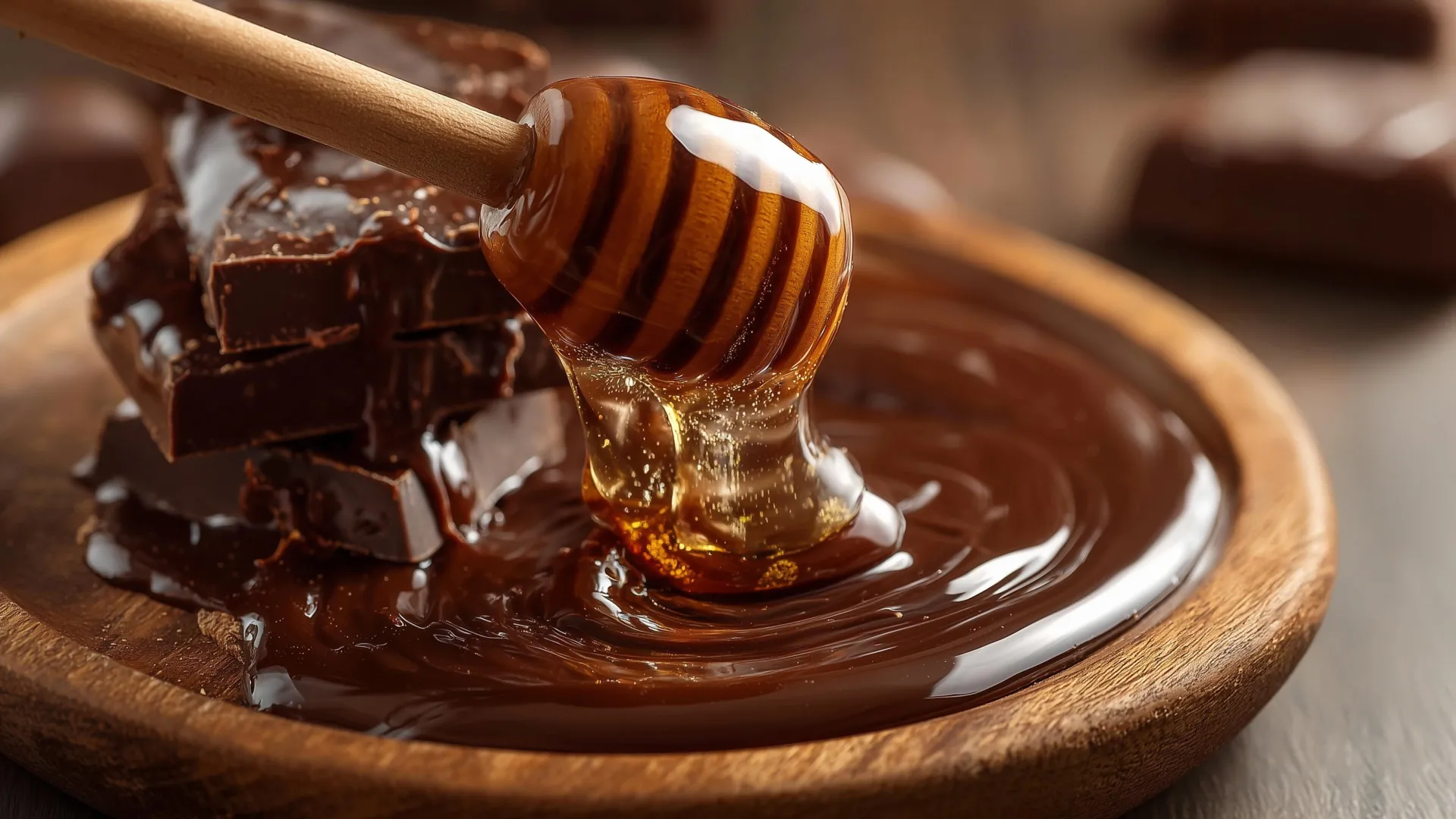
This groundbreaking innovation from one of Latin America’s leading research institutions marks a significant step forward in sustainable food science, offering a dual-purpose product that can be enjoyed as a standalone delicacy or integrated into a wide range of food and cosmetic formulations. The pioneering research, which leverages the principles of green chemistry and circular economy, has garnered international recognition, featuring prominently on the cover of the prestigious journal ACS Sustainable Chemistry & Engineering. This acknowledgment underscores the study’s scientific rigor and its profound implications for environmental sustainability and public health.
A Sweet Revolution: Unlocking Value from Waste
At the heart of this novel product lies an ingenious approach to valorizing agricultural byproducts. The research team, based at UNICAMP’s Faculty of Applied Sciences (FCA) in Limeira, harnessed the unique properties of native Brazilian bee honey to act as a natural, edible solvent. This eliminates the need for synthetic, often toxic, chemical solvents typically employed in industrial extraction processes, making the final product inherently safer and more environmentally friendly. The chosen target for extraction was cocoa bean shells, a voluminous byproduct of chocolate production that is traditionally discarded, contributing to significant agricultural waste.
Globally, cocoa production generates millions of tons of waste annually, with cocoa bean shells accounting for approximately 10-12% of the total bean weight. While some shells are used as animal feed or fertilizer, a substantial portion ends up in landfills, posing environmental challenges due to their slow decomposition and potential for pest attraction. This research transforms a problematic waste stream into a valuable resource, aligning perfectly with the burgeoning global movement towards circular economies.
The extraction process, further enhanced by ultrasound technology, effectively draws out a wealth of beneficial compounds from the cocoa shells. Among these are theobromine and caffeine, well-known for their stimulating properties and increasingly recognized for their positive impact on cardiovascular health, cognitive function, and mood regulation. Theobromine, a milder stimulant than caffeine, contributes to the characteristic feel-good sensation associated with chocolate, acting as a vasodilator and a mild diuretic. Caffeine, on the other hand, is renowned for its alertness-boosting effects. Beyond these, the ultrasound-assisted method significantly elevates the honey’s inherent levels of phenolic compounds. These powerful natural antioxidants are celebrated for their ability to combat oxidative stress, reduce inflammation, and protect cells from damage, thereby potentially lowering the risk of chronic diseases.
Sensory Appeal Meets Nutritional Powerhouse
Initial sensory evaluations of the mixture have yielded promising results, with researchers reporting a distinct and appealing chocolate flavor. This flavor profile is highly adaptable, varying in intensity depending on the specific ratio of native bee honey to cocoa shells used in the formulation. This versatility opens doors for diverse culinary applications, from a standalone spread or sweetener to an ingredient in baked goods, desserts, or beverages. Further comprehensive taste and sensory characteristic testing is planned to fully map out its potential in gastronomic contexts.
Felipe Sanchez Bragagnolo, the study’s first author, who conducted this pivotal research during his postdoctoral work at FCA-UNICAMP with crucial support from the São Paulo Research Foundation (FAPESP), emphasizes the product’s dual allure. "Of course, the biggest appeal to the public is the flavor, but our analyses have shown that it has a number of bioactive compounds that make it quite interesting from a nutritional and cosmetic point of view," Bragagnolo states. This highlights its potential not just as a delicious treat, but as a functional food ingredient and a valuable component in cosmetic formulations seeking natural, bioactive compounds for skin health benefits.
The commercialization pathway is already being actively pursued. Working in collaboration with INOVA UNICAMP, the university’s innovation agency responsible for bridging academic research with industrial application, the team is actively seeking commercial partners. The goal is to license the patented extraction method and bring this innovative product to market, offering consumers a unique blend of flavor, health benefits, and environmental responsibility. This strategic partnership underscores UNICAMP’s commitment not only to groundbreaking research but also to translating scientific discoveries into tangible societal and economic benefits.
Harnessing Brazil’s Rich Biodiversity: The Role of Native Bees
Beyond its contribution to reducing food waste, this project shines a spotlight on the sustainable utilization of Brazil’s extraordinary biodiversity. The selection of honey from native Brazilian stingless bees (Meliponini tribe) was a deliberate and crucial choice, driven by its distinct physicochemical properties. Unlike honey from the introduced European honeybee (Apis mellifera), native bee honey generally possesses a higher water content and lower viscosity. These characteristics make it a far more effective natural solvent for extracting beneficial compounds from the cocoa shells, facilitating a more efficient and complete transfer of bioactives.
Brazil is home to hundreds of species of native stingless bees, each producing honey with unique flavor profiles, aromas, and therapeutic properties. These bees are vital pollinators for a vast array of native flora, playing a critical role in maintaining ecosystem health and agricultural productivity. However, many native bee populations face threats from habitat loss, pesticide use, and climate change. By promoting the sustainable use of native bee honey, this project indirectly supports meliponiculture – the practice of raising native stingless bees – thereby contributing to the conservation of these invaluable pollinators and the biodiversity they support.
The researchers rigorously tested honey from five distinct Brazilian native bee species: borá (Tetragona clavipes), jataí (Tetragonisca angustula), mandaçaia (Melipona quadrifasciata), mandaguari (Scaptotrigona postica), and moça-branca (Frieseomelitta varia). Cocoa shells for the study were responsibly supplied by the Comprehensive Technical Assistance Coordination Office (CATI) unit in São José do Rio Preto, a division of the São Paulo State Department of Agriculture and Supply, ensuring traceability and quality control.
Mandaguari honey was initially chosen for refining the ultrasound-assisted extraction process due to its balanced water content and viscosity, which proved ideal for optimizing the parameters. Once the method was perfected, the same procedure was successfully applied to the other honey varieties, demonstrating the adaptability and robustness of the technique across different native bee honeys. Bragagnolo further notes the adaptability of the process, stating, "Therefore, it’s possible to adapt the process to locally available honey, not necessarily mandaguari honey." This flexibility is key for decentralized production and for empowering local communities to utilize their specific regional honey resources, fostering economic development in diverse areas.
Green Chemistry in Action: The Power of Ultrasound
The innovative extraction method employed in this research epitomizes the principles of green chemistry, aiming to minimize environmental impact and maximize resource efficiency. It relies on advanced ultrasound technology, a non-thermal process that offers significant advantages over conventional extraction techniques.
The process involves inserting a probe, resembling a metal pen, into a container holding the mixture of honey and cocoa shells. This probe generates high-frequency sound waves that propagate through the liquid medium. As these sound waves pass, they create microscopic bubbles (acoustic cavitation) within the honey. These bubbles rapidly expand and then violently collapse, generating localized high pressures, shear forces, and brief temperature spikes. This intense micro-agitation effectively disrupts the cell walls of the cocoa shells, facilitating the release of bioactive compounds and their subsequent dissolution into the honey matrix.
In the food and pharmaceutical industries, ultrasound-assisted extraction is rapidly gaining traction as an environmentally friendly alternative. Its benefits are numerous: it is significantly faster, requiring less processing time; it is more energy-efficient, consuming less power than many traditional methods; and crucially, it often requires reduced amounts of solvent or, as in this case, allows for the use of a natural, edible solvent, thereby minimizing chemical waste and downstream purification steps. This makes it a highly desirable technology for sustainable production.
The commitment to sustainability was not merely anecdotal but formally quantified in the study using Path2Green software. This sophisticated tool, developed by a team led by Professor Mauricio Ariel Rostagno of FCA-UNICAMP—who also supervised Bragagnolo’s postdoctoral research and coordinated the project—provides a quantitative assessment of how well a process aligns with the 12 principles of green chemistry. These principles encompass aspects such as waste prevention, atom economy, use of less hazardous chemicals, design for energy efficiency, use of renewable feedstocks, and minimizing potential for accidents. The study’s process scored a commendable +0.118 on a scale of -1 to +1, with a positive score indicating a net environmental benefit. The utilization of a local, edible, and ready-to-use solvent like native bee honey was a major factor contributing to this favorable sustainability rating, eliminating the need for complex solvent recovery and purification.
Professor Rostagno envisions a future where this technology can be widely adopted, particularly by small-scale producers and cooperatives. "We believe that with a device like this, in a cooperative or small business that already works with both cocoa and native bee honey, it’d be possible to increase the portfolio with a value-added product, including for haute cuisine," he suggests. This vision underscores the potential for decentralized production models that empower local economies, foster entrepreneurship, and cater to niche markets such as gourmet food and specialized functional ingredients.
Enhanced Shelf Life and Future Horizons
Beyond the immediate benefits of extraction, the research team is also exploring another significant advantage of ultrasound technology: its potential impact on honey microbiology and product shelf life. Native bee honey, due to its higher water content and different enzymatic composition, is generally less stable than Apis mellifera honey and often requires refrigeration, maturation, dehumidification, or pasteurization to prevent spoilage. This limits its market reach and increases storage costs.
The researchers hypothesize that the mechanical and thermal effects of ultrasound, which effectively break down plant cells during extraction, can also disrupt the cell walls and membranes of microorganisms such, as bacteria and yeasts, that may be present in the honey. "We suspect that, simply by being exposed to ultrasound, the microorganisms contained in the honey are eliminated, increasing the stability and shelf life of the product," Bragagnolo explains. If confirmed, this would be a game-changer for native bee honey producers, allowing for ambient temperature storage and broader distribution, thereby enhancing its commercial viability and accessibility. This non-thermal pasteurization effect would also preserve the delicate sensory and nutritional qualities of the honey that might otherwise be compromised by traditional heat pasteurization.
Looking ahead, the researchers are enthusiastic about the broader applicability of this "green" extraction platform. They intend to explore other uses for native bee honey as an edible solvent in ultrasound-assisted extraction, including processing a variety of other plant residues and agricultural byproducts. This could unlock a wealth of novel functional ingredients from currently undervalued natural resources, further advancing the principles of circular economy and bio-innovation.
This pioneering project, generously supported by multiple scholarships and grants from FAPESP, including postdoctoral fellowships and an international research internship for Bragagnolo, exemplifies the transformative power of interdisciplinary research. By converging expertise in food science, green chemistry, and biodiversity, UNICAMP researchers are not only creating a delicious and healthy product but also charting a sustainable path for food production, waste valorization, and the economic empowerment of local communities, positioning Brazil at the forefront of bio-inspired solutions for a more sustainable future.