
 By admin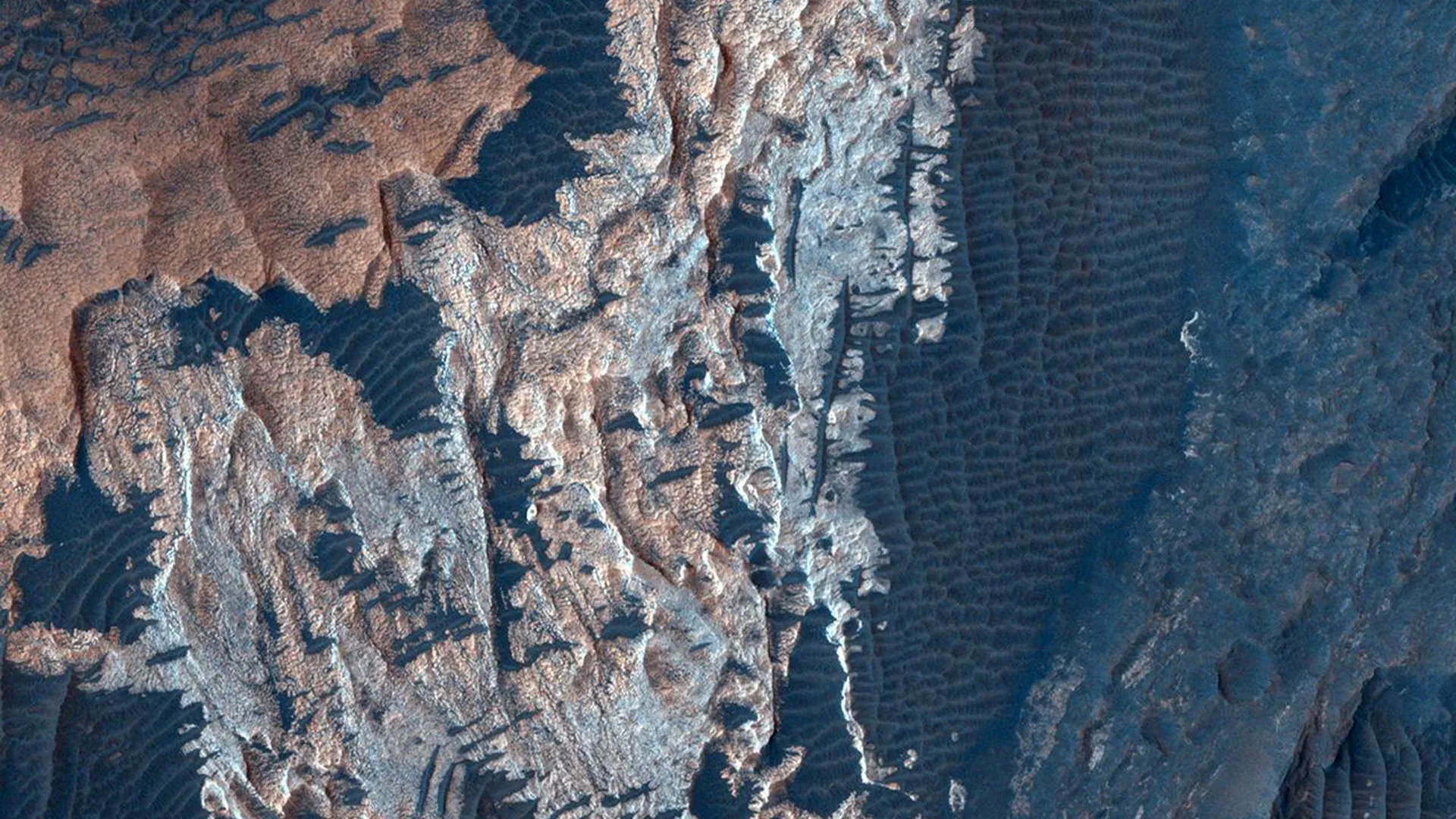
Each mineral possesses a unique atomic arrangement, or crystal structure, which dictates its distinct physical and chemical properties. Familiar terrestrial examples include gypsum, widely used in construction, and hematite, a common iron oxide found in many rocks and responsible for Mars’ reddish hue. On Mars, scientists meticulously analyze vast datasets acquired from sophisticated orbiting spacecraft, such as NASA’s Mars Reconnaissance Orbiter (MRO) and its Compact Reconnaissance Imaging Spectrometer for Mars (CRISM) instrument. These instruments employ remote sensing techniques to measure how different wavelengths of light are absorbed, reflected, or emitted by the Martian surface, allowing researchers to identify specific mineralogical compositions. By deciphering these mineral signatures, scientists can reconstruct the environmental conditions that prevailed when these minerals formed, painting a clearer picture of Mars’ ancient past, including the presence and nature of liquid water, volcanic activity, and atmospheric composition.
For nearly two decades, the scientific community has been perplexed by unusual spectral signals emanating from layered iron sulfates observed across various regions of Mars. These enigmatic signatures did not precisely match any known minerals, hinting at a potentially novel phase or an unusual combination of existing ones. A new, comprehensive investigation led by Dr. Janice Bishop, a distinguished senior research scientist at the SETI Institute and NASA’s Ames Research Center in California’s Silicon Valley, has now successfully identified and meticulously characterized an uncommon ferric hydroxysulfate phase. This significant achievement was made possible through a rigorous scientific approach that ingeniously combined detailed laboratory experiments on Earth with high-resolution orbital observations of the Martian surface. The team’s meticulous work involved simulating Martian conditions in the lab to understand how these materials form and evolve, then correlating these experimental results with the remote sensing data from Mars. Their collective findings are not merely a mineralogical identification; they provide crucial new clues about the intricate roles of heat, water, and complex chemical reactions in shaping the Martian landscape over geological timescales.
"We specifically investigated two intriguing sulfate-bearing sites located near the vast Valles Marineris canyon system," explained Dr. Bishop. "These sites were chosen because they exhibited the mysterious spectral bands previously seen from orbital data, alongside compelling geological features such as layered sulfates and other intriguing formations that suggested a complex history of water-rock interaction and thermal events." The ability to link specific spectral anomalies to experimentally reproducible mineral transformations marks a significant step forward in Martian mineralogy.
Study Sites Near Valles Marineris: Windows into Mars’ Past
The research was strategically concentrated on two distinct geographical areas situated in close proximity to Valles Marineris, one of the most colossal and geologically significant canyon systems in the entire solar system. Spanning over 4,000 kilometers in length, up to 200 kilometers in width, and reaching depths of 7 kilometers, Valles Marineris is often referred to as the "Grand Canyon of Mars," though it dwarfs its terrestrial counterpart. Its immense scale and tectonic origins have exposed vast swathes of ancient Martian crust, making it an invaluable natural laboratory for planetary scientists.
One of the focal locations was Aram Chaos, a rugged, circular region situated northeast of the main canyon system. Aram Chaos is a prime example of "chaos terrain," characterized by jumbled blocks of material that scientists believe formed when subsurface ice melted, leading to massive floods and subsequent collapse. This region is thought to have once hosted substantial flows of ancient water, which coursed through the terrain toward lower-lying areas to the north. The other critical site lay on the expansive plateau directly above Juventae Chasma, a dramatic 5-kilometer-deep canyon that represents one of the largest subsidiary chasms just north of the main Valles Marineris system. Both sites offer compelling evidence of past aqueous activity and a dynamic geological history, making them ideal candidates for unraveling the mysteries of Martian mineral formation.
Juventae Plateau (above Juventae Chasma): A Relic of a Wetter Epoch
The Juventae Plateau, perched precariously near the towering cliffs of Valles Marineris, serves as a remarkable repository of signs indicative of a significantly wetter past. The landscape here is visibly scarred by ancient channels, unmistakably carved by the persistent flow of liquid water billions of years ago. Within this region, scientists made a crucial discovery: sulfate minerals were found to be highly concentrated in a small, distinct low-lying area. This particular geological configuration strongly suggests that these sulfates formed in an environment where pools of sulfate-rich water gradually evaporated over time. As the water receded and eventually disappeared, it left behind substantial deposits of hydrated ferrous sulfates, minerals rich in iron and water.
These fascinating minerals, including the newly characterized ferric hydroxysulfate, are not randomly distributed but occur in distinctive, thin layers, each roughly a meter thick. Critically, these layers are observed both above and below older basaltic materials, which are common volcanic rocks. This specific stratigraphic positioning holds profound implications. It strongly suggests that after their initial formation from evaporating water, these sulfate layers were subsequently exposed to significant heat. This heat could have originated from later volcanic events, such as lava flows or the deposition of hot volcanic ash, which would have blanketed or intruded into the existing sulfate deposits, altering their mineralogical structure.
Dr. Catherine Weitz, a co-author on the study and a Senior Scientist at the Planetary Science Institute, underscored the importance of these observations: "Investigation of the morphologies and stratigraphies – essentially, the forms and layering – of these four compositional units allowed us to meticulously determine the age and intricate formation relationships among the different units." This careful analysis of how different rock and mineral layers stack up against each other provides a chronological framework, enabling scientists to reconstruct the sequence of geological events that shaped these regions.
Evidence From Aram Chaos: A Flooded and Altered Landscape
Sulfate minerals are ubiquitous throughout the broader Valles Marineris region, but they are particularly prevalent and diverse in the rugged, jumbled landscapes known as chaotic terrains. Scientists hypothesize that these chaotic areas formed through cataclysmic events, specifically when massive floods, potentially triggered by the melting of vast subsurface ice reservoirs, drastically reshaped the Martian surface long ago. As these enormous bodies of water eventually evaporated or sublimated into the thin Martian atmosphere, they left behind extensive, layered deposits of iron and magnesium sulfates. These layered sulfates serve as undeniable evidence of a much wetter and geologically active Mars in the distant past, providing critical insights into the planet’s early climate.
Within one such chaos terrain, which itself formed within the confines of an ancient impact crater, the research team observed a distinct mineralogical layering. The uppermost layers were found to contain polyhydrated sulfates – minerals that incorporate multiple water molecules into their crystal structure. Beneath these surface layers, however, lay distinct strata of monohydrated sulfates, which contain fewer water molecules, and the newly identified ferric hydroxysulfate. This vertical progression of mineral types strongly hints at a post-depositional alteration process, where the original minerals were transformed by subsequent geological events.
How Heat Transformed Martian Sulfates: A Laboratory Breakthrough
At first glance, the specific arrangement of these mineral layers – polyhydrated on top, monohydrated and ferric hydroxysulfate below – presented a significant scientific puzzle. The natural inclination would be to expect more hydrated minerals deeper down, where they might be better protected from surface dehydration. However, the solution to this enigma emerged from meticulous laboratory experiments conducted on Earth. Researchers painstakingly replicated the conditions under which these minerals might have formed and evolved. They discovered that subjecting polyhydrated sulfates to moderate temperatures, specifically around 50°C, was sufficient to convert them into their monohydrated forms. This process involves the loss of some water molecules from the mineral structure. Crucially, when temperatures were raised further, exceeding 100°C, the ferric hydroxysulfate began to form. These compelling experimental results unequivocally indicate that geothermal heat, originating from beneath the Martian surface, likely played a pivotal role in altering these minerals after they were initially deposited. This implies a significant thermal event or sustained heating in these specific regions.
Polyhydrated and monohydrated sulfates are relatively widespread across large areas of the Valles Marineris region, reflecting widespread past water activity. In stark contrast, ferric hydroxysulfate is a much rarer mineral, occurring only in a few small, localized areas. This limited distribution is highly significant. Scientists suspect that these specific locations were once underlain by warmer geothermal sources, possibly localized hydrothermal systems, which produced the elevated temperatures (exceeding 100°C) necessary to create this distinct mineral phase. The rarity of ferric hydroxysulfate also raises the intriguing possibility that additional deposits of this unique mineral could remain buried beneath layers of monohydrated sulfates, awaiting discovery by future missions or more advanced remote sensing techniques.
Laboratory Experiments Reveal Mineral Transformations: A Molecular Journey
Researchers at the SETI Institute and NASA Ames went beyond simple heating experiments, performing detailed laboratory analyses to trace the precise molecular evolution of these minerals. The transformation process, as elucidated by their experiments, typically begins with rozenite (Fe²⁺SO₄·4H₂O), a hydrated ferrous sulfate containing four water molecules in each unit cell of its crystal structure. Upon heating, rozenite undergoes a dehydration process, transforming into szomolnokite (Fe²⁺SO₄·H₂O), which contains only one water molecule per unit cell. The crucial discovery was that continued heating, coupled with the presence of oxygen, produced ferric hydroxysulfate, a mineral where a hydroxyl group (OH) effectively replaces the water molecules (H₂O) in the mineral’s structural framework. This is a key chemical distinction, as the hydroxyl group is bound differently within the lattice.
"Our experiments specifically suggest that this ferric hydroxysulfate only forms when hydrated ferrous sulfates are heated in the presence of oxygen," stated postdoctoral researcher Dr. Johannes Meusburger at NASA Ames, highlighting a critical environmental condition. "While the changes in the atomic structure are very small and subtle, this specific reaction drastically alters the way these minerals absorb and reflect infrared light. This distinct alteration in spectral signature was precisely what allowed us to identify this new mineral on Mars using data from the CRISM instrument." This demonstrates the power of combining molecular-level laboratory understanding with planetary-scale remote sensing.
Oxygen and Chemical Reactions on Mars: A Dynamic Environment
The chemical reaction that forms ferric hydroxysulfate from hydrated ferrous sulfates is not merely a dehydration process; it is an oxidation reaction that specifically requires oxygen gas (O₂) and generates water (H₂O) as a byproduct. This is succinctly captured in Equation 1:
Equation 1: 4 Fe²⁺SO₄·H₂O + O₂ → 4 Fe³⁺SO₄OH + 2H₂O
This equation illustrates the conversion of ferrous iron (Fe²⁺) to ferric iron (Fe³⁺), a common oxidation state change that occurs in the presence of oxygen. While Mars currently possesses a thin atmosphere overwhelmingly dominated by carbon dioxide (CO₂), it still contains a small but measurable amount of oxygen. This atmospheric oxygen, though trace compared to Earth’s, appears to be sufficient for this specific oxidation reaction to occur, as well as for other forms of iron to undergo oxidation processes on the Martian surface and subsurface. This finding contributes to our understanding of Mars’ atmospheric chemistry and its interactions with surface geology over time.
"The material formed in these lab experiments is very likely a new mineral due to its unique crystal structure and its remarkable thermal stability under the conditions tested," affirmed Dr. Bishop. However, she added a critical caveat regarding official nomenclature: "For it to be officially recognized and named as a new mineral by the International Mineralogical Association, scientists must also find it on Earth in a natural geological setting." This requirement ensures that any newly identified mineral is a truly natural product of planetary processes and not solely an artificial creation of the laboratory.
Clues to Mars’ Geological Activity: A Planet More Active Than Presumed
The newly identified ferric hydroxysulfate exhibits a crystal structure that bears a resemblance to szomolnokite, a monohydrated ferrous sulfate. However, the experimental evidence strongly indicates that it forms more readily from rozenite, which contains a greater number of water molecules. This specific formation pathway provides crucial insights into the precise conditions required for its genesis.
The transformation from more common hydrated ferrous sulfates to this distinct ferric hydroxysulfate phase necessitates temperatures exceeding 100°C. Such temperatures are considerably hotter than the typical surface conditions currently experienced on Mars, where average temperatures hover far below freezing. This temperature requirement suggests that the sulfates observed at Aram Chaos and Juventae, including the ferric hydroxysulfate, likely formed or were significantly altered more recently than the surrounding, much older terrain. Researchers propose that these thermal events may date to the Amazonian period, a geological epoch on Mars that began approximately 3 billion years ago and continues to the present day. This timeframe is relatively recent in Mars’ 4.5-billion-year history, implying a protracted period of thermal activity.
The collective findings from this groundbreaking study converge to indicate that localized volcanic heat at the Juventae Plateau and sustained geothermal energy beneath Aram Chaos were the probable mechanisms responsible for converting common hydrated sulfates into the unique ferric hydroxysulfate. This discovery is profoundly significant because it suggests that certain parts of Mars have remained chemically and thermally active much more recently than previously believed. For decades, Mars has often been characterized as a geologically "dead" planet, with most significant activity confined to its early Noachian and Hesperian periods. This new evidence challenges that narrative, offering fresh insights into the planet’s evolving surface and, perhaps most importantly, its potential ability to support life. Hydrothermal systems, driven by geothermal heat, are known on Earth to provide chemical energy and sheltered environments for microbial life, even in extreme conditions. The presence of such systems on Mars, even in its relatively recent past, could expand the window for potential habitability and provide tantalizing targets for future astrobiological exploration.
The detailed findings and their implications are meticulously presented in the paper titled, "Characterization of Ferric Hydroxysulfate on Mars and Implications of the Geochemical Environment Supporting its Formation," published in the esteemed journal Nature Communications. This research not only adds a potential new mineral to the Martian catalog but also fundamentally revises our understanding of Mars’ dynamic past, offering compelling evidence of prolonged thermal and chemical activity that could have profound implications for the search for life beyond Earth.