
 By admin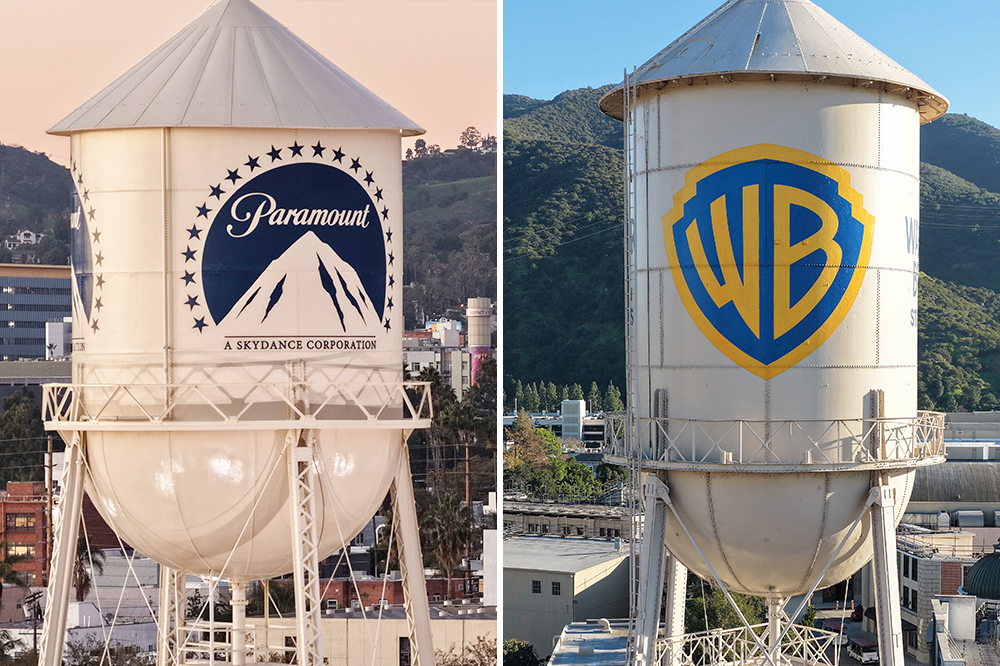
A significant controversy is brewing over the proposed $111 billion acquisition of Warner Bros. Discovery (WBD) by Paramount Skydance, with Democratic Senators Elizabeth Warren of Massachusetts and Richard Blumenthal of Connecticut vociferously criticizing the Trump administration for its alleged failure to initiate a crucial national security review of the monumental media transaction. The deal, which has secured substantial financial backing from a trio of powerful Middle Eastern sovereign wealth funds, has raised alarm bells among lawmakers concerned about foreign influence and potential risks to American interests.
At the heart of the senators’ concerns lies the Committee on Foreign Investment in the United States (CFIUS), the interagency body tasked with scrutinizing foreign investments in American businesses for potential national security implications. Led by the U.S. Treasury Department, CFIUS is designed to act as a gatekeeper, ensuring that foreign capital does not compromise American security or strategic interests. Senators Warren and Blumenthal have repeatedly urged CFIUS to conduct a thorough review of the Paramount Skydance-WBD deal, arguing that the sheer scale of the investment and the origin of the funds necessitate such scrutiny.
The financial backbone of Paramount Skydance’s ambitious bid for Warner Bros. Discovery is heavily reliant on billions of dollars from prominent sovereign wealth funds, including Saudi Arabia’s Public Investment Fund (PIF), the Qatar Investment Authority (QIA), and the Abu Dhabi Investment Authority (ADIA). As of December 1, an aggregate of $24 billion from these Middle Eastern entities was earmarked for the deal, according to a filing with the Securities and Exchange Commission (SEC). While Paramount has not disclosed the precise contributions from each fund since then, the substantial financial commitment from these state-backed investors has fueled the senators’ apprehension. WBD’s board of directors ultimately accepted Paramount’s winning bid, valued at $31 per share, after Netflix opted not to engage in a bidding war.
Senator Warren minced no words in expressing her dismay, stating in a pointed statement to Variety, "Given the cloud of corruption surrounding the Trump administration’s review of this deal from Day One, it’s no surprise that Trump’s Treasury Department is sticking its head in the sand instead of investigating the national security risks of $24 billion from Middle Eastern sovereign wealth funds apparently flooding this deal." She further articulated her belief that "American consumers will pay the price." Warren warned of potential repercussions for the American public, asserting, "Thanks to Donald Trump, a Paramount-Warner Bros. merger could mean higher prices and fewer choices, and might allow foreign actors to control what’s on our screens or access our private viewing information." Her statement underscores a broader concern about the potential for foreign entities to exert undue influence over the American media landscape and the personal data of its citizens.
Echoing Warren’s sentiments, Senator Blumenthal alleged a pattern of impropriety in the Trump administration’s handling of such matters. He claimed that the administration’s "consideration of Netflix’s bid was conspicuously tainted by political interference and outright corruption." Turning his attention to the Paramount-WBD deal, Blumenthal expressed a profound lack of faith in the current leadership of the Treasury Department and the Department of Justice to act impartially. "I have no confidence that [Treasury] Secretary [Scott] Bessent, or Attorney General [Pam] Bondi, will enforce our antitrust and national security laws when it comes to President Trump’s financial backers," he stated. Blumenthal foresees dire consequences stemming from what he perceives as a likely "rubber-stamp" approval process, predicting "higher prices on consumers, substantial job loss in Hollywood, and Gulf countries buying even more influence over Americans’ entertainment." His assessment highlights the intertwined concerns of economic impact, labor within the entertainment industry, and the erosion of American sovereignty in shaping cultural narratives.
Variety has made attempts to solicit comments from the Treasury Department regarding these allegations and concerns, but as of the time of reporting, no official response has been provided.
The exchange between the senators and the Treasury Department began in earnest on December 4, when Warren and Blumenthal penned a letter to Secretary Bessent, who serves as the chair of CFIUS. In this correspondence, they raised pointed questions about the foreign investors bankrolling Paramount’s bid for Warner Bros. Discovery and explicitly urged him to initiate a comprehensive review of the proposed transaction.
A response from the Treasury Department, dated February 27, arrived nearly three months later. This date is significant as it followed Netflix’s formal withdrawal from its bid to acquire Warner Bros. Discovery’s studios and streaming business, effectively leaving Paramount Skydance as the sole remaining contender for the media giant. The letter, penned by Mason Champion, acting principal deputy assistant secretary in the Treasury Department’s Office of Legislative Affairs, acknowledged the department’s awareness of the issue but notably failed to commit to a CFIUS review of the Paramount-WBD deal. Champion stated, "As chair of CFIUS, Treasury takes seriously the potential national security risk present in certain transactions by foreign persons." He further elaborated, "When a transaction is identified and falls within CFIUS’s statutory jurisdiction, CFIUS thoroughly considers the national security effects of each transaction – that is, an assessment of the threat, vulnerabilities, and consequences to national security related to the transaction – and takes appropriate action."
The standard operating procedure for CFIUS involves a rigorous assessment of potential national security risks. Should the committee identify a transaction that poses a threat, it has the authority to negotiate with the involved parties to implement mitigation measures. In more severe cases, CFIUS can recommend to the President of the United States that the transaction be blocked entirely.
However, Paramount Skydance has proactively attempted to preemptively sidestep CFIUS scrutiny. In SEC filings related to its unsolicited bid for WBD, the company asserted that the three Middle Eastern sovereign wealth funds "have agreed to forgo any governance rights – including board representation – associated with their non-voting equity investments." Based on this assertion, Paramount contends that the deal "will not be within CFIUS’s jurisdiction." This legal maneuver, if successful, would effectively shield the transaction from a national security review, a prospect that deeply troubles the senators.
The involvement of Middle Eastern sovereign funds in such a high-profile American media acquisition has also drawn critical commentary from industry leaders. Ted Sarandos, co-CEO of Netflix, before his company ultimately withdrew its bid for Warner Bros. Discovery, was questioned about the presence of these funds in Paramount’s offer. In a February 23 interview with "BBC Radio 4 Today," Sarandos was asked about the principle of foreign governments holding financial stakes in American TV news networks. He unequivocally stated, "I think it’s a bad idea," citing concerns that these funds originate from "a part of the world that is not very big on the First Amendment." Regarding Paramount’s claim that the funds would have no board representation, Sarandos expressed skepticism, remarking, "it seems very odd to me, with the level of investment that we’re talking about, that they’d have no influence or editorial control over media in another country." His perspective highlights the inherent tension between foreign investment and the preservation of free speech and independent journalism.
The potential implications for journalistic integrity are particularly salient given that Paramount, the parent company of CBS News, would absorb CNN into its portfolio under the proposed WBD deal. Despite these concerns, David Ellison, CEO of Paramount Skydance, stated earlier this week that CNN’s "editorial independence will absolutely be maintained" under the new ownership. This assurance, however, has done little to assuage the anxieties of those who fear foreign influence over news reporting.
Beyond Senators Warren and Blumenthal, other American politicians have also voiced their opposition to the Paramount takeover, emphasizing national security implications. On December 10, Democratic U.S. Representatives Sam Liccardo of California and Ayanna Pressley of Massachusetts declared they had "serious national security concerns" regarding Paramount’s pursuit of Warner Bros. Discovery due to the involvement of the Middle Eastern funds. They pointed out that the Saudi Public Investment Fund is directly controlled by Crown Prince Mohammed bin Salman. The representatives highlighted that "U.S. intelligence agencies have conclusively implicated Prince Salman in the brutal homicide of Washington Post journalist Jamal Khashoggi, to suppress dissent," underscoring the ethical and geopolitical dimensions of the deal.
In a letter addressed to Warner Bros. Discovery CEO David Zaslav and other members of the WBD board, Liccardo and Pressley also cautioned that a future Democratic-controlled Congress or White House "will review many of the decisions of the current Administration, and may recommend that regulators push for divestitures, which would undermine the strategic logic of this merger." This suggests a potential for future regulatory challenges and a lack of long-term stability for the merged entity if the deal proceeds under the current administration.
The debate surrounding the Paramount Skydance-Warner Bros. Discovery deal, and particularly the role of Middle Eastern sovereign wealth funds, highlights a critical intersection of global finance, media ownership, and national security. As the acquisition process continues, the calls for transparency and rigorous oversight from key legislative figures are likely to intensify, underscoring the profound implications of foreign investment in the American media landscape. The core question remains: at what point does foreign investment, even when structured to avoid direct governance, begin to exert undue influence over the information consumed by American citizens and the narratives that shape public discourse? The Treasury Department’s continued silence on the matter only amplifies these pressing concerns.