
 By Isnaini Azizah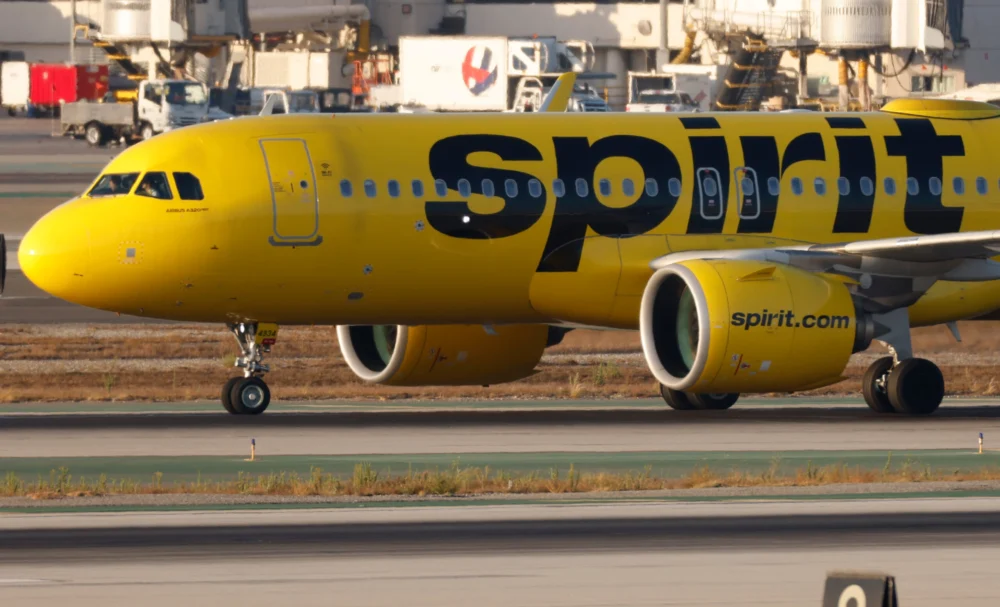
Spirit Airlines is charting a survival course that involves transforming itself into a significantly smaller, more focused version of its former self, prioritizing high-demand travel windows and profitable corridors while aggressively expanding its premium seating options. According to a comprehensive restructuring plan submitted to the U.S. Bankruptcy Court on Tuesday, the Florida-based carrier aims to shed billions in debt and overhaul its operational DNA to navigate its second Chapter 11 filing in less than a year. The strategy signals a definitive end to the "growth at all costs" model that once made Spirit the pioneer of the ultra-low-cost carrier (ULCC) sector in the United States, replacing it with a "leaner and more competitive" framework designed to weather a hostile economic environment for budget airlines.
Under the proposed plan, Spirit expects to emerge from court protection in late spring or early summer of 2025. Marshall Huebner, a lead attorney for Spirit from the firm Davis Polk, characterized the timeline as a "high-speed march" during a court hearing, emphasizing that the airline must move with extreme urgency because "every single day counts, and every single dollar counts." The urgency is underscored by the company’s staggering financial volatility. Despite a court filing in December 2024 projecting a net profit of $252 million for the year, the reality proved far bleaker. Between March 13, 2024—the date it exited its first bankruptcy—and the end of June, Spirit reported a net loss of nearly $257 million. This rapid descent back into insolvency necessitated the current filing, which focuses on a massive deleveraging of the company’s balance sheet.
The financial core of the restructuring involves a dramatic reduction in debt and lease obligations, which are slated to plummet from $7.4 billion to approximately $2.1 billion upon emergence. This $5.3 billion reduction is central to Spirit’s argument that it can return to profitability. CEO Dave Davis stated in a news release accompanying the filing that the airline will emerge as a "strong, leaner competitor" capable of delivering the value consumers expect but at a price point that allows the company to remain solvent. To achieve this, Spirit has reached an agreement in principle with its primary creditors, with secured lenders agreeing to provide "material incremental liquidity" by releasing cash collateral, providing the carrier with the necessary runway to continue operations through the bankruptcy process.
One of the most significant shifts in the plan involves the total reimagining of the Spirit fleet. For years, Spirit aggressively pursued the acquisition of modern, fuel-efficient Airbus A320neo (New Engine Option) aircraft. However, these planes have become a financial and operational liability. Huebner noted that the new fleet would consist primarily of older Airbus models, with the airline potentially "rejecting additional high-cost NEO aircraft." This move is driven partly by the ongoing crisis involving Pratt & Whitney GTF engines, which have suffered from a massive recall due to rare metal powder contamination. The recall grounded a significant portion of Spirit’s NEO fleet, depriving the airline of capacity while forcing it to maintain high lease payments. By pivoting back to older aircraft and negotiating more favorable terms with lessors, Spirit expects to cut its annualized fleet costs by $550 million—a 65% reduction from pre-bankruptcy levels.
Beyond the fleet, Spirit is overhauling its network and scheduling philosophy. The airline plans to move away from a traditional "hub-and-spoke" or high-frequency point-to-point model in favor of a "surgical" approach to scheduling. This involves maximizing aircraft utilization during peak travel periods, such as holidays and weekends, while significantly scaling back operations during travel lulls. This seasonal and demand-driven approach is intended to ensure that every flight operated has a high probability of being cash-positive. Furthermore, the carrier is doubling down on its "Spirit First" and premium economy offerings. This represents a seismic shift from the airline’s historical "Bare Fare" branding, which focused on unbundled, no-frills tickets. By expanding premium-class seats and updating its loyalty program, Spirit is attempting to capture a share of the "premium-leisure" market—a segment that has shown much higher resilience and higher margins than the pure budget segment in the post-pandemic era.

The challenges facing Spirit are not merely internal. The U.S. aviation landscape has become increasingly inhospitable for pure-play budget carriers. The "Big Four"—American, Delta, United, and Southwest—have successfully introduced "Basic Economy" fares that compete directly with Spirit’s price points while offering the perceived reliability and network reach of a legacy carrier. Simultaneously, labor costs have skyrocketed across the industry, and the consumer appetite has shifted toward more upscale travel experiences. Spirit’s struggle is a microcosm of a broader crisis among ULCCs, where even Frontier Airlines has had to pivot its strategy to survive.
Spirit’s path to this second bankruptcy was paved by a series of high-profile setbacks. The most notable was the collapse of its planned $3.8 billion merger with JetBlue Airways. The deal, which Spirit’s leadership viewed as its best chance for long-term survival, was blocked by a federal judge in early 2024 on antitrust grounds. The judge argued that the merger would eliminate a key source of low fares for price-sensitive consumers. Ironically, the blocked merger left Spirit in a weakened state, unable to compete effectively on its own. Since the deal fell through, Spirit has had to resort to desperate cost-cutting measures, including the sale of dozens of planes and the furloughing of hundreds of pilots and flight attendants. While some cabin crew members were recently recalled to handle the spring break surge, the overall workforce remains in a state of flux.
The potential for a future merger remains a central theme in Spirit’s restructuring. During the hearing, Huebner hinted that the airline’s emergence from Chapter 11 would put it in a "position of strength and stability" to consider "potential future industry transactions." Spirit had previously engaged in deal talks with Frontier Airlines and the investment firm Castlelake during this second bankruptcy cycle. Although those talks did not yield an immediate transaction, the slimmed-down Spirit—with its debt significantly reduced—could become a far more attractive acquisition target for Frontier or another suitor in late 2025.
Industry analysts suggest that Spirit’s move toward a smaller footprint is its only viable option. By focusing on a core group of high-performing routes and higher-margin premium seats, Spirit is effectively admitting that it can no longer compete as a national, high-volume carrier. The strategy mirrors the "right-sizing" efforts seen in other industries where legacy players are forced to retreat to their most profitable niches to survive. However, the transition is fraught with risk. Operating a smaller fleet of older aircraft may lower capital costs, but it can lead to higher maintenance expenses and lower fuel efficiency, potentially offsetting the savings. Additionally, Spirit must convince a skeptical public that its "premium" offering is worth the price, especially given the airline’s long-standing reputation for poor customer service and frequent delays.
The next few months will be critical for the carrier as it negotiates with aircraft lessors and other stakeholders to finalize the size and composition of its fleet. The debtors have identified an additional $300 million in cost savings from non-fleet cuts, which will likely involve further administrative streamlining and operational changes. As Spirit marches toward its projected emergence in mid-2025, it remains a symbol of the volatility of the modern airline industry—a sector where the line between a profitable disruptor and a bankrupt entity can be erased in a matter of months.
Ultimately, the success of Spirit’s plan hinges on whether a "tiny version" of a budget icon can hold its own against the giants of the sky. If Spirit can successfully shed its debt, optimize its schedule, and monetize its premium seats, it may yet write a "next chapter" of profitability. If not, this second bankruptcy could be the final descent for an airline that once fundamentally changed how Americans thought about the cost of flying. For now, the airline remains in a state of controlled contraction, hoping that by becoming smaller, it can finally become sustainable.