
 By admin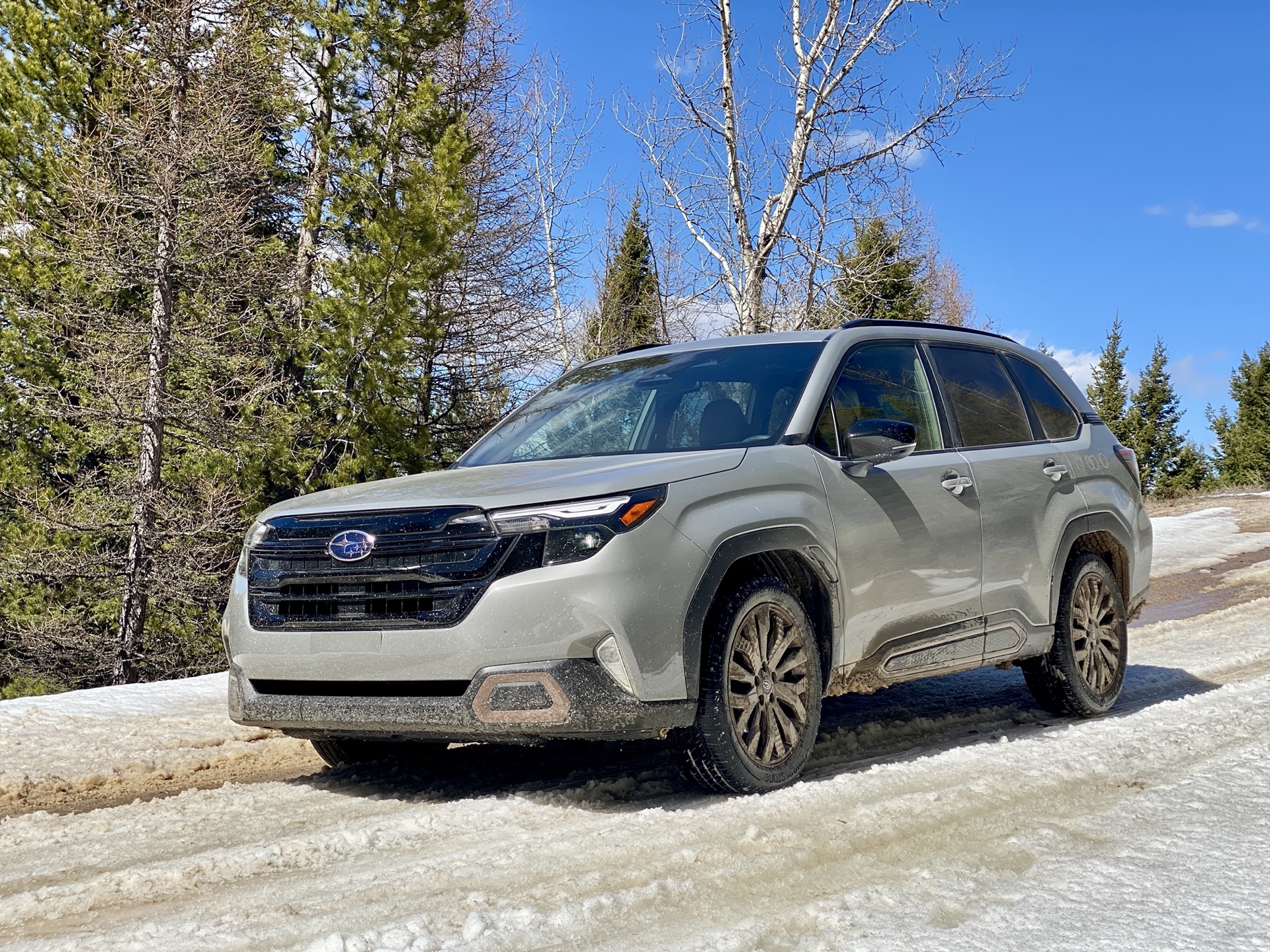
In a significant shake-up of the automotive industry’s reliability hierarchy, the venerable Japanese automaker Subaru has ascended to the top spot in Consumer Reports’ annual brand reliability rankings, displacing long-time leaders Toyota and its luxury marque, Lexus. The report, published on Thursday, marks a historic moment, as it’s the first time Subaru has claimed this coveted position, historically dominated by Toyota, a brand synonymous with bulletproof dependability and sales giants like the bestselling Toyota RAV4. This shift underscores a broader trend in the automotive landscape, where conservative engineering and incremental innovation are proving more robust than rapid technological overhauls and ambitious redesigns.
Subaru’s ascent is largely attributed to a steadfast commitment to proven engineering and a strategy of incremental refinement. For years, Toyota and Lexus set the benchmark for reliability by adopting a cautious approach, making only minor, well-tested updates and sharing robust, established components across their model lineups. Subaru appears to have not only adopted but perfected this strategy. Their redesigned vehicles, such as the upcoming 2025 Subaru Forester, exemplify this conservative philosophy. Instead of radical departures, Subaru focuses on evolving existing platforms and powertrains, ensuring that new iterations benefit from the accumulated wisdom and problem-solving of previous generations. This methodical approach minimizes the introduction of unforeseen issues that often plague entirely new designs, thereby bolstering consumer confidence and driving down reported problems.
The annual survey conducted by Consumer Reports is a monumental undertaking, gathering invaluable data from hundreds of thousands of vehicle owners. This comprehensive survey spans model years from 2000 to 2024, providing a vast historical context for reliability trends. Owners are queried about 20 potential "pain points" experienced over the preceding 12 months. These range from major mechanical failures like transmission and electric motor issues to more subtle but equally frustrating problems concerning climate controls and, increasingly, in-car electronics such as touchscreen interfaces and infotainment systems. The latter has become a significant source of frustration for many new car owners, often leading to lower satisfaction scores even in otherwise mechanically sound vehicles. Subaru’s success suggests a thoughtful integration of technology, prioritizing functionality and stability over bleeding-edge, potentially buggy features.
Conversely, Toyota’s slip from its long-held perch can be directly linked to an ambitious and extensive brand overhaul. Starting with the redesigned 2022 Toyota Tundra pickup truck, Toyota embarked on a sweeping modernization campaign, updating nearly every vehicle in its vast portfolio of sedans, crossover SUVs, trucks, and sports coupes. This culminated recently with the reveal of the 2025 Toyota 4Runner SUV, a model that had remained largely unchanged since its last redesign in 2010. Fifteen years is an eternity in automotive design, and such a significant leap brought with it a host of new technologies and engineering challenges.
Many of these new SUV and truck redesigns saw Toyota move away from the emissions-endangered V-8 engines that had long powered its larger vehicles. In their place, Toyota introduced more efficient, smaller displacement turbo and hybrid engines. While these powertrains promise improved fuel economy and reduced emissions, they also represent a significant departure from Toyota’s traditionally simpler, naturally aspirated engines. As the automotive adage goes, "New cars usually mean new problems," and Toyota’s aggressive refresh cycle appears to have inadvertently validated this maxim. The complexity of these new systems, particularly the integration of forced induction and hybrid components, has introduced unforeseen teething issues that have impacted the brand’s legendary reliability scores.
Subaru, in stark contrast, has maintained an almost stubborn adherence to its tried-and-true flat-4 boxer engine architecture across much of its lineup, seen in popular models like the Subaru Crosstrek. This commitment to a familiar, well-understood powertrain has allowed them to continuously refine its performance and reliability without introducing major new variables. Furthermore, Subaru has largely resisted the rapid electrification trend, with its only fully electric offering, the Subaru Solterra, being a joint venture built in partnership with Toyota. This strategic conservatism has paid dividends in reliability, as electric powertrains, while promising, often present their own set of novel issues related to battery management, charging systems, and complex software.
Consumer Reports’ methodology for assessing a brand’s overall reliability involves factoring in the reported problems for each specific model within that brand’s lineup. In Subaru’s case, the Solterra stands out as the lone model with a below-average score for predicted reliability, likely inheriting some of the challenges observed in its Toyota bZ4X counterpart. Predicted reliability, a crucial metric, is calculated as an average score of a model’s performance over the past three years, provided the model has not undergone a significant redesign. This ensures that the data accurately reflects the ongoing reliability of established designs.

For Toyota, several key models contributed to its decline. Below-average ratings for the redesigned Tundra, the new Tacoma midsize pickup truck, and the bZ4X EV (which shares its platform with the Solterra) collectively weighed down Toyota’s overall reliability rating. The Tundra, in particular, has been plagued by a series of significant issues since its 2022 launch, tallying 10 recalls. These persistent problems culminated in Toyota making the costly decision in July to replace more than 100,000 twin-turbo 3.5-liter V-6 engines in the 2022-2023 Tundra and Lexus LX models – a highly unusual and expensive remedial action for a company known for its quality control. While Consumer Reports acknowledges that recalls themselves do not directly harm a brand’s reliability ratings (as they indicate manufacturer action to fix problems), the underlying persistent issues that necessitate such drastic measures certainly do.
Despite these recent hiccups in its new SUV and truck lineup, Toyota still managed to rank an impressive third, with Lexus close behind at second, out of the 22 brands that Consumer Reports had sufficient data to rank. This performance, even with the setbacks, speaks volumes about the enduring strength of their legacy platforms and models that haven’t undergone recent radical transformations. It also highlights that even with a few problematic new models, the overall portfolio remains strong. Fifteen brands, ranging from niche players like Ram to luxury stalwarts like Porsche, were not included in the main rankings due to insufficient data, a common occurrence for brands with lower sales volumes or fewer distinct models.
Looking at the broader industry landscape, the report reinforces a familiar pattern: Asian brands, led by the Japanese and South Koreans, generally fared far better in reliability than their domestic American or even German counterparts. Buick, a domestic badge, emerged as a surprising standout, ranking 11th—smack dab in the middle of the pack and the highest-ranking American brand. Buick’s success, ironically, can be attributed to a strategy that mirrors Subaru’s and Toyota’s historical approach: conservative, incremental updates to proven designs. It’s also worth noting that a significant portion of Buick’s model lineup (nearly half) is manufactured in Asia, potentially benefiting from established Asian manufacturing quality control processes.
Other notable movements in the rankings included Mazda, which slipped to sixth place this year, primarily due to increased reported problems with its new CX-90 plug-in hybrid. Hyundai also saw a decline, dropping to 10th, experiencing continued issues with its Ioniq 5 electric crossover and transmission problems reported in the Santa Cruz small pickup truck. These instances further underscore the challenges associated with introducing new technologies and powertrains, whether in the form of complex hybrids, all-electric vehicles, or innovative transmission designs.
At the bottom of the reliability chart, Rivian rated last. The nascent electric vehicle manufacturer experienced significant reported problems with its R1T pickup truck, ranging from issues with paint and trim quality to more critical concerns related to EV charging systems. This serves as a stark reminder that while new entrants bring exciting innovation, they often face a steep learning curve in achieving the manufacturing consistency and reliability that established automakers have honed over decades.
Jake Fisher, senior director of Consumer Reports’ Auto Test Center, aptly summarized the report’s overarching message: “While brand rankings can guide you to the showroom, it is critical to look at reliability for specific models before making a purchase decision.” His advice is more pertinent than ever, as even within high-ranking companies, significant variations in reliability can exist, influenced by factors such as redesign cycles, new powertrain introductions, and the complexity of integrated technologies.
The 2025 Consumer Reports reliability rankings paint a dynamic picture of an automotive industry in flux. It’s a landscape where the pursuit of innovation and electrification is clashing with the foundational consumer demand for unwavering reliability. Subaru’s rise is a testament to the enduring value of cautious engineering and incremental improvement, while Toyota’s temporary dip highlights the inherent risks of aggressive technological advancement. As manufacturers continue to navigate the transition to an electrified and hyper-connected future, the balance between cutting-edge features and proven dependability will undoubtedly continue to shape the ever-evolving hierarchy of automotive reliability. For consumers, the message is clear: thorough research into specific models, beyond brand loyalty, is paramount in making a truly reliable purchase.