
 By admin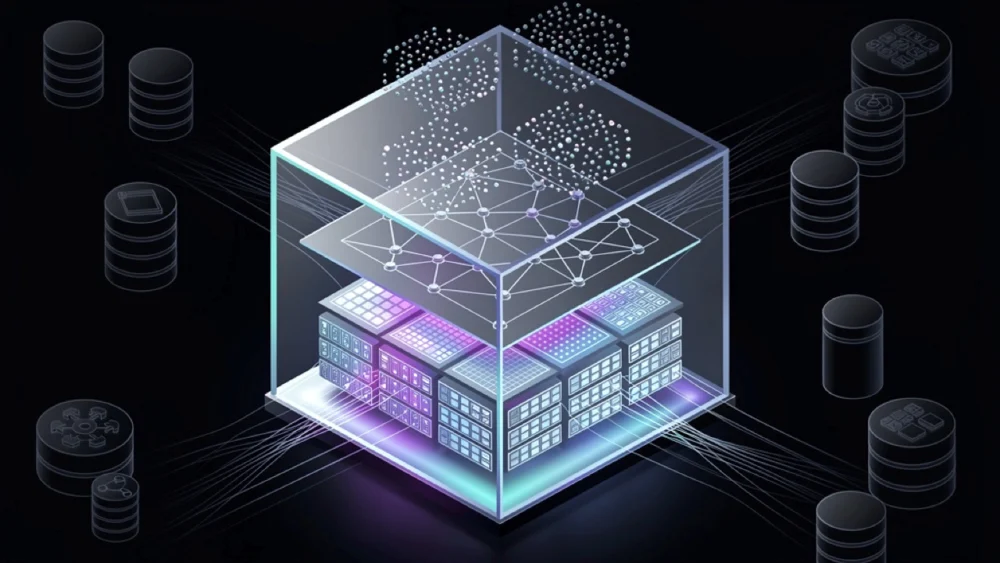
The burgeoning field of Retrieval-Augmented Generation (RAG) for AI agents is grappling with a fundamental challenge: the efficient and synchronized management of diverse data layers. Building sophisticated AI agents necessitates a potent combination of structured data, vector embeddings for semantic understanding, and graph information to represent complex relationships. In recent months, a critical realization has emerged within the AI community: for agentic systems to operate with genuine intelligence and effectiveness, they require robust memory capabilities, often referred to as contextual memory. This memory allows agents to recall past interactions, learn from experiences, and maintain a coherent understanding of their environment and tasks.
However, the integration of these disparate data types – structured, vector, and graph – into a unified and performant system is fraught with complexity. The need to synchronize information across multiple, specialized databases can introduce significant performance bottlenecks and accuracy issues. This intricate dance of data management is precisely the problem that SurrealDB is aiming to resolve with its innovative architectural approach.
SurrealDB recently announced the launch of version 3.0 of its namesake database, a milestone accompanied by a substantial $23 million Series A extension, bringing its total funding to an impressive $44 million. This funding injection underscores the significant investor confidence in SurrealDB’s vision for a unified data platform. What sets SurrealDB apart is its departure from the established paradigms of traditional relational databases like PostgreSQL, native vector databases such as Pinecone, or dedicated graph databases like Neo4j. While OpenAI, a leader in AI development, recently detailed its successful scaling of PostgreSQL to support 800 million users by leveraging read replicas – an approach optimized for read-heavy workloads – SurrealDB proposes a fundamentally different strategy.
The core tenet of SurrealDB’s architecture is to consolidate agent memory, business logic, and multi-modal data directly within the database itself. Instead of relying on the complex and often error-prone process of synchronizing data across multiple external systems, SurrealDB enables vector search, graph traversal, and relational queries to operate seamlessly and transactionally within a single, powerful Rust-native engine. This unified approach is designed to maintain absolute consistency and eliminate the latency inherent in multi-system orchestration.
Tobie Morgan Hitchcock, CEO and co-founder of SurrealDB, articulated the prevailing frustration within the AI development community during an interview with VentureBeat. "People are running DuckDB, Postgres, Snowflake, Neo4j, Quadrant or Pinecone all together, and then they’re wondering why they can’t get good accuracy in their agents," Hitchcock stated. He elaborated on the root cause: "It’s because they’re having to send five different queries to five different databases which only have the knowledge or the context that they deal with." This fragmentation of data and the subsequent need for complex inter-database communication directly impede an agent’s ability to access a holistic view of information, thus compromising its accuracy and responsiveness.
This architectural paradigm has clearly resonated with developers, as evidenced by the database’s impressive traction: 2.3 million downloads and a remarkable 31,000 stars on GitHub to date. The versatility of SurrealDB’s approach is demonstrated by its adoption across a diverse range of demanding applications. Existing deployments span critical edge devices in the automotive and defense sectors, sophisticated product recommendation engines powering major New York retailers, and the underlying technology for Android ad serving. These varied use cases highlight the database’s ability to handle both real-time, high-throughput demands and the need for deep contextual understanding.
Agentic AI Memory Baked Directly into the Database
A cornerstone of SurrealDB 3.0’s innovation lies in its inherent capability to store agent memory as graph relationships and semantic metadata directly within the database. This fundamentally alters how AI agents access and utilize their operational context, eliminating the need to manage this critical information within application code or rely on external caching layers, which can introduce inconsistencies and performance overhead.
The introduction of the Surrealism plugin system within SurrealDB 3.0 empowers developers to define precisely how agents build, query, and leverage this embedded memory. Crucially, this logic executes inside the database itself, benefiting from its inherent transactional guarantees. This means that operations related to memory management are as reliable and consistent as standard database transactions, a significant departure from approaches that rely on middleware or application-level logic for such crucial functions.
In practical terms, this integrated approach transforms how AI agents interact with data. When an agent engages with information, it can dynamically create context graphs. These graphs link entities, decisions made, and domain knowledge as interconnected database records. These relationships are not merely stored; they are directly queryable through the same intuitive SurrealQL interface that developers use for vector search and querying structured data. Imagine an AI agent tasked with resolving a customer issue. With SurrealDB, it can traverse graph connections to instantly access related past incidents, retrieve vector embeddings of similar cases for analogous problem-solving, and seamlessly join this contextual information with structured customer data – all within a single, atomic transactional query. This eliminates the need for multiple, sequential queries across different data stores, drastically reducing latency and improving the agent’s ability to reason and act decisively.
Hitchcock further emphasized the evolving demands of modern AI applications: "People don’t want to store just the latest data anymore. They want to store all that data. They want to analyze and have the AI understand and run through all the data of an organization over the last year or two, because that informs their model, their AI agent about context, about history, and that can therefore deliver better results." SurrealDB’s architecture directly addresses this need by enabling agents to access and process vast historical datasets, unlocking deeper insights and more nuanced decision-making capabilities.
SurrealDB’s Architectural Divergence from Traditional RAG Stacks
The architectural divergence of SurrealDB from conventional RAG stacks is profound and directly addresses the limitations of existing solutions. Traditional RAG systems typically operate by querying different databases based on specific data types. Developers are accustomed to writing separate, specialized queries for vector similarity search, graph traversal, and relational joins. The subsequent challenge then becomes merging these disparate results within application code, a process that is not only complex but also introduces significant synchronization delays as queries round-trip between various systems.
Hitchcock explained that SurrealDB’s foundational difference lies in its data storage mechanism. Data is stored as binary-encoded documents, with graph relationships intrinsically embedded alongside them. This means that a single, unified query executed through SurrealQL can simultaneously traverse graph relationships, perform vector similarity searches, and join structured records without ever needing to leave the confines of the database. This eliminates the architectural friction and performance penalties associated with coordinating multiple data services.
This integrated architecture also has a profound impact on consistency at scale. Hitchcock highlighted that every node within a SurrealDB cluster maintains transactional consistency, even at scales exceeding 50 nodes. This means that when an agent writes new contextual information to one node, a query on any other node will immediately reflect that update. There is no reliance on caching mechanisms or read replicas, which are common in traditional distributed systems and can introduce eventual consistency issues.
"A lot of our use cases, a lot of our deployments are where data is constantly updated and the relationships, the context, the semantic understanding, or the graph connections between that data needs to be constantly refreshed," Hitchcock explained. He stressed the absence of traditional scaling techniques that can compromise consistency: "So no caching. There’s no read replicas. In SurrealDB, every single thing is transactional." This commitment to transactional consistency across all operations is a critical differentiator, particularly for AI agents that require up-to-the-minute, reliable data to make informed decisions.
Implications for Enterprise IT and the Future of AI Development
While SurrealDB presents a compelling solution for a growing segment of AI development, Hitchcock candidly acknowledges its limitations, emphasizing that it is not a universal panacea for all database needs. "It’s important to say SurrealDB is not the best database for every task. I’d love to say we are, but it’s not. And you can’t be," he stated. He elaborated on specific scenarios where other database technologies might be more suitable: "If you only need analysis over petabytes of data and you’re never really updating that data, then you’re going to be best going with object storage or a columnar database. If you’re just dealing with vector search, then you can go with a vector database like Quadrant or Pinecone, and that’s going to suffice."
The true inflection point, according to Hitchcock, arrives when an enterprise’s requirements demand the seamless integration of multiple data types. This is where SurrealDB’s unified architecture offers a significant competitive advantage, particularly in terms of development velocity. The practical benefits are stark: what previously required months of complex development effort to orchestrate multiple databases can now be achieved and deployed in a matter of days. This acceleration of development timelines translates directly into faster innovation cycles, reduced time-to-market for AI-powered applications, and a more agile response to evolving business needs.
For enterprise IT departments, SurrealDB represents a paradigm shift in how they can approach data management for AI initiatives. By consolidating diverse data types within a single, transactional engine, it simplifies infrastructure, reduces operational overhead, and enhances data governance. The ability to perform complex, multi-modal queries transactionally within the database streamlines application development, reduces the risk of data inconsistencies, and ultimately empowers organizations to build more sophisticated and reliable AI agents. As the demand for intelligent agents continues to grow across industries, SurrealDB’s unified data platform is poised to become a critical enabler of this next wave of AI innovation.