
 By admin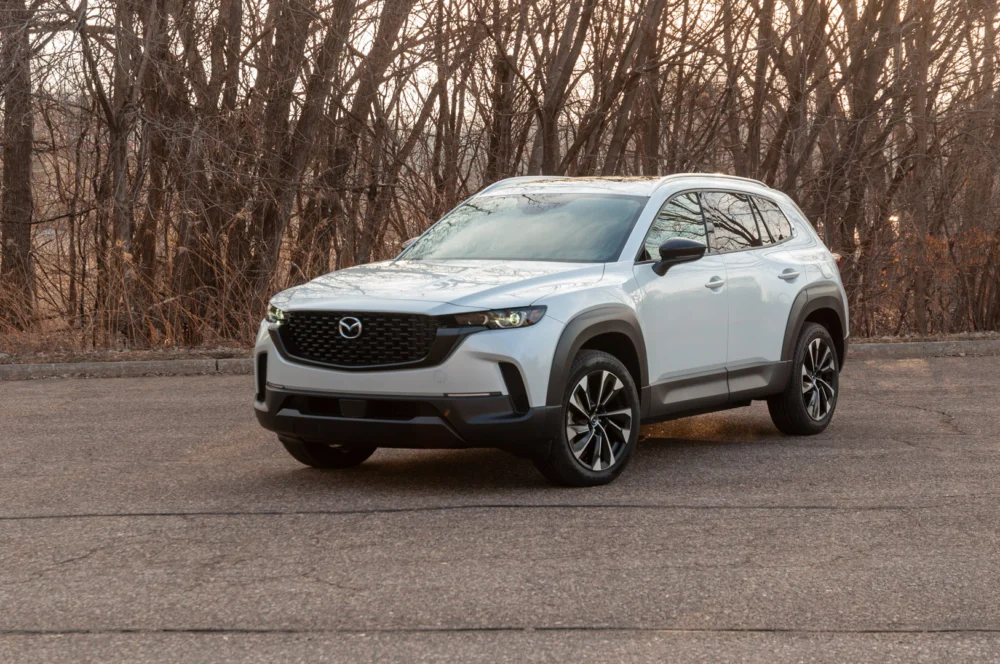
While the 2025 Mazda CX-50 Hybrid may not ignite an enthusiast’s passion or quicken the pulse of a casual driver, it undeniably holds a significant position within the Mazda portfolio. It represents the brand’s pragmatic response to evolving market demands for greater fuel efficiency, offering a more economical powertrain than its gasoline-only counterparts. This hybrid variant promises substantial improvements in fuel economy for daily commutes and family trips, backed by sufficient power for most driving scenarios. However, this practicality comes at a cost, as the CX-50 Hybrid inherits and, in some respects, exacerbates the original CX-50’s packaging flaws, particularly concerning its seating arrangement. Moreover, the integration of the hybrid powertrain introduces unexpected refinement issues that detract from the overall driving experience.
Our comprehensive evaluation involved a week of diverse driving conditions, ranging from routine urban shuttling to a weekend family road trip, allowing for a thorough assessment of the CX-50 Hybrid’s performance, comfort, and practical utility. The findings reveal a vehicle that, while making strides in efficiency, struggles to fully embody the polished experience typically associated with Mazda.
Pro: The Hybrid is the Most Efficient 2025 Mazda CX-50 Model
At its core, the primary appeal of the CX-50 Hybrid lies in its superior fuel efficiency, a non-negotiable attribute in today’s competitive crossover market. This is achieved through a strategically sourced powertrain, directly borrowed from the highly successful Toyota RAV4 Hybrid. This robust system combines a 2.5-liter inline-four engine with a sophisticated planetary torque-split hybrid system, integrating two electric motors for propulsion and regeneration. An additional 54-horsepower electric motor is strategically placed at the rear wheels, providing standard all-wheel drive capabilities without the need for a mechanical connection to the front axle. Powering this electric componentry is a 1.59-kilowatt-hour (kWh) nickel-metal-hydride battery pack, a proven technology known for its durability and reliability in hybrid applications. The combined output of this system is a respectable 219 horsepower and 163 pound-feet of torque, offering adequate acceleration for daily driving.
The Environmental Protection Agency (EPA) ratings underscore the hybrid’s efficiency advantage, coming in at an impressive 39 miles per gallon (mpg) in the city, 37 mpg on the highway, and a combined rating of 38 mpg. These figures represent a significant leap over the conventional gasoline-powered CX-50 models. For comparison, the standard non-turbo CX-50 achieves 25 mpg city, 31 mpg highway, and 28 mpg combined, while the more potent turbocharged model is rated at 23 mpg city, 29 mpg highway, and 25 mpg combined. The hybrid’s efficiency is particularly pronounced in city driving, where its electric motors can operate more frequently, reducing reliance on the gasoline engine.

During our real-world testing, the CX-50 Hybrid delivered respectable, though slightly lower, fuel economy figures compared to its official ratings. Over 190 miles of mixed suburban driving, the trip computer indicated an average of 34.0 mpg. While short of the 38 mpg combined EPA rating, this is still a strong showing for a compact SUV of this size and capability. On a subsequent 120-mile highway stretch, maintaining speeds above 70 mph, the vehicle averaged 31.2 mpg. This highway figure, while below the EPA’s 37 mpg highway rating, is still competitive and illustrates the typical challenges of matching official test cycle results in varied real-world conditions, particularly at higher speeds where aerodynamic drag and sustained engine operation become more prominent factors. Factors such as driving style, terrain, ambient temperature, and cargo load can all influence real-world fuel economy. Despite these slight variances, the CX-50 Hybrid unequivocally stands as the most fuel-efficient option within the CX-50 lineup, offering a compelling proposition for buyers prioritizing lower running costs and reduced environmental impact.
Con: Mazda CX-50 Hybrid Powertrain is Less Refined than Toyota RAV4
One of the most surprising and disappointing aspects of the 2025 Mazda CX-50 Hybrid is the noticeable lack of powertrain refinement, especially when compared directly to its Toyota RAV4 Hybrid donor. Mazda has long prided itself on delivering a premium driving experience, often characterized by smooth power delivery and a quiet cabin. Unfortunately, the CX-50 Hybrid falls short of these expectations in several key areas.
At idle, a persistent and somewhat unsettling "quiver" can be felt emanating through the steering column, the steering wheel itself, and even the front seats. This subtle vibration, which intermittently appears and disappears, is particularly noticeable when the vehicle is stationary, such as at a stoplight. It’s an unusual sensation that disrupts the otherwise calm cabin environment one expects from a hybrid.
The issues extend beyond idle. While driving, regardless of speed, applying approximately three-quarters throttle consistently produced what felt like "driveline lash"—a distinct vibration or shudder that resonated throughout the entire vehicle. This sensation suggested an unrefined engagement or disengagement of powertrain components, akin to something not quite meshing correctly within the drivetrain. It’s a jarring experience that undermines confidence in the vehicle’s mechanical harmony. These refinement issues were not isolated incidents; they were consistently present throughout the entire week of testing.
Crucially, these specific problems – the idle quiver and the driveline lash under acceleration – are anomalies that are virtually absent in the Toyota RAV4 Hybrid, despite sharing the fundamental powertrain components. This stark difference raises questions about the integration process. It suggests that while the core components are robust and proven, Mazda’s adaptation or tuning of the system within the CX-50’s architecture may have introduced these undesirable characteristics. Potential factors could include different engine mounts, altered NVH (Noise, Vibration, and Harshness) dampening strategies, or unique software calibration that interacts differently with the CX-50’s chassis. For a brand that consistently emphasizes driving pleasure and refinement, these powertrain quirks are a significant drawback and could detract from the perceived quality and long-term satisfaction for discerning buyers.

Pro: Mazda CX-50 Hybrid is a Sleeper
In an era where many hybrid vehicles loudly proclaim their eco-credentials with distinctive design elements, unique badging, or even futuristic styling cues, the 2025 Mazda CX-50 Hybrid takes a refreshingly understated approach. It’s a true "sleeper" in the hybrid segment, masterfully blending its efficient powertrain into the CX-50’s already appealing aesthetic without any overt fanfare.
From a visual standpoint, discerning the hybrid variant from its conventional gasoline-powered siblings requires a keen eye. The differences are minimal and discreet. The most prominent identifiers are a small, elegantly placed "Hybrid" badge on the front fender and another on the rear tailgate. Beyond these subtle emblems, only those with an intimate knowledge of Mazda’s design language or specific model distinctions might notice unique wheel designs that may or may not be exclusive to the hybrid trim. There are no dramatic blue accents, aerodynamic fairings, or futuristic grilles typically found on many hybrid competitors.
This understated design philosophy is a deliberate choice by Mazda, aligning with its "Kodo: Soul of Motion" design language, which prioritizes elegance, sophistication, and timeless appeal over fleeting trends. For many buyers, this is a significant advantage. It means they can enjoy the substantial benefits of a hybrid powertrain – superior fuel economy and reduced emissions – without making a bold statement about their vehicle choice. There’s no sense of driving something that "screams I bought the efficient one," which can be a turn-off for consumers who prefer a more traditional or premium aesthetic. Instead, the CX-50 Hybrid allows owners to simply appreciate its efficiency while enjoying the same rugged yet refined exterior design that has garnered praise for the standard CX-50. This subtle integration reinforces Mazda’s commitment to delivering attractive vehicles first and foremost, with hybrid technology serving as an intelligent, almost invisible, enhancement.
Con: CX-50 Hybrid Compromises Compromised Packaging
The Mazda CX-50, even in its non-hybrid form, has faced criticism for its interior packaging, particularly concerning rear-seat comfort and ingress/egress. Unfortunately, the integration of the hybrid system in the 2025 CX-50 Hybrid not only carries over these existing compromises but, in some areas, exacerbates them.
The CX-50’s rear-seat design, characterized by a "stadium seating" arrangement where rear occupants sit slightly higher than those in the front to offer a better view forward, already presents a less comfortable experience than its more traditional sibling, the CX-5. With the hybrid variant, the placement of the 1.59-kWh nickel-metal-hydride battery pack beneath the rear seats necessitates a subtle but impactful modification. While rear passengers are still positioned higher off the ground, the floor itself is also raised, resulting in a noticeable reduction in available legroom compared to the non-hybrid CX-50. This creates a more cramped environment for adult passengers, making longer journeys less comfortable and diminishing the vehicle’s appeal as a family hauler. Given that the CX-5 already offers superior rear-seat comfort, this further compromise in the hybrid CX-50 is a significant drawback, forcing buyers to weigh fuel economy against passenger comfort more heavily.

Furthermore, the front seating arrangement, a point of contention for several reviewers and owners of the standard CX-50, remains problematic in the hybrid. The front seats are mounted on brackets that position them unusually high, creating what has been described as a "booster-seat impression." This elevated seating position, while perhaps offering a commanding view of the road for some, feels unnatural and contributes to difficulties during entry and exit. Multiple individuals, including my father and a friend, struggled to contort their torsos and backs to slide into the front passenger seat without bumping their heads on the roofline or door frame. This ergonomic oversight leads to frequent grunts and groans, undermining the perceived premium feel of the cabin. While this setup might eventually become "livable" with acclimatization, it presents an immediate and frustrating hurdle for many occupants, especially taller individuals. Mazda’s design choices, perhaps prioritizing a specific exterior profile or ground clearance for its adventurous persona, have clearly impacted interior practicality and comfort, making the CX-50 Hybrid’s packaging a notable weak point.
Pro: CX-50 Hybrid Delivers Premium Look and Feel
Despite its mechanical and ergonomic shortcomings, the 2025 Mazda CX-50 Hybrid continues to uphold Mazda’s reputation for delivering an interior that consistently punches above its weight class. The cabin exudes a premium look and feel, a characteristic shared across the broader Mazda lineup, including the CX-5 and other models. This commitment to upscale materials and thoughtful design sets the CX-50 Hybrid apart from many of its direct competitors in the compact SUV segment.
Upon entering the CX-50 Hybrid, occupants are greeted by an abundance of soft-touch materials strategically placed throughout the cabin, particularly on key contact points like the dashboard and door panels. These tactile surfaces contribute significantly to a sense of quality and refinement, a stark contrast to the hard plastics often found in similarly priced vehicles. The attention to detail extends to the stitching on the dashboard, which is meticulously executed, adding a bespoke touch. Furthermore, the seats feature elegant contrast piping, elevating their visual appeal and reinforcing the impression of a more luxurious vehicle.
Even functional elements are designed with an eye toward premium aesthetics and user experience. The climate control and audio functions are managed by knurled buttons and dials, providing a satisfying tactile feedback with each turn or press. This level of craftsmanship in controls is often reserved for higher-end luxury brands and contributes significantly to the CX-50 Hybrid’s upscale ambiance.
When directly compared to its segment rivals, the CX-50 Hybrid’s interior truly shines. It easily surpasses the interior quality and design of a Toyota RAV4, which, while practical and durable, often feels more utilitarian. Similarly, it unequivocally beats the interior of a Kia Sportage, which, despite recent improvements, still lacks the consistent premium feel of the Mazda. This dedication to interior quality aligns with Mazda’s broader strategy of positioning itself as a "premium mainstream" brand, offering sophisticated design and refined user experiences at a more accessible price point. In the Premium Plus trim, which includes desirable features such as a head-up display, 19-inch alloy wheels, a premium Bose audio system, and ventilated front seats, the CX-50 Hybrid further enhances this luxurious impression, providing a comfortable and aesthetically pleasing environment for both driver and passengers.

Con: The CX-50 Hybrid is Loud
One of the counterintuitive drawbacks of the 2025 Mazda CX-50 Hybrid is its surprising level of interior noise, particularly at highway speeds. While hybrids are often lauded for their quiet operation, especially in urban environments where electric propulsion minimizes engine noise, the CX-50 Hybrid struggles to maintain this tranquility when pushed.
Around town, the CX-50 Hybrid performs reasonably well in terms of noise suppression, provided the throttle is not aggressively engaged. The transition between electric and gasoline power is generally smooth, and the gasoline engine, when operating, tends to remain a subdued hum in the background. This low-speed quietness is what one would typically expect and appreciate from a hybrid vehicle, contributing to a relaxed driving experience in city traffic.
However, the character of the cabin changes dramatically once the vehicle reaches highway speeds. Above approximately 55 mph, a rather astonishing amount of wind noise becomes evident. This pervasive whooshing sound appears to originate predominantly from the side mirrors and the A-pillar area, creating a constant and intrusive drone. This wind noise is significant enough to make sustained conversations or listening to music at moderate volumes challenging and fatiguing on longer journeys.
Beyond the wind noise, road noise also contributes to the overall cacophony, though it is the wind noise that stands out as particularly problematic. When the gasoline engine is called upon for acceleration at higher speeds, its sound also becomes more pronounced, further adding to the audible intrusion. The cumulative effect is that the CX-50 Hybrid, despite its hybrid powertrain, is downright loud inside when cruising on the highway. This lack of cabin serenity undermines the premium aspirations of the Mazda brand and detracts from what should be a comfortable and refined driving experience. For buyers who frequently travel at highway speeds, this significant noise intrusion could be a major deal-breaker, making the CX-50 Hybrid a less appealing option compared to quieter competitors.
Pricing and Market Position
The 2025 Mazda CX-50 Hybrid enters a highly competitive segment with a compelling, if somewhat complex, value proposition. Its starting price of a reasonable $35,390, including a $1,420 destination charge, positions it as an accessible entry into the hybrid compact SUV market. The Premium Plus trim model tested, which boasted a price of $41,920, included a suite of desirable enhancements such as a head-up display, stylish 19-inch alloy wheels, a premium Bose audio system, and comfortable ventilated front seats, elevating the driving experience with luxury-oriented features.

Strategically, Mazda has priced the CX-50 Hybrid to be competitive, notably undercutting a fully loaded Honda CR-V Hybrid Sport Touring model by $1,025 in the configuration tested. This aggressive pricing could be a significant draw for consumers cross-shopping these popular models, especially those who appreciate Mazda’s distinctive design and premium interior appointments.
However, the value proposition is not without its caveats. While the CX-50 Hybrid offers superior fuel economy and a sophisticated cabin, it inherits the aforementioned compromises in packaging and refinement from the non-hybrid CX-50, particularly the less-than-ideal rear-seat comfort and the surprising powertrain harshness. In a segment populated by formidable contenders like the Toyota RAV4 Hybrid (itself sharing the CX-50’s powertrain but without the same refinement issues), the Honda CR-V Hybrid, the Kia Sportage Hybrid, the Hyundai Tucson Hybrid, and the Ford Escape Hybrid, these compromises become more pronounced.
The CX-50 Hybrid’s market position is therefore nuanced. It appeals to buyers who prioritize fuel efficiency and Mazda’s distinctive "premium mainstream" aesthetic, and who are perhaps willing to overlook some ergonomic and refinement issues for a more attractive price point. It serves as a necessary addition to Mazda’s lineup, providing a hybrid option in a segment where such powertrains are increasingly expected and demanded. However, it also highlights the challenges of integrating a third-party powertrain and adapting an existing platform for hybrid duty without introducing new compromises. For Mazda, this hybrid represents a transitional step, filling a critical gap while the brand prepares for its own internally developed hybrid systems.
Conclusion
The 2025 Mazda CX-50 Hybrid is a vehicle of intriguing contradictions. On one hand, it delivers on the fundamental promise of a hybrid: significantly improved fuel efficiency, making it the most economical choice within the CX-50 lineup. It also upholds Mazda’s commendable commitment to interior design and material quality, presenting a cabin that feels genuinely premium and aesthetically pleasing, easily outclassing many of its direct competitors. The "sleeper" aesthetic, with its subtle hybrid badging, will undoubtedly appeal to those who prefer their efficiency without ostentation.
Yet, this practicality and aesthetic appeal are shadowed by unexpected compromises that ultimately temper enthusiasm. The refinement issues with the Toyota-sourced powertrain – the persistent idle quiver and the driveline lash under acceleration – are perplexing and detract from the smooth, composed driving experience Mazda typically strives for. These issues are particularly jarring given the powertrain’s exemplary performance in the RAV4 Hybrid. Furthermore, the CX-50’s inherent packaging flaws, particularly the compromised rear-seat legroom and the unusual front-seat ergonomics, are not only carried over but are, in the case of the rear seats, slightly worsened by the hybrid battery integration. The surprising amount of wind noise at highway speeds further diminishes the cabin’s tranquility, undermining the premium feel Mazda otherwise cultivates.

While the CX-50 Hybrid’s competitive pricing, especially against a loaded Honda CR-V Hybrid, offers a tangible advantage, the sum of its parts leaves a lingering sense of unfulfilled potential. It is a pragmatic vehicle for pragmatic times, fulfilling a market need for a fuel-efficient Mazda crossover. However, it falls short of being a truly compelling offering for those who value the holistic, refined driving experience Mazda is known for.
For now, the 2025 CX-50 Hybrid serves its purpose by providing Mazda buyers with a hybrid option in a crucial segment. Yet, it elicits a sense of pause, a feeling that this is a stopgap rather than a definitive statement. True hybrid excellence from Mazda might lie just over the horizon, with the anticipated arrival of the brand’s own in-house developed hybrid system, presumably slated for the next-generation CX-5. Until then, the CX-50 Hybrid remains a practical choice for efficiency-minded buyers willing to accept its specific trade-offs, but it leaves enthusiasts yearning for a hybrid that fully embodies the "Zoom-Zoom" spirit with uncompromised Mazda refinement.
2025 Mazda CX-50 Hybrid Premium Plus
Base price: $35,390 including $1,420 destination charge
Price as tested: $41,920
Powertrain: 219-hp hybrid system, all-wheel drive
EPA fuel economy: 39/37/38 mpg (city/highway/combined)
The hits: Sleeper hybrid status, sharp design, premium materials, undercuts CR-V Hybrid pricing, best fuel economy of any CX-50
The misses: Powertrain refinement issues, compromised seating, loud inside