
 By Rifan Muazin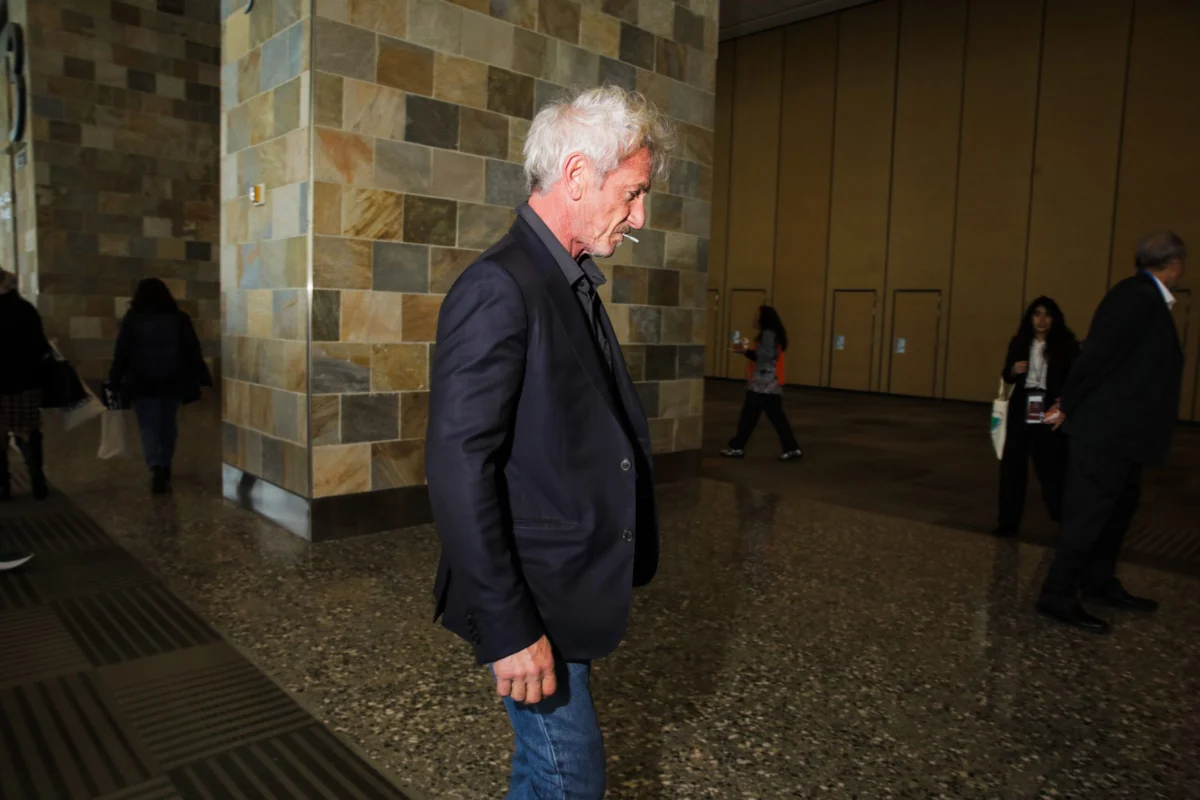
The 98th Academy Awards, held at the Dolby Theatre on a crisp Sunday evening in March 2026, will likely be remembered as the night the film industry finally, unequivocally, surrendered to the idiosyncratic genius of Paul Thomas Anderson. After decades of being the "bridesmaid" of the Academy—having collected eleven nominations without a win prior to this cycle—Anderson’s latest magnum opus, One Battle After Another, swept the major categories, including Best Picture, Best Director, and Best Screenplay. The film, a sprawling, hallucinatory adaptation of Thomas Pynchon’s 1987 novel Vineland, has been hailed as Anderson’s most personal work to date, a feat considering the intimate depths of his previous filmography. However, the ceremony was equally defined by who was not in the room. From seasoned veterans like Sean Penn and Brad Pitt to rising stars like Connor Storrie and international icons like Lewis Hamilton, the guest list featured several glaring absences that underscored the shifting priorities of Hollywood’s elite.

The tone for the One Battle After Another sweep was set early in the evening when Sean Penn secured the Oscar for Best Supporting Actor. Penn’s portrayal of the corrupt, high-octane military leader Colonel Steven J. Lockjaw was described by critics as a "terrifying return to form," blending the volatility of his early career with a seasoned, cynical gravity. While Penn was the heavy favorite going into the night, having already dominated the precursors, his seat remained empty. The actor, a two-time Best Actor winner for Mystic River and Milk, has long maintained a contentious relationship with the Academy of Motion Picture Arts and Sciences. According to reports from the New York Times, Penn opted to skip the glitz of Hollywood for the front lines of global conflict, traveling through Europe en route to Ukraine.
Penn’s absence was a political statement in itself, echoing his long-standing history of activism. In 2022, during the early stages of the Russian invasion, Penn famously gifted one of his statuettes to President Volodymyr Zelenskyy, a gesture he later suggested was a placeholder for his desire to see the awards "melted down into bullets" for the Ukrainian defense. His disdain for the ceremony’s perceived insularity was vocalized as recently as 2024, when he accused the Academy of "extraordinary cowardice" regarding its role in global cultural expression. Kieran Culkin, who accepted the award on Penn’s behalf, navigated the awkwardness with his signature dry wit, noting that Penn "couldn’t be here this evening, or didn’t want to," a comment that drew both laughs and knowing nods from the audience.

As the night progressed, the focus shifted back to Paul Thomas Anderson, whose acceptance speech for Best Screenplay provided the emotional centerpiece of the telecast. Dedicating the award to his children, Anderson offered a poignant, somewhat somber reflection on the state of the world. "To say sorry," he began, "for the housekeeping mess that we left in this world we’re handing off to them, but also with the encouragement that they will be the generation that hopefully brings us some common sense and decency." The "housekeeping mess" comment was widely interpreted as a nod to the environmental and political themes woven into One Battle After Another, a film that explores the decay of 1960s idealism and the rise of a surveillance state. Anderson’s gratitude also extended to the reclusive Thomas Pynchon. The author, who famously shuns the limelight and has not been photographed officially since the 1950s, was not present, though his presence loomed large over the production. Anderson’s ability to translate Pynchon’s dense, postmodern prose into a Best Picture winner is a feat few thought possible, cementing his status as the preeminent interpreter of Great American Novels.
While Anderson’s film took the top honors, the night also celebrated the record-breaking success of Sinners. Directed by Ryan Coogler and starring Michael B. Jordan, the film entered the night with a staggering 16 nominations, the most in the history of the Academy Awards. Michael B. Jordan took home the Best Actor trophy, delivering a powerhouse speech that balanced professional pride with personal news. He took a moment to explain the absence of his co-star, Hailee Steinfeld, who was also a nominee. "Hailee’s getting ready to have a baby right now," Jordan revealed to a chorus of cheers. Steinfeld is currently expecting her first child with Josh Allen, the star quarterback for the Buffalo Bills, a relationship that has become a fixture of both entertainment and sports headlines over the past year. Steinfeld’s absence was felt, as her performance in Sinners was considered a career-high, but the joy of her impending motherhood provided a rare "light-hearted" moment in a ceremony often bogged down by heavy themes.

The intersection of sports and cinema was further highlighted by the nominations for F1, a high-octane drama produced by Brad Pitt and Lewis Hamilton. Despite the film’s critical and commercial success, both of its primary architects were absent from the Dolby Theatre. Lewis Hamilton, who played himself in the film and served as a technical advisor to ensure the racing sequences were authentic, was halfway across the world in Shanghai. The seven-time Formula 1 World Champion had just competed in the Chinese Grand Prix, where he secured a podium finish—his first since making the high-profile move to Ferrari. The logistical impossibility of traveling from Shanghai to Los Angeles in time for the red carpet meant that Hamilton had to celebrate the film’s Best Picture nomination from afar.
Brad Pitt’s absence was perhaps more mysterious, though not entirely unprecedented. While his F1 co-star Damson Idris turned heads in a sharp Prada overcoat, Pitt was nowhere to be found. This follows a pattern for the actor, who famously skipped the 2017 ceremony—the year his production company, Plan B, won Best Picture for Moonlight—to focus on a sculpture project in a Los Angeles art studio. Whether Pitt was again "holed up" in an artistic endeavor or simply preferred to avoid the press remains a matter of speculation, but his absence served as a reminder of his evolution from a Hollywood heartthrob to a more reclusive, producer-focused figure.

The younger generation of Hollywood was also represented, albeit partially, by the cast of Heated Rivalry. The film, which has garnered a cult following and critical acclaim for its depiction of professional sports culture, saw its star Hudson Williams grace the red carpet in a daring Balenciaga ensemble. However, his co-star Connor Storrie was missing from the festivities. The two had been seen together at various high-profile pre-Oscar events, including the annual CAA party, leading many to expect a joint appearance on the big night. Storrie’s absence sparked social media chatter, though no official reason was provided by his representatives.
As the 2026 Oscars concluded, the industry looked back on a year of cinema that felt both expansive and deeply fractured. The dominance of Paul Thomas Anderson signaled a return to "auteur" filmmaking, where the vision of a single director can still captivate both the public and the Academy. Yet, the high number of no-shows among the winners and nominees suggested a growing distance between the traditional awards circuit and the stars who drive it. Whether it is the lure of international activism, the demands of a global sports schedule, or the simple desire for privacy during personal milestones, the "Oscar Night" of old—where every star in the firmament was expected to align in a single room—appears to be a relic of the past.

Ultimately, the 98th Academy Awards belonged to the storytellers who stay behind the camera. Paul Thomas Anderson’s triple win for One Battle After Another is a testament to the enduring power of complex, challenging narratives. By thanking his children and acknowledging the "mess" of the modern world, Anderson grounded the evening’s glamour in a necessary reality. The absence of Sean Penn, Lewis Hamilton, and Hailee Steinfeld only served to emphasize that while the movies are a vital part of our culture, the world they reflect—and the lives of the people who make them—are far larger than a four-hour telecast in Los Angeles. As the credits rolled and the winners headed to the Vanity Fair after-party, the takeaway was clear: Hollywood is changing, and the 2026 Oscars were the first definitive proof of a new, more fragmented, but arguably more authentic era of stardom.