
 By Rifan Muazin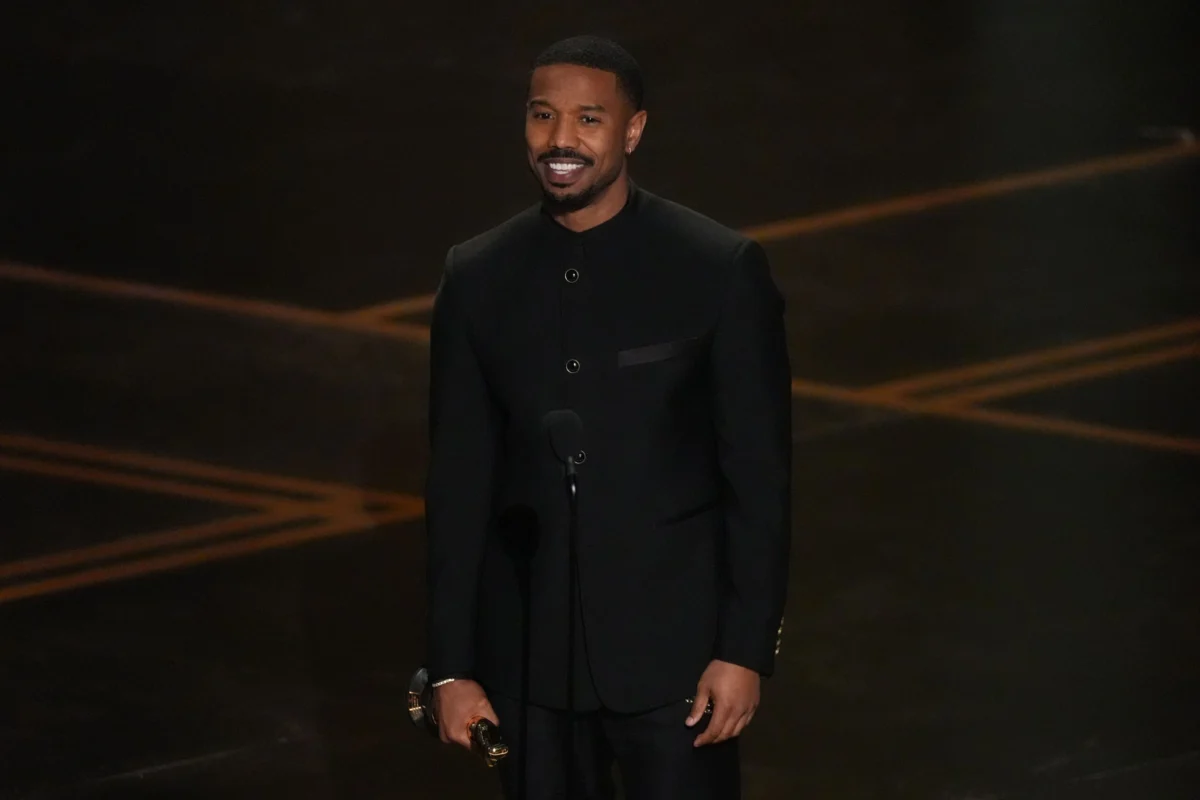
This evening, at a 2026 Oscars ceremony that brought to a close the most up-in-the-air, undecided awards season in recent history, One Battle After Another—Paul Thomas Anderson’s 30-years-in-the-making portrayal, critique, and tribute to the American revolutionary instinct—took many of the banner awards and won most of the "jump balls" with its main competition: Ryan Coogler’s brilliant vampiric genre analogy, Sinners. The night was defined by a tension between two distinct modes of American filmmaking: the sprawling, historical interrogation of a veteran auteur and the visceral, socially-charged genre-bending of a modern visionary. While Anderson’s film secured the top prize, the emotional center of the evening belonged to a performance that will likely be studied for decades to come.
One of a few notable exceptions to the Anderson sweep was the great Michael B. Jordan’s Best Actor win for his performance as twins in the film that almost certainly finished a close second for Best Picture. As both Smoke and Stack in Sinners, Jordan tackles two roles that demand pathos, humor, and a deeply layered emotional resonance. It is a performance destined to age well, deepening with repeated viewings, which makes it perhaps less surprising that his road to this award was anything but conventional. Jordan’s victory carries immense historical weight: he is the first actor to ever win the award for playing twins and only the sixth Black man to ever win Best Actor in the Academy’s 98-year history.
To understand the magnitude of this win, one must analyze the "tape" of Jordan’s career and the specific alchemy of this year’s race. It would have been difficult to predict Jordan as an Academy Award winner just two months ago. He has long been one of those actors whose sheer charisma makes audiences—and critics—question the very nature of "great acting." Is it the transformation, or is it the presence? Jordan has always possessed an abundance of both. Many critics have long held that he effectively "blew the late, great Chadwick Boseman off the screen" in Black Panther, a feat that confirmed the raw, unbridled star power first glimpsed in his breakout role as Wallace on The Wire. From the tragic vulnerability of Oscar Grant in Fruitvale Station to the physical discipline of the Creed franchise, Jordan has spent twenty years building the "narrative" that often precedes a legacy win.
However, as with any Oscar triumph, this win must also be framed within the language of opportunity and circumstance. At the outset of 2026, the Best Actor race appeared to be a foregone conclusion. In the space of a single week in January, Timothée Chalamet picked up Best Actor at both the Critics Choice Awards and the Golden Globes. At the Globes, Chalamet secured the win for Best Male Actor in a Musical or Comedy, strategically avoiding the Drama category where Michael B. Jordan ultimately lost to Wagner Moura. Chalamet was riding a wave of momentum following his transformative performance as Bob Dylan in late 2024, a role that miraculously avoided the "Boomer rock-god" tropes that often sink musical biopics.
Chalamet’s narrative seemed invincible. He had won the SAG Award for his Dylan portrayal, only to lose the subsequent Oscar to Adrien Brody in a decision that many Academy voters reportedly regretted by the time Brody’s historically long acceptance speech concluded. Seeking to capitalize on that "overdue" sentiment, Chalamet followed the Dylan biopic with Marty Supreme, a $100 million original period piece focused on a Jewish Lower East Side tenement ping pong player. The project, directed by Josh Safdie, was built entirely on Chalamet’s magnetism. As of January 30th, just six weeks ago, prognosticating websites like Gold Derby gave Chalamet a staggering 93% probability of winning Best Actor.
But the "Oscar curse" of the frontrunner is a real phenomenon, and several significant events contributed to the cooling of Chalamet’s campaign. Just four days before the Oscar nominations were announced, the New York Post and Page Six relitigated a decade-old controversy: an incident on the set of the 2017 film Good Time that allegedly sparked a permanent rift between the Safdie brothers. This behind-the-scenes drama cast a shadow over Marty Supreme, which ultimately went 0-for-9 on Oscar night. Furthermore, Chalamet began to rankle the Academy’s traditionalist wing with what some called a "conceptual, Marty-like manipulation of the digital-media apparatus." By the end of an exhausting awards season, the discourse had devolved into absurd arguments over whether Chalamet had shown "sufficient enthusiasm for ballet," a strange byproduct of a campaign that had simply run out of steam.
As Chalamet’s momentum stalled, Michael B. Jordan’s began to surge. While Chalamet represented the "prestige" pick, Jordan represented the "cultural" pick. Sinners is not merely a vampire movie; it is a Ryan Coogler film that uses the supernatural to explore themes of brotherhood, survival, and the predatory nature of systemic inequality. By playing both Smoke and Stack, Jordan had to perform against himself, creating two distinct personalities that felt like whole, separate humans rather than mere archetypes. The technical difficulty of the role, combined with the emotional payoff of the film’s climax, made it impossible for voters to ignore.
The night also saw historic wins in other categories, most notably for Autumn Durald Arkapaw, who became the first woman of color to win for Best Cinematography. Her work on Sinners—capturing the murky, blood-soaked atmosphere of the film with a painterly precision—was a vital component of Jordan’s success. However, the night was also marked by notable absences. Leonardo DiCaprio, the beloved lead of Paul Thomas Anderson’s One Battle After Another, watched as his film won Best Picture and Best Director but failed to secure any acting distinctions. Similarly, Wagner Moura, the "dark horse" of the season for his work in Secret Agent, went home empty-handed, as did the cast of the indie darling It Was Just An Accident.
But the air in the Dolby Theatre changed the moment Michael B. Jordan’s name was called. The room erupted in a way that suggested this wasn’t just a win for a performance, but a win for a person. Jordan embraced his mother, his longtime collaborator Ryan Coogler, and his costar Delroy Lindo—who many felt was snubbed in the Supporting Actor category—before ascending the stage. The cameras lingered on Teyana Taylor, who celebrated with a "nearly indignant" joy, clasping her hands and exclaiming "Yes!" with the intensity of a star athlete finally getting a long-overdue call from a referee.
Jordan’s acceptance speech was a masterclass in humility and historical awareness. He immediately singled out his mother, sitting front-row, and his father, who had traveled from Ghana to watch from the upper decks. “I stand here because of the people who came before me,” Jordan said, his voice steady but thick with emotion. He then proceeded to reel off the names of every Black man who had previously won the Best Actor Oscar: Sidney Poitier, Denzel Washington, Jamie Foxx, Forest Whitaker, and Will Smith. It is a list that did not take long to recite—a sobering reminder that this "arbitrary" award has frequently broken against racial lines for nearly a century.
Jordan acknowledged the symbolic importance of his victory, framing it not just as a personal achievement, but as a "proof of concept" for the industry. He thanked the audience for "betting on him" throughout a career that spanned from child actor to global superstar. “I feel it. I know you guys want me to do well, and I want to do that because you guys bet on me, so thank you for keeping betting on me,” he said, wiping tears from his eyes as the telecast drew to a close.
By the time Jordan walked offstage, clutching the gold statue that had eluded so many of his predecessors, the "up-in-the-air" nature of the 2026 season felt resolved. While Paul Thomas Anderson finally received the "coronation" many felt he was owed for his contribution to American cinema, the night ultimately belonged to the "revolutionary instinct" embodied by Michael B. Jordan. It was a victory of narrative, of spirit, and of a performance that—much like the vampires in Sinners—is destined to live forever in the annals of film history. In a year of jump balls, Jordan didn’t just win the tip; he took the game.