
 By Rifan Muazin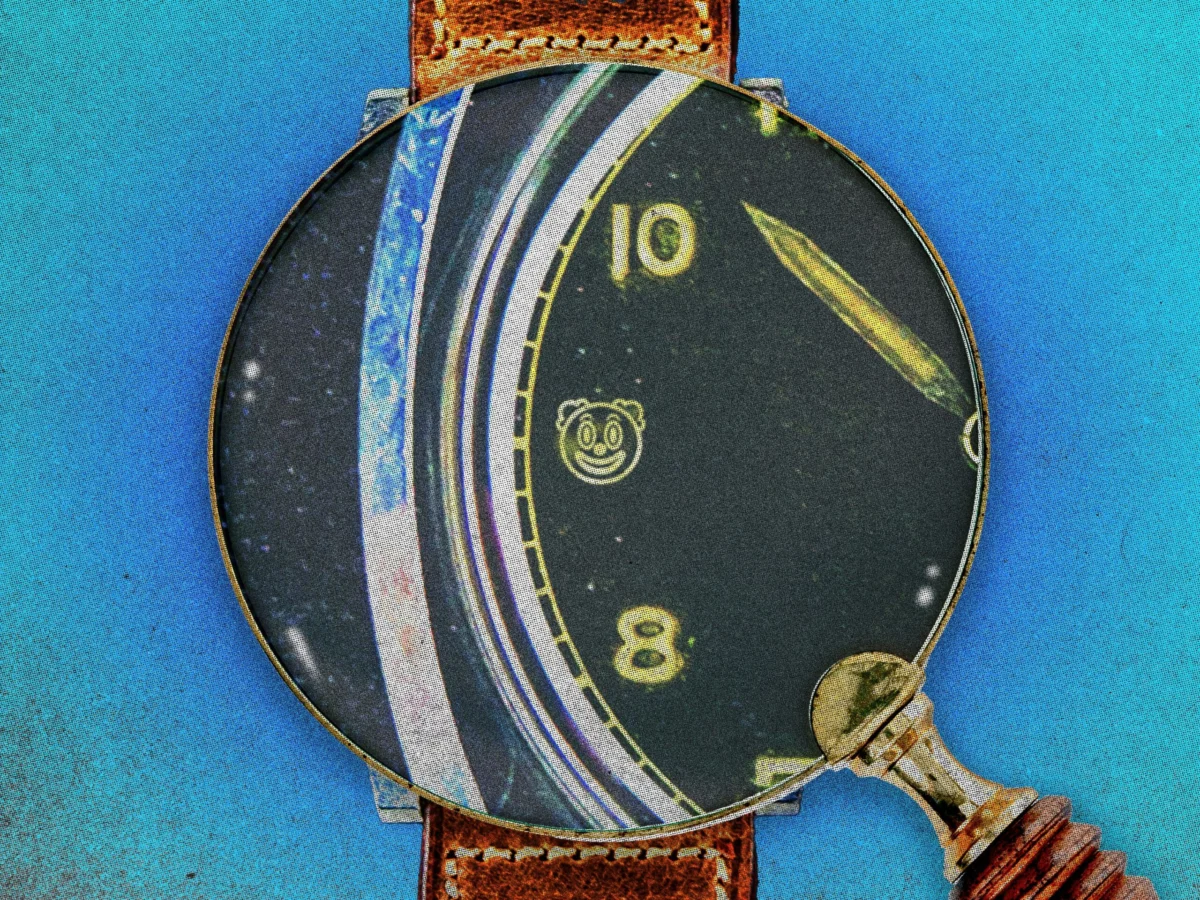
The timepiece was a marvel of mid-century engineering, a vintage chronograph from a prestigious Swiss maison that appeared to have survived the decades in breathtakingly pristine condition. For the price of $5.5 million, the buyer expected nothing less than a museum-grade masterpiece of horological history. However, the discovery that followed would send shockwaves through the upper echelons of the collecting world: the watch was a sophisticated, high-level forgery. This revelation was brought to light by Jose Perez, the man behind the influential and often feared digital platform Perezcope. For the anonymous buyer, a person of immense wealth for whom seven figures represents discretionary spending, the financial loss was secondary to the sting of the deception. The incident serves as a harrowing case study in a market where the line between a genuine relic and a "superfake" has become dangerously thin.
Jose Perez occupies a unique and polarized position within the watch industry. As one of the world’s leading experts in vintage authentication, he has built a reputation as a forensic horologist of the highest order. His methodology relies on a massive, proprietary digital directory containing detailed records of more than 100,000 vintage timepieces. By cataloging the minutiae of case engravings, dial typography, movement finishing, and historical provenance, Perez provides a level of scrutiny that many auction houses struggle to match. To his supporters, he is a digital crusader fighting for transparency in an opaque market; to his detractors—which include several prominent auction houses and brands—he is a disruptive force whose "Perezcope" reports can instantly devalue a multimillion-dollar inventory.
The irony of the current counterfeit crisis is rooted in horological history. In the 18th century, the Swiss watch industry was actually the underdog, often producing lower-quality imitations of superior English-made timepieces. Today, the roles are reversed, and the scale of the problem has reached industrial proportions. According to the "Counterfeiting, Piracy and the Swiss Economy 2025" report published by the Organization for Economic Cooperation and Development (OECD), approximately $1.88 billion worth of counterfeit Swiss-branded watches was sold globally in 2021 alone. This is no longer a matter of "flea market" knockoffs with plastic movements; the modern era is defined by the "superfake."
As Quaid Walker, the founder of the online watch marketplace Bezel, notes, the evolution of counterfeiting has moved from obvious visual discrepancies to the replication of the very DNA of a watch. Modern forgers utilize advanced CNC machining, 3D printing, and high-resolution laser engraving to mimic case materials, movements, and even the "patina" of age. The data from Bezel underscores the severity of the issue: in 2025, the platform’s authentication experts rejected 34% of the watches submitted for sale, an increase from 29% the previous year. This suggests that as the value of vintage watches continues to climb, the incentives for high-end forgery grow proportionally.
The $5.5 million fake identified by Perez represents the apex of this deceptive craft. Perez believes such a piece could only have originated from a specialized high-end restoration workshop. These facilities possess the rare combination of historical knowledge, access to genuine vintage components, and the artisan skill required to replicate a watch so perfectly that even its serial number engravings appear authentic under initial inspection. "The level of craftsmanship is remarkable," Perez admits. When the forgers are as skilled as the original watchmakers, the traditional methods of authentication begin to fail.
A significant portion of the danger in the current market comes from "Frankenwatches." Unlike a total counterfeit, a Frankenwatch is a hybrid—a "monster" assembled from a mix of genuine parts and aftermarket or forged components. A seller might take a genuine Rolex movement, place it in a forged case, and top it with a "refreshed" or fake dial. Because the movement is authentic, a cursory inspection by a non-expert might pass the watch as genuine. These pieces often change hands multiple times, gaining a false sense of legitimacy with every sale, until they encounter a specialist like Perez who can spot the subtle inconsistencies in the marriage of parts.
This leads to the most contentious debate in the watch world: the ethics of restoration. In the high-end vintage market, "originality" is the ultimate currency. A watch that remains exactly as it left the factory 60 years ago—even if it shows signs of wear—is worth significantly more than one that has been polished or had its parts replaced. This obsession with "un-touched" condition has created a perverse incentive for dealers to hide restoration work. Perez argues that the industry’s bias against restoration is both hypocritical and physically impossible. "A 50- or 60-year-old watch in perfect condition has almost certainly been restored—that’s just physics," he says. Materials like tritium and radium degrade, oils dry up, and gaskets fail.
In the world of fine art, the restoration of a centuries-old painting by a master is documented and often celebrated as a necessary act of conservation. In the watch world, however, admitting to a restoration can cause a watch’s value to plummet. Consequently, some of the most talented restorers in the world work in the shadows, their labor intended to be invisible so that a watch can be sold as "New Old Stock" or "unworn." Perez seeks to change this culture, advocating for a model where restoration is disclosed and the artisans who perform it are credited, rather than treated as co-conspirators in a fraud.
On the other side of this debate are purists like Eric Wind, owner of Wind Vintage and a former Christie’s specialist. Wind represents "Team Patina," a group of collectors who believe that the history of a watch is written in its flaws. For Wind, the "recutting" of cases to make them look factory-new is a form of deception that robs a watch of its soul. He argues that restoration should only be a last resort for watches that are otherwise non-functional. The market currently favors Wind’s perspective, as evidenced by the astronomical prices paid for "tropical" dials—dials that have turned a unique shade of brown due to sun exposure and humidity. These defects are seen as "self-validating evidence" of a watch’s originality, as they are notoriously difficult to replicate convincingly.
To bridge the gap between suspicion and certainty, Perez has introduced a tiered system of authentication "passports." These reports range from basic movement assessments to exhaustive, high-resolution photographic documentation of a disassembled watch. By providing a "biometric" record of every gear, bridge, and screw, Perez aims to give buyers the certainty they need to invest millions into what have essentially become blue-chip assets. This level of transparency is designed to protect the market from the fear and hesitation that can suppress values.
The reaction from the established industry has been a mixture of quiet cooperation and public frostiness. Some auction houses have begun to reach out to Perez privately to vet high-value lots before they go under the hammer, recognizing that a public debunking on the Perezcope blog could be a PR disaster. Others view him as a vigilante whose methods are overly aggressive and whose conclusions can sometimes be subjective. Yet, the data suggests that his presence is forcing a higher standard of due diligence across the board.
The stakes have never been higher. As watches transition from functional tools to alternative investments, the "arms race" between forgers and authenticators continues to accelerate. Perez recently inspected a Rolex Daytona with a "Paul Newman" dial—the most coveted variant in the vintage world. He identified it as a fake not through obvious errors, but through "the tiniest graphical errors" in the printing that the counterfeiters had not yet mastered. "The print quality is insane, though," he noted, a sobering reminder that the next generation of fakes may be indistinguishable from the real thing.
Ultimately, the battle for the soul of vintage watch collecting is a battle for truth. In a world of "superfakes" and "Frankenwatches," the value of a timepiece is no longer just in its gold case or its complex movement, but in the verified story of its existence. Whether through digital databases, forensic photography, or a cultural shift toward disclosing restoration, the industry must find a way to guarantee authenticity, or risk the collapse of collector confidence. As the $5.5 million fake demonstrates, in the high-stakes world of horology, the most expensive thing a collector can buy is a lie.